Training Overview
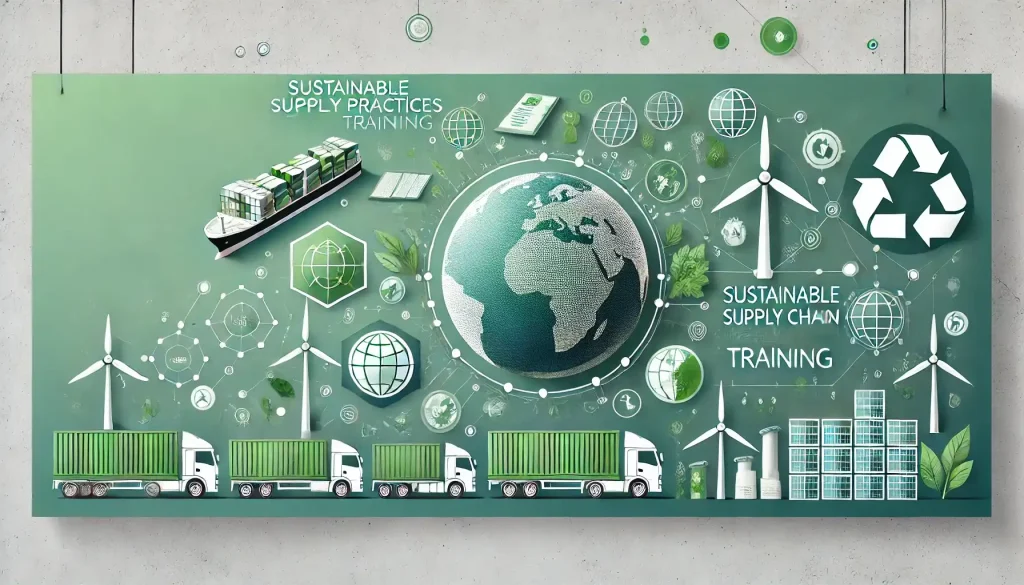
This training provides participants with a comprehensive understanding of sustainable supply chain management, equipping them with strategies to reduce environmental impact, improve ethical sourcing, and optimize resource efficiency. It is designed for supply chain professionals, procurement managers, sustainability officers, and business leaders aiming to integrate sustainability into their operations.
Target Audience
Sustainable Supply Chain Practices Training in Singapore is primarily suitable for:
- Supply Chain & Logistics Managers
- Procurement & Sourcing Professionals
- Sustainability & CSR Officers
- Operations & Production Managers
- Business Owners & Entrepreneurs
Training Objectives
By the end of this training, participants will be able to:
- Understand the principles of sustainable supply chain management.
- Implement eco-friendly procurement and logistics strategies.
- Evaluate supply chain risks and compliance related to sustainability.
- Develop frameworks for ethical sourcing and circular supply chains.
- Measure sustainability impact through key performance indicators (KPIs).
Training Contents
First Day
- Module 1: Introduction to Sustainable Supply Chains
- Definition and importance of sustainability in supply chains
- Key drivers and global trends in sustainable sourcing
- Understanding the Triple Bottom Line: People, Planet, Profit
Module 2: Sustainable Procurement Strategies
- Ethical sourcing and supplier sustainability audits
- Integrating ESG (Environmental, Social, and Governance) criteria
- Certifications and compliance standards (ISO 14001, FSC, Fair Trade)
Second Day
- Module 3: Green Logistics & Transportation
- Reducing carbon footprint in transportation & warehousing
- Innovations in eco-friendly packaging and reverse logistics
- Route optimization and energy-efficient distribution models
Module 4: Circular Economy in Supply Chains
- Implementing waste reduction and recycling initiatives
Third Day
- Module 4: Circular Economy in Supply Chains
- Product life cycle assessment and redesigning for sustainability
- Transitioning from linear to circular supply chain models
- Module 5: Supply Chain Risk Management & Compliance
- Identifying and mitigating sustainability risks
- Regulatory frameworks and corporate responsibility guidelines
- Supplier due diligence and third-party risk assessments
Forth Day
- Module 6: Measuring & Reporting Sustainability Impact
- Sustainability performance metrics (KPIs)
- ESG reporting and sustainability disclosures
- Communicating sustainability achievements to stakeholders
- Review of Unilever Case – Measuring Supplier Sustainability through its “Partner to Win” Programme
- Review of IKEA Case – Integrating IWAY for Monitoring & Reporting Sustainable Practices
Fifth Day
- Case Study Analysis & Action Plan Development
- Reviewing real-world sustainable supply chain models
- Group discussions on challenges and best practices
- Developing an action plan for sustainable supply chain integration
Programme Methodology
Sustainable Supply Chain Practices Training is designed to be highly interactive, practical, and outcomes-focused. It combines expert-led presentations with real-world case studies, group exercises, and hands-on simulations that reflect current challenges in global supply chains. Participants engage in scenario-based learning to explore the integration of ESG principles, circular economy strategies, and impact measurement tools. The methodology also includes guided discussions, peer learning, and the use of sustainability reporting frameworks (e.g., GRI, CDP) to ensure participants leave with both the knowledge and practical skills to implement sustainable practices within their organizations.
£3,850 per participant · invoice and bank transfer · groups of 5 or more receive a discount
Five or more from one organisation: ask for the group rate on the invoice request.
Ten or more: an in-house version for your institution may cost less per person. Ask for an in-house quote.
Registration closes in 98 days (24 Jan 2027)
Host Country Profile
- Why? A global hub for trade, logistics, and supply chain innovation.
- Advantage: Ranked among the most sustainable urban economies with strong environmental policies.
- Added Benefit: Efficient infrastructure and excellent connectivity for international participants.