Ключевые факты
- Даты
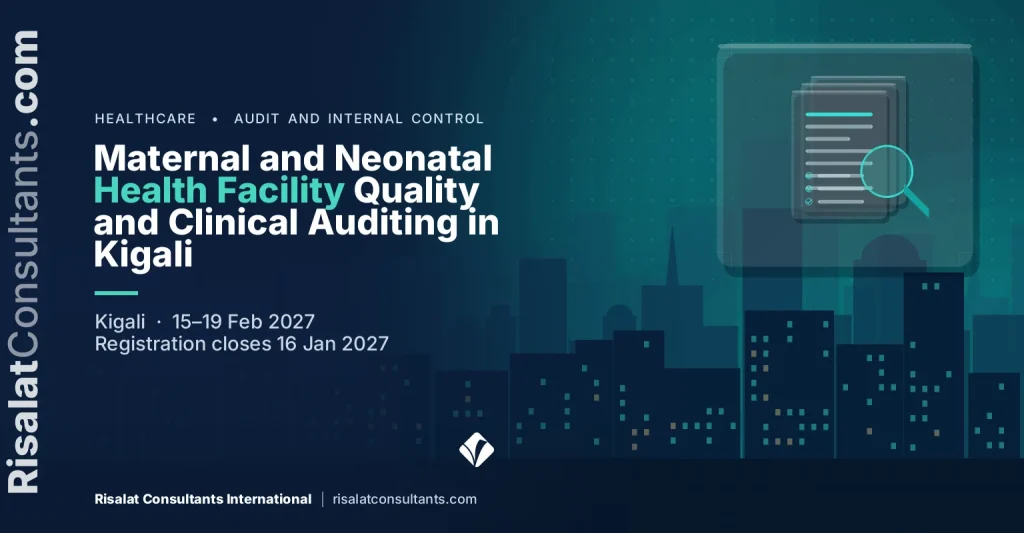
- 15–19 февр. 2027 (5 дней)
- Где
- Кигали, Руанда
- Стоимость на одного участника
- £2 300 (GBP)
- Оплата
- По счету банковским переводом
- Регистрация закрывается
- 16 янв. 2027
- Сертификат
- Сертификат о прохождении
- Корпоративный формат
- Проведите ее для своей команды в удобные вам даты
На этой странице 14 разделов
Обзор программы
Maternal and neonatal health outcomes depend heavily on the continuous quality of clinical care and the operational readiness of health facilities. This five-day course equips participants with practical competencies to conduct clinical audits, maintain specialised biomedical equipment, and monitor frontline staff performance. Delivered in Kigali, the programme reviews established assessment frameworks that ensure public hospitals and district health centres adhere to international care standards. Participants engage in structured reviews of health facility workflows to identify clinical gaps and reduce preventable adverse events.
The curriculum addresses the critical operational systems required for high-performing maternity and neonatal units. Participants scrutinise perinatal mortality audit cycles, neonatal intensive care unit infrastructure, and preventative maintenance protocols essential for life-saving technologies. Through detailed technical sessions, attendees evaluate workforce management techniques, competency-based staffing models, and routine performance dashboards. The learning integrates validated World Health Organization standards for improving maternal and newborn care quality, ensuring that health professionals can effectively institutionalise systematic oversight and compliance across diverse secondary and tertiary care facilities.
Special attention is given to standardising clinical governance and establishing responsive, respectful services for vulnerable groups. Participants formulate quality improvement action plans tailored to their institutions and integrate adolescent-friendly health service guidelines into routine facility operations. By examining Rwanda's experience in maternal health coordination and district-level clinical accountability, the training provides transferable insights for institutional teams seeking to optimise donor-financed interventions, strengthen departmental leadership, and establish sustainable clinical auditing systems capable of driving measurable patient-centred health gains across national public health delivery networks.
Strengthening facility-level clinical governance is critical as public health authorities scale up large maternal, child, and adolescent health operations, including major international financing initiatives such as the US$150m Investing in Maternal, Child and Adolescent Health project. Health ministries and hospital directorates require rigorous internal auditing systems, reliable biomedical equipment maintenance, and competent clinical supervision to convert external capital investments into measurable reductions in maternal and perinatal mortality. Establishing standard clinical audit cycles now ensures that health facilities develop sustainable institutional quality assurance mechanisms that safeguard mothers, neonates, and adolescents over the long term.
Программа, которую Risalat Consultants International проводит в Кигали (Руанда), сочетает занятия под руководством экспертов, реальные кейсы и групповую работу, чтобы участники могли применять полученные знания в своей организации.
The Programme Strengthens Institutional Capability
- Principles of clinical governance and facility-based quality assurance in maternal care
- World Health Organization standards for improving maternal and newborn care in facilities
- Operationalising Maternal and Perinatal Death Surveillance and Response (MPDSR) cycles
- Establishing blame-free multidisciplinary audit committees and data collection workflows
- Practical exercise: Reviewing facility case notes and identifying avoidable clinical factors
- Infrastructure readiness standards for intermediate and intensive neonatal care units
- Maintenance, calibration, and infection control protocols for incubators, phototherapy, and CPAP units
- Medical gas supply chains, oxygen delivery safety, and continuous power resilience planning
- Оценка рисков мошенничества и реестры рисков мошенничества
- Разработка и тестирование внутреннего контроля
- Модель трех линий и роль надзора
- Планирование аудита, доказательства и документация
It is designed for obstetric programme officers managing maternal health portfolios, hospital clinical directors and medical superintendents, maternal and child health coordinators at national and regional levels and others who want practical, current skills in fraud, audit and internal control.
- Операция
- Учет
- Контроль
- Доказательства
- Заключение
The Growing Importance of Maternal and Neonatal Health Facility Quality and Clinical Auditing in Kigali
От государственных органов и проектов, финансируемых донорами, ожидают подтверждения того, что средства используются по назначению. Аудиторы, надзорные органы и финансирующие организации все чаще смотрят не только на финансовую отчетность, но и на стоящие за ней механизмы контроля, документы и поведение.
Мошенничество и слабость контроля редко возникают из-за одного сбоя. Они разрастаются там, где роли нечетки, документы неполны, а тревожные сигналы остаются без внимания. Команды, понимающие, как происходит мошенничество и как механизмы контроля его останавливают, защищают и свою организацию, и людей, которым она служит.
Организациям все больше нужны специалисты, способные:
- Выявлять и оценивать риски мошенничества и контроля в своих процессах
- Разрабатывать соразмерные и проверяемые механизмы контроля
- Собирать и документировать надежные аудиторские доказательства
- Своевременно распознавать тревожные сигналы и правильно их эскалировать
- Превращать выводы в практические согласованные действия
Сильные системы противодействия мошенничеству, аудита и внутреннего контроля помогают организациям:
- Сокращать потери и неприемлемые расходы
- Проходить внешний аудит с меньшим числом замечаний
- Укреплять доверие финансирующих организаций и граждан
- Реагировать на обвинения справедливо и с документальным оформлением
This Maternal and Neonatal Health Facility Quality and Clinical Auditing in Kigali programme brings these elements together in a practical format, so that participants understand not only what good practice looks like but also how to introduce it in their own setting, with the people and resources they have.
Who Should Attend This Maternal and Neonatal Health Facility Quality and Clinical Auditing in Kigali Training?
Программа предназначена для:
- Obstetric programme officers managing maternal health portfolios
- Hospital clinical directors and medical superintendents
- Maternal and child health coordinators at national and regional levels
- Supervising midwives and heads of obstetrics and gynaecology departments
- Neonatal intensive care unit nurse managers and lead paediatricians
- Quality improvement officers in public health ministries and secretariats
- Clinical audit team leaders and facility governance committee members
- Biomedical engineers and facility operations managers in public hospitals
- Technical specialists and managers from maternal health delivery projects in Senegal
- Внутренние аудиторы и руководители аудита
- Финансовые менеджеры и бухгалтеры
- Специалисты по комплаенсу и рискам
Программа подходит как опытным специалистам, так и тем, кто переходит к новым обязанностям. Приветствуются группы из разных организаций и стран, поскольку участники многому учатся на опыте друг друга.
Отметьте, что должна уметь ваша команда.
Maternal and Neonatal Health Facility Quality and Clinical Auditing in Kigali Training Objectives
Upon successful completion of this Maternal and Neonatal Health Facility Quality and Clinical Auditing in Kigali Training, participants will be able to:
- Evaluate maternal and perinatal death surveillance and response systems using World Health Organization audit principles
- Analyse neonatal intensive care unit equipment management, calibration workflows, and preventative maintenance protocols
- Design healthcare worker performance tracking matrices aligned with national clinical service guidelines
- Formulate institutional quality improvement action plans to rectify identified clinical and infrastructural gaps
- Apply adolescent-friendly health service standards to routine maternal, antenatal, and postnatal care delivery pathways
- Audit emergency obstetric and newborn care facility readiness against established international service benchmarks
- Establish structured clinical governance frameworks for ongoing hospital accountability, reporting, and patient safety oversight
- Объяснять, как и почему происходит мошенничество, с помощью признанных моделей рисков мошенничества
- Проводить оценку рисков мошенничества и контроля для реального процесса
- Сопоставлять механизмы контроля с рисками по модели трех линий
Каждая цель отрабатывается в ходе программы на упражнениях, кейсах или в групповой работе, чтобы участники умели это делать, а не только описывать.
Содержание и структура программы
- Principles of clinical governance and facility-based quality assurance in maternal care
- World Health Organization standards for improving maternal and newborn care in facilities
- Operationalising Maternal and Perinatal Death Surveillance and Response (MPDSR) cycles
- Establishing blame-free multidisciplinary audit committees and data collection workflows
- Practical exercise: Reviewing facility case notes and identifying avoidable clinical factors
- Infrastructure readiness standards for intermediate and intensive neonatal care units
- Maintenance, calibration, and infection control protocols for incubators, phototherapy, and CPAP units
- Medical gas supply chains, oxygen delivery safety, and continuous power resilience planning
- Developing asset management registers and downtime tracking systems for biomedical equipment
- Case study: Resolving technical equipment failures and clinical downtime in district hospitals
- Competency-based clinical workforce management for maternity and delivery suites
- Key performance indicators for tracking midwifery and obstetric staff productivity and quality
- Designing supportive supervision checklists and continuous workplace performance feedback systems
- Addressing clinical burn-out, duty roster optimisation, and emergency team readiness
- Simulation exercise: Constructing a departmental performance dashboard for obstetric staff
- Root cause analysis methodologies: Using 5-Whys and fishbone diagrams in clinical contexts
- Plan-Do-Study-Act (PDSA) cycles applied to emergency obstetric and newborn care bottlenecks
- Formulating realistic, resource-efficient facility Quality Improvement Action Plans
- Securing budget lines and departmental buy-in for clinical corrective interventions
- Workshop: Developing an institutional action plan to reduce post-partum haemorrhage response times
- Integrating adolescent-friendly reproductive health standards into facility intake and triage
- Respectful maternity care charters: Eliminating mistreatment and protecting patient dignity
- Community feedback mechanisms and patient-reported experience measures in clinical audits
- Cross-country learning: Reviewing Rwandan and regional clinical audit models and practices
- Participant presentations: Final facility quality improvement and clinical audit proposals
Полное содержание по дням
Программа длится 5 дней. Каждый день сочетает выступления экспертов, практическую работу и заключительный семинар или разбор кейса:
- First Day: Day 1: Clinical Auditing Frameworks and Perinatal Surveillance
- Second Day: Day 2: Neonatal Intensive Care Infrastructure and Biomedical Equipment Maintenance
- Third Day: Day 3: Healthcare Workforce Performance Tracking and Clinical Supervision
- Fourth Day: Day 4: Quality Improvement Methodologies and Action Planning
- Fifth Day: Day 5: Adolescent-Friendly Standards and Institutional Governance
Полное содержание по дням
First Day | Day 1: Clinical Auditing Frameworks and Perinatal Surveillance
- Principles of clinical governance and facility-based quality assurance in maternal care
- World Health Organization standards for improving maternal and newborn care in facilities
- Operationalising Maternal and Perinatal Death Surveillance and Response (MPDSR) cycles
- Establishing blame-free multidisciplinary audit committees and data collection workflows
- Practical exercise: Reviewing facility case notes and identifying avoidable clinical factors
Workshop: Day 1: Clinical Auditing Frameworks and Perinatal Surveillance: Applying It to Your Institution
Работая в небольших группах, участники применяют методы дня к примерам из своих организаций и согласовывают практические дальнейшие шаги.
Second Day | Day 2: Neonatal Intensive Care Infrastructure and Biomedical Equipment Maintenance
- Infrastructure readiness standards for intermediate and intensive neonatal care units
- Maintenance, calibration, and infection control protocols for incubators, phototherapy, and CPAP units
- Medical gas supply chains, oxygen delivery safety, and continuous power resilience planning
- Developing asset management registers and downtime tracking systems for biomedical equipment
- Case study: Resolving technical equipment failures and clinical downtime in district hospitals
Workshop: Day 2: Neonatal Intensive Care Infrastructure and Biomedical Equipment Maintenance: Applying It to Your Institution
Работая в небольших группах, участники применяют методы дня к примерам из своих организаций и согласовывают практические дальнейшие шаги.
Third Day | Day 3: Healthcare Workforce Performance Tracking and Clinical Supervision
- Competency-based clinical workforce management for maternity and delivery suites
- Key performance indicators for tracking midwifery and obstetric staff productivity and quality
- Designing supportive supervision checklists and continuous workplace performance feedback systems
- Addressing clinical burn-out, duty roster optimisation, and emergency team readiness
- Simulation exercise: Constructing a departmental performance dashboard for obstetric staff
Case Study: Day 3: Healthcare Workforce Performance Tracking and Clinical Supervision in Practice
Участники анализируют реалистичный кейс, сравнивают принятые решения с передовой практикой и извлекают уроки, применимые в своих условиях.
Fourth Day | Day 4: Quality Improvement Methodologies and Action Planning
- Root cause analysis methodologies: Using 5-Whys and fishbone diagrams in clinical contexts
- Plan-Do-Study-Act (PDSA) cycles applied to emergency obstetric and newborn care bottlenecks
- Formulating realistic, resource-efficient facility Quality Improvement Action Plans
- Securing budget lines and departmental buy-in for clinical corrective interventions
- Workshop: Developing an institutional action plan to reduce post-partum haemorrhage response times
Workshop: Day 4: Quality Improvement Methodologies and Action Planning: Applying It to Your Institution
Работая в небольших группах, участники применяют методы дня к примерам из своих организаций и согласовывают практические дальнейшие шаги.
Fifth Day | Day 5: Adolescent-Friendly Standards and Institutional Governance
- Integrating adolescent-friendly reproductive health standards into facility intake and triage
- Respectful maternity care charters: Eliminating mistreatment and protecting patient dignity
- Community feedback mechanisms and patient-reported experience measures in clinical audits
- Cross-country learning: Reviewing Rwandan and regional clinical audit models and practices
- Participant presentations: Final facility quality improvement and clinical audit proposals
Capstone Exercise: Maternal and Neonatal Health Facility Quality and Clinical Auditing in Kigali Action Plan for Your Institution
Участники объединяют итоги недели в план действий для своей организации с приоритетами, ответственными и первыми шагами и представляют его коллегам и ведущим для обратной связи.
Maternal and Neonatal Health Facility Quality and Clinical Auditing in Kigali Training Methodology
The training is delivered through interactive lectures, practical clinical auditing workshops, and case analysis of facility-based data. Participants work individually and in syndicate groups to appraise realistic hospital case records, evaluate biomedical maintenance schedules, and apply root-cause analysis tools to clinical scenarios. Facilitators guide practical exercises using standardised checklists and frameworks from international public health bodies, enabling attendees to translate technical knowledge directly into adaptable institutional action plans.
Программа сочетает:
- Занятия под руководством экспертов по актуальной практике
- Региональные и международные кейсы
- Групповая работа и практические упражнения
- Симуляции и ролевые игры, где это уместно
- Обсуждение собственных задач участников
- Обмен опытом между организациями и странами
- Практические инструменты и шаблоны для работы
- Ежедневная рефлексия и планирование действий
Перед программой короткая предварительная оценка помогает ведущим понять роль и приоритеты каждого участника, чтобы адаптировать примеры и упражнения к группе. Каждый день завершается короткой рефлексией, в ходе которой участники отмечают, что они применят в работе.
Ожидаемые результаты
Upon completion of this Maternal and Neonatal Health Facility Quality and Clinical Auditing in Kigali Training, participants will be able to:
- Competency to establish and run multidisciplinary maternal and perinatal death surveillance and response committees
- Ability to design and execute preventative maintenance and calibration plans for neonatal intensive care equipment
- Proficiency in monitoring clinical workforce performance using standardised indicators and supportive supervision tools
- Capability to formulate comprehensive quality improvement action plans targeting adverse obstetric and neonatal outcomes
- Practical skill in adapting health facility intake and clinical pathways to meet adolescent-friendly standards
- Strengthened institutional governance capacity to oversee donor-financed maternal and child health facility investments
- Оценивать риски мошенничества и контроля в своих процессах
- Разрабатывать и тестировать соразмерные механизмы контроля
Участники уходят с личным планом действий и практическими инструментами, которые можно применять в своей организации с первой же недели после возвращения. Организации, направляющие нескольких участников, могут использовать программу, чтобы согласовать общие методы и шаблоны для разных команд: так улучшения легче закрепить.
£2 300 за участника · оплата по счету банковским переводом · для групп от 5 человек предусмотрена скидка
Пять и более участников от одной организации: укажите групповой тариф в запросе счета.
Ten or more: an in-house version for your institution may cost less per person. Ask for an in-house quote.
Registration closes in 65 days (16 Jan 2027)
Institutional Application of Maternal and Neonatal Health Facility Quality and Clinical Auditing in Kigali Training
Программа помогает организациям укрепить:
- Управление рисками мошенничества и коррупции
- Системы внутреннего контроля
- Механизмы аудита и надзора
- Работа по замечаниям аудита
- Добросовестность и каналы сообщений о нарушениях
Участники возвращаются с практическими инструментами для улучшения:
- Реестры рисков и карты контролей
- Планирование аудита и тестирование
- Доказательства и документация
- Отчетность перед руководством и советами
- Предотвращение неприемлемых расходов
Программа построена так, чтобы знания переходили из учебной аудитории в организацию. По возможности участники работают с собственными процессами и документами и уходят с планом действий, который их руководители могут рассмотреть и поддержать.
Региональная актуальность и применение
Европа
Европейские организации работают в сферах противодействия мошенничеству, аудита и внутреннего контроля в рамках детально проработанного регулирования и программ реформ. Участники из Европы могут сравнить свою практику с опытом коллег из других регионов и проверить, как устоявшиеся методы работают в иных условиях.
Африка
По всей Африке министерства, ведомства и проектные команды в сферах противодействия мошенничеству, аудита и внутреннего контроля все чаще работают параллельно с программами, финансируемыми донорами, которые ожидают четких систем и фактических данных. Программа помогает участникам адаптировать лучшую практику к своим организациям и имеющимся ресурсам.
Ближний Восток
На Ближнем Востоке национальные стратегии развития и планы диверсификации предъявляют все более высокие требования к противодействию мошенничеству, аудиту и внутреннему контролю. Участники изучают, как сформировать потенциал, необходимый для этих планов, внутри государственных органов и компаний.
Азия
Организации в Азии сочетают быстрый рост с амбициозными программами модернизации. Участники из Азии могут поделиться опытом быстрого масштабирования систем и узнать о подходах, применяемых в других странах.
Тихоокеанский регион
Малые островные и тихоокеанские государства сталкиваются с особыми ограничениями, связанными с размером, удаленностью и потенциалом. Программа показывает практичные и соразмерные подходы к противодействию мошенничеству, аудиту и внутреннему контролю, подходящие для небольших организаций.
Holding the programme in Kigali, Rwanda brings participants together away from their daily pressures, so they can compare how fraud, audit and internal control is handled in different settings. The same programme can also be delivered in-house for one institution, in its own country or online, with cases taken from its current work.
Профиль принимающей страны – Руанда
Программы, семинары, ознакомительные поездки и учебные курсы в Кигали (Руанда) от Risalat Consultants International
Обучение за пределами своей страны дает участникам время сосредоточиться, по-новому взглянуть на свою организацию и выстроить сеть контактов с коллегами из других стран.
Maternal and Neonatal Health Facility Quality and Clinical Auditing in Kigali Training Deliverables
Участники получают поддержку до, во время и после программы, поэтому подготовка, обучение и последующее сопровождение складываются в единый непрерывный процесс.
До программы
- Предварительная оценка участников
- Maternal and Neonatal Health Facility Quality and Clinical Auditing in Kigali Readiness Assessment
- Maternal and Neonatal Health Facility Quality and Clinical Auditing in Kigali Resource Pack
- Материалы для предварительного чтения
- Бесплатная визовая поддержка и консультации
Во время программы
- Встреча в аэропорту и приветственное сопровождение
- Проживание с завтраком
- Приветственный ужин для нетворкинга
- Комплект участника Risalat (сумка, бутылка, кружка, футболка, кепка, обложка для паспорта, ручки, блокнот, магнит и брелок)
- Comprehensive Maternal and Neonatal Health Facility Quality and Clinical Auditing in Kigali Training Manual
- Шаблон реестра рисков мошенничества
- Матрица сопоставления контролей
- Чек-лист аудиторских доказательств
- Трекер выводов и последующих действий
- Практические семинары и симуляции
- Групповые дискуссии и обмен опытом
- Ежедневный обед и кофе-брейки
- Полный доступ к инфраструктуре места проведения
- Мини-планшет с цифровыми учебными материалами
- Выездной визит (при наличии)
- Развлекательная экскурсия по городу
После программы
- Сертификат о прохождении
- Награда Risalat за участие в программе
- Справочные материалы после обучения
- Руководство по самооценке рисков мошенничества
- Чек-лист тестирования контролей
- Поддержка и консультации после обучения
- Отчет по программе
Institutions can also request a tailored in-house version of this programme, delivered at their premises or online. Request a proposal.
Common Challenges in Maternal and Neonatal Health Facility Quality and Clinical Auditing in Kigali, And How This Training Helps
Как организациям выявлять и оценивать риски мошенничества и контроля в собственных процессах?
The programme addresses this directly on the first day (Day 1: Clinical Auditing Frameworks and Perinatal Surveillance), where participants practise the methods involved and adapt them to their own institution, then build it into their action plan.
Как организациям разрабатывать соразмерные и проверяемые меры контроля?
The programme addresses this directly on the second day (Day 2: Neonatal Intensive Care Infrastructure and Biomedical Equipment Maintenance), where participants practise the methods involved and adapt them to their own institution, then build it into their action plan.
Как организациям собирать и документировать надежные аудиторские доказательства?
The programme addresses this directly on the third day (Day 3: Healthcare Workforce Performance Tracking and Clinical Supervision), where participants practise the methods involved and adapt them to their own institution, then build it into their action plan.
Как организациям своевременно распознавать тревожные сигналы и правильно их эскалировать?
The programme addresses this directly on the fourth day (Day 4: Quality Improvement Methodologies and Action Planning), where participants practise the methods involved and adapt them to their own institution, then build it into their action plan.
Как организациям превращать выводы в практические согласованные действия?
The programme addresses this directly on the fifth day (Day 5: Adolescent-Friendly Standards and Institutional Governance), where participants practise the methods involved and adapt them to their own institution, then build it into their action plan.
Часто задаваемые вопросы
When and where does the Maternal and Neonatal Health Facility Quality and Clinical Auditing in Kigali programme take place?
It runs from 15 Feb 2027 to 19 Feb 2027, in Kigali, Rwanda. The registration deadline is shown at the top of this page.
Кому стоит участвовать?
The programme is designed for obstetric programme officers managing maternal health portfolios, hospital clinical directors and medical superintendents, maternal and child health coordinators at national and regional levels, supervising midwives and heads of obstetrics and gynaecology departments, and others who want practical skills in fraud, audit and internal control.
Получу ли я сертификат?
Да. Участники, завершившие программу, получают сертификат о прохождении от Risalat Consultants International.
Можно ли провести эту программу только для нашей организации?
Да. Мы можем провести адаптированную корпоративную версию в вашей организации, в другом городе или онлайн на основе ваших собственных кейсов. Воспользуйтесь формой запроса предложения на этой странице.
Нужен ли мне опыт в области противодействия мошенничеству, аудита и внутреннего контроля?
Специальная подготовка не требуется, достаточно опыта работы в смежной должности. Короткая предварительная оценка помогает ведущим адаптировать занятия к группе.
Who Will Deliver This Programme
Each date is delivered by a team assigned from Risalat's expert network for this subject. For this programme we assign:
How we choose them: Experience in the region of the participants or comparable settings; Command of the financier rules that apply (World Bank, ADB, AfDB, EU, UN) where relevant; Delivery in English; other languages on request for in-house groups; No conflict of interest with participants' institutions.
Names and short CVs of the assigned experts are shared with registered participants and sponsoring organisations before the programme, on request. Are you an expert in this subject? Join our expert network.
Training courses in KigaliHealthcare training courses
Почему эта программа проходит в Кигали
Кигали славится чистыми и безопасными улицами и реформами государственного сектора, а для путешественников из Африки здесь упрощенный визовый режим.
The Maternal and Neonatal Health Facility Quality and Clinical Auditing in Kigali programme in February 2027 brings together officials and professionals from across the Africa region and beyond. Sessions combine short inputs, case studies and group work on participants' own files, and the city's institutions can be added as a study visit on request.
Как добраться: международный аэропорт Кигали (KGL).
Узнайте, нужна ли вам виза, с помощью бесплатного сервиса «Проверка визы» и запросите приглашение после регистрации.
Та же тема в других городах
- Maternal and Neonatal Referral Protocols and Obstetric Care Auditing in Lisbon (Lisbon)
- Child Healthcare Quality Benchmarking and Human Capital Financing in London (London)
- Contracting Primary Care Networks and Essential Health Service Packages in Amman (Amman)
- Emergency Nutrition & Essential Health Package Delivery in Conflict in Cairo (Cairo)
- Primary Maternal and Child Healthcare Service Continuity in Kigali (Kigali)
- Primary Healthcare Quality and Sub-District Clinic Management in Kigali (Kigali)
Другие программы в Кигали
- Community Health Worker Logistics and Child Nutrition Delivery in Kigali
- Agri-Tech Startup Incubation and Digital Venture Matching in Kigali
- Sub-National Capital Investment Auditing and Municipal Grants in Kigali
- Basic Education Equity Grants and School-Based Management in Kigali
- Rural Electrification Grid Extension and Line Construction in Kigali
For teams and institutions
Bring your team
Teams that learn together apply more at work. Tell us how many people and how you would like to take part: we reply with a group quote within two working days.
Other dates and cities for this subject: Health Systems and Health Project Management training courses (109 upcoming dates).
Другие учебные курсы в Руанде · Все программы в Африке · Полный календарь обучения
Plan this programme in a roadmap: why it matters, why to approve it, the dates to plan and the career it builds.