Ключевые факты
- Даты
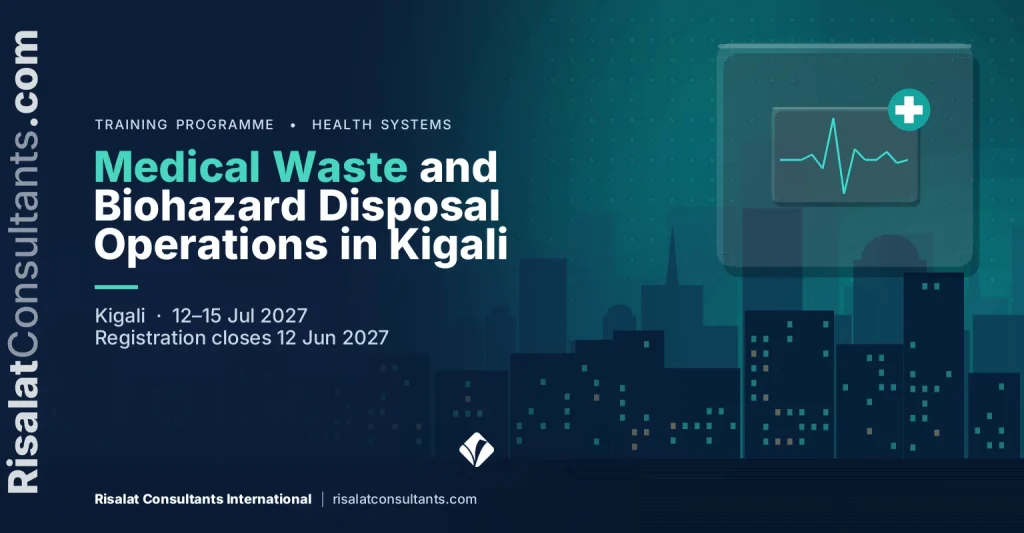
- 12–15 Jul 2027 (4 days)
- Где
- Кигали, Руанда
- Стоимость на одного участника
- £1,850 (GBP)
- Оплата
- По счету банковским переводом
- Регистрация закрывается
- 12 Jun 2027
- Сертификат
- Сертификат о прохождении
- Корпоративный формат
- Проведите ее для своей команды в удобные вам даты
На этой странице 16 разделов
Обзор программы
Healthcare systems require rigorous biohazard management to protect public health, clinical personnel, and surrounding ecosystems from biological and chemical contamination. This four-day professional course in Kigali provides specialized training on operational medical waste management, covering primary health clinics through to central treatment facilities. Participants study core treatment pathways including high-temperature incineration, autoclave shredding, and chemical neutralisation, aligning facility procedures with international standards established by the World Health Organisation and the World Bank Group Environmental, Health, and Safety Guidelines.
The curriculum addresses the entire lifecycle of clinical waste, emphasizing source segregation, colour-coded containment, safe internal movement, and compliant on-site storage. Delegates examine emission thresholds, residual ash handling, and mechanical validation techniques required for non-burn technologies. Through structured operational reviews, the course assists public health and sanitation practitioners in establishing robust control measures that prevent groundwater pollution, accidental needle-stick injuries, and atmospheric releases of hazardous pollutants such as dioxins and furans.
Delivered in Rwanda, a recognised regional leader in municipal sanitation and environmental policy, the programme combines technical analysis with context-specific operational design. Participants formulate waste stream workflows, contingency frameworks, and monitoring regimes tailored to primary health institutions. By benchmarking facility practices against multi-lateral development bank environmental and social standards, attendees build the operational competence required to upgrade health centre infrastructure and maintain auditable environmental compliance across public healthcare networks.
Public healthcare networks in Southern Africa face increasing volumes of clinical, pharmaceutical, and biohazardous waste generated by expanded primary care and health emergency interventions. In the context of programmes such as the Zimbabwe COVID-19 Response and Essential Health Services Additional Financing, executing agencies and healthcare facilities must satisfy stringent environmental and social commitments. Upgrading biohazard handling protocols, phasing out non-compliant open burning, and establishing verifiable waste tracking are essential requirements for maintaining regulatory compliance, protecting host communities, and satisfying international project safeguard frameworks.
Программа, которую Risalat Consultants International проводит в Кигали (Руанда), сочетает занятия под руководством экспертов, реальные кейсы и групповую работу, чтобы участники могли применять полученные знания в своей организации.
The Programme Strengthens Institutional Capability
- International regulatory frameworks: WHO guidance and World Bank Group EHS guidelines for healthcare facilities
- Waste classification: infectious, pathological, sharps, pharmaceutical, and genotoxic streams
- Colour-coding systems, containment specifications, and puncture-resistant sharps receptacle standards
- Point-of-generation segregation workflows to minimise hazardous volumes in primary health clinics
- Internal collection routes, intermediate storage requirements, and personal protective equipment standards
- Incineration design principles: dual-chamber combustion, residence times, and core temperature thresholds
- Management of flue-gas emissions: controlling particulate matter, acid gases, dioxins, and furans
- Bottom ash and fly ash handling: toxicity characteristics, containment, and engineered landfill disposal
- Планирование услуг и управление ими
- Повышение качества и стандарты
- Управление персоналом и кадровое планирование
- Финансирование и бюджетирование услуг
It is designed for environmental health practitioners and public health inspectors, clinical waste management officers from municipal and district councils, operations supervisors and facility managers in primary health clinics and others who want practical, current skills in health, education and social services.
The Growing Importance of Medical Waste and Biohazard Disposal Operations in Kigali
Услуги здравоохранения, образования и социальной сферы напрямую доходят до людей, и их качество зависит от планирования, управления и использования доказательной базы. Правительства и партнеры ожидают лучших результатов при ограниченных бюджетах.
Руководители и менеджеры в этих секторах сталкиваются с растущим спросом, нехваткой кадров и новыми технологиями. Сильные управленческие навыки помогают организациям планировать услуги, рационально использовать ресурсы и демонстрировать результаты.
Организациям все больше нужны специалисты, способные:
- Планировать услуги и управлять ими в соответствии со спросом
- Повышать качество в соответствии со стандартами
- Эффективно управлять персоналом и ресурсами
- Использовать данные для принятия решений
- Работать с сообществами и партнерами
Сильные системы здравоохранения, образования и социальных услуг помогают организациям:
- Предоставлять более качественные услуги большему числу людей
- Эффективно использовать бюджеты и персонал
- Соответствовать стандартам качества
- Демонстрировать результаты правительству и партнерам
This Medical Waste and Biohazard Disposal Operations in Kigali programme brings these elements together in a practical format, so that participants understand not only what good practice looks like but also how to introduce it in their own setting, with the people and resources they have.
Who Should Attend This Medical Waste and Biohazard Disposal Operations in Kigali Training?
Программа предназначена для:
- Environmental health practitioners and public health inspectors
- Clinical waste management officers from municipal and district councils
- Operations supervisors and facility managers in primary health clinics
- Infection prevention and control (IPC) focal points
- Health and safety compliance officers in public hospitals
- Project management unit (PMU) environmental safeguard specialists
- Infrastructure and biomedical engineers handling clinical equipment
- Sanitation supervisors overseeing hazardous materials disposal
- Quality assurance officers in secondary and tertiary health facilities
- Руководители и администраторы служб
- Директора и высокопоставленные должностные лица
- Специалисты по планированию и политике
Программа подходит как опытным специалистам, так и тем, кто переходит к новым обязанностям. Приветствуются группы из разных организаций и стран, поскольку участники многому учатся на опыте друг друга.
Отметьте, что должна уметь ваша команда.
Medical Waste and Biohazard Disposal Operations in Kigali Training Objectives
Upon successful completion of this Medical Waste and Biohazard Disposal Operations in Kigali Training, participants will be able to:
- Classify biomedical waste streams in compliance with international categorisation systems and technical standards
- Evaluate high-temperature incineration operations against international atmospheric emission and flue-gas treatment standards
- Apply autoclave shredding and alternative non-burn decontamination techniques for clinical waste disinfection
- Execute chemical neutralisation procedures for liquid biohazards, laboratory residues, and pharmaceutical waste
- Design segregation, collection, and internal transport workflows tailored to primary healthcare clinic settings
- Establish environmental management logs and tracking systems for chain-of-custody biohazard documentation
- Formulate operational risk mitigation and emergency response plans for biohazard spills and occupational exposures
- Объяснять основные вызовы, стоящие перед их сектором
- Планировать услуги в соответствии со спросом и ресурсами
- Применять методы повышения качества
Каждая цель отрабатывается в ходе программы на упражнениях, кейсах или в групповой работе, чтобы участники умели это делать, а не только описывать.
Содержание и структура программы
- International regulatory frameworks: WHO guidance and World Bank Group EHS guidelines for healthcare facilities
- Waste classification: infectious, pathological, sharps, pharmaceutical, and genotoxic streams
- Colour-coding systems, containment specifications, and puncture-resistant sharps receptacle standards
- Point-of-generation segregation workflows to minimise hazardous volumes in primary health clinics
- Internal collection routes, intermediate storage requirements, and personal protective equipment standards
- Incineration design principles: dual-chamber combustion, residence times, and core temperature thresholds
- Management of flue-gas emissions: controlling particulate matter, acid gases, dioxins, and furans
- Bottom ash and fly ash handling: toxicity characteristics, containment, and engineered landfill disposal
- Combustion monitoring systems, maintenance routines, and stack testing protocols
- Standard operating procedures for primary clinic incinerators and communal healthcare treatment plants
- Thermal non-burn technologies: operational mechanisms of integrated autoclave-shredder systems
- Validation and verification: biological indicators, parametric monitoring, and spore test protocols
- Chemical neutralisation procedures for liquid infectious agents, pathological fluids, and expired reagents
- Pre-treatment considerations for wastewater streams and clinic drainage neutralisation systems
- Comparative assessment of burn versus non-burn disposal modalities: costs, safety, and environmental impact
- Chain of custody: waste manifest design, tracking ledgers, and off-site transport compliance
- Developing environmental management logs and audit documentation for primary healthcare networks
- Contingency planning: management of biohazard spills, needle-stick incidents, and equipment failure
- Staff training frameworks and workplace safety protocols under project-financed operations
- Action planning: drafting a comprehensive biohazard waste management plan for participant facilities
Полное содержание по дням
Программа длится 4 дня. Каждый день сочетает выступления экспертов, практическую работу и завершающий практикум или кейс:
- First Day: Biohazard Identification, Segregation Protocols, and Point-of-Generation Controls
- Second Day: High-Temperature Incineration and Emission Control Standards
- Third Day: Autoclave Shredding, Chemical Disinfection, and Non-Burn Technologies
- Fourth Day: Environmental Compliance, Manifest Documentation, and Operational Logs
Полное содержание по дням
First Day | Biohazard Identification, Segregation Protocols, and Point-of-Generation Controls
- International regulatory frameworks: WHO guidance and World Bank Group EHS guidelines for healthcare facilities
- Waste classification: infectious, pathological, sharps, pharmaceutical, and genotoxic streams
- Colour-coding systems, containment specifications, and puncture-resistant sharps receptacle standards
- Point-of-generation segregation workflows to minimise hazardous volumes in primary health clinics
- Internal collection routes, intermediate storage requirements, and personal protective equipment standards
Workshop: Biohazard Identification, Segregation Protocols, and Point-of-Generation Controls: Applying It to Your Institution
Работая в небольших группах, участники применяют методы дня к примерам из своих организаций и согласовывают практические дальнейшие шаги.
Second Day | High-Temperature Incineration and Emission Control Standards
- Incineration design principles: dual-chamber combustion, residence times, and core temperature thresholds
- Management of flue-gas emissions: controlling particulate matter, acid gases, dioxins, and furans
- Bottom ash and fly ash handling: toxicity characteristics, containment, and engineered landfill disposal
- Combustion monitoring systems, maintenance routines, and stack testing protocols
- Standard operating procedures for primary clinic incinerators and communal healthcare treatment plants
Workshop: High-Temperature Incineration and Emission Control Standards: Applying It to Your Institution
Работая в небольших группах, участники применяют методы дня к примерам из своих организаций и согласовывают практические дальнейшие шаги.
Third Day | Autoclave Shredding, Chemical Disinfection, and Non-Burn Technologies
- Thermal non-burn technologies: operational mechanisms of integrated autoclave-shredder systems
- Validation and verification: biological indicators, parametric monitoring, and spore test protocols
- Chemical neutralisation procedures for liquid infectious agents, pathological fluids, and expired reagents
- Pre-treatment considerations for wastewater streams and clinic drainage neutralisation systems
- Comparative assessment of burn versus non-burn disposal modalities: costs, safety, and environmental impact
Case Study: Autoclave Shredding, Chemical Disinfection, and Non-Burn Technologies in Practice
Участники анализируют реалистичный кейс, сравнивают принятые решения с передовой практикой и извлекают уроки, применимые в своих условиях.
Fourth Day | Environmental Compliance, Manifest Documentation, and Operational Logs
- Chain of custody: waste manifest design, tracking ledgers, and off-site transport compliance
- Developing environmental management logs and audit documentation for primary healthcare networks
- Contingency planning: management of biohazard spills, needle-stick incidents, and equipment failure
- Staff training frameworks and workplace safety protocols under project-financed operations
- Action planning: drafting a comprehensive biohazard waste management plan for participant facilities
Capstone Exercise: Medical Waste and Biohazard Disposal Operations in Kigali Action Plan for Your Institution
Участники объединяют итоги недели в план действий для своей организации с приоритетами, ответственными и первыми шагами и представляют его коллегам и ведущим для обратной связи.
Medical Waste and Biohazard Disposal Operations in Kigali Training Methodology
The training is conducted using interactive technical lectures, practical workflow design exercises, and comparative technology assessments. Participants analyse real-world institutional scenarios to identify compliance shortfalls and operational bottlenecks. Through hands-on working groups, delegates apply engineering and environmental control templates to configure facility-specific waste routes, logging mechanisms, and decontamination routines, concluding with peer-reviewed operational presentations.
Программа сочетает:
- Занятия под руководством экспертов по актуальной практике
- Региональные и международные кейсы
- Групповая работа и практические упражнения
- Симуляции и ролевые игры, где это уместно
- Обсуждение собственных задач участников
- Обмен опытом между организациями и странами
- Практические инструменты и шаблоны для работы
- Ежедневная рефлексия и планирование действий
Перед программой короткая предварительная оценка помогает ведущим понять роль и приоритеты каждого участника, чтобы адаптировать примеры и упражнения к группе. Каждый день завершается короткой рефлексией, в ходе которой участники отмечают, что они применят в работе.
Ожидаемые результаты
Upon completion of this Medical Waste and Biohazard Disposal Operations in Kigali Training, participants will be able to:
- Proficiency in aligning facility operations with WHO standards and international project environmental safeguards
- Ability to operate and supervise compliant incineration, autoclave shredding, and chemical neutralisation workflows
- Capability to eliminate hazardous waste mixing through strict point-of-generation segregation systems
- Operational competency to maintain auditable environmental management logs and tracking manifests
- Skill to implement occupational safety protocols and biohazard spill emergency response procedures
- Formulation of a facility-level medical waste action plan ready for immediate institutional implementation
- Планировать услуги в соответствии со спросом
- Повышать качество в соответствии со стандартами
Участники уходят с личным планом действий и практическими инструментами, которые можно применять в своей организации с первой же недели после возвращения. Организации, направляющие нескольких участников, могут использовать программу, чтобы согласовать общие методы и шаблоны для разных команд: так улучшения легче закрепить.
£1,850 per participant · invoice and bank transfer · groups of 5 or more receive a discount
Пять и более участников от одной организации: укажите групповой тариф в запросе счета.
Десять и более человек: корпоративная версия для вашей организации может обойтись дешевле в расчете на одного участника. Запросите расчет корпоративной программы.
Registration closes in 212 days (12 Jun 2027)
Institutional Application of Medical Waste and Biohazard Disposal Operations in Kigali Training
Программа помогает организациям укрепить:
- Планирование услуг
- Управление качеством
- Управление персоналом
- Использование данных
- Партнерства
Участники возвращаются с практическими инструментами для улучшения:
- Планы услуг
- Анализ качества
- Кадровые планы
- Отчеты об эффективности
- Планирование поставок
Программа построена так, чтобы знания переходили из учебной аудитории в организацию. По возможности участники работают с собственными процессами и документами и уходят с планом действий, который их руководители могут рассмотреть и поддержать.
Региональная актуальность и применение
Европа
Европейские организации работают в сферах здравоохранения, образования и социальных услуг в рамках детально проработанного регулирования и программ реформ. Участники из Европы могут сравнить свою практику с опытом коллег из других регионов и проверить, как устоявшиеся методы работают в иных условиях.
Африка
По всей Африке министерства, ведомства и проектные команды в сферах здравоохранения, образования и социальных услуг все чаще работают параллельно с программами, финансируемыми донорами, которые ожидают четких систем и фактических данных. Программа помогает участникам адаптировать лучшую практику к своим организациям и имеющимся ресурсам.
Ближний Восток
На Ближнем Востоке национальные стратегии развития и планы диверсификации предъявляют все более высокие требования к здравоохранению, образованию и социальным услугам. Участники изучают, как сформировать потенциал, необходимый для этих планов, внутри государственных органов и компаний.
Азия
Организации в Азии сочетают быстрый рост с амбициозными программами модернизации. Участники из Азии могут поделиться опытом быстрого масштабирования систем и узнать о подходах, применяемых в других странах.
Тихоокеанский регион
Малые островные и тихоокеанские государства сталкиваются с особыми ограничениями, связанными с размером, удаленностью и потенциалом. Программа показывает практичные и соразмерные подходы к здравоохранению, образованию и социальным услугам, подходящие для небольших организаций.
Holding the programme in Kigali, Rwanda brings participants together away from their daily pressures, so they can compare how health, education and social services is handled in different settings. The same programme can also be delivered in-house for one institution, in its own country or online, with cases taken from its current work.
Профиль принимающей страны – Руанда
Программы, семинары, ознакомительные поездки и учебные курсы в Кигали (Руанда) от Risalat Consultants International
Обучение за пределами своей страны дает участникам время сосредоточиться, по-новому взглянуть на свою организацию и выстроить сеть контактов с коллегами из других стран.
Medical Waste and Biohazard Disposal Operations in Kigali Training Deliverables
Участники получают поддержку до, во время и после программы, поэтому подготовка, обучение и последующее сопровождение складываются в единый непрерывный процесс.
До программы
- Предварительная оценка участников
- Medical Waste and Biohazard Disposal Operations in Kigali Readiness Assessment
- Medical Waste and Biohazard Disposal Operations in Kigali Resource Pack
- Материалы для предварительного чтения
- Бесплатная визовая поддержка и консультации
Во время программы
- Встреча в аэропорту и приветственное сопровождение
- Проживание с завтраком
- Приветственный ужин для нетворкинга
- Комплект участника Risalat (сумка, бутылка, кружка, футболка, кепка, обложка для паспорта, ручки, блокнот, магнит и брелок)
- Comprehensive Medical Waste and Biohazard Disposal Operations in Kigali Training Manual
- Шаблон планирования услуг
- Шаблон плана повышения качества
- Шаблон кадрового планирования
- Шаблон панели показателей эффективности
- Практические семинары и симуляции
- Групповые дискуссии и обмен опытом
- Ежедневный обед и кофе-брейки
- Полный доступ к инфраструктуре места проведения
- Мини-планшет с цифровыми учебными материалами
- Выездной визит (при наличии)
- Развлекательная экскурсия по городу
После программы
- Сертификат о прохождении
- Награда Risalat за участие в программе
- Справочные материалы после обучения
- Чек-лист анализа услуг
- Лист отслеживания улучшений
- Поддержка и консультации после обучения
- Отчет по программе
Организации также могут заказать адаптированную корпоративную версию этой программы с проведением на своей территории или онлайн. Запросить предложение.
Common Challenges in Medical Waste and Biohazard Disposal Operations in Kigali, And How This Training Helps
Как организациям планировать услуги и управлять ими в соответствии со спросом?
The programme addresses this directly on the first day (Biohazard Identification, Segregation Protocols, and Point-of-Generation Controls), where participants practise the methods involved and adapt them to their own institution, then build it into their action plan.
Как организациям повышать качество в соответствии со стандартами?
The programme addresses this directly on the second day (High-Temperature Incineration and Emission Control Standards), where participants practise the methods involved and adapt them to their own institution, then build it into their action plan.
Как организациям эффективно управлять персоналом и ресурсами?
The programme addresses this directly on the third day (Autoclave Shredding, Chemical Disinfection, and Non-Burn Technologies), where participants practise the methods involved and adapt them to their own institution, then build it into their action plan.
Как организациям использовать данные для принятия решений?
The programme addresses this directly on the fourth day (Environmental Compliance, Manifest Documentation, and Operational Logs), where participants practise the methods involved and adapt them to their own institution, then build it into their action plan.
Как организациям работать с местными сообществами и партнерами?
The programme addresses this directly on the first day (Biohazard Identification, Segregation Protocols, and Point-of-Generation Controls), where participants practise the methods involved and adapt them to their own institution, then build it into their action plan.
Часто задаваемые вопросы
When and where does the Medical Waste and Biohazard Disposal Operations in Kigali programme take place?
It runs from 12 Jul 2027 to 15 Jul 2027, in Kigali, Rwanda. The registration deadline is shown at the top of this page.
Кому стоит участвовать?
The programme is designed for environmental health practitioners and public health inspectors, clinical waste management officers from municipal and district councils, operations supervisors and facility managers in primary health clinics, infection prevention and control (IPC) focal points, and others who want practical skills in health, education and social services.
Получу ли я сертификат?
Да. Участники, завершившие программу, получают сертификат о прохождении от Risalat Consultants International.
Можно ли провести эту программу только для нашей организации?
Да. Мы можем провести адаптированную корпоративную версию в вашей организации, в другом городе или онлайн на основе ваших собственных кейсов. Воспользуйтесь формой запроса предложения на этой странице.
Нужен ли мне опыт в сфере здравоохранения, образования и социальных услуг?
Специальная подготовка не требуется, достаточно опыта работы в смежной должности. Короткая предварительная оценка помогает ведущим адаптировать занятия к группе.
Who Will Deliver This Programme
Each date is delivered by a team assigned from Risalat's expert network for this subject. For this programme we assign:
How we choose them: Experience in the region of the participants or comparable settings; Command of the financier rules that apply (World Bank, ADB, AfDB, EU, UN) where relevant; Delivery in English; other languages on request for in-house groups; No conflict of interest with participants' institutions.
Names and short CVs of the assigned experts are shared with registered participants and sponsoring organisations before the programme, on request. Are you an expert in this subject? Join our expert network.
Training courses in KigaliHealthcare training courses
Почему эта программа проходит в Кигали
Кигали славится чистыми и безопасными улицами и реформами государственного сектора, а для путешественников из Африки здесь упрощенный визовый режим.
The Medical Waste and Biohazard Disposal Operations in Kigali programme in July 2027 brings together officials and professionals from across the Africa region and beyond. Sessions combine short inputs, case studies and group work on participants' own files, and the city's institutions can be added as a study visit on request.
Как добраться: международный аэропорт Кигали (KGL).
Узнайте, нужна ли вам виза, с помощью бесплатного сервиса «Проверка визы» и запросите приглашение после регистрации.
Та же тема в других городах
Другие программы в Кигали
- Community Health Worker Logistics and Child Nutrition Delivery in Kigali
- Agri-Tech Startup Incubation and Digital Venture Matching in Kigali
- Sub-National Capital Investment Auditing and Municipal Grants in Kigali
- Basic Education Equity Grants and School-Based Management in Kigali
- Rural Electrification Grid Extension and Line Construction in Kigali
For teams and institutions
Bring your team
Teams that learn together apply more at work. Tell us how many people and how you would like to take part: we reply with a group quote within two working days.
Other dates and cities for this subject: Health Systems and Health Project Management training courses (109 upcoming dates).
Другие учебные курсы в Руанде · Все программы в Африке · Полный календарь обучения
Plan this programme in a roadmap: why it matters, why to approve it, the dates to plan and the career it builds.