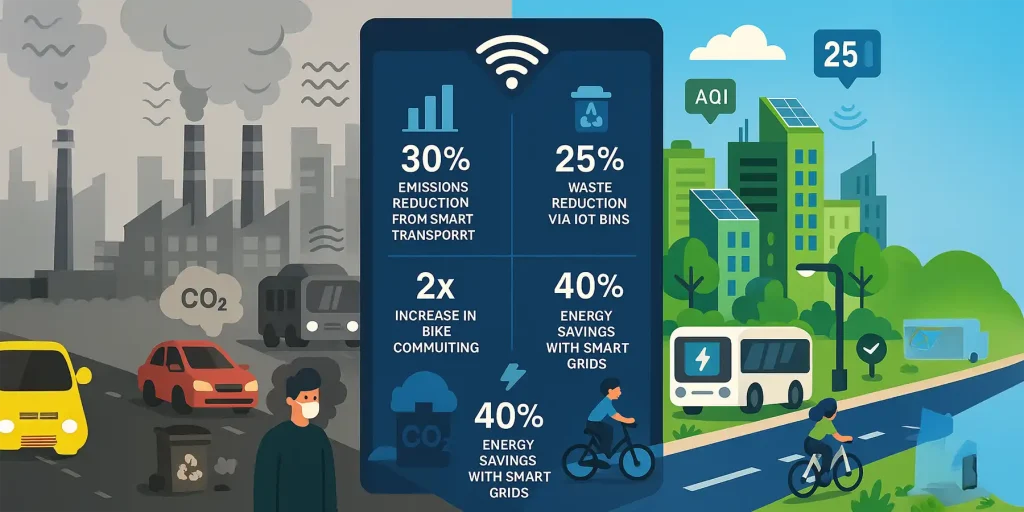
In short: Smart Cities Cutting Pollution use advanced sensors, achieving up to 99% accuracy in forecasting key environmental conditions.
Бесплатная экспресс-проверка: оценка систем мониторинга, оценки и обучения (M&E и MEAL) позволяет примерно за 10 минут получить балл вашей системы и узнать, какие пробелы следует устранить в первую очередь.
Глобальное загрязнение уносит более 9 миллионов жизней ежегодно, делая системы экологического мониторинга фундаментальной инфраструктурой для наших все более урбанизированных обществ. Проблемы городского загрязнения продолжают обостряться, оказывая прямое влияние на показатели общественного здравоохранения, экологической устойчивости и стандарты качества жизни в столичных регионах. По мере развития технологий превращение «умных» городов в инструменты резкого снижения уровня загрязнения становится реальностью.
Муниципальные органы власти теперь имеют возможность осуществлять мониторинг опасных загрязнителей, включая концентрации диоксида азота, диоксида серы, углекислого газа и твердых частиц (PM2.5 и PM10), с помощью сложной инфраструктуры экологического мониторинга IoT. Эти сети мониторинга в реальном времени генерируют практические аналитические данные, которые обеспечивают проактивные протоколы управления загрязнением и стратегические инициативы городского развития. Умные города, сокращающие загрязнение, используют передовые технологии экологических датчиков, достигающие исключительных стандартов точности, причем некоторые системы демонстрируют показатели точности 99% при прогнозировании критических экологических параметров. Внедрение дистанционного экологического мониторинга позволяет городам выявлять токсичные вещества, обнаруживать случаи химического загрязнения и отслеживать распространение вредных загрязнителей, что приводит к повышению возможностей управления экологическими рисками. Следовательно, системы экологического мониторинга центров обработки данных стали незаменимыми элементами муниципальных стратегий, направленных на создание более здоровых и устойчивых городских экосистем благодаря усилиям умных городов по сокращению загрязнения.
Urban Pollution Sources and the Critical Imperative for Intelligent Monitoring
Urban atmospheric contamination has manifested as a profound public health crisis, resulting in millions of premature fatalities across global metropolitan areas annually. The intricate composition of airborne pollutants necessitates sophisticated environmental monitoring infrastructures capable of identifying contamination sources and facilitating implementation of targeted remediation strategies that contribute to smart cities cutting pollution.
Vehicle emissions and industrial discharge hotspots
The transportation sector maintains its position as the predominant contributor to urban atmospheric pollution, generating approximately 75% of volatile organic compound (VOC) emissions by total weight. Transportation activities account for nearly 24% of global CO2 emissions, with projections indicating continued growth as mobility demands expand. Vehicular sources release particulate matter, particularly PM2.5 concentrations, that accumulate in high-traffic corridors, establishing pollution hotspots requiring focused monitoring methodologies. These data-driven approaches are central to smart cities cutting pollution.
Industrial operations create concentrated contamination zones where pollutant levels substantially surpass ambient environmental conditions. Research conducted within package printing and fine chemical industrial complexes reveals VOC concentrations ranging from 1.62 to 2.75 times greater than measurements recorded in adjacent urban districts. Such industrial hotspots generate significant environmental equity challenges, potentially exposing neighboring residential populations to disproportionate health risks. Real-time environmental monitoring infrastructures equipped with strategically positioned sensors possess the capability to identify these concentration variations, facilitating accurate source attribution and enabling targeted intervention protocols adopted by smart cities cutting pollution.
Новые загрязняющие вещества: микропластик и летучие органические соединения
Современная городская среда сталкивается с новыми категориями загрязнителей, которые создают новые сложности мониторинга, выходящие за рамки традиционного отслеживания загрязняющих веществ. Частицы микропластика, определяемые как пластиковые фрагменты размером менее 5 мм в длину, получили глобальное распространение в городских экосистемах, простираясь от антарктических регионов до пустынных ландшафтов. Пандемия COVID-19 значительно усилила загрязнение микропластиком за счет расширения использования средств индивидуальной защиты, создав во всем мире от 4,4 до 15,1 млн тонн дополнительных плохо управляемых отходов. Умные города, борющиеся с загрязнениями, все чаще интегрируют возможности отслеживания микропластика в свои IoT-структуры.
Volatile organic compounds constitute another escalating concern within metropolitan atmospheric systems. VOC emissions originate from varied industrial sources, including petroleum refining operations (11%), off-road transportation activities (7%), and conventional vehicular transport (6%). These chemical compounds facilitate ground-level ozone development and secondary organic aerosol formation, subsequently compromising regional air quality standards. High-density environmental sensor deployments now enable tracking of these previously unmonitored pollutants, delivering essential data resources for public health protection initiatives, as practiced by smart cities cutting pollution.
Climate change effects pollution dispersion
Atmospheric conditions exert substantial influence over pollutant transport patterns and concentration dynamics within urban environments. Heatwave conditions create stable atmospheric stratification phenomena that intensify urban heat island effects while concurrently elevating pollutant concentration levels. Thermal water body conditions can produce pollutant increases of 100% at street-level measurements, illustrating how climatic variables amplify pollution exposure impacts.
Urban architectural features such as street canyon configurations trap airborne pollutants, generating localized zones characterized by degraded air quality conditions. Concurrently, urban vegetation emissions contribute to ozone concentration increases of up to 7.4% during peak daylight periods, demonstrating the complex interdependencies between natural ecosystem processes and built environment factors that IoT environmental monitoring systems must incorporate when analyzing pollution distribution patterns. These integrations are crucial for smart cities cutting pollution effectively.
IoT Environmental Sensor Networks and Architectural Frameworks
Technical innovations within IoT ecosystems have established sophisticated environmental monitoring infrastructures that address fundamental limitations inherent in conventional measurement approaches. These interconnected sensor architectures deliver granular insights into urban pollution dynamics through strategically distributed monitoring networks, enabling smart cities cutting pollution at scale.
Недорогие датчики твердых частиц и сложности их калибровки
Electrochemical sensors represent essential infrastructure components within high-density environmental monitoring deployments. While these sensors offer cost-effectiveness and deployment flexibility, they present substantial calibration challenges that directly influence data quality and reliability. Research indicates that, sensors frequently demonstrate reduced sensitivity to key pollutants including NO2 and O3. This degradation represents an irreversible phenomenon, requiring systematic identification and replacement protocols for non-functional units to preserve data integrity standards.
Трудности калибровки обусловлены главным образом факторами окружающей среды, в частности колебаниями температуры, которые существенно влияют на характеристики производительности датчиков. Точное преобразование из частей на миллиард (ppb) в мкг/м³ требует применения специфических коэффициентов конверсии (1.995 для O3, 1.912 для NO2) в стандартных атмосферных условиях. Проблемы перекрестной чувствительности еще больше осложняют развертывание датчиков, поскольку устройства обнаружения газа, предназначенные для определенных загрязнителей, часто проявляют чувствительность к альтернативным загрязняющим веществам, что является известной проблемой для умных городов, борющихся с загрязнением.
Wireless sensor networks for comprehensive urban coverage
Беспроводные сенсорные сети предоставляют исключительные возможности для оценки загрязнения в мегаполисах благодаря автономной организации, энергетической независимости и превосходным характеристикам пространственно-временного разрешения. Традиционное оборудование для мониторинга качества воздуха, обеспечивая точность измерений, имеет ограничения при развертывании из-за требований к размеру и значительных капитальных затрат. ВСС обеспечивают всесторонний охват в различных городских условиях за счет стратегий распределенного размещения датчиков.
Field validation studies reveal high correlations among measurements from collocated nodes across varied temporal periods, indicating measurement consistency throughout WSN deployments. These networks demonstrate particular effectiveness in detecting intra-urban pollution concentration zones through their responsiveness to localized environmental conditions, making them a backbone of smart cities cutting pollution.
Vehicular sensor networks for dynamic data acquisition
Сети автомобильных датчиков включают интеллектуальные бортовые сенсорные модули и придорожные инфраструктурные блоки, которые обеспечивают непрерывный сбор данных во время движения транспортных средств. Эти мобильные платформы мониторинга дополняют сети стационарных станций, устраняя ограничения пространственного покрытия в городских агломерациях. Системы муниципального транспорта, оснащенные сенсорными пакетами COCAL, содержащими устройства для измерения качества воздуха, передают собранные данные через сотовые сети на централизованные пункты обработки, что является ключевым инструментом для умных городов в деле снижения загрязнения.
Data center environmental monitoring for computational processing
Backend computational processing depends upon specialized environmental monitoring infrastructures deployed within data center facilities. These installations employ temperature and humidity sensor arrays connected through communication platforms including LoRa networks. Such systems demonstrate capability to correlate thermal gradient patterns with energy utilization metrics, facilitating dynamic cooling system adjustments that supersede traditional static configuration approaches. These backend systems are essential for the real-time responsiveness required by smart cities cutting pollution.
Metropolitan Success Stories: Documented Pollution Reduction Achievements Through Strategic IoT Implementation
Multiple metropolitan regions have successfully deployed advanced environmental monitoring systems, achieving substantial reductions in urban pollution concentrations. These documented implementations illustrate how strategic data collection methodologies produce measurable improvements in urban air quality standards.
Интегрированная архитектура мониторинга и нормативно-правовая база Пекина
Кризис качества воздуха в Пекине, затрагивающий более двадцати миллионов жителей, потребовал применения сложных решений для мониторинга, способных справиться со сложной динамикой загрязнения. Муниципальные власти учредили проект AIRPOLL-Beijing, объединивший несколько методологий мониторинга в рамках единой структуры:
- Receptor modeling techniques for pollution source identification through chemical fingerprinting
- Протоколы измерения потоков для количественной оценки общих объемов сброса загрязняющих веществ
- Three-dimensional spatial analysis utilizing innovative sensor deployment strategies
- Протоколы интеграции наземных измерений с уникальной 325-метровой мониторинговой башней в центре Пекина
Эта интегрированная инфраструктура мониторинга позволила гибридной модели прогнозирования ARIMA в Пекине достичь выдающихся возможностей прогнозирования PM2.5, продемонстрировав улучшение показателей метрики RMSE на 99,23% по сравнению с традиционными подходами прогнозирования. Повышенная точность прогнозирования способствовала реализации целевых стратегий вмешательства, что в конечном итоге привело к зафиксированному в Пекине снижению концентрации загрязнителей атмосферного воздуха на 50%.
Regulatory integration proved equally significant, with municipal authorities implementing residential heating subsidies to encourage transitions from coal-based to natural gas systems, complemented by comprehensive public education initiatives addressing health impact awareness. This demonstrates how collaboration with international consulting organizations can accelerate pollution reduction outcomes through specialized technical expertise and strategic policy development guidance.
Delhi’s Satellite-Ground Sensor Integration Model
Delhi’s monitoring approach differs from conventional single-source methodologies by implementing hybrid data fusion techniques that combine satellite observations with terrestrial sensor networks. This integrated model ensures comprehensive spatial coverage while maintaining measurement accuracy through cross-validation protocols between multiple monitoring platforms.
Copenhagen’s Intelligent Traffic Management and Air Quality Integration
Copenhagen established itself as Scandinavia’s pioneering municipality to deploy intelligent traffic signal systems across all intersection points. This sophisticated infrastructure prioritizes bicycle transportation and public transit systems, producing documented 5-20% travel time reductions for public transport users and 10% efficiency improvements for cycling commuters.
Муниципальные системы экологического мониторинга в реальном времени непрерывно отслеживают основные загрязняющие вещества, включая концентрации оксидов азота, угарного газа, углекислого газа, PM10 и PM2.5 на ключевых перекрестках. Алгоритмы оптимизации дорожного движения затем корректируют режимы работы светофоров на основе собранных данных о качестве воздуха. Подход Копенгагена представляет собой фундаментальный сдвиг в философии управления транспортом, устанавливая интенсивность движения велосипедов в качестве основного базового показателя вместо метрик, ориентированных на автомобили.
Sustainable Infrastructure and Future-Ready Environmental Intelligence Systems
Long-term viability of IoT environmental monitoring networks depends on resolving energy constraints, enhancing analytical sophistication, and strengthening stakeholder collaboration. These technological advancements will determine municipal capacity to sustain already-achieved pollution reduction outcomes while expanding monitoring capabilities.
Energy harvesting for long-term sensor deployment
Energy harvesting represents a strategic solution for extending wireless sensor network operational lifecycles. Ambient energy capture; encompassing thermal, photovoltaic, mechanical, radio frequency, and biological sources – enables sensor autonomy spanning multiple years without battery maintenance requirements. Battery-free system development utilizing capacitors and supercapacitors gains momentum, particularly piezoelectric technology implementations. These systems generate approximately one milliwatt under standard operating conditions while delivering energy provision comparable to long-life primary battery alternatives.
AI-based forecasting models for pollution prediction
Искусственный интеллект коренным образом изменила стандарты точности прогнозирования загрязнения. Алгоритмы случайного леса занимают лидирующие позиции в современной отрасли, демонстрируя в актуальных исследовательских применениях точность до 98.2%. Методологии машинного обучения улучшают интерпретацию экологических данных за счет обеспечения более глубокого понимания, точности прогнозирования и стратегий снижения рисков загрязнения. В Хошимине развернуты модели на базе искусственного интеллекта, обеспечивающие почасовые прогнозы и прогнозы скользящего среднего PM2.5 на 24 часа с помощью специализированных мобильных приложений, которые предупреждают граждан об ухудшении качества воздуха. Гибридные архитектуры моделей искусственного интеллекта неизменно превосходят производительность одномодельных систем в задачах прогнозирования загрязнения.
Гражданская наука и управляемые сообществами сенсорные сети
Sensor.Community demonstrates how contributor-driven global sensor networks generate open environmental datasets. Citizen engagement expands data collection geographical scope, establishing comprehensive urban area coverage. Organizations currently evaluate citizen science-based air quality network feasibility for wildfire crisis management applications. These collaborative initiatives create synergistic environments where community stakeholders, municipal authorities, and urban planning professionals collaborate to identify pollution sources and develop targeted intervention strategies.
Нормативно-правовая база для систем мониторинга окружающей среды в реальном времени
Cities require robust policy architectures supporting real-time monitoring effectiveness. Blockchain technology ensures environmental data security and manipulation resistance. Governments must establish proactive data governance protocols protecting sensitive information assets. Many municipalities now engage international consulting firms to develop comprehensive monitoring strategies addressing sensor interoperability challenges, data security protocols, and regulatory standardization requirements.
Strategic Implications and Future Trajectories
Развертывание систем экологического мониторинга на базе Интернета вещей (IoT) доказало свою операционную эффективность в крупнейших мировых мегаполисах, позволив муниципальным администрациям добиться существенных результатов в снижении уровня загрязнения. Эти взаимосвязанные инфраструктуры мониторинга демонстрируют исключительные возможности в отслеживании концентраций диоксида азота, диоксида серы, углекислого газа и твердых частиц с беспрецедентными стандартами точности. Тематические исследования в мегаполисах, включая комплексную программу Пекина, позволившую снизить уровень загрязнения воздуха до 50%, и интеллектуальную оптимизацию дорожного движения в Копенгагене, сократившую время поездок на общественном транспорте на 5–20%, подтверждают стратегическую ценность этих технологических внедрений.
The sustained effectiveness of these monitoring systems necessitates addressing several foundational requirements. Energy harvesting technologies must evolve to support extended sensor deployment cycles without frequent maintenance interventions. Predictive modeling capabilities continue advancing through artificial intelligence applications, with Random Forest algorithms already demonstrating 98.2% accuracy in pollution forecasting applications. Community-driven data collection initiatives such as Sensor.Community extend monitoring coverage while establishing collaborative frameworks between citizens, municipal authorities, and urban development specialists.
Future municipal strategies require careful integration of technological innovation with pragmatic implementation methodologies. Comprehensive policy frameworks must establish secure data governance protocols and regulatory standardization measures to support real-time monitoring operations. The maturation of these technologies promises enhanced pollution reduction capabilities, ultimately establishing healthier, more sustainable metropolitan environments for urban populations worldwide.
The evolution from isolated monitoring installations to interconnected sensor ecosystems represents a paradigmatic shift in municipal pollution management approaches. This transformation enables precise pollution source identification, targeted intervention strategies, and evidence-based policy development that serves urban community interests. Through continuous refinement of environmental monitoring capabilities, metropolitan regions maintain exceptional potential for addressing contemporary urban pollution challenges with increasing effectiveness and strategic precision.
Смотреть



Know people who should read this? Become an Ambassador or write with Risalat.
Партнеры в успехе проектов с 2011 года: диагностика, консультационная поддержка и прикладное обучение для министерств, государственных ведомств и проектных команд.
Нужна помощь, чтобы применить это на практике?
Начните с бесплатной 10-минутной диагностики или обратитесь к нашим экспертам.