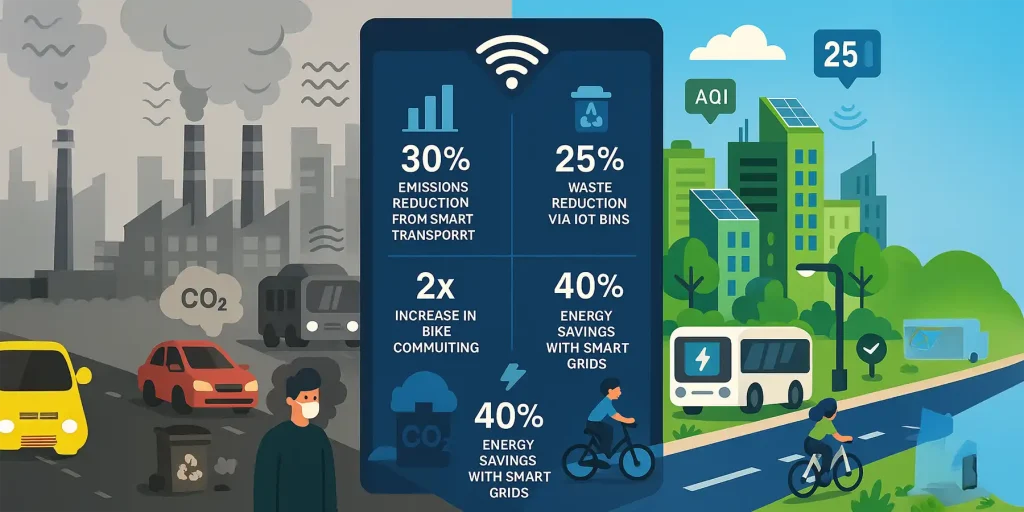
In short: Smart Cities Cutting Pollution use advanced sensors, achieving up to 99% accuracy in forecasting key environmental conditions.
فحص ذاتي مجاني: يمنحك تقييم المتابعة والتقييم والتعلم (M&E and MEAL) درجة لنظام المتابعة والتقييم والتعلم الخاص بك والثغرات التي يجب سدها أولاً، في غضون 10 دقائق تقريباً.
تتسبب التلوث العالمي في وفاة أكثر من 9 ملايين شخص سنويًا، مما يجعل أنظمة الرصد البيئي بنية أساسية أساسية لمجتمعاتنا المتزايدة التحضر. تستمر تحديات التلوث الحضري في التصاعد، مما يخلق عواقب مباشرة على نتائج الصحة العامة، ومقاييس الاستدامة البيئية، ومعايير جودة السكن عبر المناطق الحضرية. مع تطور التكنولوجيا، يصبح تحول المدن الذكية لتقليل التلوث بشكل جذري حقيقة واقعة.
تتمتع السلطات البلدية الآن بالقدرة على رصد الملوثات الخطرة، بما في ذلك ثنائي أكسيد النيتروجين، ثنائي أكسيد السفر، ثنائي أكسيد الكربون، وتركيزات المواد الدقيقة (PM2.5 وPM10) من خلال البنى التحتية المتطورة لرصد البيئة عبر إنترنت الأشياء. تولد شبكات الرصد الفوري هذه معلومات قابلةتنفيذ تتيح بروتوكولات إدارة التلوث الاستباقية ومبادرات التنمية الحضرية الاستراتيجية. تستخدم المدن الذكية لتقليل التلوث تقنيات استشعار بيئي متقدمة لتحقيق معايير دقة استثنائية، حيث تظهر بعض الأنظمة معدلات دقة تصل إلى 99% عند التنبؤ بالمعايير البيئية الحرجة. تتيح تطبيقات الرصد البيئي عن بعد للمدن تحديد المواد السامة، واكتشاف حوادث التلوث الكيميائي، وتتبع توزيعات الملوثات الضارة، مما يؤدي إلى قدرات فائقة في إدارة المخاطر البيئية. ونتيجة لذلك، أصبحت أنظمة رصد البيئة لمراكز البيانات عناصر لا غنى عنها ضمن الاستراتيجيات البلدية المصممة لإنشاء أنظمة بيئية حضرية أكثر صحة واستدامة من خلال جهود المدن الذكية في الحد من التلوث.
Urban Pollution Sources and the Critical Imperative for Intelligent Monitoring
Urban atmospheric contamination has manifested as a profound public health crisis, resulting in millions of premature fatalities across global metropolitan areas annually. The intricate composition of airborne pollutants necessitates sophisticated environmental monitoring infrastructures capable of identifying contamination sources and facilitating implementation of targeted remediation strategies that contribute to smart cities cutting pollution.
Vehicle emissions and industrial discharge hotspots
The transportation sector maintains its position as the predominant contributor to urban atmospheric pollution, generating approximately 75% of volatile organic compound (VOC) emissions by total weight. Transportation activities account for nearly 24% of global CO2 emissions, with projections indicating continued growth as mobility demands expand. Vehicular sources release particulate matter, particularly PM2.5 concentrations, that accumulate in high-traffic corridors, establishing pollution hotspots requiring focused monitoring methodologies. These data-driven approaches are central to smart cities cutting pollution.
Industrial operations create concentrated contamination zones where pollutant levels substantially surpass ambient environmental conditions. Research conducted within package printing and fine chemical industrial complexes reveals VOC concentrations ranging from 1.62 to 2.75 times greater than measurements recorded in adjacent urban districts. Such industrial hotspots generate significant environmental equity challenges, potentially exposing neighboring residential populations to disproportionate health risks. Real-time environmental monitoring infrastructures equipped with strategically positioned sensors possess the capability to identify these concentration variations, facilitating accurate source attribution and enabling targeted intervention protocols adopted by smart cities cutting pollution.
الملوثات الناشئة: اللدائن الدقيقة والمركبات العضوية المتطايرة
Contemporary urban environments confront emerging contaminant categories that introduce novel monitoring complexities beyond conventional pollutant tracking. Microplastic particles defined as plastic fragments measuring less than 5mm in length have achieved global penetration across urban ecosystems, extending from Antarctic regions to desert environments. The COVID-19 pandemic significantly intensified microplastic contamination through expanded personal protective equipment utilization, generating an estimated 4.4 to 15.1 million tons of additional mismanaged waste materials worldwide. Smart cities cutting pollution increasingly integrate microplastic tracking capabilities into their IoT frameworks.
Volatile organic compounds constitute another escalating concern within metropolitan atmospheric systems. VOC emissions originate from varied industrial sources, including petroleum refining operations (11%), off-road transportation activities (7%), and conventional vehicular transport (6%). These chemical compounds facilitate ground-level ozone development and secondary organic aerosol formation, subsequently compromising regional air quality standards. High-density environmental sensor deployments now enable tracking of these previously unmonitored pollutants, delivering essential data resources for public health protection initiatives, as practiced by smart cities cutting pollution.
Climate change effects pollution dispersion
Atmospheric conditions exert substantial influence over pollutant transport patterns and concentration dynamics within urban environments. Heatwave conditions create stable atmospheric stratification phenomena that intensify urban heat island effects while concurrently elevating pollutant concentration levels. Thermal water body conditions can produce pollutant increases of 100% at street-level measurements, illustrating how climatic variables amplify pollution exposure impacts.
Urban architectural features such as street canyon configurations trap airborne pollutants, generating localized zones characterized by degraded air quality conditions. Concurrently, urban vegetation emissions contribute to ozone concentration increases of up to 7.4% during peak daylight periods, demonstrating the complex interdependencies between natural ecosystem processes and built environment factors that IoT environmental monitoring systems must incorporate when analyzing pollution distribution patterns. These integrations are crucial for smart cities cutting pollution effectively.
IoT Environmental Sensor Networks and Architectural Frameworks
Technical innovations within IoT ecosystems have established sophisticated environmental monitoring infrastructures that address fundamental limitations inherent in conventional measurement approaches. These interconnected sensor architectures deliver granular insights into urban pollution dynamics through strategically distributed monitoring networks, enabling smart cities cutting pollution at scale.
أجهزة استشعار الجسيمات الدقيقة (PM) منخفضة التكلفة وتعقيدات المعايرة
Electrochemical sensors represent essential infrastructure components within high-density environmental monitoring deployments. While these sensors offer cost-effectiveness and deployment flexibility, they present substantial calibration challenges that directly influence data quality and reliability. Research indicates that, sensors frequently demonstrate reduced sensitivity to key pollutants including NO2 and O3. This degradation represents an irreversible phenomenon, requiring systematic identification and replacement protocols for non-functional units to preserve data integrity standards.
تنشأ صعوبات المعايرة بشكل أساسي من المتغيرات البيئية، لا سيما تقلبات درجات الحرارة التي تؤثر بشكل كبير على خصائص أداء المستشعر. يتطلب التحويل الدقيق من جزء في البิลيون إلى ميكروغرام/م³ عوامل تحويل محددة (1.995 للأوزون O3، و 1.912 لثنائي أكسيد النيتروجين NO2) في ظل الظروف الجوية القياسية. تعقد مشكلات الحساسية المتبادلة نشر المستشعرات بشكل أكبر، حيث تُظهر وحدات الكشف عن الغاز المصممة لملوثات معينة غالباً استجابة للملوثات البديلة، وهو شاغل معروف للمدن الذكية التي تقلل التلوث.
Wireless sensor networks for comprehensive urban coverage
توفر شبكات الاستشعار اللاسلكية إمكانيات استثنائية لتقييم التلوث الحضري من خلال التنظيم الذاتي، والاستقلال بالطاقة، وخصائص دقة المكان والزمان الفائقة. تعاني معدات مراقبة جودة الهواء التقليدية، على الرغم من توفيرها لدقة القياس، من قيود النشر بسبب متطلبات الحجم والتكاليف الرأسمالية الكبيرة. تمكن شبكات الاستشعار اللاسلكية تغطية شاملة عبر بيئات حضرية متنوعة من خلال استراتيجيات وضع المستشعرات الموزعة.
Field validation studies reveal high correlations among measurements from collocated nodes across varied temporal periods, indicating measurement consistency throughout WSN deployments. These networks demonstrate particular effectiveness in detecting intra-urban pollution concentration zones through their responsiveness to localized environmental conditions, making them a backbone of smart cities cutting pollution.
Vehicular sensor networks for dynamic data acquisition
تتضمن شبكات أستشعار المركبات وحدات استشعار ذكية مدمجة على متن المركبات ووحدات البنية التحتية على جوانب الطرق التي تحافظ على جمع البيانات باستمرار أثناء تشغيل المركبة. تكمل منصات المراقبة المتنقلة هذه شبكات المحطات الثابتة من خلال معالجة قيود التغطية المكانية عبر المناطق الحضرية. تقوم أنظمة النقل البلدي المزودة بحزم مستشعرات COCAL التي تحتوي على أجهزة قياس جودة الهواء بنقل البيانات التي تم جمعها عبر شبكات الهاتف المحمول إلى مرافق المعالجة المركزية، وهي أداة رئيسية للمدن الذكية التي تقلل التلوث.
Data center environmental monitoring for computational processing
Backend computational processing depends upon specialized environmental monitoring infrastructures deployed within data center facilities. These installations employ temperature and humidity sensor arrays connected through communication platforms including LoRa networks. Such systems demonstrate capability to correlate thermal gradient patterns with energy utilization metrics, facilitating dynamic cooling system adjustments that supersede traditional static configuration approaches. These backend systems are essential for the real-time responsiveness required by smart cities cutting pollution.
Metropolitan Success Stories: Documented Pollution Reduction Achievements Through Strategic IoT Implementation
Multiple metropolitan regions have successfully deployed advanced environmental monitoring systems, achieving substantial reductions in urban pollution concentrations. These documented implementations illustrate how strategic data collection methodologies produce measurable improvements in urban air quality standards.
هنية المراقبة المتكاملة والإطار التنظيمي في بكين
أزمة جودة الهواء في بيجين، التي أثرت على أكثر من عشرين مليون مقيم، تطلبت حلول رصد متطورة يمكنها معالجة ديناميكيات التلوث المعقدة. أنشأت السلطات البلدية مشروع AIRPOLL-Beijing، والذي تضمن منهجيات رصد متعددة ضمن إطار موحد:
- Receptor modeling techniques for pollution source identification through chemical fingerprinting
- بروتوكولات قياس التدفق لتحديد الكميات الإجمالية لمعدلات تصريف الملوثات
- Three-dimensional spatial analysis utilizing innovative sensor deployment strategies
- بروتوكولات التكامل التي تربط القياسات القريبة من السطح برج المراقبة المميز بطول 325 متراً في وسط بكين
أتاحت بنية المراقبة المتكاملة هذه لـ نموذج التنبؤ الهجين ARIMA في بكين تحقيق قدرات ملحوظة في التنبؤ بالجسيمات الدقيقة PM2.5، مما أظهر تحسناً بنسبة 99.23% في مقاييس أداء جذر متوسط المربع (RMSE) مقارنة بأساليب التنبؤ التقليدية. سهلت دقة التنبؤ المحسنة استراتيجيات التدخل المستهدفة، مما ساهم في النهاية في تحقيق بكين للخفض الموثق بنسبة 50% في تراكيز الملوثات المحيطة.
Regulatory integration proved equally significant, with municipal authorities implementing residential heating subsidies to encourage transitions from coal-based to natural gas systems, complemented by comprehensive public education initiatives addressing health impact awareness. This demonstrates how collaboration with international consulting organizations can accelerate pollution reduction outcomes through specialized technical expertise and strategic policy development guidance.
Delhi’s Satellite-Ground Sensor Integration Model
Delhi’s monitoring approach differs from conventional single-source methodologies by implementing hybrid data fusion techniques that combine satellite observations with terrestrial sensor networks. This integrated model ensures comprehensive spatial coverage while maintaining measurement accuracy through cross-validation protocols between multiple monitoring platforms.
Copenhagen’s Intelligent Traffic Management and Air Quality Integration
Copenhagen established itself as Scandinavia’s pioneering municipality to deploy intelligent traffic signal systems across all intersection points. This sophisticated infrastructure prioritizes bicycle transportation and public transit systems, producing documented 5-20% travel time reductions for public transport users and 10% efficiency improvements for cycling commuters.
تقوم أنظمة الرصد البيئي في الوقت الفعلي للبلديات بتتبع الملوثات الأساسية باستمرار، بما في ذلك تركيزات أكسيد النيتروجين، أول أكسيد الكربون، ثاني أكسيد الكربون، PM10، و PM2.5 في مواقع التقاطع الإستراتيجية. وتعمل خوارزميات تحسين تدفق المرور لاحقاً على ضبط توقيت الإشارات بناءً على معلومات جودة الهواء التي تم جمعها. يمثل نهج كوبنهاغن تحولاً جذرياً في فلسفة إدارة النقل، حيث يتم إنشاء تدفق حركة المرور على الدراجات كخط أساس أساسي للقياس بدلاً من المقاييس المرتكزة على السيارات.
Sustainable Infrastructure and Future-Ready Environmental Intelligence Systems
Long-term viability of IoT environmental monitoring networks depends on resolving energy constraints, enhancing analytical sophistication, and strengthening stakeholder collaboration. These technological advancements will determine municipal capacity to sustain already-achieved pollution reduction outcomes while expanding monitoring capabilities.
Energy harvesting for long-term sensor deployment
Energy harvesting represents a strategic solution for extending wireless sensor network operational lifecycles. Ambient energy capture; encompassing thermal, photovoltaic, mechanical, radio frequency, and biological sources – enables sensor autonomy spanning multiple years without battery maintenance requirements. Battery-free system development utilizing capacitors and supercapacitors gains momentum, particularly piezoelectric technology implementations. These systems generate approximately one milliwatt under standard operating conditions while delivering energy provision comparable to long-life primary battery alternatives.
AI-based forecasting models for pollution prediction
الذكاء الاصطناعي غيرت أساسياً معايير دقة التنبؤ بالتلوث. تؤسس خوارزميات الغابات العشوائية القيادة الحالية للصناعة، مظاهرةً دقة تصل إلى 98.2% في تطبيقات البحوث المعاصرة. تعزز منهجيات التعلم الآلي تفسير البيانات البيئية من خلال تسهيل الفهم الأفضل، دقة التنبؤ، واستراتيجيات التخفيف من مخاطر التلوث. تنشر مدينة هو تشي منه نماذج مدعومة بالذكاء الاصطناعي تقدم توقعات كلية لساعة والتنبؤات المتحركة لمدة 24 ساعة للجسيمات الدقيقة PM2.5 من خلال تطبيقات محمولة مخصصة تنبه المواطنين بشأن تدهور جودة الهواء. تتفوق هندسة نماذج الذكاء الاصطناعي الهجينة باستمرار على أداء النموذج الفردي في تطبيقات التنبؤ بالتلوث.
علوم المواطن وشبكات المستشعرات التي تقودها المجتمعات
Sensor.Community demonstrates how contributor-driven global sensor networks generate open environmental datasets. Citizen engagement expands data collection geographical scope, establishing comprehensive urban area coverage. Organizations currently evaluate citizen science-based air quality network feasibility for wildfire crisis management applications. These collaborative initiatives create synergistic environments where community stakeholders, municipal authorities, and urban planning professionals collaborate to identify pollution sources and develop targeted intervention strategies.
الأطر السياسية لأنظمة الرصد البيئي في الوقت الفعلي
Cities require robust policy architectures supporting real-time monitoring effectiveness. Blockchain technology ensures environmental data security and manipulation resistance. Governments must establish proactive data governance protocols protecting sensitive information assets. Many municipalities now engage international consulting firms to develop comprehensive monitoring strategies addressing sensor interoperability challenges, data security protocols, and regulatory standardization requirements.
Strategic Implications and Future Trajectories
أثبتت عمليات نشر أنظمة الرصد البيئي لإنترنت الأشياء (IoT) فعاليتها التشغيلية في جميع أنحاء المناطق الحضرية العالمية، مما يتيح للإدارات البلدية تحقيق نتائج جوهرية في التخفيف من التلوث. تظهر بنى الرصد المترابطة هذه قدرة استثنائية في تتبع تركيزات ثاني أكسيد النيتروجين وثاني أكسيد السلفر وثاني أكسيد الكربون والجسيمات العالقة بمعايير دقة غير مسبوقة. تؤكد دراسات الحالة الحضرية، بما في ذلك إطار عمل بيكين الشامل الذي يحقق تخفيضات في التلوث تصل إلى 50% وتحسين حركة المرور الذكي في كوبنهاغن الذي يقلل أوقات رحلات النقل العام بنسبة 5-20%، القيمة الاستراتيجية لهذه التطبيقات التكنولوجية.
The sustained effectiveness of these monitoring systems necessitates addressing several foundational requirements. Energy harvesting technologies must evolve to support extended sensor deployment cycles without frequent maintenance interventions. Predictive modeling capabilities continue advancing through artificial intelligence applications, with Random Forest algorithms already demonstrating 98.2% accuracy in pollution forecasting applications. Community-driven data collection initiatives such as Sensor.Community extend monitoring coverage while establishing collaborative frameworks between citizens, municipal authorities, and urban development specialists.
Future municipal strategies require careful integration of technological innovation with pragmatic implementation methodologies. Comprehensive policy frameworks must establish secure data governance protocols and regulatory standardization measures to support real-time monitoring operations. The maturation of these technologies promises enhanced pollution reduction capabilities, ultimately establishing healthier, more sustainable metropolitan environments for urban populations worldwide.
The evolution from isolated monitoring installations to interconnected sensor ecosystems represents a paradigmatic shift in municipal pollution management approaches. This transformation enables precise pollution source identification, targeted intervention strategies, and evidence-based policy development that serves urban community interests. Through continuous refinement of environmental monitoring capabilities, metropolitan regions maintain exceptional potential for addressing contemporary urban pollution challenges with increasing effectiveness and strategic precision.
شاهد



Know people who should read this? Become an Ambassador or write with Risalat.
شركاء في نجاح المشاريع منذ 2011، نقدم التشخيص والدعم الاستشاري والتعلم التطبيقي للوزارات والهيئات العامة وفرق المشاريع.
هل تحتاج إلى مساعدة في تطبيق ذلك عملياً؟
ابدأ بتشخيص مجاني مدته 10 دقائق أو تحدث إلى خبرائنا.