Ключевые выводы
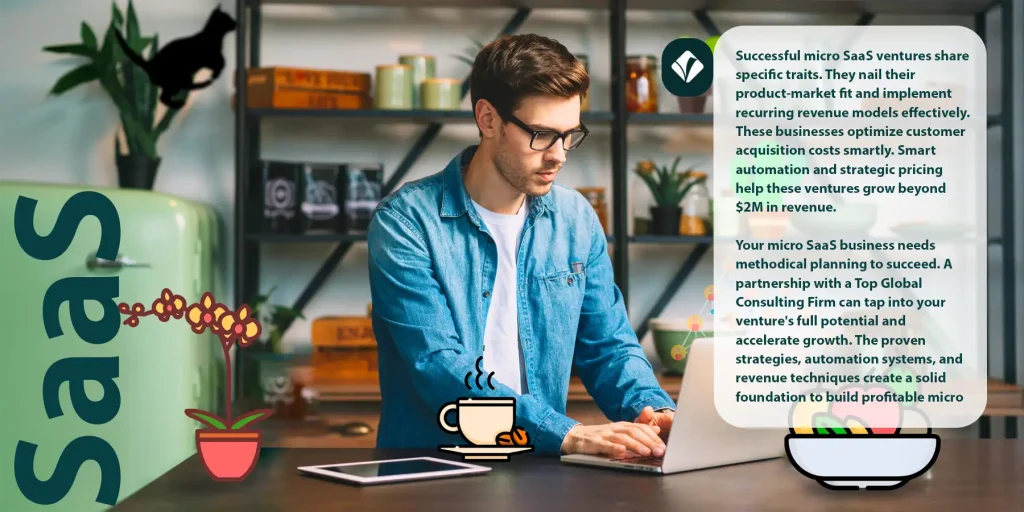
- Background and practical significance. Did you know that micro SaaS businesses can generate over $2 million in revenue with just one founder?
- Recurring Revenue Models. Micro SaaS businesses succeed through steady income from different recurring revenue models.
- Identifying Profitable Micro SaaS Ideas. The right market chance forms the foundations of a successful micro SaaS.
- Revenue Growth Strategies. Revenue growth strategies are vital to scale micro SaaS businesses past the $2M mark.
- Application for public agencies and donor-funded projects. Solo founders who run micro SaaS ventures need reliable automation systems to succeed.
In short: Micro SaaS Businesses Generate $2M+ Revenue with Just One Founder requires practical choices about resources, evidence and implementation. This guide explains the main opportunities and constraints, and how organisations can turn the underlying ideas into measurable decisions.
Background and practical significance
Background and practical significance
Did you know that micro SaaS businesses can generate over $2 million in revenue with just one founder? These lean, focused software ventures are changing the digital world and show impressive growth rates that average 25% yearly compared to standard SaaS companies.
The global SaaS market will reach $369.4 billion by 2024, which creates amazing opportunities for micro SaaS business ventures. These micro SaaS products stand out especially when you have minimal overhead costs and small teams. Many successful businesses in this space thrive with solo entrepreneurs who focus on specific market needs without needing extensive resources or funding.
Let's dive into building and scaling a profitable micro SaaS venture. We'll cover everything from spotting lucrative opportunities to setting up automation systems that help small teams run smoothly. You'll also see real success stories and proven strategies that have helped founders hit major revenue milestones.
Key Traits of 2M Micro SaaS Products
Micro SaaS products that generate $2M+ in revenue share specific traits that make them stand out. These characteristics are the foundations of their growth and staying power.
Product-Market Fit Indicators
Product-market fit is significant to micro SaaS success. The market pulls the product forward at the time it achieves this fit. Companies don't need to push their way into the market. You'll see clear signs when businesses grow more than 10% monthly after hitting $84K in Monthly Recurring Revenue (MRR). The product shows strong market fit when at least 40% of users say they would be "very disappointed" without access to it.
For micro saas businesses generate $2m+ revenue with just one founder, a useful implementation plan should explicitly consider learning outcomes, institutional roles and the time available for implementation. A responsible decision starts by identifying who experiences the problem, who has authority to respond, and what information would change the proposed action. These questions help separate an attractive concept from a feasible intervention.
For example, an organisation considering a new initiative can document the existing process, consult the people who use it, select a manageable pilot and record its baseline. The pilot should have a named owner, a delivery timetable, a complaints route and a realistic operating budget. Progress should be judged against observed results rather than the number of meetings, workshops or announcements completed.
Recurring Revenue Models
Recurring Revenue Models
Micro SaaS businesses succeed through steady income from different recurring revenue models. The subscription model works best to provide reliable cash flow and promote lasting customer relationships. The most effective implementations include:
Usage-based billing that tracks specific metrics like API calls or messages sent
Per-user pricing that grows with team size
Tiered plans that serve different customer segments
These models create profit margins between 70-90% because of low operating costs. The recurring revenue structure lets founders put profits back into automation and better products.
Low Customer Acquisition Cost
Profitable micro SaaS ventures excel at keeping customer acquisition costs (CAC) low. Traditional SaaS companies spend up to $3,300 to get one customer. Successful micro SaaS businesses reduce this cost through focused marketing and streamlined sales.
Understanding and targeting specific market segments helps keep CAC low. These companies get better results by:
Creating content marketing and SEO strategies that attract organic traffic
Using customer referrals, since 88% of people trust recommendations from their network
Growing through free trials and freemium models
Successful micro SaaS products keep customers longer, which means they need fewer new ones. This strategy makes sense because finding new customers costs five times more than keeping current ones.
Strong product-market fit, steady recurring revenue, and smart customer acquisition create the base for micro SaaS businesses to hit major revenue goals. Solo founders can build and grow their ventures while keeping high profits by focusing on these areas.
Building a Profitable Micro SaaS Business
A systematic approach to solving specific market problems helps solo founders start a micro SaaS business. Smart planning and execution can lead to profitable ventures with substantial revenue.
For micro saas businesses generate $2m+ revenue with just one founder, a useful implementation plan should explicitly consider costs, procurement options, stakeholder incentives and the risks of premature scaling. A responsible decision starts by identifying who experiences the problem, who has authority to respond, and what information would change the proposed action. These questions help separate an attractive concept from a feasible intervention.
For example, an organisation considering a new initiative can document the existing process, consult the people who use it, select a manageable pilot and record its baseline. The pilot should have a named owner, a delivery timetable, a complaints route and a realistic operating budget. Progress should be judged against observed results rather than the number of meetings, workshops or announcements completed.
Identifying Profitable Micro SaaS Ideas
Identifying Profitable Micro SaaS Ideas
The right market chance forms the foundations of a successful micro SaaS. Target growing markets where customers look for solutions actively. Pick one well-defined problem to solve rather than tackling multiple problems at once.
These steps will verify potential ideas:
Join online communities to spot recurring challenges
Research keywords on search engines to see what people need
Look at competitors' strengths and weaknesses
Personal expertise or direct contact with potential customers often leads to the best micro SaaS concepts. Working with industry peers and understanding freelance client problems can reveal valuable chances.
MVP Development Timeline
A well-laid-out timeline helps build a Minimum Viable Product (MVP) efficiently. Industry data shows you should build your original MVP in 2-3 weeks. The complete Minimum Lovable Product (MLP) usually takes 4-8 weeks to develop.
The MVP development has these distinct phases:
Planning and Research (1-2 weeks)
Market analysis
Business plan creation
Feature prioritization
Design Phase (7-10 days)
UI/UX design
Development and Testing (1-2 weeks)
Core functionality implementation
Обеспечение качества
Performance testing
Customer Feedback Integration
Customer feedback plays a vital role in growth. Successful micro SaaS businesses create reliable feedback loops that involve users through multiple channels.
These steps help integrate feedback effectively:
Add in-app feedback tools
Build dedicated feedback portals
Watch customer support interactions
Studies show a 5% increase in customer retention can boost profits by 25% to 95%. Gathering and acting on user feedback throughout the product lifecycle should be your priority. This approach helps refine features and improves user satisfaction, which leads to eco-friendly growth.
Direct communication with early adopters helps founders spot areas for improvement and adapt their products. This ongoing feedback loop arranges the product development with user needs and market requirements.
For micro saas businesses generate $2m+ revenue with just one founder, a useful implementation plan should explicitly consider quality assurance, privacy or environmental safeguards where relevant, and transparent reporting. A responsible decision starts by identifying who experiences the problem, who has authority to respond, and what information would change the proposed action. These questions help separate an attractive concept from a feasible intervention.
For example, an organisation considering a new initiative can document the existing process, consult the people who use it, select a manageable pilot and record its baseline. The pilot should have a named owner, a delivery timetable, a complaints route and a realistic operating budget. Progress should be judged against observed results rather than the number of meetings, workshops or announcements completed.
Revenue Growth Strategies
Revenue Growth Strategies
Revenue growth strategies are vital to scale micro SaaS businesses past the $2M mark. Solo founders can substantially increase their recurring revenue by analyzing and applying proven methods.
Pricing Model Optimization
Smart pricing requires constant monitoring and adjustments based on market conditions. Companies that use strategic pricing models see a 15-25% boost in gross profits in their first year.
The best ways to maximize revenue potential:
Create tiered pricing that lines up with customer segments
Study usage patterns to pick the right value metrics
Stay away from unlimited packages that might limit future growth
Picking the right value metrics for pricing tiers makes a big difference. To cite an instance, HubSpot found success with contact-based metrics, while Shopify boosted revenue by mixing subscription tiers with lower transaction fees at higher volumes.
Success comes from understanding what customers value. Analytical insights show companies consistently perform better when they use data-backed pricing instead of traditional cost-plus methods. Regular price testing helps find sweet spots that strike a chord with different customer groups.
Upselling Techniques
Smart upselling techniques are a great way to get more revenue for micro SaaS ventures. A mere 5% increase in customer retention through good upselling can boost profits by 25% to 95%.
Winning upselling approaches include:
Feature-based upgrades
Show premium features in navigation menus
Build strategic friction points at usage limits
Give time-sensitive promotional pricing
Usage-based prompts
Show upgrade notices when users near plan limits
Spotlight higher-tier feature benefits
Present clear upgrade value propositions
Dropbox shows how this works by reminding customers about storage upgrade benefits to stay on their radar. Loom boosts conversions by showing time-saving benefits and offering limited-time deals on AI features.
Timing can make or break your success. Upgrade options work best during key workflows, especially when users hit feature limits. On top of that, personalized upsell messages based on behavior patterns work better.
Quarterly business reviews give you perfect opportunities to discuss strategic upgrades. These sessions help match product capabilities with customer goals, which naturally leads to talks about advanced features and upgrades.
Micro SaaS founders can build lasting paths to better profits by thoughtfully using these revenue growth strategies. A mix of smart pricing models and strategic upselling creates a solid foundation to hit major revenue goals.
For micro saas businesses generate $2m+ revenue with just one founder, a useful implementation plan should explicitly consider the difference between a pilot that works once and a process that an institution can sustain. A responsible decision starts by identifying who experiences the problem, who has authority to respond, and what information would change the proposed action. These questions help separate an attractive concept from a feasible intervention.
For example, an organisation considering a new initiative can document the existing process, consult the people who use it, select a manageable pilot and record its baseline. The pilot should have a named owner, a delivery timetable, a complaints route and a realistic operating budget. Progress should be judged against observed results rather than the number of meetings, workshops or announcements completed.
Application for public agencies and donor-funded projects
Automation Systems for Solo Founders
Solo founders who run micro SaaS ventures need reliable automation systems to succeed. The right tools help entrepreneurs handle their business operations without hiring additional team members.
Customer Support Automation
Self-service support automation is the life-blood of growing customer interactions. Intercom helps founders create customizable ch
For micro saas businesses generate $2m+ revenue with just one founder, a useful implementation plan should explicitly consider the needs of implementing agencies, suppliers, community representatives and development partners. A responsible decision starts by identifying who experiences the problem, who has authority to respond, and what information would change the proposed action. These questions help separate an attractive concept from a feasible intervention.
For example, an organisation considering a new initiative can document the existing process, consult the people who use it, select a manageable pilot and record its baseline. The pilot should have a named owner, a delivery timetable, a complaints route and a realistic operating budget. Progress should be judged against observed results rather than the number of meetings, workshops or announcements completed.
For a ministry or project implementation unit, the practical sequence is to agree the public purpose, map responsibilities across agencies, identify procurement and safeguard requirements, and record the evidence needed for approval. Where a donor finances the work, the project team should use the applicable financing agreement, procurement framework and environmental and social commitments rather than assuming that one generic procedure applies to every project.
Consider a hypothetical donor-funded programme with a limited implementation period. The project manager could commission a baseline assessment, involve local stakeholders in defining service standards, test the proposed intervention in a small number of sites and evaluate performance before expansion. An independent review of expenditure and outcomes can reveal whether the programme is reaching intended beneficiaries and whether the implementing agency can maintain it after external financing ends.
Implementation checklist
- Define the decision and intended beneficiaries.
- Confirm legal, financial and operational constraints.
- Set a baseline and measurable indicators.
- Assign owners and establish stakeholder feedback.
- Pilot, evaluate and revise before scaling.
Часто задаваемые вопросы
What is the main practical benefit?
It helps decision-makers connect the topic to defined needs, realistic resources and observable outcomes.
What should an organisation assess first?
Start with a baseline, stakeholder needs, delivery responsibilities and applicable legal requirements.
Which implementation risks deserve attention?
Pay attention to affordability, institutional capacity, inclusion, data quality and ongoing maintenance.
How can progress be measured?
Use a small set of baseline-linked indicators, user feedback and periodic independent review.
How does this apply to donor-funded projects?
Apply the project financing agreement and relevant procurement, safeguard, monitoring and reporting obligations.
Знаете тех, кому стоит это прочитать? Станьте амбассадором Risalat или напишите статью вместе с Risalat под своим именем.
Партнеры в успехе проектов с 2011 года: диагностика, консультационная поддержка и прикладное обучение для министерств, государственных ведомств и проектных команд.
Нужна помощь, чтобы применить это на практике?
Начните с бесплатной 10-минутной диагностики или обратитесь к нашим экспертам.