Programme Introduction
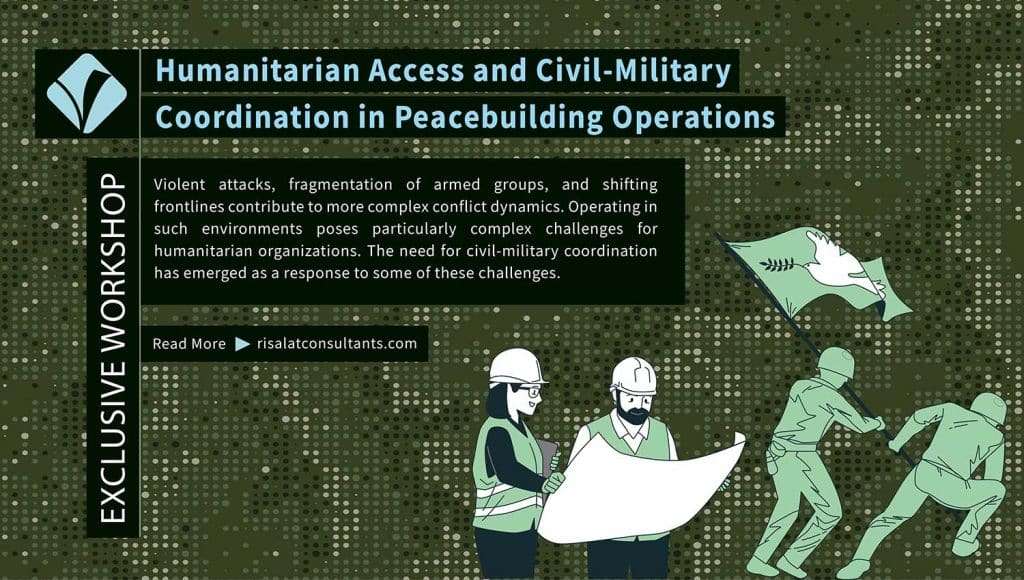
The absence of effective mechanisms that could mediate the root causes of conflict has resulted in a striking number of people in need of protection. Civilians are increasingly bearing the burden of armed conflicts. Violent attacks, fragmentation of armed groups, and shifting frontlines contribute to more complex conflict dynamics and heightened unpredictability. Operating in such environments poses particularly complex challenges for humanitarian organizations. The need for civil-military coordination has emerged as a response to some of these challenges.
Civil-military coordination is a collective term referring to all kinds of interactions between civilian organizations be it individual, national, or international with military forces. The dialogue between the two can help attain greater and more strategic goals related to conflict transformation and peacebuilding. Civil-military cooperation is essential to any peace operation as it lays the foundations for mission coordination and system-wide impact.
This programme in Warsaw, Poland has been exclusively developed by Risalat. It provides foundational knowledge regarding civil-military coordination in a wider peacebuilding operations context with specific emphasis made on humanitarian access, assistance, and protection. Upon the completion of this programme, its delegates will have a thorough understanding of concepts, principles, policies, and best practices in civil-military coordination and learn how to apply these in specific mission contexts.
Target Audience
This programme is aimed at:
- Humanitarian Workers and Mission Personnel
- Civil Affairs Officers
- Political Affairs Officers
- Military Officers
- Police Officers
- Any professional involved in CMC
Programme Objectives
Upon the successful completion of this exclusive workshop, its attendees shall be able to:
- Understand the nature and the need for civil-military coordination
- Assess the role of CMC in peace operations and other emergencies
- Understand the local response to conflicts
- Analyze the role of civil-military coordination in the protection of civilians and the communities as a whole
- Promote effective civil-military interactions in humanitarian emergencies
- Engage in the dialogue between the military and the civilians
- Learn how civil-military coordination contributes to the achievement of development goals
Programme Contents
First Day
- Understanding civil-military coordination, its nature, and its need
- Approaches to civil-military coordination; The use of force
- The full spectrum of peace operations
- Civil and Military partners in integrated peace operations
- UN civil-military coordination
- Military support in disasters, conflicts, and other complex emergencies
Second Day
- Peacebuilding Framework; Actors in the Peacebuilding Process
- Peacebuilding and Conflict Management
- Local Response to Conflicts; Civilians
- Coordination and Cooperation in Peace Operations
- UN civil-military coordination structures
Third Day
- Civil-Military Liaison
- Information Sharing
- Mission and Community Support
- Humanitarian Principles and CMC
- Protection of Civilians
Fourth Day
- Support to disarmament, Demobilization, and Integration
- Military Support and Development
- Project Management and CMC
- Civil-military communications
- Public Information and Disclosure
Fifth Day
Full-Day Practice and Exposure
The last day of the programme shall be entirely dedicated to practical assignments, panel discussions, case studies, and meetings with subject-matter experts involved in civil-military coordination. Real-life situations are to be discussed and analyzed to derive best practices and identify the ways for technical implementation. Guest speakers from humanitarian missions present their experiences and recurrent challenges in civil-military coordination.
Programme Methodology
This workshop builds upon modern adult-learning principles. It is centered around peer learning and group engagement. Formal presentations are supplemented by group work, several case studies, and active discussions around the most pressing topics of civil-military coordination.
£4,870 per participant · invoice and bank transfer · groups of 5 or more receive a discount
Five or more from one organisation: ask for the group rate on the invoice request.
Ten or more: an in-house version for your institution may cost less per person. Ask for an in-house quote.
Registration closes in 91 days (17 Jan 2027)
Host Country Profile
Poland follows the Oslo Guidelines on the use of foreign military and civil defense assets in emergency relief. The country utilizes its military logistical capacity to bring assistance to disaster areas. (E.g., in Nepal after the 2015 earthquake).
Poland is an active member of the NATO Civil-Military Co-operation Centre of Excellence (CCOE) and organizes civil-military affairs training for its NATO military personnel on a regular basis. This proves to be essential for the country as it participates regularly in international military coalitions.