Programme Overview
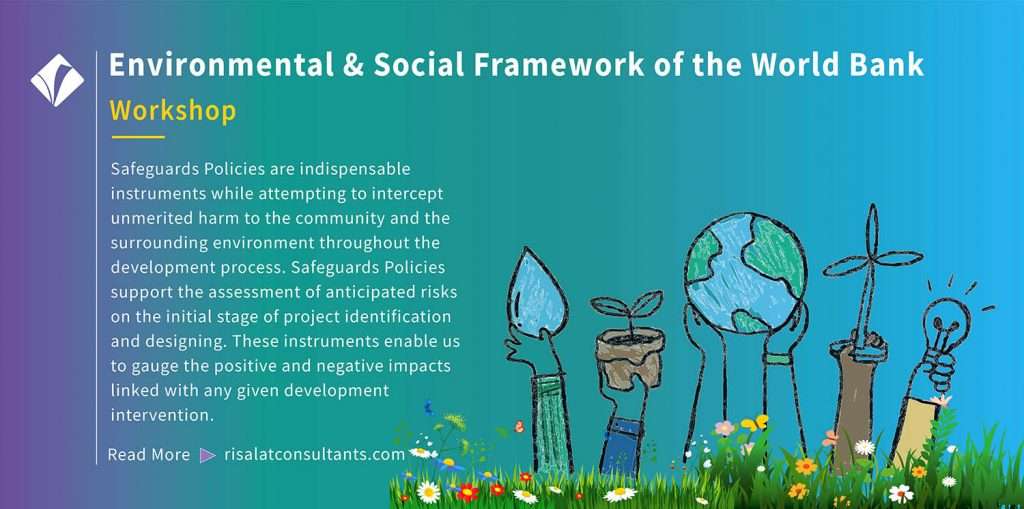
World Bank Environmental and Social Framework (ESF) Training focuses on strengthening the capacity of governments, project implementation units, development partners, and donor-funded project teams to effectively understand, apply, and manage environmental and social risk requirements across World Bank-financed projects.
As development financing increasingly emphasizes sustainability, accountability, and stakeholder protection, organizations implementing infrastructure, public sector, energy, transport, and social development projects must comply with strong environmental and social safeguards. Many institutions face challenges in understanding ESF requirements, managing environmental and social risks, stakeholder engagement, labor standards, land acquisition, community health and safety, and grievance redress systems.
This programme addresses these challenges by equipping participants with practical tools, internationally aligned frameworks, and strategic approaches to implementing the World Bank Environmental and Social Framework (ESF), including approaches applied in practical safeguards implementation frameworks covering risk assessment, compliance monitoring, stakeholder consultation, environmental and social commitment planning, and institutional safeguards management.
Participants will gain hands-on experience in environmental and social risk screening, ESF implementation planning, compliance systems, project monitoring, reporting obligations, and institutional coordination. The programme emphasizes real-world application, enabling participants to strengthen safeguards systems, improve project compliance, and support successful project delivery.
Additionally, strong environmental and social safeguards systems are essential for protecting communities, improving development outcomes, reducing implementation risks, and ensuring compliance with World Bank project financing requirements.
Target Audience
This programme is designed for professionals involved in project implementation, safeguards management, compliance, and donor-funded development programmes, including:
- Project implementation unit (PIU) staff
- Environmental and social safeguards specialists
- Government and public sector officials
- Infrastructure and public works project teams
- Procurement and contract management professionals
- Development partners and donor-funded project staff
- Monitoring and evaluation professionals
- Compliance officers and risk management teams
- NGOs and social development practitioners
- Consultants working on World Bank-financed projects
Tick what your team needs to be able to do.
Objectives of World Bank Environmental and Social Framework (ESF) Training
Upon completion, participants will be able to:
- Understand the structure and requirements of the World Bank ESF
- Apply Environmental and Social Standards (ESSs) effectively
- Conduct environmental and social risk screening and assessment
- Strengthen stakeholder engagement and consultation systems
- Improve labor management and community health safeguards
- Manage land acquisition, resettlement, and social inclusion requirements
- Strengthen grievance redress mechanisms and accountability systems
- Improve institutional compliance monitoring and reporting
- Align project delivery with donor safeguards requirements
- Develop practical ESF implementation and compliance action plans
World Bank Environmental and Social Framework (ESF) Training Structure & Content
- Introduction to the World Bank Environmental and Social Framework
- Understanding the Environmental and Social Standards (ESSs)
- Institutional responsibilities and borrower obligations
- Environmental and social risk classification
- Principles of proportionality, mitigation, and compliance
- Environmental impact assessment and mitigation planning
- Biodiversity protection and pollution prevention
- Resource efficiency and sustainable project implementation
- Community health and safety requirements
- Climate risk considerations within ESF implementation
- Stakeholder engagement and consultation planning
- Labor management procedures and working conditions
- Land acquisition and involuntary resettlement
- Vulnerable groups and social inclusion strategies
- Community grievance redress mechanisms
- Environmental and social commitment plans (ESCPs)
- Monitoring, supervision, and compliance reporting
- Contractor management and safeguards responsibilities
- Incident reporting and corrective action systems
- Internal controls and institutional accountability mechanisms
- Building institutional safeguards management systems
- Integrating ESF into project governance and procurement
- Strengthening cross-sector coordination and accountability
- Linking safeguards compliance with project performance outcomes
- Developing sustainable environmental and social compliance systems
Full day-by-day contents
First Day | Foundations of the Environmental and Social Framework
- Introduction to the World Bank Environmental and Social Framework
- Understanding the Environmental and Social Standards (ESSs)
- Institutional responsibilities and borrower obligations
- Environmental and social risk classification
- Principles of proportionality, mitigation, and compliance
Exercise: ESF risk identification and screening
Second Day | Environmental Risk Management and Assessment
- Environmental impact assessment and mitigation planning
- Biodiversity protection and pollution prevention
- Resource efficiency and sustainable project implementation
- Community health and safety requirements
- Climate risk considerations within ESF implementation
These systems are closely aligned with sustainable infrastructure and environmental governance frameworks used in major development projects.
Workshop: Environmental safeguards planning
Third Day | Social Risk Management and Stakeholder Engagement
- Stakeholder engagement and consultation planning
- Labor management procedures and working conditions
- Land acquisition and involuntary resettlement
- Vulnerable groups and social inclusion strategies
- Community grievance redress mechanisms
Strong social safeguards systems are further strengthened through effective community development planning and stakeholder coordination approaches, as demonstrated in real-world safeguards workshop experience across donor-funded development projects.
Case Study: Managing stakeholder risks in project implementation
Fourth Day | Institutional Compliance and Monitoring Systems
- Environmental and social commitment plans (ESCPs)
- Monitoring, supervision, and compliance reporting
- Contractor management and safeguards responsibilities
- Incident reporting and corrective action systems
- Internal controls and institutional accountability mechanisms
Modern safeguards systems also require stronger governance, documentation, and compliance oversight to ensure successful project delivery, supported by lessons from practical workshops on environmental and social safeguards across development projects.
Simulation: Compliance monitoring and corrective action response
Fifth Day | Institutional Strengthening and Strategic Integration
- Building institutional safeguards management systems
- Integrating ESF into project governance and procurement
- Strengthening cross-sector coordination and accountability
- Linking safeguards compliance with project performance outcomes
- Developing sustainable environmental and social compliance systems
Capstone Exercise: Institutional ESF implementation strategy
Effective ESF implementation integrates safeguards management, compliance systems, stakeholder engagement, and institutional accountability within project delivery systems.
Programme Methodology
This World Bank Environmental and Social Framework (ESF) Training uses an applied, practice-oriented methodology combining expert-led sessions, real-world case studies, simulations, and interactive workshops.
Participants will engage in hands-on exercises focused on environmental risk screening, social safeguards planning, compliance monitoring, stakeholder engagement, and institutional safeguards implementation to ensure direct application within their organizations.
Key learning methods include:
- Case studies from real World Bank-financed projects
- Practical safeguards planning exercises
- Compliance simulations and risk assessments
- Stakeholder consultation workshops
- Tools, templates, and ESF compliance frameworks
- Peer learning and institutional action planning sessions
Participants leave with practical tools and strategies to strengthen safeguards systems and improve ESF compliance across development projects. Participants can also explore practical implementation examples through this safeguards training video, showcasing real-world safeguards application and institutional learning outcomes.
Expected Outcomes of World Bank Environmental and Social Framework (ESF) Training
Participants will strengthen their ability to manage environmental and social risks and ensure compliance with World Bank safeguards requirements.
They will be able to:
- Improve ESF implementation and compliance systems
- Strengthen safeguards planning and institutional coordination
- Reduce project risks and implementation delays
- Improve stakeholder engagement and grievance management
- Strengthen environmental and social monitoring systems
- Enhance institutional transparency and accountability
- Support successful delivery of donor-funded development projects
£4,650 per participant · invoice and bank transfer · groups of 5 or more receive a discount
Five or more from one organisation: ask for the group rate on the invoice request.
Ten or more: an in-house version for your institution may cost less per person. Ask for an in-house quote.
Registration closes in 103 days (29 Jan 2027)
Institutional Application
This programme supports organizations in strengthening safeguards systems, improving ESF compliance, and reducing implementation risks across donor-funded and public sector development projects.
Participants will return with practical tools to improve project controls, strengthen safeguards accountability, and support effective environmental and social risk management.
Strong environmental and social compliance systems are essential for safeguarding communities, ensuring regulatory compliance, and delivering sustainable development outcomes.
These approaches are further strengthened through integrated governance, procurement, monitoring, and institutional performance systems aligned with international best practices.
Regional Relevance & Application of ESF Training
Environmental and social safeguards challenges continue to affect infrastructure investments, public sector programmes, and donor-funded development projects across rapidly developing regions where institutional systems and compliance mechanisms are evolving.
This World Bank Environmental and Social Framework (ESF) Training is highly relevant for professionals working in:
- Africa, where infrastructure expansion and donor-funded projects require strong safeguards compliance and stakeholder protection
- South Asia, where large-scale transport, energy, and public works programmes demand stronger environmental and social risk management
- Southeast Asia, where rapid urbanization and development financing require improved safeguards governance and project accountability
- Middle East, where major infrastructure and development investments require stronger compliance systems and social safeguards implementation
Across these regions, institutions face increasing pressure to improve safeguards compliance, strengthen accountability, and ensure alignment with international development financing standards.
This programme equips participants with practical tools and globally aligned methodologies to improve safeguards implementation, manage environmental and social risks effectively, and strengthen institutional performance across complex project environments.
Host Country Profile – Copenhagen
As one of Europe’s leading cities in sustainable urban development, climate resilience, and inclusive governance, Copenhagen offers valuable exposure to modern approaches in environmental safeguards, stakeholder engagement, social inclusion, and responsible project implementation, supported by real environmental and social safeguards workshop experiences in Copenhagen. Its strong institutional reputation makes it a highly respected destination for executive and government-focused professional training.
Denmark’s emphasis on sustainability, transparency, environmental protection, and social accountability aligns closely with global efforts to strengthen safeguards compliance and responsible development financing across public sector and donor-funded projects, supported by institutions such as State of Green and the Danish Ministry of Environment, which play key roles in advancing sustainable development, environmental governance, and responsible infrastructure planning.
Hosting this programme in Copenhagen allows participants to gain practical insights into international best practices in environmental and social safeguards management while benefiting from a professional, high-level, and sustainability-driven learning environment.
Course Deliverables
Participants will enjoy a comprehensive and high-quality experience designed to support effective learning, practical application, and long-term institutional impact.
Before the Programme
- Participant Pre-Assessment aligned with ESF and safeguards competencies
- Customized preparatory materials on World Bank safeguards systems
- Complimentary visa support and advisory
- Airport pickup and welcome assistance
- Accommodation with daily breakfast for the full programme duration
- Welcome networking dinner with participants and Risalat team
During the Programme
- Risalat Executive Training Kit including: bag, water bottle, coffee mug, t-shirt, cap, passport cover, pens, notebook, magnet, and keychain
- Mini Pad / Tablet preloaded with training materials (participants keep it)
- Comprehensive course manual and training materials
- ESF Implementation Toolkit including templates, compliance checklists, stakeholder engagement plans, and safeguards monitoring frameworks
- Sample reporting tools, safeguards dashboards, and compliance tracking templates
- Practical exercises, simulations, and group workshops
- Daily lunch and refreshments during training sessions
- Access to full training venue facilities and learning resources
- Access to online learning materials and post-session resources
- Field visit (where applicable) to observe safeguards implementation systems
- Entertaining city tour and cultural experience
After the Programme
- Certificate of Completion
- Risalat Programme Participation Recognition Award
- Post-training support and follow-up guidance
- Access to additional tools, templates, and updated safeguards resources
- Programme report and learning summary
Participants will leave equipped with practical tools, strategic frameworks, and applied knowledge to strengthen ESF compliance, improve safeguards systems, reduce project risks, and deliver stronger institutional development outcomes.
For group participation, customized delivery, or institutional engagement, contact Risalat Consultants International to secure your seats and tailored programme options. Limited availability ensures a focused and high-impact learning experience.