حقائق رئيسية
- المواعيد
- 1–5 فبراير 2027 (5 أيام)
- المكان
- TBD, San Jose, Costa Rica
- الرسوم لكل مشارك
- £4,930 (جنيه إسترليني)
- الدفع
- بالفاتورة والتحويل المصرفي
- إغلاق التسجيل
- 23 ديسمبر 2026
- الصيغة
- 5-day short course: a practical capacity-building programme for government, NGO and project teams in San Jose
- الشهادة
- شهادة إتمام
- الخيار المؤسسي
- نفّذه لفريقك، في المواعيد التي تناسبك
في هذه الصفحة 11 قسماً
نظرة عامة على البرنامج
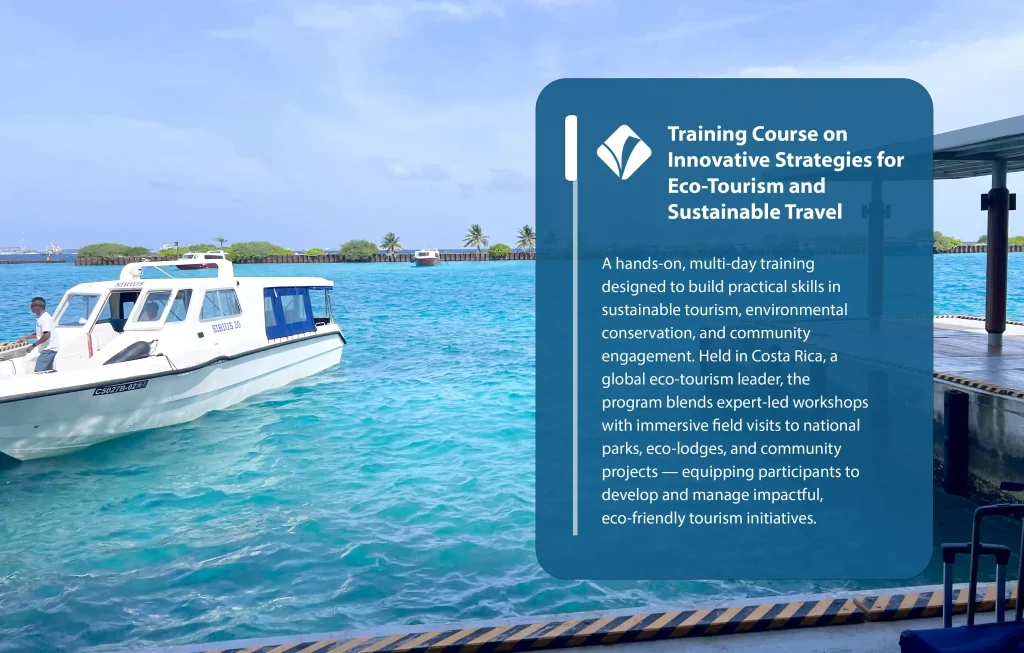
As the global tourism industry shifts toward sustainability, it is no longer enough to "do less harm". This training in San Jose dives into regenerative practices, inclusive travel design, and innovative green operations that empower destinations and businesses to thrive while protecting the planet. From digital storytelling to climate-conscious product design, participants explore creative, actionable, and measurable ways to reshape the future of travel.
Delivered by Risalat Consultants International in San Jose, Costa Rica, the programme combines expert-led sessions, real cases, and group work, allowing participants to apply what they learn directly to their own institutions. The course is suited for professionals and stakeholders engaged in sustainable tourism, conservation, and community development who require practical and current capabilities.
The curriculum links strategic principles with practical implementation, preparing professionals to address destination planning, heritage conservation, and environmental management while balancing the priorities of visitors and host communities.
يعزز البرنامج القدرات المؤسسية في:
- تعريف السياحة التجديدية
- Comparing sustainability vs. regeneration
- Introduction to regenerative frameworks and metrics
- Geo-cultural asset mapping techniques
- Community engagement and co-design strategies
- Indigenous partnerships in tourism development
- Building zero-waste hospitality systems
- الممارسات الأخلاقية في سياحة الطبيعة والمغامرات
- تخطيط الوجهات السياحية وإدارتها
- مبادئ السياحة المستدامة
- صون التراث وإدارته
- التسويق وتجربة الزوار
- الصناديق
- الجهة
- المشروع
- النتائج
- القياس والإبلاغ والتحقق
Why this matters now
تحتاج المؤسسات بشكل متزايد إلى مهنيين قادرين على:
- تخطيط وجهات سياحية توازن بين الزوار والمجتمعات المحلية
- حماية التراث وإدارته
- تسويق الوجهات السياحية وتحسين تجربة الزوار
- إشراك المجتمعات المحلية وتقاسم المنافع
- رصد أداء القطاع السياحي وآثاره
Strong tourism, culture and heritage systems help organisations:
- تنمية السياحة على نحو مستدام
- حماية التراث والبيئة
- خلق فرص عمل ومنشآت محلية
- استقطاب الاستثمارات والشركاء
من ينبغي له الحضور
صُمم هذا البرنامج من أجل:
- تصميم نماذج سياحة تجديدية تعيد البيئات المحلية وتمكن المجتمعات
- Apply geo-cultural mapping techniques for sustainable destination planning
- Develop zero-waste and circular economy strategies in tourism operations
- Integrate indigenous knowledge and ethical co-creation into travel experiences
- Innovate climate-conscious travel products and eco-certification practices
- Utilize digital storytelling and ethical branding to promote eco-destinations
- موظفو وزارات السياحة وهيئاتها
- مديرو الوجهات السياحية
- مسؤولو التراث والثقافة
- مسؤولو الحكومات المحلية
- أصحاب المنشآت السياحية ومديروها
- موظفو التسويق والترويج
- Sustainability officers and development organizations
حدّد ما يحتاج فريقك إلى القدرة على إنجازه.
أهداف البرنامج
بنهاية هذا البرنامج سيتمكن المشاركون من:
- شرح مبادئ السياحة المستدامة
- تخطيط الوجهة السياحية وإدارتها بالتعاون مع أصحاب المصلحة
- تطبيق ممارسات صون التراث وإدارته
- إعداد خطط للتسويق وتجربة الزوار
- إشراك المجتمعات المحلية وتقاسم المنافع بإنصاف
- Build partnerships with the private sector
- رصد أداء القطاع السياحي وآثاره
- الاستعداد للأزمات والمخاطر
- إعداد خطة عمل لوجهتهم
Training Structure & Contents
- تعريف السياحة التجديدية
- Comparing sustainability vs. regeneration
- Introduction to regenerative frameworks and metrics
- Global shifts and regenerative principles
- Environmental stewardship fundamentals
- Workshop: Regenerative Tourism & Global Trends: Applying It to Your Institution
- Small group application of daily methods to institutional examples and agreeing practical next steps
- Geo-cultural asset mapping techniques
- Community engagement and co-design strategies
- Indigenous partnerships in tourism development
- Stakeholder collaboration and benefit-sharing mechanisms
- Local context integration for destination planning
- ورشة عمل: رسم خرائط الوجهات وتمكين المجتمع: تطبيق ذلك على مؤسستك
- Small group application of daily methods to institutional examples and agreeing practical next steps
- Building zero-waste hospitality systems
- الممارسات الأخلاقية في سياحة الطبيعة والمغامرات
- Case study: Circular tourism hubs
- Developing circular economy strategies in operations
- Eco-certification standards and accountability
- دراسة حالة: العمليات الدائرية والتجارب الأخلاقية في الممارسة
- Participant analysis of realistic cases to draw operational lessons
- Designing low-emission travel products
- Carbon offset integration
- Green mobility solutions for eco-destinations
- Climate-conscious product design methods
- Managing visitor footprints in sensitive areas
- Workshop: Climate-Conscious Innovation & Mobility: Applying It to Your Institution
- Small group application of daily methods to institutional examples and agreeing practical next steps
- روي القرى الرقمي للسياحة البيئية
- بناء هوية علامة تجارية واعية بيئياً
- Ethical branding and destination promotion
- التخطيط العملي وجلسة التعقيب
- Institutional alignment and implementation prioritisation
- Capstone Exercise: Innovative Strategies for Eco-Tourism and Sustainable Travel Action Plan for Your Institution
- Presentation of participant action plans for feedback from peers and facilitators
المحتوى الكامل يوماً بيوم
First Day | Regenerative Tourism & Global Trends
- تعريف السياحة التجديدية
- Comparing sustainability vs. regeneration
- Introduction to regenerative frameworks and metrics
- Global shifts and regenerative principles
- Environmental stewardship fundamentals
- Workshop: Regenerative Tourism & Global Trends: Applying It to Your Institution
- Small group application of daily methods to institutional examples and agreeing practical next steps
Second Day | Destination Mapping & Community Empowerment
- Geo-cultural asset mapping techniques
- Community engagement and co-design strategies
- Indigenous partnerships in tourism development
- Stakeholder collaboration and benefit-sharing mechanisms
- Local context integration for destination planning
- ورشة عمل: رسم خرائط الوجهات وتمكين المجتمع: تطبيق ذلك على مؤسستك
- Small group application of daily methods to institutional examples and agreeing practical next steps
Third Day | Circular Operations & Ethical Experiences
- Building zero-waste hospitality systems
- الممارسات الأخلاقية في سياحة الطبيعة والمغامرات
- Case study: Circular tourism hubs
- Developing circular economy strategies in operations
- Eco-certification standards and accountability
- دراسة حالة: العمليات الدائرية والتجارب الأخلاقية في الممارسة
- Participant analysis of realistic cases to draw operational lessons
اليوم الرابع | الابتكار الواعي بالمناخ والتنقل
- Designing low-emission travel products
- Carbon offset integration
- Green mobility solutions for eco-destinations
- Climate-conscious product design methods
- Managing visitor footprints in sensitive areas
- Workshop: Climate-Conscious Innovation & Mobility: Applying It to Your Institution
- Small group application of daily methods to institutional examples and agreeing practical next steps
Fifth Day | Branding, Storytelling & Strategic Action
- روي القرى الرقمي للسياحة البيئية
- بناء هوية علامة تجارية واعية بيئياً
- Ethical branding and destination promotion
- التخطيط العملي وجلسة التعقيب
- Institutional alignment and implementation prioritisation
- Capstone Exercise: Innovative Strategies for Eco-Tourism and Sustainable Travel Action Plan for Your Institution
- Presentation of participant action plans for feedback from peers and facilitators
منهجية التدريب
The training covers environmental stewardship, community engagement, eco-certification, and tourism planning. Before the programme, a short pre-assessment helps the facilitators understand each participant's role and priorities, so that examples and exercises can be adjusted to the group. Each day ends with a short reflection in which participants note what they will apply at work, ensuring that learning moves effectively from the classroom into the organisation.
- Interactive Workshops: Facilitated sessions with presentations, group discussions, and problem-solving exercises
- Field-Based Learning: Guided visits to national parks, eco-lodges, rural tourism initiatives, and conservation projects
- Participatory Group Work: Small teams co-develop eco-tourism models or action plans tailored to their local contexts
- Simulation & Role-Play: Stakeholder negotiation exercises around land use, conservation conflicts, or visitor impact
- Digital Tools & GIS Mapping: Introductory sessions on using basic digital tools for eco-tourism planning and monitoring
- Reflection & Action Planning: Daily and final reflection sessions to connect learning to real-world application
- جلسات يقودها خبراء حول الممارسات الحالية
- دراسات حالة إقليمية ودولية
النتائج المتوقعة
- تخطيط الوجهات السياحية على نحو مستدام
- حماية التراث وإدارته
- تسويق الوجهات السياحية بفعالية
- إشراك المجتمعات المحلية وتقاسم المنافع
- رصد الأداء والآثار
- قيادة التحسين في وجهاتهم السياحية
£4,930 لكل مشارك · فاتورة وتحويل مصرفي · خصم للمجموعات المكوّنة من 5 مشاركين أو أكثر
خمسة مشاركين أو أكثر من مؤسسة واحدة: اطلبوا سعر المجموعة عند طلب الفاتورة.
عشرة أشخاص أو أكثر: قد تكلف النسخة الخاصة بمؤسستك أقل للفرد الواحد. اطلب عرض أسعار خاصاً بالمؤسسة.
Registration closes in 30 days (23 Dec 2026)
الأهمية الإقليمية والتطبيق
Europe: European institutions apply tourism, culture and heritage within detailed regulatory frameworks and reform agendas. Participants from Europe can compare their practice with colleagues from other regions and test how established methods work under different conditions.
Africa: Across Africa, ministries, agencies and project teams working in tourism, culture and heritage increasingly operate alongside donor-financed programmes that expect clear systems and evidence. The programme helps participants adapt good practice to the institutions and resources they work with.
Middle East: In the Middle East, national initiatives increasingly focus on cultural heritage, destination development, and economic diversification.
نبذة عن البلد المضيف
Why Costa Rica is the Smart Choice for Eco-Tourism Training and Investment:
- Costa Rica is a proven global leader in eco-tourism, attracting over 3 million visitors annually, with nearly 50% seeking nature-based experiences.
- Over 25% of its land is protected through national parks and reserves, hosting over 500,000 species, which accounts for about 5% of global biodiversity.
- Costa Rica’s Certification for Sustainable Tourism (CST) programme, recognized by the UNWTO, ensures accountability and quality across eco-lodging and tour operations.
- The Payment for Environmental Services (PES) programme has helped reforest more than 1 million hectares, showcasing a successful public-private partnership model for conservation.
- The country features a stable political climate, strong legal frameworks, and a national goal of net-zero emissions by 2050, offering low-risk, high-impact opportunities for NGOs and investors.
- Costa Rica ranks among the top 5 in the Global Green Economy Index, and its eco-tourism sector contributes nearly 6.3% of GDP.
- It provides an ideal setting for capacity-building, community engagement, and showcasing scalable sustainability models, presenting a high-demand, values-driven market with measurable returns.
Who Will Deliver This Programme
Each date is delivered by a team assigned from Risalat's expert network for this subject. For this programme we assign:
How we choose them: Experience in the region of the participants or comparable settings; Command of the financier rules that apply (World Bank, ADB, AfDB, EU, UN) where relevant; Delivery in English; other languages on request for in-house groups; No conflict of interest with participants' institutions.
الدورات التدريبية في سان خوسيهCultural Heritage & Sustainable Tourism training courses
Why San Jose for this programme
San Jose, Costa Rica, was chosen for this programme because it is easy to reach for the participants we expect and has suitable venues for practical, interactive training.
The Innovative Strategies for Eco-Tourism and Sustainable Travel programme in February 2027 brings together officials and professionals. Sessions combine short inputs, case studies and group work on participants' own files, and the city's institutions can be added as a study visit on request.
تحقق مما إذا كنت بحاجة إلى تأشيرة عبر أداة التحقق من التأشيرة المجانية، واطلب خطاب دعوة بعد إتمام تسجيلك.
الموضوع نفسه في مدن أخرى
ذات صلة: السياحة وإدارة الوجهات · أداة مجانية: مخطط الزيارات الميدانية · جميع البرامج
Free roadmap: Charting a Sustainable Course: a 12-month plan for your team
- UN Tourism UN Tourism
- UNESCO World Heritage Centre UNESCO
Is there tourism and culture training for government officials in San Jose in February 2027?
Can "Innovative Strategies for Eco-Tourism and Sustainable Travel" be delivered in-house for one organisation?
ما البرامج الأخرى التي تقدّمها Risalat في مجال السياحة والثقافة؟
كيف تسجّل المؤسسات وتسدّد الرسوم؟
للفرق والمؤسسات
Bring your team
Teams that learn together apply more at work. Tell us how many people and how you would like to take part: we reply with a group quote within two working days.
Watch: this programme in short
More training courses in Costa Rica · جميع البرامج في الأمريكتين · تقويم التدريب الكامل
تخطيط هذا البرنامج في خارطة طريق: لماذا هو مهم، ولماذا يجب الموافقة عليه، والتواريخ المراد التخطيط لها، والمسار المهني الذي يبنيه.