حقائق رئيسية
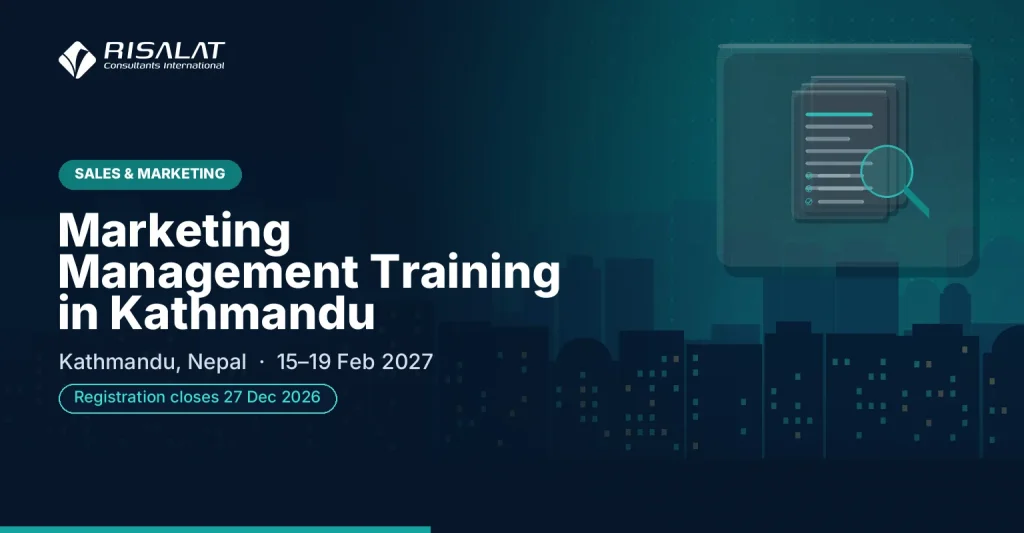
- المواعيد
- 15–19 فبراير 2027 (5 أيام)
- المكان
- Yatri Suites & Spa, Kathmandu, Nepal
- الرسوم لكل مشارك
- £2,550 (جنيه إسترليني)
- الدفع
- بالفاتورة والتحويل المصرفي
- إغلاق التسجيل
- 27 ديسمبر 2026
- الشهادة
- شهادة إتمام
- الخيار المؤسسي
- نفّذه لفريقك، في المواعيد التي تناسبك
نظرة عامة على البرنامج
Marketing is no longer only a private-sector function. Export promotion agencies, tourism boards, public enterprises, cooperatives and donor-financed value-chain projects all have products, services or destinations to position, and all are judged on whether buyers, visitors and investors actually respond. This Marketing Management Training in Kathmandu gives these teams a shared, practical toolkit for analysing markets, choosing segments, building a marketing mix and measuring results.
Nepal offers a live setting for this work. The Nepal Trade Integration Strategy 2023, in force since July 2023, lists 32 priority export products, up from 12 in the previous strategy, ranging from large cardamom, tea and coffee to pashmina, felt, handmade paper and Himalayan spring water. The National Pashmina Sector Export Strategy 2022–2026, prepared with EU funding and International Trade Centre support, sets an export target of USD 75 million by the end of 2026 and plans to brand Nepali pashmina for luxury markets.
Tourism marketing is moving in the same direction. Preliminary figures from the Immigration Office and the Nepal Tourism Board show 1,158,459 international arrivals in 2025. In May 2026 the Board validated an International Marketing Strategy and Five-Year Action Plan 2026–2030 built around brand repositioning, product diversification, digital integration and a shift from volume to value. In March 2026 the World Bank approved USD 85 million for the Greater Lumbini Area Development Project, which includes destination planning and private sector engagement.
The digital and legal setting is changing too. DataReportal counts 16.6 million internet users in Nepal in late 2025, about 56% of the population, while the E-Commerce Act 2025 now requires online sellers, including those trading through social media, to register and to refund buyers when goods differ from what was advertised. Marketers must therefore plan campaigns that are measurable, compliant and respectful of customer data.
Over five days, participants move from market analysis (PESTLE, Porter’s Five Forces, SWOT and customer analysis) through segmentation, positioning and the marketing mix, to integrated communication, digital marketing, budgeting and evaluation. Each day ends with a workshop built on real Nepali and regional cases.
يعزز البرنامج القدرات المؤسسية في
- Market and environment analysis using PESTLE, SWOT and Porter’s Five Forces
- Customer research, survey design and use of secondary data
- B2B and B2C market segmentation
- Targeting, positioning and value proposition design
- Product, service and destination branding
- Marketing mix design for goods, services and public offers
- Pricing decisions linked to cost, value and competition
- Distribution and channel choice, including online marketplaces
- Integrated marketing communication planning
- التسويق الرقمي والتسويق عبر وسائل التواصل الاجتماعي
- Advertising budgets, media selection and media scheduling
- Promotion strategy across the product life cycle
- Push and pull strategies with distributors and agents
- Export marketing and buyer-seller engagement
- Destination marketing and visitor segmentation
- Marketing audits and strategic marketing plans
- Campaign monitoring, key performance indicators and evaluation
- Consumer protection, e-commerce and data protection compliance
- Marketing for donor-financed value-chain and tourism projects
- Coordination between marketing, sales and product teams
The result is a marketing function that can explain its choices with evidence, defend its budget and show results to boards, ministries and financing partners.
The Growing Importance of Marketing Management
Nepal’s export data show why marketing skill matters. In fiscal year 2025/26 total exports reached Rs315.29 billion, but Rs146 billion of that came from processed edible oil re-exported to India, according to the Kathmandu Post. Exports of the higher-value products listed in the trade strategy grew only 3.16% to Rs104.62 billion: large cardamom rose strongly, while tea and carpets declined. Producing a good product is not enough; buyers must find it, trust it and pay a premium for it.
Nepal is also scheduled to graduate from Least Developed Country status on 24 November 2026. The government asked in May 2026 to extend the preparatory period, and ECOSOC has asked the UN General Assembly to decide before that date. Either way, trade preferences will change over time, and exporters will compete more on brand, quality and market knowledge than on tariff advantages.
For tourism, the Nepal Tourism Board approved a budget of about Rs1.6 billion for 2025/26 with a focus on international promotion, signed an agreement with TikTok, and plans its first overseas marketing office in India, its largest source market. These choices need staff who can read market data, plan campaigns and measure return.
تحتاج المؤسسات بشكل متزايد إلى مهنيين قادرين على:
- Turning market research into clear segment and targeting decisions
- Writing a costed, measurable marketing plan
- Positioning products for premium export markets
- Building and protecting a product or destination brand
- Running digital and social media campaigns with clear metrics
- Choosing media and scheduling campaigns within a fixed budget
- Managing agents, distributors and online marketplaces
- Preparing for trade fairs and buyer-seller meetings
- Designing surveys and questionnaires that produce usable data
- Applying consent rules to customer data and marketing messages
- Complying with e-commerce registration and refund obligations
- Auditing marketing performance and reporting to boards and financiers
- Coordinating marketing with product quality and certification teams
Strong marketing management systems help organisations:
- Win and keep customers in competitive markets
- Earn higher prices through differentiation
- Spend promotion budgets where they produce results
- Reduce dependence on a few buyers or source markets
- Launch new products and destinations with less risk
- Respond quickly to changes in demand and regulation
- Show measurable results to ministries and financing partners
- Build trust through accurate, compliant advertising
- Align staff behind one clear brand promise
The programme treats marketing as a management discipline: analysis, choice, delivery and measurement, applied to commercial firms and public bodies alike.
Source: Immigration Office and Nepal Tourism Board preliminary data, reported by Kantipur, January 2026
1. How many priority export products does the Nepal Trade Integration Strategy 2023 list?
The Kathmandu Post reports that NTIS 2023 expanded the priority list from 12 to 32 products.
2. Which was Nepal's largest source market for international visitors in 2025?
Preliminary Immigration Office and Nepal Tourism Board data show 292,438 arrivals from India, about 25% of the total.
3. Under Nepal's E-Commerce Act 2025, what can a buyer claim if a product differs from its advertised version?
The Kathmandu Post reports the Act entitles buyers to a full refund when goods differ from what was advertised.
Who Should Attend This Marketing Management Training?
صُمم هذا البرنامج من أجل:
- Marketing managers and marketing officers
- Sales managers and sales professionals
- Business development managers and specialists
- Brand and communication managers
- Digital marketing and social media officers
- Officers of trade and export promotion agencies
- Destination marketing staff of tourism boards and local governments
- Marketing staff of public enterprises and state-owned companies
- Export managers of SMEs and producer associations
- Cooperative and producer group leaders
- Value-chain and private sector development specialists in donor-financed projects
- Tourism enterprise owners and managers
- Product managers and market research officers
- Customer service and key account managers
- Chamber of commerce and business association staff
- Consultants and trainers in marketing and enterprise development
Teams of two or three from one organisation gain the most, because they can build a shared marketing plan during the week.
حدّد ما يحتاج فريقك إلى القدرة على إنجازه.
Marketing Management Training Objectives
Upon successful completion of this Marketing Management Training, participants will be able to:
- Explain how marketing has evolved and how it differs from selling
- Analyse the marketing environment with PESTLE, SWOT and Porter’s Five Forces
- Carry out customer and competitor analysis
- Segment B2B and B2C markets and select target segments
- Write positioning statements and value propositions
- Design a marketing mix for products, services and destinations
- Plan integrated marketing communication and promotional campaigns
- Set advertising budgets and build a media schedule
- Adapt promotion strategy across the product life cycle
- Design a marketing research process and questionnaire
- Apply e-commerce, consumer protection and data consent rules to campaigns
- Conduct a marketing audit and prepare a strategic marketing plan
Each objective is practised in a workshop, so participants leave with drafts they can finish and use at work.
محتوى البرنامج وهيكله
- The evolution of the marketing concept
- Marketing versus selling: what changes in practice
- Scale and scope of marketing management
- Old and new rules of marketing in a digital market
- The customer as the marketer’s most powerful tool
- Defining the macro and micro marketing environment
- PESTLE analysis for products and destinations
- The marketing research process step by step
- Secondary data sources: trade, tourism and digital statistics
- Primary data: interviews, focus groups and surveys
- Questionnaire design and common errors
- Bases for segmenting consumer markets
- B2B segmentation for exporters and suppliers
- Evaluating and selecting target segments
- Developing the marketing mix for products and services
- The extended mix for services: people, process, physical evidence
- Product decisions, quality and packaging
- Branding, origin labels and trademarks
- Pricing methods: cost, value and competition based
- Premium pricing for export markets
- Distribution channels, agents and online marketplaces
- Integrated marketing communication: goals and tasks of promotion
- Creating a promotional campaign from brief to launch
- Determining the advertising budget
- Choosing among media types: broadcast, print, outdoor, digital
- Media scheduling and campaign timing
- Social media and content marketing
- Search, short video and influencer collaborations
- The marketing audit: scope and method
- Strategic marketing planning: from analysis to action
- Setting objectives, targets and key performance indicators
- Monitoring and evaluating promotional campaigns
- Marketing dashboards and reporting to management
- Measuring return on marketing spend
- Coordinating marketing, sales and product teams
المحتوى الكامل يوماً بيوم
The five days follow the logic of a marketing plan, from analysis to measurement.
- Day 1: marketing foundations and environment analysis
- Day 2: market research, segmentation and positioning
- Day 3: marketing mix, pricing, channels and brand
- Day 4: integrated communication, digital marketing and compliance
- Day 5: marketing audits, plans and performance measurement
المحتوى الكامل يوماً بيوم
First Day | Marketing Foundations and the Marketing Environment
- The evolution of the marketing concept
- Marketing versus selling: what changes in practice
- Scale and scope of marketing management
- Old and new rules of marketing in a digital market
- The customer as the marketer’s most powerful tool
- Defining the macro and micro marketing environment
- PESTLE analysis for products and destinations
- Porter’s Five Forces and competitive intensity
- SWOT analysis that leads to decisions
- Customer and competitor analysis basics
Workshop: PESTLE and Five Forces for a Nepali Export Product
Teams take one product from the 32 priority products in the Nepal Trade Integration Strategy 2023, such as large cardamom, tea or felt, and build a PESTLE and Five Forces analysis for one target market. They use published export trends and the pending LDC graduation as inputs, then turn the analysis into three strategic questions the marketing plan must answer.
Second Day | Market Research, Segmentation and Positioning
- The marketing research process step by step
- Secondary data sources: trade, tourism and digital statistics
- Primary data: interviews, focus groups and surveys
- Questionnaire design and common errors
- Bases for segmenting consumer markets
- B2B segmentation for exporters and suppliers
- Evaluating and selecting target segments
- Positioning, differentiation and value propositions
- Perceptual maps and competitor positioning
- Ethical research and informed consent
Workshop: Segmenting Nepal’s Visitor Markets
Using 2025 arrival data, in which India, the United States, China, the United Kingdom and Bangladesh were the top source markets, teams segment visitors by origin, motive and spending. Drawing on the Nepal Tourism Board’s focus on wellness and younger travellers, they choose two target segments and write a positioning statement and a short survey to test it.
Third Day | Building the Marketing Mix and Brand
- Developing the marketing mix for products and services
- The extended mix for services: people, process, physical evidence
- Product decisions, quality and packaging
- Branding, origin labels and trademarks
- Pricing methods: cost, value and competition based
- Premium pricing for export markets
- Distribution channels, agents and online marketplaces
- Push and pull strategies with channel partners
- The product life cycle and portfolio decisions
- Marketing public services and destinations
Case Study: Branding Pashmina for Luxury Markets
Participants review the National Pashmina Sector Export Strategy 2022–2026, which aims to lift exports to USD 75 million by the end of 2026 from a 2021 base of USD 19.31 million, and plans to brand products for luxury markets. Teams design a marketing mix for one target market, covering product story, price band, channel and proof of authenticity, and test it against buyer expectations.
Fourth Day | Integrated Communication and Digital Marketing
- Integrated marketing communication: goals and tasks of promotion
- Creating a promotional campaign from brief to launch
- Determining the advertising budget
- Choosing among media types: broadcast, print, outdoor, digital
- Media scheduling and campaign timing
- Social media and content marketing
- Search, short video and influencer collaborations
- Promotion mix across the product life cycle
- E-commerce Act 2025: registration, product information and refunds
- Individual Privacy Act 2018: consent for data and marketing messages
Workshop: Planning a Costed Digital Campaign
Teams plan a three-month campaign for a destination or export product with a fixed budget. With about half of Nepal’s population using social media and QR payments now widely accepted, they choose channels, write a media schedule, set targets for reach, enquiries and sales, and check every element against consent and e-commerce rules.
Fifth Day | Marketing Plans, Audits and Performance
- The marketing audit: scope and method
- Strategic marketing planning: from analysis to action
- Setting objectives, targets and key performance indicators
- Monitoring and evaluating promotional campaigns
- Marketing dashboards and reporting to management
- Measuring return on marketing spend
- Coordinating marketing, sales and product teams
- Marketing in donor-financed value-chain and tourism projects
- Managing risk and reputation
- Presenting and defending the marketing plan
Capstone Exercise: A Marketing Plan for a Destination Cluster
Building on the Greater Lumbini Area Development Project, which links Lumbini with Tilaurakot, Devdaha and Ramgram and funds destination planning and private sector engagement, teams prepare a marketing plan for a less-visited site cluster. The plan covers segments, positioning, mix, campaign, budget and indicators, and is presented to a panel for feedback.
- الجمع
- التنقية
- التخزين
- التحليل
- القرار
Marketing Management Training Methodology
The training is practical and built around participants’ own products, services and destinations. Short expert inputs are followed by applied exercises, and each day closes with a workshop that adds one section to a team marketing plan.
يجمع البرنامج بين:
- عروض موجزة يقدمها خبراء مع أمثلة تطبيقية
- Case studies from Nepali export and tourism strategies
- Group analysis using PESTLE, SWOT and Five Forces templates
- Segmentation and positioning exercises
- Questionnaire design practice
- Campaign planning and media scheduling simulations
- Budgeting exercises with fixed resource limits
- Review of real advertisements and digital content
- Compliance checklists for e-commerce and data consent
- Peer review of draft marketing plans
- التخطيط الفردي للعمل
- ملاحظات يومية لتكييف الجلسات التالية
Participants are encouraged to bring market data, brochures, campaign results or a current plan. Trainers adapt examples to the mix of public bodies, enterprises and projects in the room.
النتائج المتوقعة
Upon completion of this Marketing Management Training, participants will be able to:
- Present a structured analysis of their market and competitors
- Select target segments and justify the choice with data
- Write a clear positioning statement and brand promise
- Design a marketing mix suited to each segment
- Prepare a costed campaign and media schedule
- Run research that produces usable customer insight
- Track campaigns with agreed indicators
- Apply consent, refund and registration rules in marketing
- Conduct a marketing audit and update the marketing plan
Most importantly, participants return with a draft marketing plan their organisation can review, cost and approve.
£2,550 لكل مشارك · فاتورة وتحويل مصرفي · خصم للمجموعات المكوّنة من 5 مشاركين أو أكثر
خمسة مشاركين أو أكثر من مؤسسة واحدة: اطلبوا سعر المجموعة عند طلب الفاتورة.
Ten or more: an in-house version for your institution may cost less per person. Ask for an in-house quote.
Registration closes in 55 days (27 Dec 2026)
Institutional Application of Marketing Management Training
يدعم هذا البرنامج المؤسسات في تعزيز:
- Marketing strategy and annual marketing planning
- Market intelligence and research functions
- Brand management and brand guidelines
- Export promotion and buyer engagement
- Destination marketing and visitor services
- القدرات في التسويق الرقمي
- Advertising procurement and media buying
- Campaign evaluation and reporting
- Coordination between marketing and sales
- Consumer protection and data compliance
- Partnerships with private sector and producer groups
- Marketing components of donor-financed projects
يعود المشاركون بأدوات عملية لتحسين:
- PESTLE, SWOT and Five Forces templates
- Segmentation and targeting matrix
- Positioning statement worksheet
- Marketing mix planner
- Campaign brief and media schedule
- Advertising budget calculator
- Questionnaire design checklist
- Marketing audit checklist
- Marketing KPI dashboard template
Institutions that want to check their wider readiness can use Risalat’s free digital readiness assessment or the training needs assessment before nominating staff.
الأهمية الإقليمية والتطبيق
آسيا
UN Tourism reports 331 million international arrivals in Asia and the Pacific in 2025, up 6%. South Asian exporters and destinations compete for the same buyers and visitors, so clear segmentation and brand positioning are the main ways to stand out. Nepal’s export and tourism strategies give regional teams a close and comparable case.
أفريقيا
Africa recorded 81 million international arrivals in 2025, the fastest regional growth at 8%. Tourism boards, export agencies and agricultural value-chain projects across the continent face the same task as Nepal: moving from commodity sales to branded, higher-value products.
الشرق الأوسط
The Middle East received nearly 100 million international arrivals in 2025. Public enterprises and investment and tourism agencies in the region run large promotion budgets and need strong planning, media buying and evaluation skills to show value for money.
أوروبا
Europe remains the largest tourism region with 793 million arrivals in 2025 and is a key premium market for products such as pashmina, tea and coffee. Exporters selling into Europe need marketing that proves origin, quality and sustainability.
Across all regions, the tools taught are the same; the cases and data change. Participants apply them to their own markets during the workshops.
لمحة عن البلد المضيف – نيبال
Kathmandu is Nepal’s capital and main gateway, home to ministries, the Trade and Export Promotion Centre, the Nepal Tourism Board, development partners and many tourism and trading businesses. The valley’s heritage sites and busy commercial districts make it an easy place to observe destination and retail marketing at first hand.
Nepal is a useful benchmark because it is marketing both products and a destination under real pressure. The Trade and Export Promotion Centre, set up in 2006, runs buyer-seller meetings, market information and product testing; sector export strategies cover pashmina and other priority goods; and the Nepal Tourism Board is implementing a new five-year international marketing strategy. Nepal Rastra Bank reports that QR payment transactions grew 92.5% in 2024/25, with about 2.9 million merchants accepting QR, showing how quickly buyers are moving online.
Kathmandu’s Tribhuvan International Airport has direct flights from many Asian and Middle Eastern hubs. Many nationalities can obtain a tourist visa on arrival or apply online in advance, while some must apply through a Nepalese embassy; participants should check current rules with the Department of Immigration or the nearest Nepalese mission. Risalat provides visa guidance and invitation letters for registered participants.
Marketing Management Training Deliverables
Every participant receives the following support before, during and after the programme.
قبل البرنامج
- التقييم المسبق للمشاركين
- Marketing Management Readiness Assessment
- Marketing Management Resource Pack
- مواد قراءة تحضيرية
- دعم واستشارات مجانية بشأن التأشيرة
- الاستقبال من المطار والمساعدة عند الوصول
- إقامة مع الإفطار
- عشاء ترحيبي للتعارف
أثناء البرنامج
- حقيبة Risalat التدريبية (حقيبة، وقارورة، وكوب، وقميص، وقبعة، وغلاف جواز سفر، وأقلام، ودفتر، ومغناطيس وميدالية مفاتيح)
- Comprehensive Marketing Management Training Manual
- PESTLE, SWOT and Five Forces Templates
- Segmentation and Positioning Worksheets
- Campaign Brief and Media Schedule Template
- Advertising Budget Calculator
- Marketing Audit Checklist
- E-Commerce and Data Consent Compliance Checklist
- ورش عمل عملية ومحاكاة
- مناقشات جماعية وتعلم من الأقران
- غداء ومرطبات يومية
- الاستفادة الكاملة من مرافق مكان التدريب
- جهاز Mini Pad / جهاز لوحي مزود بمواد تعليمية رقمية
- زيارة ميدانية (حسب الاقتضاء)
- جولة ترفيهية في المدينة
بعد البرنامج
- شهادة الإتمام
- جائزة Risalat تقديراً للمشاركة في البرنامج
- مواد مرجعية بعد التدريب
- Draft Marketing Plan Template
- Marketing KPI Dashboard Template
- Questionnaire Design Guide
- الدعم بعد التدريب وإرشادات المتابعة
- تقرير البرنامج
Institutions can request a tailored in-house version of this programme for their marketing, export or destination teams, built around their own products and data. Request a proposal to discuss dates and content.
Common Challenges in Marketing Management, And How This Training Helps
How can we market products when buyers do not know our brand?
Day 3 covers branding, origin labels and premium pricing, using the pashmina export strategy as a case. Participants build a brand story and proof points that buyers can verify.
How do we choose which markets or visitor segments to target?
Day 2 teaches segmentation and targeting with real arrival and trade data. Teams score segments on size, growth, fit and cost to reach, then select the few worth pursuing.
How can a small team run digital marketing with a limited budget?
Day 4 shows how to plan a focused campaign, set a budget, choose channels and measure results, so that spending follows evidence rather than habit.
How do we show managers and financiers that marketing works?
Day 5 introduces marketing indicators, dashboards and return on spend, and the capstone plan includes a monitoring framework ready for reporting.
How do we stay compliant with e-commerce and data rules?
Day 4 reviews registration, product information and refund duties under the E-Commerce Act 2025 and consent rules under the Individual Privacy Act 2018, with a checklist for campaigns.
How can analysis tools lead to real decisions instead of long reports?
Day 1 links PESTLE, Five Forces and SWOT directly to strategic questions, and each later workshop uses those answers to make choices.
How do we market a less-known destination or site?
The capstone on Day 5 uses the Greater Lumbini Area Development Project as a model for planning segments, partnerships and campaigns for less-visited sites.
الأسئلة الشائعة
Who is this marketing management training for?
Marketing, sales and business development staff of enterprises, export promotion agencies, tourism boards, public enterprises, producer associations and donor-financed value-chain or tourism projects.
Does the training cover digital marketing?
Yes. Day 4 covers social media, content, search and short video, campaign budgets and media scheduling, plus e-commerce and data consent rules that affect online marketing in Nepal.
Which analysis tools are taught?
PESTLE, SWOT, Porter's Five Forces, customer and competitor analysis, segmentation matrices, perceptual maps and the marketing audit.
Will we produce anything we can use at work?
Yes. Each daily workshop adds a section to a team marketing plan, which participants complete in the Day 5 capstone and take home with templates.
هل يمكن تقديم هذا البرنامج داخل المؤسسة؟
Yes. Risalat can tailor the programme to an organisation's products, markets and data and deliver it at a location of its choice.
All programmes in Kathmanduالمزيد من برامج المبيعات والتسويق
Why Kathmandu for this programme
Kathmandu, Nepal, was chosen for this programme because it is easy to reach for the participants we expect and has suitable venues for practical, interactive training.
The Marketing Management Training in Kathmandu programme in February 2027 brings together officials and professionals. Sessions combine short inputs, case studies and group work on participants' own files, and the city's institutions can be added as a study visit on request.
تحقق مما إذا كنت بحاجة إلى تأشيرة عبر أداة التحقق من التأشيرة المجانية، واطلب خطاب دعوة بعد إتمام تسجيلك.
ذو صلة: برامج تنمية المؤسسات والمنشآت الصغيرة والمتوسطة · تقييم الاحتياجات التدريبية المجاني · جميع البرامج
المزيد من الدورات التدريبية في نيبال · جميع البرامج في آسيا · تقويم التدريب الكامل