Principais conclusões
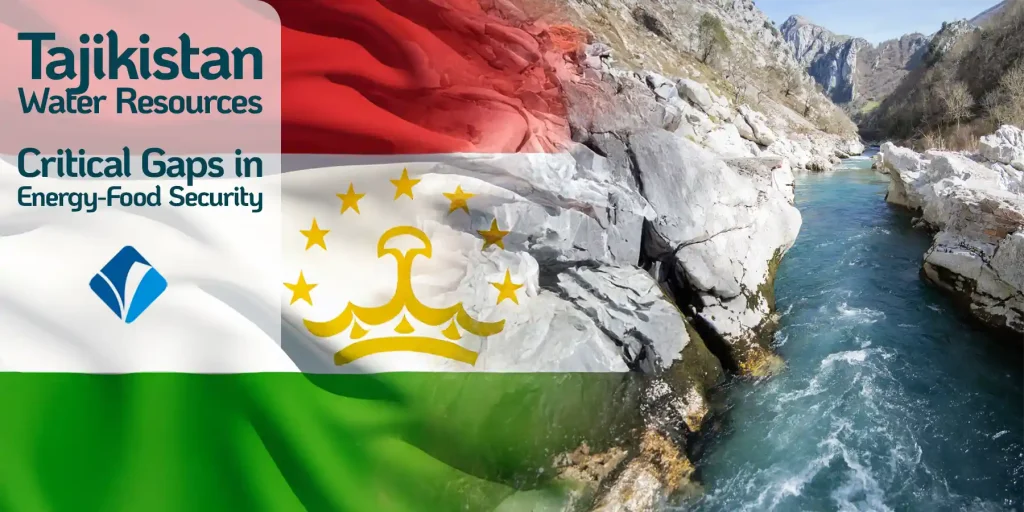
- Background and practical significance. Tajikistan water resources are abundant. Yet the country faces a puzzling water inefficiency crisis that puts its future development at risk.
- Transboundary Water Tensions on the Amu Darya. Water management challenges reach beyond Tajikistan's borders, especially in the Amu Darya basin shared with neighboring states.
- Aging Irrigation Systems and Pump Failures. Farmers in Tajikistan rely heavily on irrigation, but old infrastructure limits farm output.
- Absence of Real-Time Hydropower Risk Models. Tajikistan gets 98% of its power from hydropower plants, but these plants lack modern risk tracking systems.
- Application for public agencies and donor-funded projects. Water-efficient technologies are the most important reform priority.
In short: Explore tajikistan water resources with practical examples, implementation risks and clear steps for institutions, public agencies and project teams.
Free self-check: the digital readiness assessment gives how ready your institution is for digital services, data and AI, in about 10 minutes.
In short: Tajikistan Water Resources requires practical choices about resources, evidence and implementation. This guide explains the main opportunities and constraints, and how organisations can turn the underlying ideas into measurable decisions.
Contexto e relevância prática
Contexto e relevância prática
Tajikistan water resources are abundant. Yet the country faces a puzzling water inefficiency crisis that puts its future development at risk. The numbers tell a concerning story – only 30% of irrigation water reaches cultivated lands. Central Asian states use 150% more water for irrigation than recommended volumes. This inefficiency especially worries the agricultural sector that depends on power-hungry irrigation systems.
The agricultural sector's reliance on irrigation pumps stands at 44% – the highest in Central Asia. As a result, agriculture has become Tajikistan's third largest energy consumer and uses 21% of the country's total electricity. This creates a risky situation because Tajikistan gets over 90% of its electricity from hydropower. Water management, energy security, and food production challenges are interlinked and need unified solutions. The EU has recognized these systemic problems and invested €1.25 million through its Nexus Dialog initiative. Stakeholders now see the need for detailed reform of Tajikistan water resource management to ensure eco-friendly development and regional stability.
Why Water Resource Management Is Central to Tajikistans Future
Water resource management is the life-blood of Tajikistan's socioeconomic stability. The country's water resources deeply affect its energy production, agricultural output, and regional diplomacy.
Climate Change and Glacial Melt Effect on River Flows
Os recursos hídricos do Tajiquistão enfrentam desafios sem precedentes devido à aceleração das alterações climáticas. Os glaciares que alimentam os principais sistemas fluviais estão a recuar rapidamente. Os cientistas alertam que os glaciares mais pequenos abaixo dos 3.000 metros poderão desaparecer completamente até 2050 sob as atuais tendências de aquecimento. Os padrões de caudal dos rios mostram alterações dramáticas com derretimentos precoces na primavera. Os caudais de verão diminuíram quando os agricultores mais precisam de água.
These water changes threaten food security directly. Agriculture makes up about 20% of GDP and provides jobs to more than half the population. The altered river flows also make hydropower generation less reliable, which accounts for 94% of Tajikistan's electricity production.
Para os recursos hídricos do Tajiquistão, um plano de implementação útil deve considerar explicitamente os resultados de aprendizagem, os papéis institucionais e o tempo disponível para a implementação. Uma decisão responsável começa por identificar quem experiencia o problema, quem tem autoridade para responder e que informação mudaria a ação proposta. Estas questões ajudam a separar um conceito atraente de uma intervenção exequível.
Por exemplo, uma organização que pondera uma nova iniciativa pode documentar o processo existente, consultar as pessoas que o utilizam, selecionar um piloto gerível e registar a sua situação de referência. O piloto deve ter um responsável identificado, um calendário de execução, uma via para reclamações e um orçamento de funcionamento realista. O progresso deve ser avaliado pelos resultados observados e não pelo número de reuniões, workshops ou anúncios realizados.
Transboundary Water Tensions on the Amu Darya
Transboundary Water Tensions on the Amu Darya
Water management challenges reach beyond Tajikistan's borders, especially in the Amu Darya basin shared with neighboring states. Soviet-era water allocation agreements remain disputed as downstream countries rely heavily on steady water supplies for their irrigation systems.
Major projects like the Rogun Dam have created diplomatic tensions with downstream Uzbekistan. The country worries about seasonal water shortages affecting its cotton industry. All the same, recent diplomatic talks show a possible transformation toward shared management approaches among riverside states.
Upstream Position in Central Asia and Regional Implications
A localização do Tajiquistão como fonte de água a montante cria oportunidades e deveres. O país controla as cabeceiras que fornecem mais de 40% dos recursos hídricos totais da Ásia Central. As suas decisões sobre a água afetam toda a região.
This upstream advantage lets Tajikistan discover the potential of hydropower – estimated at 527 billion kWh yearly. Yet it must also ensure fair water sharing. Regional stability now depends more than ever on cooperative water governance across borders.
O Tajiquistão deve equilibrar as suas necessidades internas com as promessas internacionais. O país precisa de infraestruturas modernas enquanto protege os ecossistemas. Deve construir instituições responsivas que possam adaptar-se às incertezas climáticas. O stress hídrico aumenta em toda a Ásia Central à medida que as populações aumentam, a agricultura se expande e as indústrias se desenvolvem. As escolhas de governação da água no Tajiquistão moldarão tanto o seu futuro quanto a segurança regional.
Critical Infrastructure and Data Gaps in the Water-Energy-Food Nexus
Tajikistan's water infrastructure is falling apart on many fronts. This breakdown creates a chain of failures in the water-energy-food system that puts national development goals at risk.
For tajikistan water resources, a useful implementation plan should explicitly consider costs, procurement options, stakeholder incentives and the risks of premature scaling. A responsible decision starts by identifying who experiences the problem, who has authority to respond, and what information would change the proposed action. These questions help separate an attractive concept from a feasible intervention.
Por exemplo, uma organização que pondera uma nova iniciativa pode documentar o processo existente, consultar as pessoas que o utilizam, selecionar um piloto gerível e registar a sua situação de referência. O piloto deve ter um responsável identificado, um calendário de execução, uma via para reclamações e um orçamento de funcionamento realista. O progresso deve ser avaliado pelos resultados observados e não pelo número de reuniões, workshops ou anúncios realizados.
Aging Irrigation Systems and Pump Failures
Aging Irrigation Systems and Pump Failures
Os agricultores no Tajiquistão dependem fortemente da irrigação, mas as infraestruturas antigas limitam a produção agrícola. Metade das estações de bombagem do país já não funciona. As estações construídas entre 1950 e 1970 apresentam danos graves. Estas avarias afetam gravemente os agricultores, que não conseguiram cultivar quase 900 hectares de terras irrigadas na região de Khatlon devido à falha das bombas. Em todo o país, os agricultores deixaram 975,96 hectares por cultivar em 2023 devido a estações de bombagem avariadas.
The old equipment wastes energy, and the lack of automated power meters at major pumping stations makes it hard to track power use. By April 2025, water users had piled up debt of 279 million somonis to the national power company. The irrigation systems waste up to 75% of water in some places.
Falta de Sistemas Digitais de Monitorização da Água
Tajikistan didn't have automated water monitoring tools to manage resources well until recently. Things are looking up now – Tajikistan and Uzbekistan have set up new flow-monitoring stations on shared canals. These stations send live digital data about water volumes. This marks a vital step toward fixing regional water shortages, especially since the Eurasian Development Bank expects severe water shortages of 5-12 cubic kilometers by 2028-2029.
Limited Access to WASH Services in Rural Areas
A big gap exists between city and village access in Tajikistan water. Two-thirds of rural homes have no piped water. Only 24% of rural people have piped water compared to 86.9% in cities. Women and girls suffer the most – they fetch water alone in almost 90% of homes without pipes. This keeps them from school and jobs.
Half the rural schools lack running water, and nearly 60% use pit latrines. Girls face the toughest situation – only 2% of schools have water in girls' bathrooms for menstrual hygiene. Experts say Tajikistan needs to invest at least 8529.23 million TJS to give everyone safe water by 2030.
Para os recursos hídricos do Tajiquistão, um plano de implementação útil deve considerar explicitamente a garantia de qualidade, a privacidade ou as salvaguardas ambientais, quando relevante, e a comunicação transparente de informações. Uma decisão responsável começa por identificar quem experiencia o problema, quem tem autoridade para responder e que informação alteraria a ação proposta. Estas questões ajudam a separar um conceito atrativo de uma intervenção exequível.
Por exemplo, uma organização que pondera uma nova iniciativa pode documentar o processo existente, consultar as pessoas que o utilizam, selecionar um piloto gerível e registar a sua situação de referência. O piloto deve ter um responsável identificado, um calendário de execução, uma via para reclamações e um orçamento de funcionamento realista. O progresso deve ser avaliado pelos resultados observados e não pelo número de reuniões, workshops ou anúncios realizados.
Absence of Real-Time Hydropower Risk Models
Absence of Real-Time Hydropower Risk Models
Tajikistan gets 98% of its power from hydropower plants, but these plants lack modern risk tracking systems. Most facilities date back to Soviet times and need upgrades to handle changing water patterns due to climate change. The 240-MW Golovnaya Hydropower Plant shows these problems clearly – its equipment has deteriorated after decades without major updates.
Running hydropower plants safely in changing climate needs new dam rules based on complete water data. But weather and water records have big gaps, especially from the civil war years of 1992-1994.
Reform Priorities for Tajikistan Water Governance
O Programa de Reforma do Setor da Água do Tajiquistão (2016-2025) estabelece prioridades claras para melhorar a gestão da água através de alterações institucionais e abordagens modernas.
Strengthening Basin-Level Institutions and ALRI
Basin-level governance within hydrographic boundaries forms the foundation of Tajikistan water reform. The country has five basin zones – Syrdarya, Zeravshan, Panj, Vakhsh, and Kafarnihon. These zones work as territorial units that manage water resources using integrated principles.
The institutional reform creates these key bodies:
The National Water Council – a high-level group that coordinates ministerial activities
River Basin Organizations – they manage basins and implement plans
Conselhos de Bacia Hidrográfica – fóruns onde organismos governamentais, utilizadores de água e sociedade civil trabalham em conjunto
The Agency for Land Reclamation and Irrigation (ALRI) needs reliable support to build its technical capacity and financial stability. ALRI lacks a medium-term investment program and long-term strategy that matches agricultural development goals.
For tajikistan water resources, a useful implementation plan should explicitly consider the difference between a pilot that works once and a process that an institution can sustain. A responsible decision starts by identifying who experiences the problem, who has authority to respond, and what information would change the proposed action. These questions help separate an attractive concept from a feasible intervention.
Por exemplo, uma organização que pondera uma nova iniciativa pode documentar o processo existente, consultar as pessoas que o utilizam, selecionar um piloto gerível e registar a sua situação de referência. O piloto deve ter um responsável identificado, um calendário de execução, uma via para reclamações e um orçamento de funcionamento realista. O progresso deve ser avaliado pelos resultados observados e não pelo número de reuniões, workshops ou anúncios realizados.
Aplicação em organismos públicos e projetos financiados por doadores
Modernizing Irrigation with Drip and Sprinkler Systems
Water-efficient technologies are the most important reform priority. Drip irrigation systems in Khatlon province have showed remarkable benefits in water-scarce regions. These low-pressure gravity systems help farmers apply water directly to plant roots, which saves water across Tajikistan's arid zones.
UNDP-supported drip systems in Ayni district have helped farmers bounce back from climate-related irrigation canal damage. The damage had caused 75% harvest reductions before. Modern irrigation systems protect downstream communities from disaster risks too.
Integrating WEF Nexus into National Planning
Better water governance in Tajikistan needs more than technology – we just need skilled institutions, strong local actors, and analytical insights. The EU has funded the Nexus Dialog project with €1.25 million to promote this integrated approach.
Schools now teach WEF Nexus simulation training. Teachers who train civil servants and water specialists have added interactive simulations to university courses. This helps future water managers develop negotiation skills and think across different sectors.
Public Sector Capacity Building for Water Management
Young specialists have
For tajikistan water resources, a useful implementation plan should explicitly consider the needs of implementing agencies, suppliers, community representatives and development partners. A responsible decision starts by identifying who experiences the problem, who has authority to respond, and what information would change the proposed action. These questions help separate an attractive concept from a feasible intervention.
Por exemplo, uma organização que pondera uma nova iniciativa pode documentar o processo existente, consultar as pessoas que o utilizam, selecionar um piloto gerível e registar a sua situação de referência. O piloto deve ter um responsável identificado, um calendário de execução, uma via para reclamações e um orçamento de funcionamento realista. O progresso deve ser avaliado pelos resultados observados e não pelo número de reuniões, workshops ou anúncios realizados.
For a ministry or project implementation unit, the practical sequence is to agree the public purpose, map responsibilities across agencies, identify procurement and safeguard requirements, and record the evidence needed for approval. Where a donor finances the work, the project team should use the applicable financing agreement, procurement framework and environmental and social commitments rather than assuming that one generic procedure applies to every project.
Considere-se um programa hipotético financiado por doadores com um período de implementação limitado. O gestor do projeto poderia encomendar uma avaliação de base, envolver as partes interessadas locais na definição dos padrões de serviço, testar a intervenção proposta num pequeno número de locais e avaliar o desempenho antes de a alargar. Uma revisão independente da despesa e dos resultados pode revelar se o programa está a chegar aos beneficiários previstos e se a entidade executora o consegue manter depois de terminar o financiamento externo.
Lista de verificação da implementação
- Definir a decisão e os beneficiários previstos.
- Confirmar as restrições jurídicas, financeiras e operacionais.
- Definir uma situação de referência e indicadores mensuráveis.
- Atribuir responsáveis e criar mecanismos de feedback das partes interessadas.
- Testar, avaliar e rever antes de alargar a escala.
Perguntas frequentes
Qual é o principal benefício prático?
Ajuda os decisores a ligar o tema a necessidades definidas, recursos realistas e resultados observáveis.
O que deve uma organização avaliar primeiro?
Comece por uma situação de referência, pelas necessidades das partes interessadas, pelas responsabilidades de execução e pelos requisitos legais aplicáveis.
Que riscos de implementação merecem atenção?
Preste atenção à acessibilidade financeira, à capacidade institucional, à inclusão, à qualidade dos dados e à manutenção contínua.
Como se pode medir o progresso?
Utilize um pequeno conjunto de indicadores ligados à situação de referência, o feedback dos utilizadores e uma revisão independente periódica.
Como se aplica isto aos projetos financiados por doadores?
Aplique o acordo de financiamento do projeto e as obrigações pertinentes de contratação, salvaguardas, monitorização e reporte.
Ver


Know people who should read this? Become an Ambassador or write with Risalat.
Parceiros no sucesso dos projetos desde 2011: diagnósticos, apoio consultivo e aprendizagem aplicada para ministérios, organismos públicos e equipas de projeto.
Precisa de ajuda para pôr isto em prática?
Comece com um diagnóstico gratuito de 10 minutos ou fale com os nossos especialistas.