

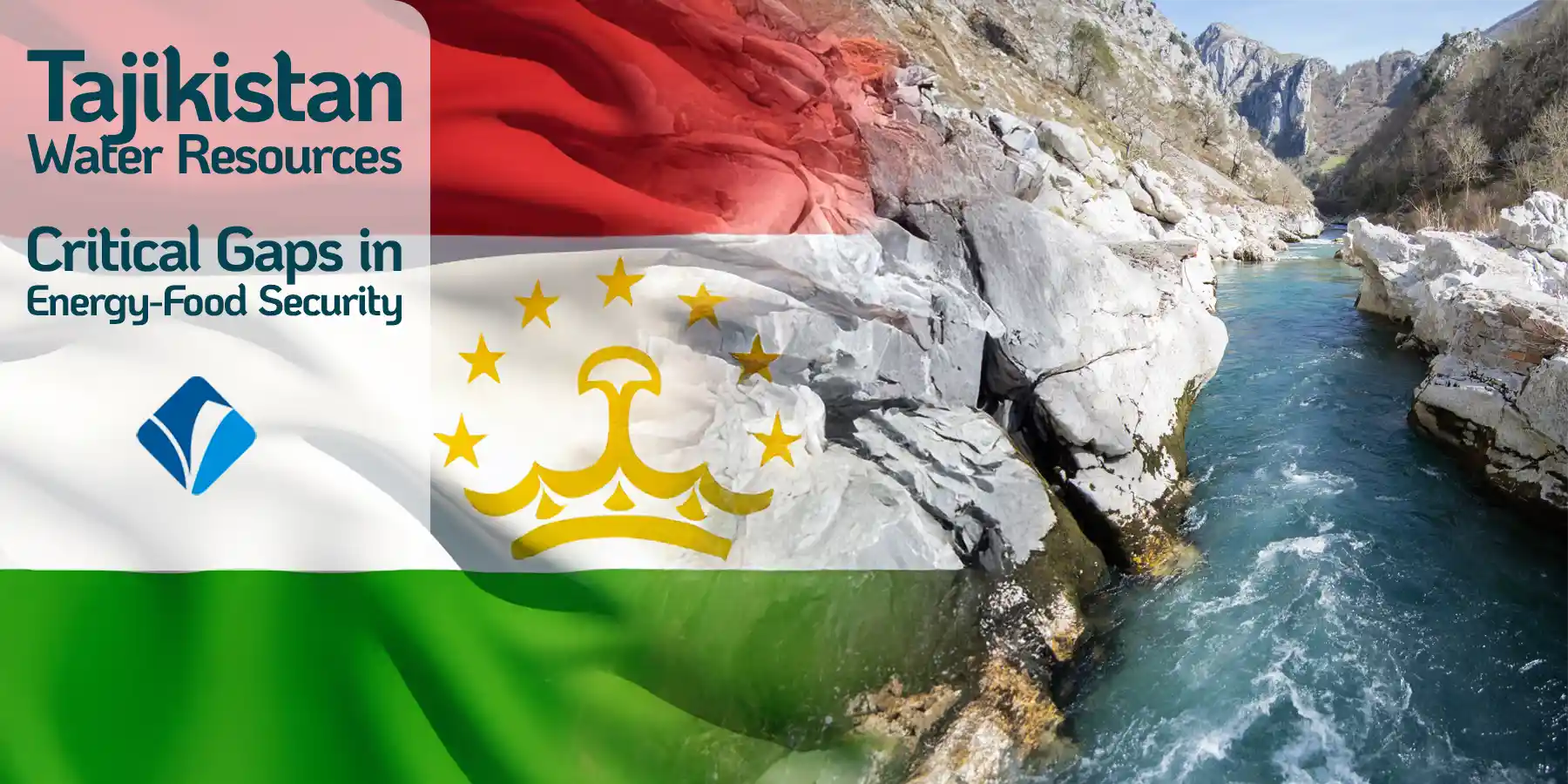
Tajikistan water resources are abundant. Yet the country faces a puzzling water inefficiency crisis that puts its future development at risk. The numbers tell a concerning story – only 30% of irrigation water reaches cultivated lands. Central Asian states use 150% more water for irrigation than recommended volumes. This inefficiency especially worries the agricultural sector that depends on power-hungry irrigation systems.
The agricultural sector’s reliance on irrigation pumps stands at 44% – the highest in Central Asia. As a result, agriculture has become Tajikistan’s third largest energy consumer and uses 21% of the country’s total electricity. This creates a risky situation because Tajikistan gets over 90% of its electricity from hydropower. Water management, energy security, and food production challenges are interlinked and need unified solutions. The EU has recognized these systemic problems and invested €1.25 million through its Nexus Dialog initiative. Stakeholders now see the need for detailed reform of Tajikistan water resource management to ensure eco-friendly development and regional stability.
Why Water Resource Management Is Central to Tajikistan’s Future
Water resource management is the life-blood of Tajikistan’s socioeconomic stability. The country’s water resources deeply affect its energy production, agricultural output, and regional diplomacy.
Climate Change and Glacial Melt Effect on River Flows
Tajikistan water resources face unprecedented challenges from accelerating climate change. The glaciers that feed major river systems are retreating rapidly. Scientists warn that smaller glaciers below 3,000 meters could disappear completely by 2050 under current warming trends. River flow patterns show dramatic changes with earlier spring runoffs. Summer flows have decreased when farmers need water most.
These water changes threaten food security directly. Agriculture makes up about 20% of GDP and provides jobs to more than half the population. The altered river flows also make hydropower generation less reliable, which accounts for 94% of Tajikistan’s electricity production.
Transboundary Water Tensions on the Amu Darya
Water management challenges reach beyond Tajikistan’s borders, especially in the Amu Darya basin shared with neighboring states. Soviet-era water allocation agreements remain disputed as downstream countries rely heavily on steady water supplies for their irrigation systems.
Major projects like the Rogun Dam have created diplomatic tensions with downstream Uzbekistan. The country worries about seasonal water shortages affecting its cotton industry. All the same, recent diplomatic talks show a possible transformation toward shared management approaches among riverside states.
Upstream Position in Central Asia and Regional Implications
Tajikistan’s location as an upstream water source creates both opportunities and duties. The country controls headwaters that provide over 40% of Central Asia’s total water resources. Its water decisions affect the entire region.
This upstream advantage lets Tajikistan discover the potential of hydropower – estimated at 527 billion kWh yearly. Yet it must also ensure fair water sharing. Regional stability now depends more than ever on cooperative water governance across borders.
Tajikistan must balance its domestic needs with international promises. The country needs modern infrastructure while protecting ecosystems. It must build responsive institutions that can adapt to climate uncertainties. Water stress grows throughout Central Asia as populations increase, agriculture expands, and industries develop. Tajikistan water governance choices will shape both its future and regional security.
Critical Infrastructure and Data Gaps in the Water-Energy-Food Nexus
Tajikistan’s water infrastructure is falling apart on many fronts. This breakdown creates a chain of failures in the water-energy-food system that puts national development goals at risk.
Aging Irrigation Systems and Pump Failures
Farmers in Tajikistan rely heavily on irrigation, but old infrastructure limits farm output. Half of the country’s pumping stations don’t work anymore. Stations built between 1950-1970s show heavy damage. These breakdowns hit hard – farmers couldn’t grow crops on almost 900 hectares of irrigated land in the Khatlon region because the pumps failed. Across the country, farmers left 975.96 hectares uncultivated in 2023 due to broken pumping stations.
The old equipment wastes energy, and the lack of automated power meters at major pumping stations makes it hard to track power use. By April 2025, water users had piled up debt of 279 million somonis to the national power company. The irrigation systems waste up to 75% of water in some places.
Lack of Digital Water Monitoring Systems
Tajikistan didn’t have automated water monitoring tools to manage resources well until recently. Things are looking up now – Tajikistan and Uzbekistan have set up new flow-monitoring stations on shared canals. These stations send live digital data about water volumes. This marks a vital step toward fixing regional water shortages, especially since the Eurasian Development Bank expects severe water shortages of 5-12 cubic kilometers by 2028-2029.
Limited Access to WASH Services in Rural Areas
A big gap exists between city and village access in Tajikistan water. Two-thirds of rural homes have no piped water. Only 24% of rural people have piped water compared to 86.9% in cities. Women and girls suffer the most – they fetch water alone in almost 90% of homes without pipes. This keeps them from school and jobs.
Half the rural schools lack running water, and nearly 60% use pit latrines. Girls face the toughest situation – only 2% of schools have water in girls’ bathrooms for menstrual hygiene. Experts say Tajikistan needs to invest at least 8529.23 million TJS to give everyone safe water by 2030.
Absence of Real-Time Hydropower Risk Models
Tajikistan gets 98% of its power from hydropower plants, but these plants lack modern risk tracking systems. Most facilities date back to Soviet times and need upgrades to handle changing water patterns due to climate change. The 240-MW Golovnaya Hydropower Plant shows these problems clearly – its equipment has deteriorated after decades without major updates.
Running hydropower plants safely in changing climate needs new dam rules based on complete water data. But weather and water records have big gaps, especially from the civil war years of 1992-1994.
Reform Priorities for Tajikistan Water Governance
Tajikistan Water Sector Reform Program (2016-2025) sets clear priorities to improve water management through institutional changes and modern approaches.
Strengthening Basin-Level Institutions and ALRI
Basin-level governance within hydrographic boundaries forms the foundation of Tajikistan water reform. The country has five basin zones – Syrdarya, Zeravshan, Panj, Vakhsh, and Kafarnihon. These zones work as territorial units that manage water resources using integrated principles.
The institutional reform creates these key bodies:
- The National Water Council – a high-level group that coordinates ministerial activities
- River Basin Organizations – they manage basins and implement plans
- River Basin Councils – forums where government bodies, water users, and civil society work together
The Agency for Land Reclamation and Irrigation (ALRI) needs reliable support to build its technical capacity and financial stability. ALRI lacks a medium-term investment program and long-term strategy that matches agricultural development goals.
Modernizing Irrigation with Drip and Sprinkler Systems
Water-efficient technologies are the most important reform priority. Drip irrigation systems in Khatlon province have showed remarkable benefits in water-scarce regions. These low-pressure gravity systems help farmers apply water directly to plant roots, which saves water across Tajikistan’s arid zones.
UNDP-supported drip systems in Ayni district have helped farmers bounce back from climate-related irrigation canal damage. The damage had caused 75% harvest reductions before. Modern irrigation systems protect downstream communities from disaster risks too.
Integrating WEF Nexus into National Planning
Better water governance in Tajikistan needs more than technology – we just need skilled institutions, strong local actors, and analytical insights. The EU has funded the Nexus Dialog project with €1.25 million to promote this integrated approach.
Schools now teach WEF Nexus simulation training. Teachers who train civil servants and water specialists have added interactive simulations to university courses. This helps future water managers develop negotiation skills and think across different sectors.
Public Sector Capacity Building for Water Management
Young specialists have benefited from capacity building programs throughout 2025. The OSCE trained 30 participants recently, with half being women, in integrated water management, international water law, and cross-border cooperation. These programs support Tajikistan’s National Water Strategy 2040 by teaching multiple generations.
Technical assistance programs help improve procurement skills for water sector reforms. This ensures projects meet international standards. The training has given 29 Water User Associations skills in fair water accounting and infrastructure maintenance.
Global Lessons for Tajikistan’s Water-Energy-Food Strategy
Many countries around the world show practical ways that Tajikistan can use to deal with its water-energy-food challenges. These models provide real-life frameworks that help manage resources responsibly.
Nepal’s Hydropower Governance and Community Involvement
Nepal shows how getting communities involved makes hydropower more sustainable. Their model includes local stakeholders who make decisions through water user committees that have real authority. This approach has led to fewer conflicts over resource distribution and better infrastructure maintenance. Tajikistan could make its local water management stronger, especially in rural areas where infrastructure keeps breaking down.
Morocco’s Irrigation Modernization and Subsidy Reform
Morocco successfully moved its farming water use by combining subsidy changes with modern irrigation methods. Farmers received financial incentives to switch from flood irrigation to drip systems. On top of that, Morocco changed its water pricing to match actual resource costs. This two-part strategy boosted farm output despite decreasing water availability – a key lesson for Tajikistan as it faces similar climate challenges.
Kazakhstan, Tajikistan, and Uzbekistan Water Cooperation Models
Recent deals between Kazakhstan, Tajikistan, and Uzbekistan show new ways of working together in the region. These agreements balance the needs of upstream hydropower with downstream irrigation through seasonal water-energy exchanges. Countries now recognize their mutual needs instead of competing, which creates stable foundations for managing water in the region.
EU’s Nexus Dialog and Simulation-Based Training
The EU’s simulation training methods are a great way for Tajikistan to build institutional skills. Officials learn to understand complex trade-offs between water, energy, and agriculture sectors in different climate scenarios. Tajikistan can develop expertise across sectors by using similar training throughout its government institutions, which helps implement policies more effectively.
Partners in project success since 2011, diagnostics, advisory support and applied learning for ministries, public agencies and project teams.
Need help putting this into practice?
Start with a free 10-minute diagnostic or talk to our experts.


Leave a comment