AI for Health Systems and Health Data Training in Geneva
Health ministries, public health institutes, and tertiary hospitals face growing pressure to modernise digital health infrastructure using artificial intelligence.
Your choices are remembered on this device. Designed to WCAG 2.2 AA · keyboard: Tab to move, Esc to close. Read our accessibility statement.
Press / to search from any page · Esc to close
A robust selection of training programmes that help you master tech essentials, from integrated planning, and design to optimization, operation and control of technological products, processes, and services.
Technology training courses from Risalat Consultants International: 128 open dates in Singapore, Dubai, Tallinn and Istanbul, for governments, international organisations, project teams and companies. Choose a date below, or ask us to run any course in-house.
Health ministries, public health institutes, and tertiary hospitals face growing pressure to modernise digital health infrastructure using artificial intelligence.
Non-revenue water presents a critical threat to the financial viability and operational resilience of municipal utilities across developing economies.
Modern public administration requires resilient data infrastructure to deliver citizen-centric digital services across central and regional government bodies.
Developing national fibre optic backbones requires robust contractual frameworks and technical oversight to ensure non-discriminatory open access.
Artificial intelligence offers substantial potential to modernise public administration, social protection, infrastructure monitoring, and tax administration.
Smart Cities and Urban Transformation have become central priorities for governments and urban authorities as cities expand rapidly across the globe.
In today’s digitally driven world, cybersecurity is no longer just an IT concern, it is a critical business imperative.
Scheduling and Tracking project progress is one of the most crucial aspects of the project management process.
Public sector organisations face growing pressures to deliver complex programmes with constrained administrative resources.
Digital Government, Public Sector Innovation & Service Delivery Excellence Training equips public sector professionals with practical tools, innovation frameworks, digital transformation strategies, citizen-centric service…
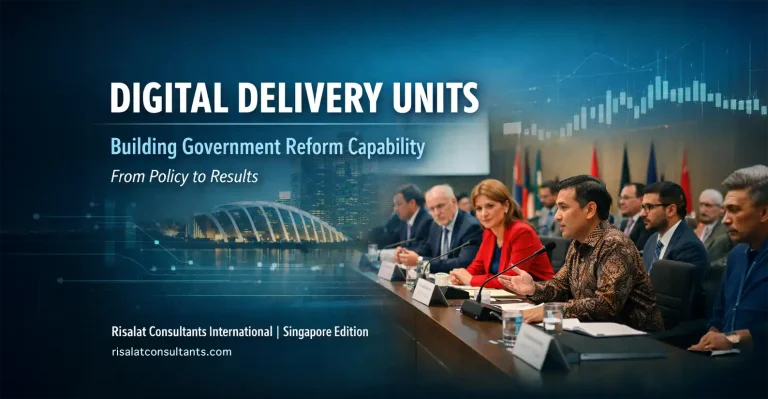
An applied programme in Singapore for public agencies and development project teams seeking practical capability in digital delivery units for government reform, with guided…
AI Governance Training in Finland is a hands-on training programme equips municipal leaders, public officials, and technical teams with the skills and strategies necessary…
As Artificial Intelligence (AI) becomes increasingly integrated into decision-making across sectors, the need for ethical oversight, transparent governance, and responsible deployment has become critical.…
Information and Communications Technologies have given rise to worldwide revolution and fundamentally changed the ways we work, learn, or interact.
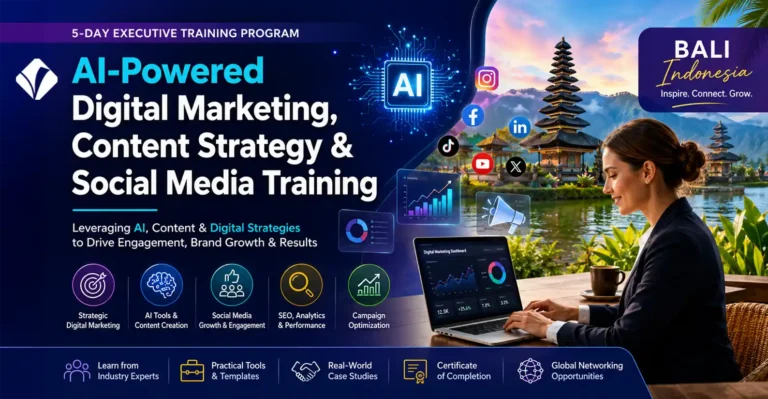
AI-Powered Digital Marketing, Content Strategy & Social Media Training equips professionals with practical digital marketing strategies, artificial intelligence tools, content creation techniques, social media…
Artificial Intelligence, Big Data Analytics, and Machine Learning are transforming the financial services industry by improving decision-making, strengthening risk management, enhancing fraud detection, supporting…
In this, globally-connected world cyber-crime is becoming a growing threat for everyone.
An applied programme in Seoul for public agencies and development project teams seeking practical capability in electronic government procurement, with guided workshops and institutional…
Precision agriculture capitalizes on technology such as satellite imagery, GPS, drones, and field mapping to enhance crop quality and profitability.
Public institutions and donor-funded programmes face an urgent need to translate expanding volumes of environmental observations into effective operational decisions.
High-voltage transmission systems require robust engineering interventions to guarantee operational continuity and cross-border grid stability.
Social protection delivery systems increasingly depend on integrated data architectures to reach vulnerable populations efficiently.
The Islamic finance industry stands at a pivotal juncture where digital innovation, FinTech integration, and Shariah compliance must co-exist to shape the future of…
This comprehensive course delves into the powerful intersection of artificial intelligence, neuroscience, and behavioral psychology to unlock deeper insights into consumer decision-making.
In today's interconnected world, digital health systems have become essential for managing patient care, improving clinical outcomes, and enabling healthcare professionals to access and…
Rapid expansion of mobile network operators and agent networks has transformed financial inclusion, yet it brings substantial regulatory complexity.
This programme gives officials and project teams the practical methods of e-procurement and digital public procurement systems, built around real cases from public institutions…
Digital Social Protection Training in Lisbon for government and development professionals covering AI, integrated case management, dynamic social registries, interoperability, DPI, data governance and…
Well-thought and Sustainable Human Resource Management is vital for the positive development of the organization.
This programme gives participants practical knowledge and tools in fraud, audit and internal control, with a focus on what works in public institutions and…
A five-day, management-level programme in Moscow on scoping, prioritising and acting on cyber risk and vulnerability assessments, using NIST CSF 2.0, ISO/IEC 27005:2022 and…
National digital transformation agendas depend on reliable, high-capacity middle-mile infrastructure to connect underserved regions and lower wholesale transit costs.
Modernising public administration requires resilient digital foundations that dismantle data silos and improve public service delivery.
The rapid rise of artificial intelligence offers governments unprecedented opportunities to improve public administration, enhance service delivery, and support evidence-based policymaking.
Effective social protection delivery relies on robust administrative data infrastructure, resilient identification systems, and accountable beneficiary interfaces.
The AI for Agriculture and Food Security Training in Accra delivers comprehensive guidance on deploying artificial intelligence across agricultural value chains and national monitoring…
Public social protection registries store vast volumes of sensitive citizen identity, vulnerability, and financial data.
Educational systems are undergoing structural transformation as digital infrastructure expands into primary and secondary schools.
Revenue administrations are undergoing significant operational transformations driven by digital systems, transaction-level reporting, and sophisticated analytical tools.
FinTech, Digital Banking, and AI are redefining financial services through intelligent automation, Open Banking, digital payments, enhanced cybersecurity, and customer-centric innovation, enabling institutions to…
Artificial intelligence is rapidly reshaping public administration, policy formulation and the delivery of citizen services worldwide.
National social protection systems increasingly depend on integrated social registries to coordinate assistance, verify beneficiary eligibility, and channel public resources efficiently.
Digital transformation across emerging markets requires robust broadband infrastructure to support expanding public e-services and commercial enterprise.
This programme gives officials and project teams the practical methods of e-procurement and digital public procurement systems, built around real cases from public institutions…
Public sector organisations face growing pressure to modernise service delivery and improve administrative efficiency through artificial intelligence.
Educational ministries face mounting operational pressures to transition from fragmented paper records to robust digital education management information systems.
This intensive four-day training programme examines the critical technical and operational pathways for modernising social registries and scaling government-to-person (G2P) payments.
National statistical systems face mounting pressure to deliver timely, granular indicators while managing constrained data collection budgets.
This programme gives officials and project teams the practical methods of digital government and citizen e-services, built around real cases from public institutions and…
Government institutions and donor-funded operations face a dual challenge as artificial intelligence reshapes the cybersecurity landscape.
Small island developing states face distinct structural constraints in delivering inclusive public services across geographically dispersed populations.
Modernising public service delivery requires robust national interoperability architectures and secure digital identity frameworks.
Modern social protection delivery demands robust targeting mechanisms and secure data infrastructure to direct welfare resources efficiently.
Higher education systems are transitioning towards centralised digital infrastructure to support remote instruction, blended pedagogy, and shared institutional research.
This three-day professional training programme equips public sector statistical leaders with the technical and institutional capabilities required to modernise data access.
Modern public administration demands seamless inter-agency collaboration and robust data sovereignty.
This programme gives officials and project teams the practical methods of e-procurement and digital public procurement systems, built around real cases from public institutions…
Artificial intelligence is rapidly transforming public administration, judicial systems and international development programmes.
This five-day professional training programme provides public sector specialists with essential technical and operational knowledge for implementing large-scale broadband infrastructure.
This intensive four-day professional programme equips social protection practitioners with the operational competencies required to design, implement, and govern modern productive safety nets and…
Artificial intelligence is transforming education and skills development across the globe.
The Mini Degree in Digital Government and AI in Tallinn provides public sector leaders and project teams with an end to end programme covering…
Electrical distribution networks face operational complexities driven by urbanisation, industrial demand, and the integration of decentralised energy resources.
Artificial intelligence is transforming how governments deliver public services, allocate resources, and monitor operational performance.
This five-day training programme in Kigali equips Project Implementation Unit (PIU) staff and public sector managers with practical artificial intelligence skills.
Electrical distribution networks face intense operational pressure to expand access, integrate distributed energy resources, and reduce commercial and technical losses.
This programme gives officials and project teams the practical methods of digital government and citizen e-services, built around real cases from public institutions and…
Tax and customs administrations face growing transaction volumes, sophisticated non-compliance, and expanding public expectations for modern digital services.
Expanding digital connectivity into underserved rural areas requires robust public intervention, sound regulatory instruments, and well-structured capital investments.
This four-day executive programme equips social protection practitioners with the administrative and technical capabilities required to operate dynamic unified social registries.
This four-day professional course delivers rigorous technical guidance on designing, deploying, and maintaining management information systems dedicated to gender protection and social welfare.
This four-day professional executive course in Tallinn provides technical leaders and programme directors with the architectural knowledge required to design and govern national digital…
This four-day professional executive programme equips public sector leaders and technical experts to structure sustainable public-private partnerships for rural broadband infrastructure.
Modernising public employment services requires robust digital infrastructure capable of processing dynamic workforce data.
This programme gives officials and project teams the practical methods of digital government and citizen e-services, built around real cases from public institutions and…
Modernising land administration requires robust spatial foundations and streamlined legal processes.
Digital Delivery Units for Government Reform Training in Almaty is a practice-based professional programme for public agencies, development project teams and organisations responsible for…
The integration of artificial intelligence into development cooperation is transforming monitoring, evaluation, accountability and learning functions.
This four-day executive training programme delivers rigorous capacity building in telecommunications policy, legal architecture, and regulatory enforcement.
This four-day professional course provides public sector technology leaders with the operational tools required to defend national digital assets against advanced threats.
Pastoral livestock economies across Central Asia and Mongolia face acute logistics and market integration bottlenecks.
Public sector institutions across North Africa and the Levant face urgent demands to modernise administrative procedures and deliver transparent citizen services.
Cross-border digital integration requires modern trade ecosystems to replace fragmented clearance pathways with interoperable platforms.
Modernising public administration requires public institutions across North Africa and the Levant to accelerate their digital transitions.
Public sector institutions and donor-funded project implementation units face urgent demands to modernise administrative operations while maintaining strict governance standards.
Digital beneficiary registries and government-to-person (G2P) payment ecosystems are central to modern social protection delivery.
Power distribution utilities face urgent operational pressures to improve revenue collection, curb technical and commercial losses, and elevate service quality.
This comprehensive course delves into the powerful intersection of artificial intelligence, neuroscience, and behavioral psychology to unlock deeper insights into consumer decision-making.
Modern public administration requires resilient digital public infrastructure to deliver citizen-centric services across fragmented public sectors.
Electrical distribution networks across West Africa face substantial technical and commercial challenges that require modern, automated solutions.
Public procurement functions face growing workloads, complex compliance mandates and demands for greater operational efficiency.
Digital transformation in public administration is essential for improving transparency, operational efficiency, and citizen satisfaction across North Africa and the Levant.
Modern agrarian reform initiatives require reliable, digital spatial frameworks to convert collective land holdings into individual property titles.
Modern public financial management relies heavily on the strength, security, and integrity of digital architectures.
This four-day professional course equips public sector technology leaders with the strategic and operational competencies required to implement robust digital infrastructure.
Government agencies face mounting pressure to modernize legacy digital infrastructure while ensuring robust public data protection, sovereign control, and system cohesion.
This five-day professional training programme delivers rigorous technical guidance on enterprise architecture and cross-government interoperability for public sector modernisation.
Artificial intelligence is transforming financial ecosystems, presenting supervisory authorities and regulated entities with unprecedented analytical capabilities and complex regulatory challenges.
Subsea fibre-optic infrastructure forms the critical foundation of global connectivity, yet landing a cable does not automatically translate into affordable access.
Modern public administration requires resilient digital public infrastructure to underpin inclusive social services and economic development.
Public sector institutions and project implementation units face expanding demands to modernise civil service capacity through structured, scalable learning.
Public financial management and oversight bodies face increasing pressure to improve fiscal discipline, enhance transparency, and process complex expenditure data efficiently.
Public sector organisations and development programmes face mounting pressure to deliver complex portfolios with constrained administrative capacity.
Developing resilient national backbone networks requires public institutions to transition towards open-access principles and structured wholesale telecommunications markets.
This programme gives officials and project teams the practical methods of digital government and citizen e-services, built around real cases from public institutions and…
Rapid urbanisation and resource constraints require municipal authorities to modernise public service delivery through advanced digital technologies.
This five-day professional training programme provides an intensive grounding in the architecture, governance, and technical administration of integrated social registries.
This programme gives officials and project teams the practical methods of digital government and citizen e-services, built around real cases from public institutions and…
This five-day professional training programme provides public sector technology leaders with the technical and strategic competencies required to design, procure, and govern national cloud…
Modern public administration requires resilient civil registration systems that grant legal identity to all individuals.
Modern retail payment infrastructures form the foundation of accessible, resilient, and inclusive financial ecosystems.
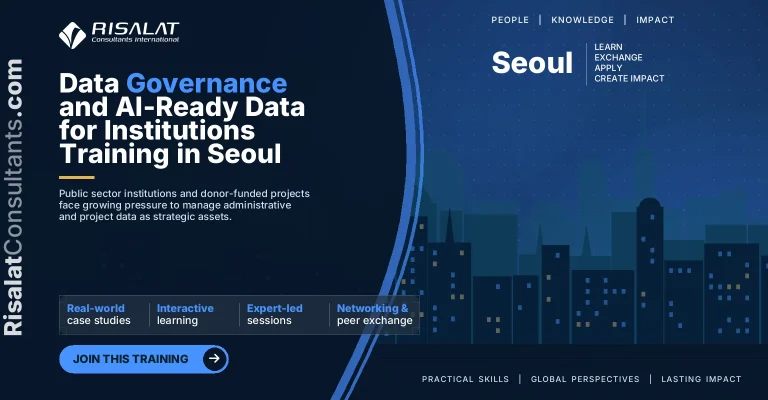
Public sector institutions and donor-funded projects face growing pressure to manage administrative and project data as strategic assets.
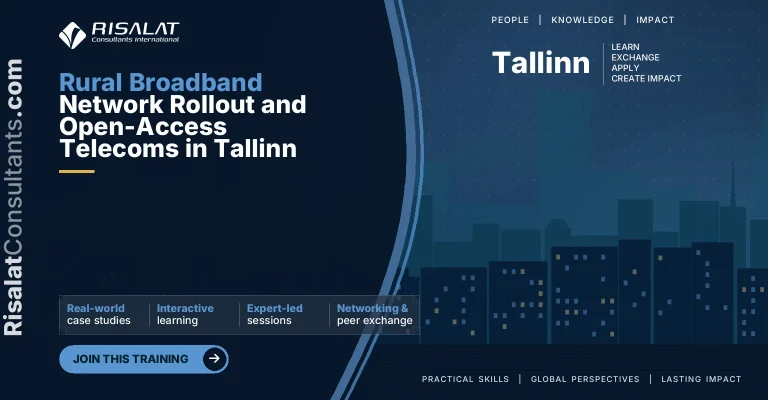
The Rural Broadband Network Rollout and Open-Access Telecoms programme delivers technical, regulatory, and commercial competencies for deploying high-capacity digital infrastructure in underserved regions.
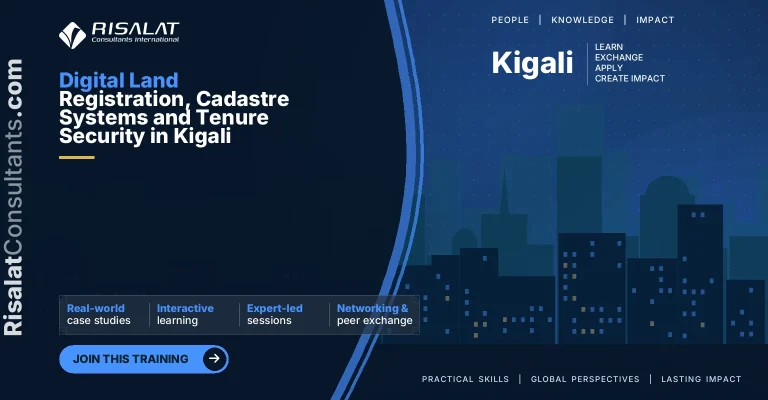
Modern land governance demands reliable, transparent, and accessible digital systems that guarantee property rights and secure tenure for all citizens.
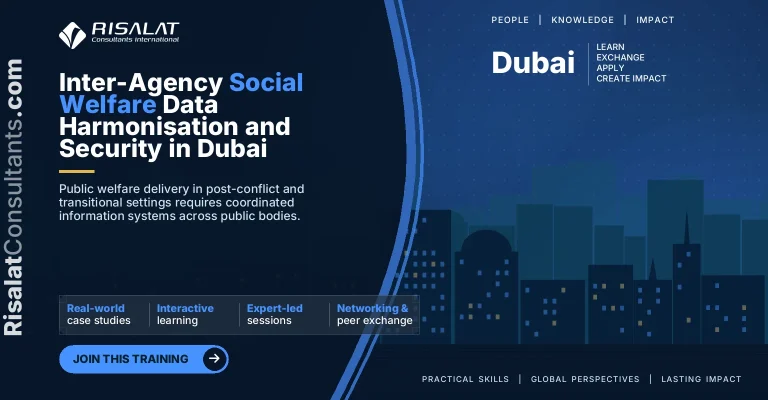
Public welfare delivery in post-conflict and transitional settings requires coordinated information systems across public bodies.
Municipal water utilities face escalating operational challenges that demand modern automation and reliable telemetry.
Modern public administration requires resilient data infrastructure that bridges institutional fragmentation and enables secure, citizen-centric service delivery.
Modern cadastre systems require strong links between technical survey accuracy and institutional land administration processes.
Modern socio-economic development relies on resilient public digital infrastructure and pervasive broadband networks.
Immunisation programmes require robust data architectures to ensure equitable vaccine delivery, protect public health investments, and maintain clinical accountability.
This comprehensive course delves into the powerful intersection of artificial intelligence, neuroscience, and behavioral psychology to unlock deeper insights into consumer decision-making.
Public sector bodies, international organisations and development agencies face increasing demands to deliver complex outputs with speed, precision and accountability.
Modern digital financial infrastructure serves as the core backbone for resilient capital markets and inclusive domestic economic growth.
Delivering equitable, high-quality education across dispersed island geographies presents acute operational and pedagogical hurdles for public education authorities.
Cross-border transport and telecommunications corridors require integrated technical supervision and cross-sector coordination to succeed.
National digital transformation requires resilient, high-capacity transmission networks alongside efficient domestic traffic exchange.
In today's interconnected world, digital health systems have become essential for managing patient care, improving clinical outcomes, and enabling healthcare professionals to access and…
Primary education authorities face continuous pressure to modernise foundational learning through digital innovation.
Try another month or city, or ask us to run this programme on dates that suit you.
Request your datesRisalat has 128 open Technology courses in 40 cities (Singapore, Dubai, Tallinn, Istanbul, Kigali and Seoul and others), from 11 Jan 2027 to 15 Nov 2027. A typical course lasts 5 days. Fees start at £2,350 per participant.
Subjects covered most often: Data, AI and analytics, Governance and anti-corruption, Digital government, Infrastructure and urban development and Public procurement.
The courses are written for governments, public agencies, teams running donor-financed projects and companies. Sessions combine short inputs, case studies and group work on participants' own files.
Ranked by how often the subject has run in this field and by registrations.
Risalat also advises institutions on these subjects:
Free tools to prepare before a course:
Looking for a short course, a training programme or a capacity-building programme in Technology? The 128 open programmes on this page are for government officials, project teams of donor-financed projects, NGOs and private sector professionals, and each can run in-house for one organisation.
There are 128 upcoming Technology courses in Singapore, Dubai, Tallinn, Istanbul, Kigali and Seoul, starting between 11 Jan 2027 and 15 Nov 2027.
Fees for the upcoming courses range from £2,350 to £6,550 per participant. Each programme page shows its own fee. Payment is by invoice and bank transfer.
The next one is AI for Health Systems and Health Data Training in Geneva, 11-15 Jan 2027 in Geneva (5 days). Registration closes on 2 Dec 2026.
Upcoming dates are in Singapore, Dubai, Tallinn, Istanbul, Kigali, Seoul, Casablanca and Kuala Lumpur. Teams from any country can join, and the course can also be delivered in your own country or online.
Yes. Any Risalat programme can be delivered in-house for one institution, in your own country or online, on dates that suit your team and adapted to your own documents. Request a proposal.
It depends on your passport: the free Visa Check shows the visa type, processing time and documents for the host country. Registered participants can request an invitation letter: self-funded participants receive it after full payment, sponsored participants on receipt of an official nomination letter and a payment commitment. Embassies can check the letter online.
Yes. Participants receive a Risalat certificate with its own code and QR code, which anyone can check online at risalatconsultants.com/verify.
You qualify for the discount if you register as a group. See the discount plans and cancellation policy.
Open courses are delivered in English. If your team needs another language, say so when you request an in-house proposal.
Yes. Any programme can run as a dedicated course for one organisation or a group of partner agencies: in your country, in a city you choose in your region, or online. The content is adapted to your institutions, rules and current projects.
Officials and staff of ministries, agencies, project units and humanitarian and development organisations who do this work. A short needs assessment before the course sets the level for your group.
Most open programmes run for five days, Monday to Friday; each programme page gives its own dates. A dedicated course is planned around your group: length, cohort size and the mix of sessions, simulations and field visits are agreed with you.
Each participant receives a Certificate of Completion, the training manual and practical tools and templates to use at work, and post-training follow-up.
Each programme page lists exactly what the fee covers. For a dedicated course we send an itemised quotation that separates tuition from logistics (venue, meals, accommodation, transfers). Payment is by invoice and bank transfer.
Registration and payment close at least 40 days before a programme starts, which leaves time for official invitation letters, visas and travel. For a dedicated course, contact us as early as you can so dates and venue can be secured.
We tailor any programme to your institution, in-house, online or in a city of your choice, with content built around your projects. Payment is by invoice and bank transfer.
Essential cookies keep this site secure. With your permission we also use analytics and advertising cookies. Cookie policy
Google Analytics counts visits: in the EU, the UK and Switzerland only after you accept, elsewhere unless you reject it. You can change your choice at any time from “Cookie settings” at the bottom of every page.
The Risalat Brief: one short report a week on a real delivery problem in procurement, safeguards, M&E or public finance, its causes and what works. No adverts; unsubscribe any time.
By subscribing you agree to receive our newsletter. Privacy policyMost questions (dates, fees, visas, registration, invoices) are answered fastest in our website chat, which also keeps a record for your team. For anything else, email info@risalatconsultants.com.
Still urgent?
Please do not send documents or payment details by WhatsApp.