Commercial Water Loss Reduction & Smart Metering Infrastructure in Dubai
Non-revenue water presents a critical threat to the financial viability and operational resilience of municipal utilities across developing economies.
Your choices are remembered on this device. Designed to WCAG 2.2 AA · keyboard: Tab to move, Esc to close. Read our accessibility statement.
Press / to search from any page · Esc to close
Risalat Consultants International runs 111 open training courses in Dubai, United Arab Emirates, for government officials, project teams and professionals, in Energy and Water, Accounting & Finance and Procurement, Supply Chain & Logistics. Choose a date below, or ask us to run any course in-house for your team.
Dubai, United Arab Emirates, is one of the cities where Risalat Consultants International runs practical training programmes for officials, project teams and professionals, with 119 programmes listed here.
Non-revenue water presents a critical threat to the financial viability and operational resilience of municipal utilities across developing economies.
Youth unemployment in small island developing states and tourism-dependent economies requires modern, employer-led technical and vocational education and training systems.
Adaptive Social Safety Nets and Crisis Beneficiary Targeting equips public sector practitioners with operational mechanisms to deliver scalable support during compounding shocks.
Modern public administration requires resilient data infrastructure to deliver citizen-centric digital services across central and regional government bodies.
This five-day professional development programme provides technical personnel with the engineering principles and operational competencies required to integrate solar photovoltaic arrays and battery energy…
Macroeconomic volatility, terms of trade shocks, and climate vulnerability require robust domestic policy mechanisms to safeguard fiscal stability and economic growth.
Rapid urbanisation and protracted displacement place immense pressure on municipal infrastructure and basic service delivery across fragile environments.
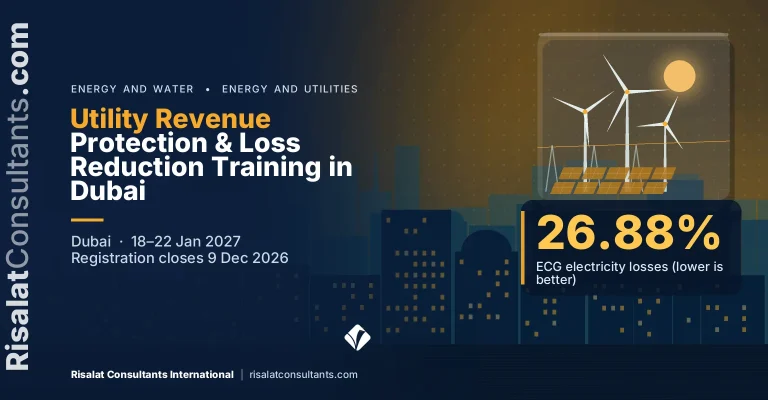
A five-day programme for distribution utilities, energy and finance ministries and regulators on energy accounting, metering, revenue protection, collection and results-based financing, with Dubai's…
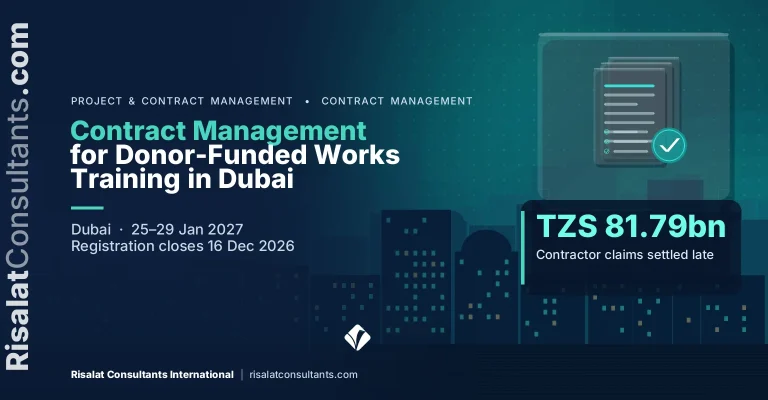
A five-day programme in Dubai on administering donor-financed works contracts: variations, securities, interim payments, late-payment interest, NeST e-contract records and closing audit findings.
Efficient public health delivery requires robust, accountable, and resilient end-to-end pharmaceutical logistics.
This intensive four-day professional programme in Dubai provides public sector managers, technology park authorities, and enterprise development professionals with the operational capabilities required to…
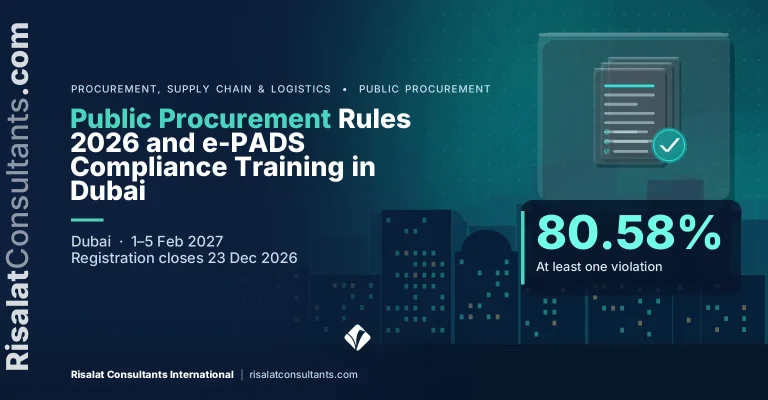
A five-day programme in Dubai for procurement cells, evaluation and grievance committees and donor-project teams applying Pakistan's Public Procurement Rules 2026 on e-PADS, from…
A five-day Dubai programme for HR leaders and managers: turn strategy into a workforce plan, meet nationalisation targets, measure human capital with ISO 30414:2025…
Programmes financed through Programme-for-Results (PforR) instruments demand strict alignment between policy achievements and financial flows.
Social protection delivery systems increasingly depend on integrated data architectures to reach vulnerable populations efficiently.
Electricity distribution companies face intense scrutiny to improve operational efficiency, secure revenue adequacy, and reduce fiscal shortfalls across emerging markets.
High-capacity urban transit systems require rigorous operational planning, dependable asset stewardship, and robust digital integration to deliver reliable public transport services.
Groundwater resources represent a vital lifeline for agricultural resilience across arid and semi-arid regions.
Rapid expansion of mobile network operators and agent networks has transformed financial inclusion, yet it brings substantial regulatory complexity.
Macroeconomic stabilization demands rigorous fiscal planning and quantitative forecasting, particularly when governments rationalise universal subsidies.
State-owned enterprises play a critical role in providing essential public services and driving national infrastructure development.
Public employment services require structured operational frameworks to bridge the gap between education systems and the modern labour market.
Managing the purchasing department of the 21st century is not an easy task.
Rapidly growing small towns require engineered sanitation solutions that match local institutional capacities and settlement layouts.
Small island developing states face critical spatial constraints and acute ecological vulnerabilities when managing municipal waste disposal.
This programme gives officials and project teams the practical methods of public financial management reform and budget execution, built around real cases from public…
Primary healthcare systems face growing demands to demonstrate measurable clinical quality, patient safety, and robust information governance.
Public social protection registries store vast volumes of sensitive citizen identity, vulnerability, and financial data.
Deep-water ports serve as vital economic engines for regional trade corridors, demanding robust infrastructure and modern operations.
Educational systems are undergoing structural transformation as digital infrastructure expands into primary and secondary schools.
This programme gives officials and project teams the practical methods of results-based monitoring and evaluation for donor-funded projects, built around real cases from public…
Practical gender mainstreaming training in Dubai with applied cases, structured exercises and an institutional action plan.
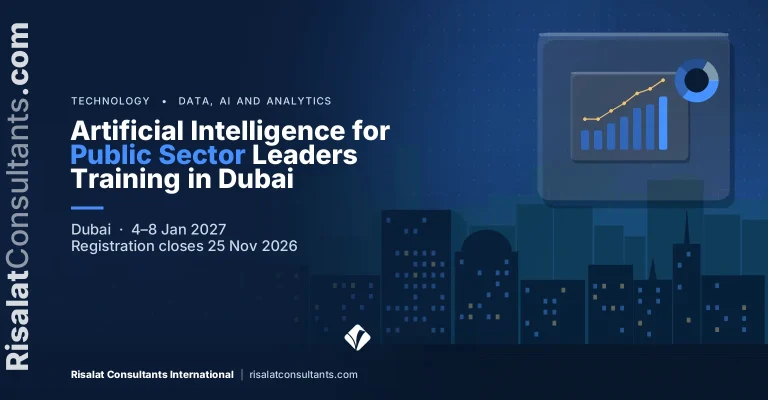
Artificial intelligence is rapidly reshaping public administration, policy formulation and the delivery of citizen services worldwide.
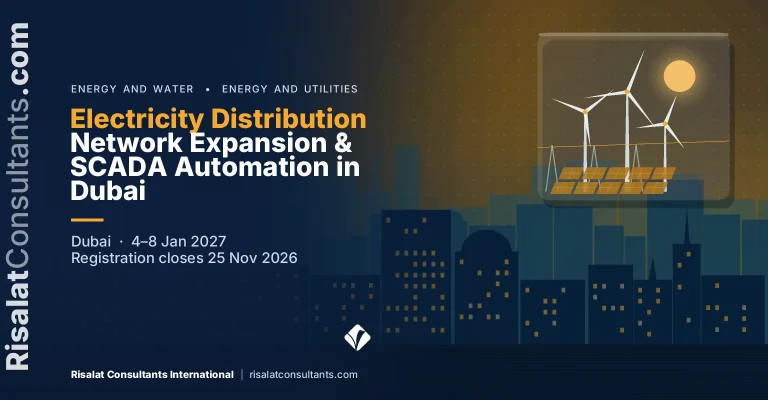
This five-day professional training programme provides specialized technical instruction on modernising electricity distribution networks and implementing automated supervisory control systems.
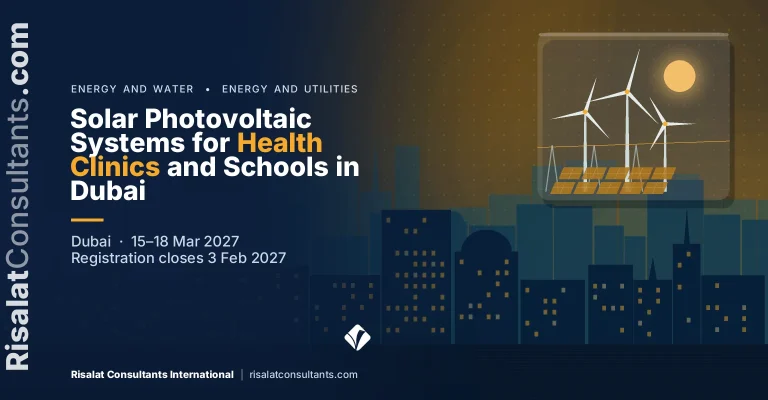
This four-day professional course addresses the critical engineering and management requirements for deploying standalone solar photovoltaic systems in essential community facilities.
Financial inclusion remains central to sustainable economic development, requiring robust regulatory mechanisms that safeguard financial stability while expanding credit access.
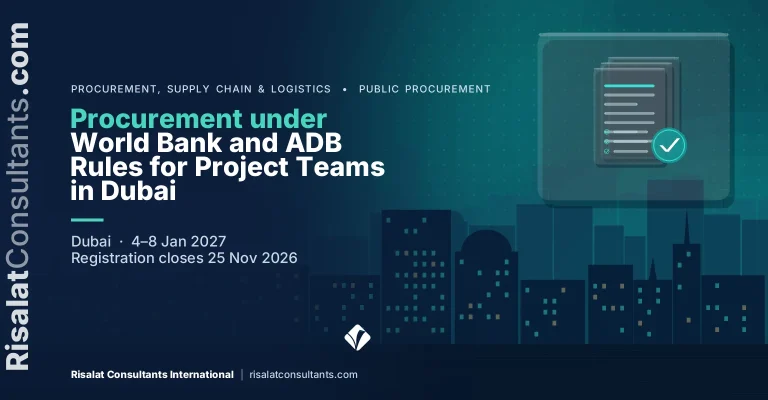
This programme gives officials and project teams the practical methods of procurement under World Bank and ADB rules for project teams, built around real…
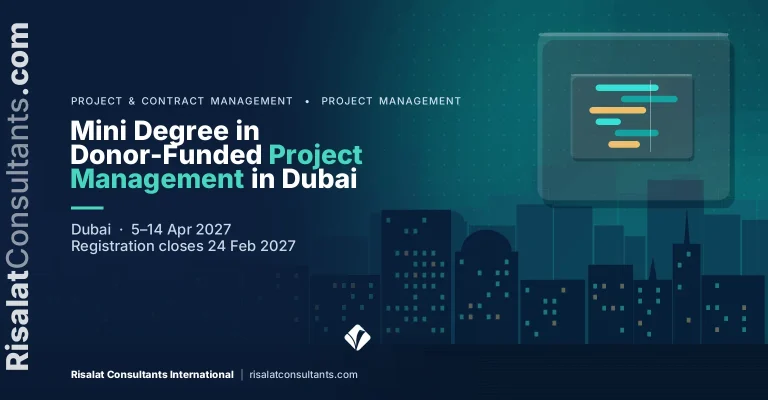
This ten-day executive programme in Dubai delivers an end-to-end immersion in the management of development projects financed by multilateral and bilateral development partners.
Clean energy access expansion requires robust legal, commercial, and regulatory frameworks to mobilise private sector capital and operational capacity.
Micro, small, and medium enterprise (MSME) development sits at the centre of economic diversification agendas across emerging markets.
This programme gives officials and project teams the practical methods of blue economy, fisheries and ocean governance, built around real cases from public institutions…
Aviation infrastructure projects demand rigorous procurement planning and robust contract administration to manage substantial technical risks.
This programme gives officials and project teams the practical methods of strategic leadership for senior government officials, built around real cases from public institutions…
Community-driven resilience planning has become essential for maintaining basic service delivery and safeguarding community assets in fragile and conflict-affected contexts.
National health systems rely on resilient diagnostic networks to deliver accurate clinical findings and maintain epidemiological vigilance.
Modern public administration demands seamless inter-agency collaboration and robust data sovereignty.
Marine transport hubs require robust civil engineering frameworks to accommodate modern container vessels and regional cargo demands.
This five-day professional training programme provides operational practitioners with the essential tools to design, manage, and monitor labor-intensive public works and community cash initiatives.…
Public transport authorities face expanding mandates requiring institutional realignment, robust regulatory structures, and unified service standards.
Commercial growth relies heavily on transparent, agile, and predictable governance environments.
Municipal wastewater reclamation and modernised irrigation infrastructure are critical pillars for arid regions facing structural water deficits.
This four-day executive training programme delivers rigorous operational insights into administering contributory unemployment benefit schemes alongside modern public employment services.
Grid Extension and Solar Distribution Management in Dubai provides intensive technical instruction for power sector professionals tasked with expanding national electricity infrastructure.
Rapid urbanisation in developing economies places severe pressure on public health and sanitation infrastructure.
Developing resilient domestic capital markets remains an essential policy priority for transitional economies seeking to reduce reliance on external foreign currency borrowing.
Efficient freight connectivity underpins economic diversification and industrial competitiveness across emerging trade corridors.
This four-day professional course addresses the critical disciplines of maritime navigation safety, marine aids to navigation, and port operations in island and coastal environments.…
Primary healthcare networks face profound operational pressures when balancing surging patient loads with fiscal constraints.
Maintaining financial sector resilience while expanding access to finance remains a core policy challenge for developing and emerging economies.
This programme gives officials and project teams the practical methods of ppp and infrastructure project finance, built around real cases from public institutions and…
This five-day training programme delivers operational methodologies for financing venture capital ecosystems and accelerating micro, small, and medium enterprise (MSME) expansion.
This five-day professional training programme provides power engineers and energy sector managers with practical tools to integrate utility-scale solar photovoltaic generation into existing distribution…
This programme gives officials and project teams the practical methods of digital government and citizen e-services, built around real cases from public institutions and…
Expanding digital connectivity into underserved rural areas requires robust public intervention, sound regulatory instruments, and well-structured capital investments.
National health insurance organisations are undertaking large-scale digital transformations to achieve universal health coverage and enhance operational transparency.
Protracted instability and economic shocks place immense strain on community structures, destroying micro-enterprises and basic productive infrastructure.
Sub-national public financial management requires transparent expenditure control, realistic medium-term commitments, and accountable intergovernmental funding mechanisms.
This programme gives officials and project teams the practical methods of utility regulation and energy sector reform, built around real cases from public institutions…
This five-day professional training programme provides public sector executives and industrial park authorities with modern tools to plan, operate, and populate competitive industrial zones.…
Multi-donor trust funds operate in intricate operational environments requiring rigorous oversight, multi-stakeholder reporting, and unyielding financial controls.
This five-day professional training course equips energy ministry engineers, utility planning officers, and project implementation units with the technical and managerial competencies required to…
High-voltage electricity transmission networks require continuous engineering upgrades to sustain industrial growth and manage expanding load profiles.
Hydropower infrastructure remains central to sustainable energy transitions and water security across developing economies.
Securing pharmaceutical supply chains in volatile operating environments requires robust operational controls, precise tracking, and resilient storage solutions.
Primary healthcare infrastructure requires robust engineering oversight to guarantee structural integrity, occupant safety, and functional clinical performance.
Emergency procurement operations demand a delicate balance between speed, legal compliance, and life-saving urgency.
Small and medium enterprise lending remains critical for economic recovery, yet financial intermediaries often face structural constraints when extending capital to vulnerable commercial segments.…
Affordable housing delivery depends on well-capitalised financial intermediaries and robust secondary market institutions.
Climate-smart tank cascade rehabilitation and micro-irrigation are vital for agricultural resilience in drought-prone landscapes.
Technical and vocational education and training systems face mounting pressure to align their outputs with private sector requirements.
The Mini Degree in Procurement and Contract Management in Dubai delivers comprehensive, end to end professional instruction across the public procurement cycle.
Early childhood education forms the bedrock of lifelong learning, social cohesion, and national human capital development.
Rapid urbanisation requires public authorities to modernise transit corridors, upgrade terminal infrastructure, and transition informal services into regulated networks.
State-owned enterprises represent critical drivers of infrastructure delivery, employment, and public services, yet their commercial performance directly shapes national fiscal sustainability.
This programme gives officials and project teams the practical methods of renewable energy planning and mini-grids, built around real cases from public institutions and…
Protracted displacement situations demand comprehensive programme strategies that integrate the needs of refugees, internally displaced persons, and host communities.
Integrating solar photovoltaic generation into transmission networks demands rigorous engineering protocols and updated system planning practices.
This four-day professional course addresses the critical structural challenges that constrain micro, small, and medium enterprise finance in developing economies.
Medical oxygen is a vital clinical medicine requiring robust production, distribution, and monitoring infrastructure across secondary and tertiary health facilities.
Cultural and creative industries serve as essential drivers of social cohesion and economic recovery in urban areas undergoing post-crisis reconstruction.
Industrial parks and special economic zones serve as vital instruments for accelerating structural transformation, attracting foreign direct investment, and generating high-value employment.
Modern public administration requires resilient civil registration systems that grant legal identity to all individuals.
This five-day professional training programme delivers critical technical engineering and management expertise for integrating large-scale solar photovoltaic plants into existing transmission networks.
This programme gives officials and project teams the practical methods of humanitarian logistics and supply chain management, built around real cases from public institutions…
Solar-powered irrigation offers a reliable, low-carbon pathway to secure agricultural production against erratic rainfall patterns.
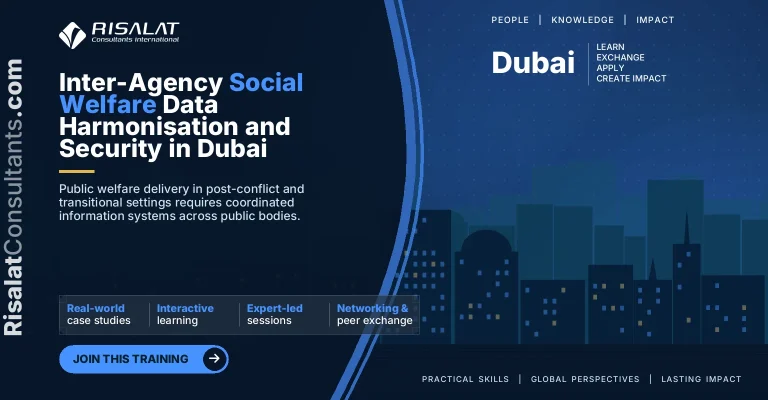
Public welfare delivery in post-conflict and transitional settings requires coordinated information systems across public bodies.
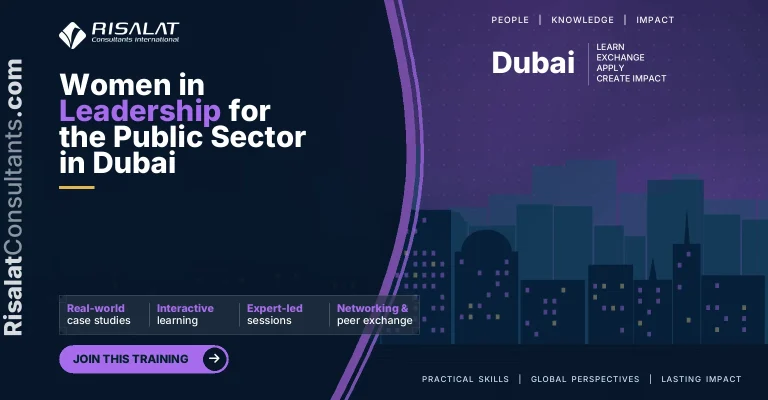
This programme gives officials and project teams the practical methods of women in leadership for the public sector, built around real cases from public…
Renewable energy deployment relies fundamentally on robust contractual frameworks that balance utility solvency with private developer bankability.
The Emergency Geohazard Early Warning and Disaster Response Command programme delivers operational methodologies for managing complex natural hazards in vulnerable mountain environments.
Public institutions and donor-funded project units generate vast volumes of sensitive operational, financial, and strategic information daily.
Supreme Audit Institutions operate at the centre of public accountability, evaluating whether public resources achieve intended policy results.
Green Budget Tagging and Climate Fiscal Risk Management is an intensive four-day professional programme designed for public finance managers navigating the intersection of macro-fiscal…
Agricultural transformation demands structured commercial channels connecting smallholder producer organisations with high-value domestic, regional, and international buyers.
Delivering emergency assistance and infrastructure support in conflict-affected regions demands rigorous oversight under severe access limitations.
Digital financial services and credit guarantee schemes are transforming access to finance for micro, small, and medium enterprises in fragile and developing economies.
Micro, small, and medium enterprise (MSME) access to credit remains constrained in transition economies facing macroeconomic volatility and heightened credit risk.
Cross-border transport and telecommunications corridors require integrated technical supervision and cross-sector coordination to succeed.
Ageing water infrastructure and shifting precipitation patterns present severe operational risks to multi-purpose storage assets worldwide.
Efficient freight connectivity requires the seamless operational integration of maritime container terminals, national rail systems, and inland logistics hubs.
This five-day professional training programme provides power sector engineers and utility planners with the engineering methods required to integrate off-grid solar photovoltaic systems and…
Road corridor modernisation initiatives increasingly demand targeted interventions to translate civil works investments into measurable economic growth for adjacent rural communities.
Try another month or city, or ask us to run this programme on dates that suit you.
Request your datesDubai is a one-flight hub for Africa, Asia and Europe, with simple visas for many nationalities and modern training venues.
Risalat has scheduled 111 programmes in Dubai, and the subjects run most often here are infrastructure and urban development, audit and internal control and governance and anti-corruption.
Sessions combine short inputs, case studies and group work on participants' own files, so officials and project staff leave with work they can use. Courses in Dubai are open to participants from any country, and suit delegations from across the Middle East region.
Ranked by how often the subject has run here and by registrations.
Risalat also advises institutions on these subjects:
Free tools to prepare before a course:
Visiting officials can examine Dubai's rapid modernisation and public sector transformation, driven by entities such as the Roads and Transport Authority and the Dubai Electricity and Water Authority. The emirate is well known for pioneering digital governance through initiatives that streamlined public services into unified online platforms. Participants can observe large-scale infrastructure delivery, modern port management at Jebel Ali, and the operational planning behind international aviation hubs. Furthermore, the wider United Arab Emirates framework offers insights into strategic national planning, economic diversification away from oil, and regulatory reforms that encourage foreign investment. These achievements provide concrete examples of how public institutions can modernise administrative procedures, integrate technology into civil services, and manage ambitious urban development projects.
This city best suits programmes in digital government transformation, mega-project management, public sector innovation, and strategic infrastructure planning because of its globally recognised modern public utilities and advanced administrative systems.
Participants usually arrive the day before the programme through Dubai International (DXB), are met at the airport and settle into the hotel. Sessions run from about 9:00 to 16:00 local time (GMT+4), with practical work on the participants' own cases each day. Where the programme includes one, a field or study visit takes place mid-week, and a city tour and a welcome dinner give the group time to know each other. On the last day each participant presents an action plan and receives a certificate that anyone can verify online.
To join from abroad, register and complete payment at least 40 days before the start; the invitation letter for the visa is issued after registration, and the free Visa Check shows what your passport needs for the United Arab Emirates.
Each programme below was designed from published evidence: financed projects, reforms and official reports in the country it was built for. The first source is shown; every programme page lists all of them.
Choose your country to see the programmes that fit its current projects and reforms, and the cities its teams can reach most easily.
South Asia
Central Asia and the Caucasus
The Middle East
Africa
Free planning tools for participants and HR teams:
Blueprints that match the fields taught here (free, step by step):
Fees for the programmes in Dubai range from £2,350 to £6,000 per participant, and each fee is all-inclusive:
Payment is by invoice and bank transfer. Groups from one organisation receive a group rate, and any programme can be delivered in-house.
Ratings and testimonials say how a course felt. Institutions investing public or project funds should also check:
Whether you are looking for a short course in Dubai, a training programme for your ministry or agency, or a capacity-building programme for a project team, the 111 programmes on this page are open to individual participants and to groups. Most run for 5 days, and ten-day intensive programmes (mini degrees) go deeper.
They are designed for officials of ministries and public agencies, staff of project implementation units on World Bank, AfDB, ADB and UN-financed projects, NGOs and development partners, and professionals from the private sector. Each one can also run in-house for one organisation, in Dubai, in your own country or online.
Many participants are funded by the capacity-building or project management budget of a project financed by the World Bank, a regional development bank, the EU or a UN agency. A short note that links the course to the project's objectives and its procurement plan makes approval easier.
Ask for a free justification note for your project · Book a 30-minute call
There are 111 upcoming training courses in Dubai, United Arab Emirates, starting between 11 Jan 2027 and 15 Nov 2027, in Energy and Water, Accounting & Finance, Procurement, Supply Chain & Logistics, Banking & Insurance, Technology and Agriculture & Forestry.
Yes. 111 short courses are planned in Dubai, most of them 5 days long, for government officials, project teams and professionals. Each includes the course materials, a certificate that can be checked online and post-course support.
Yes. Any programme can be run as a private workshop or seminar for one organisation in Dubai, in your own country or online, on dates that suit you and using your own documents. Book a call or request a proposal.
This page lists 111 upcoming programmes in Dubai in Energy and water, Accounting and finance, Procurement, supply chain and logistics, Banking and insurance, with dates, fees and the full agenda of each. The next one is Commercial Water Loss Reduction & Smart Metering Infrastructure in Dubai. Each programme is open to individual participants and groups, and can also run in-house for your organisation.
Fees for the upcoming courses range from £2,350 to £6,000 per participant. Each programme page shows its own fee. Payment is by invoice and bank transfer.
The next one is Commercial Water Loss Reduction & Smart Metering Infrastructure in Dubai, 11-14 Jan 2027 (4 days). Registration closes on 2 Dec 2026.
Yes. Any Risalat programme can be delivered in-house for one institution, in Dubai, in your own country or online, on dates that suit your team and adapted to your own documents. Request a proposal.
It depends on your passport: the free Visa Check shows the visa type, processing time and documents for the United Arab Emirates. Registered participants can request an invitation letter: self-funded participants receive it after full payment, sponsored participants on receipt of an official nomination letter and a payment commitment. Embassies can check the letter online.
We tailor any programme to your institution, in-house, online or in a city of your choice, with content built around your projects. Payment is by invoice and bank transfer.
Essential cookies keep this site secure. With your permission we also use analytics and advertising cookies. Cookie policy
Google Analytics counts visits: in the EU, the UK and Switzerland only after you accept, elsewhere unless you reject it. You can change your choice at any time from “Cookie settings” at the bottom of every page.
The Risalat Brief: one short report a week on a real delivery problem in procurement, safeguards, M&E or public finance, its causes and what works. No adverts; unsubscribe any time.
By subscribing you agree to receive our newsletter. Privacy policyMost questions (dates, fees, visas, registration, invoices) are answered fastest in our website chat, which also keeps a record for your team. For anything else, email info@risalatconsultants.com.
Still urgent?
Please do not send documents or payment details by WhatsApp.