Key facts
- Dates
- 10–13 May 2027 (4 days)
- Where
- Dubai, United Arab Emirates
- Fee per participant
- £3,000 (GBP)
- Payment
- By invoice and bank transfer
- Registration closes
- 31 Mar 2027
- Format
- 4-day short course: a practical capacity-building programme for government, NGO and project teams in Dubai
- Groups
- Teams of 3 or more qualify for a group discount, offered case by case: ask for a group quote.
- In-house option
- Run it for your team, on your dates
On this page 10 sections
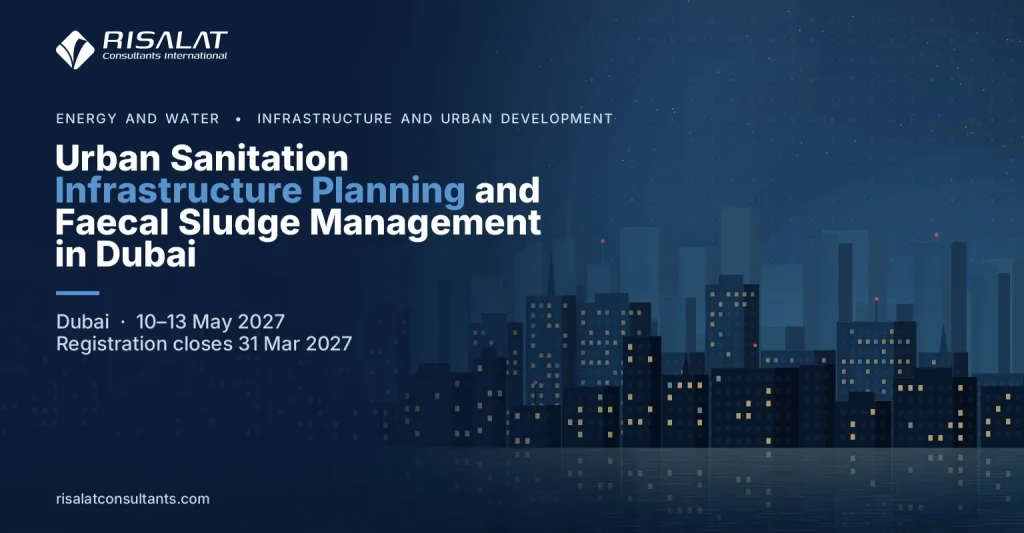
Urban Sanitation Infrastructure Planning and Faecal Sludge Management in Dubai
Programme Overview
Rapid urbanisation in developing economies places severe pressure on public health and sanitation infrastructure. Conventional centralised sewerage systems frequently prove too costly and technically unviable for expanding informal and low-income settlements. This course equips technical professionals with practical capabilities to plan, procure, and supervise citywide inclusive sanitation systems. Participants examine non-sewered sanitation approaches, off-grid infrastructure, and structured containment standards, linking engineering principles directly to municipal public health goals and urban master planning frameworks.
Municipal utilities require robust methodologies to manage the complete faecal sludge service chain from containment to end-use. Through this intensive programme in Dubai, participants examine modern faecal sludge treatment plant designs, mechanical emptying technologies, and scheduled desludging logistics. The curriculum bridges technical execution and economic sustainability by exploring cost-reflective tariff structures and performance-based contracts for private operators. Training materials reflect standards and guidelines established by international financiers including the World Bank and the African Development Bank.
Engineers and sanitation managers will evaluate operational frameworks that integrate non-sewered sanitation alongside existing utility networks. By assessing international regulatory benchmarks and standard operating procedures, participants learn to establish rigorous sanitary inspection regimes and compliance monitoring protocols. Delivered by Risalat Consultants International in Dubai, United Arab Emirates, it combines expert-led sessions, real cases and group work, so that participants can apply what they learn in their own institution.
The programme strengthens institutional capability in:
- Principles of Citywide Inclusive Sanitation (CWIS) and urban sanitation planning frameworks
- Assessment of on-site containment technologies: septic tanks, lined pits, and twin-pit systems
- Technical standards for containment construction, soil infiltration tests, and groundwater protection
- Municipal sanitary inspection procedures, defect identification, and regulatory enforcement
- Mapping urban sanitation coverage and containment typologies using spatial assessment tools
- Emptying technologies: vacuum tankers, mini-evacuators, and semi-mechanised extraction equipment
- Route optimisation, transfer stations, and logistical planning for scheduled desludging
- Occupational health and safety protocols for sanitation service workers during extraction and transport
- Climate and environmental risk assessment
- Adaptation and mitigation planning
- Sector strategies for energy, water and land
- Project design for climate and environmental goals
Why this matters now
Organisations increasingly require professionals capable of:
- Assess climate and environmental risks to their services and assets
- Design projects that meet climate and environmental goals
- Prepare proposals that financiers can approve
- Measure and report results credibly
- Work with communities and partners across sectors
Strong climate, environment and natural resources systems help organisations:
- Protect services and infrastructure from climate risks
- Access climate and environmental finance
- Meet national and international commitments
- Use natural resources sustainably
- Funds
- Entity
- Project
- Results
- MRV
Who Should Attend
This programme is designed for:
- Urban utility engineers and technical directors
- Municipal sewerage authority project managers
- Municipal sanitary and public health inspectors
- Sanitation infrastructure planning officers
- City council environmental health engineers
- Project implementation unit (PIU) sanitation specialists
- Water and sanitation regulatory authority analysts
- Public works contract management specialists
- Faecal sludge treatment plant operations managers
- Climate change and environment officers
- Energy, water and agriculture sector staff
- Planning and policy officers
Tick what your team needs to be able to do.
Programme Objectives
By the end of this programme participants will be able to:
- Evaluate non-sewered sanitation networks and containment systems against international public health and engineering standards
- Appraise mechanical emptying technologies and logistics systems to optimise scheduled desludging operations
- Design operational flowsheets and unit processes for modern faecal sludge treatment facilities
- Formulate cost-reflective tariff structures to ensure full life-cycle cost recovery for sanitation services
- Develop performance-based service contracts to engage and regulate private faecal sludge vacuum operators
- Establish municipal sanitary inspection protocols to enforce containment compliance across urban residential zones
- Apply multilateral development bank project guidelines to structure capital procurement and technical supervision
- Explain the main climate and environmental challenges for their sector
- Assess climate and environmental risks to services and assets
- Plan adaptation and mitigation measures
Training Structure & Contents
- Principles of Citywide Inclusive Sanitation (CWIS) and urban sanitation planning frameworks
- Assessment of on-site containment technologies: septic tanks, lined pits, and twin-pit systems
- Technical standards for containment construction, soil infiltration tests, and groundwater protection
- Municipal sanitary inspection procedures, defect identification, and regulatory enforcement
- Mapping urban sanitation coverage and containment typologies using spatial assessment tools
- Application of containment engineering methods to institutional scenarios
- Emptying technologies: vacuum tankers, mini-evacuators, and semi-mechanised extraction equipment
- Route optimisation, transfer stations, and logistical planning for scheduled desludging
- Occupational health and safety protocols for sanitation service workers during extraction and transport
- Structuring performance-based contracts for private sector pit-emptying service providers
- Digital monitoring, fleet tracking systems, and mobile-based customer request management
- Practical group work on institutional emptying logistics and next steps
- Faecal sludge characterisation, quantification, and chemical sampling methodologies
- Solid-liquid separation: settling-thickening tanks, unplanted drying beds, and planted drying beds
- Biological treatment stages, anaerobic digestion, and co-treatment options with domestic wastewater
- Safe end-use applications, nutrient recovery, and pathogen inactivation benchmarks
- Developing standard operating procedures (SOPs) for treatment plant operation and maintenance
- Case study analysis of treatment facility design choices and good practice lessons
- Financial modelling for sanitation: capital expenditure (CapEx) and operational expenditure (OpEx)
- Designing equitable, cost-reflective sanitation tariffs, surcharges, and pro-poor subsidy models
- Key performance indicators (KPIs) and service level agreements (SLAs) for sanitation utilities
- Environmental and social risk management under World Bank and international financing standards
- Preparation of capital investment plans and procurement packages for sanitation projects
- Institutional action planning covering priorities, owners, and immediate implementation steps
- Climate and environmental risk assessment for municipal sanitation assets
- Sector strategies and adaptation planning for energy, water, and land interfaces
- Formulation of project proposals and technical documentation for international financiers
- Establishing operational compliance monitoring and inspection regimes across utilities
- Action plan presentations and peer evaluation for municipal service delivery
Full day-by-day contents
First Day | Citywide Inclusive Sanitation and Containment Engineering
- Principles of Citywide Inclusive Sanitation (CWIS) and urban sanitation planning frameworks
- Assessment of on-site containment technologies: septic tanks, lined pits, and twin-pit systems
- Technical standards for containment construction, soil infiltration tests, and groundwater protection
- Municipal sanitary inspection procedures, defect identification, and regulatory enforcement
- Mapping urban sanitation coverage and containment typologies using spatial assessment tools
- Application of containment engineering methods to institutional scenarios
Second Day | Faecal Sludge Emptying Logistics and Transport Management
- Emptying technologies: vacuum tankers, mini-evacuators, and semi-mechanised extraction equipment
- Route optimisation, transfer stations, and logistical planning for scheduled desludging
- Occupational health and safety protocols for sanitation service workers during extraction and transport
- Structuring performance-based contracts for private sector pit-emptying service providers
- Digital monitoring, fleet tracking systems, and mobile-based customer request management
- Practical group work on institutional emptying logistics and next steps
Third Day | Faecal Sludge Treatment Facility Planning and Design
- Faecal sludge characterisation, quantification, and chemical sampling methodologies
- Solid-liquid separation: settling-thickening tanks, unplanted drying beds, and planted drying beds
- Biological treatment stages, anaerobic digestion, and co-treatment options with domestic wastewater
- Safe end-use applications, nutrient recovery, and pathogen inactivation benchmarks
- Developing standard operating procedures (SOPs) for treatment plant operation and maintenance
- Case study analysis of treatment facility design choices and good practice lessons
Fourth Day | Tariff Setting, Governance, and Donor Project Execution
- Financial modelling for sanitation: capital expenditure (CapEx) and operational expenditure (OpEx)
- Designing equitable, cost-reflective sanitation tariffs, surcharges, and pro-poor subsidy models
- Key performance indicators (KPIs) and service level agreements (SLAs) for sanitation utilities
- Environmental and social risk management under World Bank and international financing standards
- Preparation of capital investment plans and procurement packages for sanitation projects
- Institutional action planning covering priorities, owners, and immediate implementation steps
Fifth Day | Sector Integration, Climate Resilience, and Project Structuring
- Climate and environmental risk assessment for municipal sanitation assets
- Sector strategies and adaptation planning for energy, water, and land interfaces
- Formulation of project proposals and technical documentation for international financiers
- Establishing operational compliance monitoring and inspection regimes across utilities
- Action plan presentations and peer evaluation for municipal service delivery
Training Methodology
The course uses an applied professional delivery method combining technical lectures, real-world case analysis, and hands-on operational calculation exercises. Participants work with engineering spreadsheets, contract drafting templates, and municipal inspection checklists. Structured group working sessions allow utility engineers to review actual sanitation master plan scenarios, address specific implementation challenges, and present proposed operational solutions for peer and expert evaluation.
- Technical lectures and expert input
- Real-world case analysis
- Hands-on operational calculation exercises using engineering spreadsheets
- Practical contract drafting templates and municipal inspection checklists
- Small-group institutional application exercises and capstone action planning
- Peer and facilitator review sessions
Expected Outcomes
- Technical capability to plan and supervise citywide inclusive sanitation systems
- Proficiency in containment technology assessment and groundwater protection standards
- Operational knowledge to design and monitor scheduled desludging logistics and emptying fleets
- Ability to draft performance-based service contracts for private faecal sludge operators
- Competence in treatment plant process design, characterisation, and standard operating procedures
- Capacity to formulate cost-reflective tariffs, surcharges, and pro-poor subsidy models
- Preparation of capital investment plans aligned with multilateral development bank standards
£3,000 per participant · invoice and bank transfer · groups of 5 or more receive a discount
Five or more from one organisation: ask for the group rate on the invoice request.
Ten or more: an in-house version for your institution may cost less per person. Ask for an in-house quote.
Registration closes in 122 days (31 Mar 2027)
Who Will Deliver This Programme
Each date is delivered by a team assigned from Risalat's expert network for this subject. For this programme we assign:
How we choose them: Experience in the region of the participants or comparable settings; Command of the financier rules that apply (World Bank, ADB, AfDB, EU, UN) where relevant; Delivery in English; other languages on request for in-house groups; No conflict of interest with participants' institutions.
Training courses in DubaiEnergy and Water training courses
Why Dubai for this programme
Dubai is a one-flight hub for Africa, Asia and Europe, with simple visas for many nationalities and modern training venues.
The Urban Sanitation Infrastructure Planning and Faecal Sludge Management in Dubai programme in May 2027 brings together officials and professionals from across the Middle East region and beyond. Sessions combine short inputs, case studies and group work on participants' own files, and the city's institutions can be added as a study visit on request.
Getting there: Dubai International (DXB).
Check whether you need a visa with the free Visa Checker, and ask for an invitation letter once you are registered.
The same topic in other cities
- On-Site Sanitation Facility Construction and Sludge Treatment Oversight in Dakar (Dakar)
- Groundwater Security and Urban-Rural Sanitation Network Expansion in Geneva (Geneva)
- Urban Drainage Design, Faecal Sludge Management and Utility Operations in Porto (Porto)
- Sludge Management and Small-Town Sanitation Engineering in Dubai (Dubai)
- Urban Water Reticulation & Faecal Sludge Management in Small Island States in Auckland (Auckland)
- Township Water Network Expansion & Sludge Management in Kuala Lumpur (Kuala Lumpur)
Other programmes in Dubai
- Mini Degree in Internal Audit and Risk Management in Dubai
- Refugee and Host Community Programme Management in Dubai
- Performance Audit for Supreme Audit Institutions in Dubai
- Artificial Intelligence for Public Sector Leaders Training in Dubai
- Records and Archives Management for Public Institutions in Dubai
Questions before you nominate your team? Book a 30-minute call with us, or ask for this programme in-house.
Teams often travel here from Maldives, Sri Lanka, Bangladesh, Nepal, Pakistan, Kazakhstan, Uzbekistan, Kyrgyzstan. Funding, visa letters and group rates are explained on each country page.
Free roadmap: Sustainable Infrastructure: a 12-month plan for your team
Is there infrastructure and urban development training for government officials in Dubai in May 2027?
Can "Urban Sanitation Infrastructure Planning and Faecal Sludge Management in Dubai" be delivered in-house for one organisation?
Which other infrastructure and urban development programmes does Risalat run?
How do organisations register and pay?
For teams and institutions
Bring your team
Teams that learn together apply more at work. Tell us how many people and how you would like to take part: we reply with a group quote within two working days.
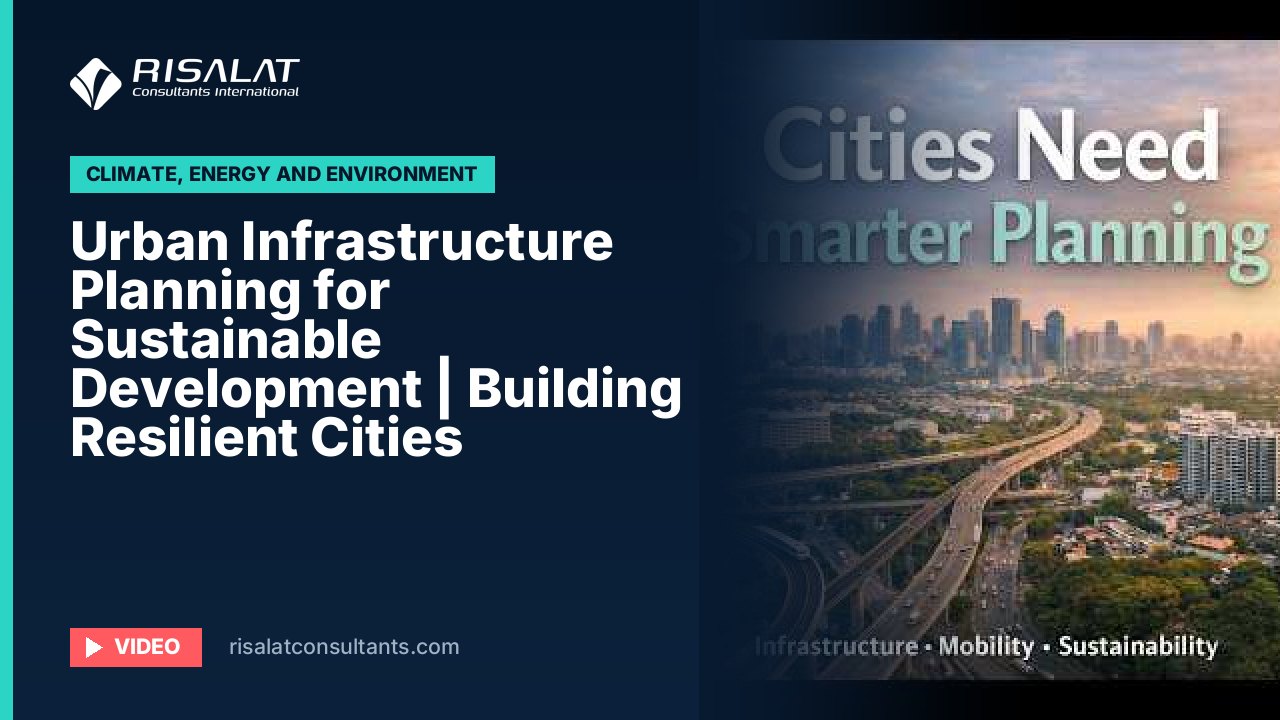
Watch: this programme in short

Other dates and cities for this subject: Water Supply and Sanitation Management training courses (96 upcoming dates).
More training courses in the United Arab Emirates · All programmes in Middle East · Full training calendar
Plan this programme in a roadmap: why it matters, why to approve it, the dates to plan and the career it builds.