Key facts
- Dates
- 26–28 Jan 2027 (3 days)
- Where
- Amara Singapore, Singapore
- Fee per participant
- £3,780 (GBP)
- Payment
- By invoice and bank transfer
- Registration closes
- 17 Dec 2026
- Certificate
- Certificate of completion
- In-house option
- Run it for your team, on your dates
On this page 15 sections
Programme Overview
In today’s digitally driven world, cybersecurity is no longer just an IT concern , it is a critical business imperative. Business leaders must understand the fundamental principles of cybersecurity to protect organizational assets, ensure regulatory compliance, and uphold customer trust. This programme in Singapore equips executives and managers with practical cybersecurity knowledge, risk management strategies, and leadership insights to foster a culture of cyber resilience across the organization. Participants will learn how to recognize cyber threats, align security initiatives with business goals, and respond effectively to cyber incidents.
Host Country Profile Singapore stands as a global leader in cybersecurity, innovation, and digital resilience. Recognized for its advanced infrastructure, strong regulatory frameworks, and commitment to cyber defense, Singapore provides the perfect environment for business leaders to gain practical, real-world cybersecurity insights. Home to the ASEAN Cybersecurity Centre of Excellence and the Singapore Cybersecurity Strategy 2021, the city-state consistently ranks among the top nations globally for cyber readiness. Participants will not only benefit from world-class training facilities but also experience a dynamic, safe, and highly connected business hub that fosters cutting-edge thinking and global collaboration. Singapore’s strategic location, easy international access, and thriving tech ecosystem make it the ultimate destination for empowering leaders to drive cyber resilience within their organizations.
Delivered by Risalat Consultants International in Singapore, it combines expert-led sessions, real cases and group work, so that participants can apply what they learn in their own institution.
The Programme Strengthens Institutional Capability
- The evolving cybersecurity landscape
- Key terminologies every leader must know
- Why cybersecurity is a board-level responsibility
- Major cyber threats targeting businesses
- Vulnerability assessment and risk prioritization
- Social engineering, phishing, ransomware, and insider threats
- Overview of GDPR, ISO 27001, NIST Cybersecurity Framework
- Data protection laws and business obligations
- Digital strategy and transformation planning
- Data governance and data quality
- Data analysis and visualisation
- Cybersecurity basics and risk management
It is designed for CEOs, CFOs, COOs, and Executive Directors, business Owners and Entrepreneurs, department Heads and Senior Managers and others who want practical, current skills in digital government, data and technology.
The Growing Importance of Cybersecurity Fundamentals for Business Leaders
Digital services, data and new technologies are changing how institutions work and how citizens are served. Done well, they make services faster, cheaper and more transparent; done badly, they waste money and expose data to risk.
Institutions need people who can plan digital change, manage data responsibly, protect systems and use evidence from data in decisions. These skills are now expected across all functions, not only in IT.
Organisations increasingly require professionals capable of:
- Plan digital initiatives that solve real problems
- Manage data quality, protection and sharing
- Analyse data and present it clearly
- Manage cyber and technology risks
- Lead people through digital change
Strong digital government, data and technology systems help organisations:
- Deliver faster and more accessible services
- Make better use of data in decisions
- Protect systems and personal data
- Get value from technology investments
This Cybersecurity Fundamentals for Business Leaders programme brings these elements together in a practical format, so that participants understand not only what good practice looks like but also how to introduce it in their own setting, with the people and resources they have.
Who Should Attend This Cybersecurity Fundamentals for Business Leaders Training?
This programme is designed for:
- CEOs, CFOs, COOs, and Executive Directors
- Business Owners and Entrepreneurs
- Department Heads and Senior Managers
- Risk Management Professionals
- Legal, Compliance, and HR Officers
- Anyone involved in organizational leadership or digital transformation
- Understand key cybersecurity concepts and their impact on business operations
- Identify and assess common cyber threats, vulnerabilities, and risks
- Align cybersecurity strategies with business objectives and risk appetite
- Interpret and apply key regulations and compliance frameworks (GDPR, ISO 27001, etc.)
- Lead organizational cybersecurity initiatives and create a culture of security awareness
- Develop a basic cyber incident response and crisis management plan
The programme suits experienced professionals as well as those moving into new responsibilities. Groups that mix institutions and countries are encouraged, because participants learn a great deal from each other’s experience.
Tick what your team needs to be able to do.
Cybersecurity Fundamentals for Business Leaders Training Objectives
Upon successful completion of this Cybersecurity Fundamentals for Business Leaders Training, participants will be able to:
- Explain the main trends in digital government and data use
- Plan a digital initiative linked to service goals
- Apply data governance and quality principles
- Analyse and visualise data for decision makers
- Identify and manage cyber and technology risks
- Apply responsible practice when using AI and automation
- Plan the procurement and management of technology
- Lead people through digital change
- Prepare a digital action plan for their institution
Each objective is practised during the programme through exercises, cases or group work, so that participants leave able to do it, not only to describe it.
Programme Contents and Structure
- Module 2: Understanding Threats, Vulnerabilities, and Risks
- The evolving cybersecurity landscape
- Key terminologies every leader must know
- Why cybersecurity is a board-level responsibility
- Major cyber threats targeting businesses
- Vulnerability assessment and risk prioritization
- Social engineering, phishing, ransomware, and insider threats
- Module 4: Building a Cybersecurity Strategy
- Overview of GDPR, ISO 27001, NIST Cybersecurity Framework
- Data protection laws and business obligations
- Penalties for non-compliance and reputational risk
- Risk management principles
- Security policies and governance models
- Integrating cybersecurity into enterprise risk management (ERM)
- Module 6: Leadership’s Role in Cyber Resilience
- Incident detection and reporting
- Building a cyber incident response team (CIRT)
- Crisis communication during cyberattacks
- Embedding cybersecurity into organizational culture
- Employee awareness and training programmes
- Supply chain and third-party risk management
Full day-by-day contents
The programme runs over 3 days. Each day combines expert input, practical work and a closing workshop or case study:
- First Day: Module 1: Introduction to Cybersecurity for Business Leaders
- Second Day: Module 3: Regulatory and Compliance Frameworks
- Third Day: Module 5: Cyber Incident Management and Crisis Response
Full day-by-day contents
First Day | Module 1: Introduction to Cybersecurity for Business Leaders
- Module 2: Understanding Threats, Vulnerabilities, and Risks
- The evolving cybersecurity landscape
- Key terminologies every leader must know
- Why cybersecurity is a board-level responsibility
- Major cyber threats targeting businesses
- Vulnerability assessment and risk prioritization
- Social engineering, phishing, ransomware, and insider threats
Workshop: Module 1: Introduction to Cybersecurity for Business Leaders: Applying It to Your Institution
Working in small groups, participants apply the day's methods to examples from their own institutions and agree practical next steps.
Second Day | Module 3: Regulatory and Compliance Frameworks
- Module 4: Building a Cybersecurity Strategy
- Overview of GDPR, ISO 27001, NIST Cybersecurity Framework
- Data protection laws and business obligations
- Penalties for non-compliance and reputational risk
- Risk management principles
- Security policies and governance models
- Integrating cybersecurity into enterprise risk management (ERM)
Workshop: Module 3: Regulatory and Compliance Frameworks: Applying It to Your Institution
Working in small groups, participants apply the day's methods to examples from their own institutions and agree practical next steps.
Third Day | Module 5: Cyber Incident Management and Crisis Response
- Module 6: Leadership’s Role in Cyber Resilience
- Incident detection and reporting
- Building a cyber incident response team (CIRT)
- Crisis communication during cyberattacks
- Embedding cybersecurity into organizational culture
- Employee awareness and training programmes
- Supply chain and third-party risk management
Capstone Exercise: Cybersecurity Fundamentals for Business Leaders Action Plan for Your Institution
Participants bring the week together in an action plan for their own institution, with priorities, owners and first steps, and present it for feedback from peers and facilitators.
Cybersecurity Fundamentals for Business Leaders Training Methodology
Expert-Led Lectures Clear, structured presentations on cybersecurity principles tailored for non-technical leaders. Interactive Sessions Real-world cybersecurity scenarios where participants identify risks, assess threats, and make decisions. Group Discussions Peer sharing and reflection on personal experiences with cyber risk or crisis management. Case Studies Review of famous cyber breaches (e.g., Equifax, Marriott) to understand leadership failures and lessons learned. Simulations Tabletop exercise simulating a ransomware attack or data breach , leaders must respond in real-time. Toolkit Development Each participant leaves with a practical toolkit: incident response templates, basic cyber governance checklists, risk evaluation models. Panel Discussion Optional guest cybersecurity expert or CISO to share leadership insights (live or virtual).
The programme combines:
- Expert-led sessions on current practice
- Regional and international case studies
- Group work and practical exercises
- Simulations and role plays where relevant
- Discussion of participants' own challenges
- Peer learning across institutions and countries
- Practical tools and templates to take back to work
- Daily reflection and action planning
Before the programme, a short pre-assessment helps the facilitators understand each participant’s role and priorities, so that examples and exercises can be adjusted to the group. Each day ends with a short reflection in which participants note what they will apply at work.
- Collect
- Clean
- Store
- Analyse
- Decide
Expected Outcomes
Upon completion of this Cybersecurity Fundamentals for Business Leaders Training, participants will be able to:
- Plan digital initiatives linked to service goals
- Apply data governance and quality principles
- Analyse and present data clearly
- Manage cyber and technology risks
- Use AI and automation responsibly
- Lead digital change in their institution
Participants leave with a personal action plan and practical tools they can use in their institution from the first week back. Institutions that send several participants can use the programme to agree shared methods and templates across teams, which makes improvements easier to sustain.
£3,780 per participant · invoice and bank transfer · groups of 5 or more receive a discount
Five or more from one organisation: ask for the group rate on the invoice request.
Ten or more: an in-house version for your institution may cost less per person. Ask for an in-house quote.
Registration closes in 39 days (17 Dec 2026)
Institutional Application of Cybersecurity Fundamentals for Business Leaders Training
This programme supports organisations in strengthening:
- Digital strategy
- Data governance
- Data-driven decisions
- Cybersecurity
- Technology management
Participants return with practical tools to improve:
- Data inventories
- Dashboards
- Risk registers
- Technology procurement
- Change plans
The programme is built so that learning moves from the classroom into the institution. Participants work on their own processes and documents where possible, and leave with an action plan that their managers can review and support.
Regional Relevance & Application
Europe
European institutions apply digital government, data and technology within detailed regulatory frameworks and reform agendas. Participants from Europe can compare their practice with colleagues from other regions and test how established methods work under different conditions.
Africa
Across Africa, ministries, agencies and project teams working in digital government, data and technology increasingly operate alongside donor-financed programmes that expect clear systems and evidence. The programme helps participants adapt good practice to the institutions and resources they work with.
Middle East
In the Middle East, national development strategies and diversification plans place growing demands on digital government, data and technology. Participants explore how to build the capability these plans need inside public bodies and companies.
Asia
Institutions across Asia combine rapid growth with ambitious modernisation programmes. Participants from Asia can share their experience of scaling systems quickly and learn from approaches used elsewhere.
Pacific
Small island and Pacific states face particular constraints of size, distance and capacity. The programme highlights practical, proportionate approaches to digital government, data and technology that suit smaller institutions.
Holding the programme in Singapore brings participants together away from their daily pressures, so they can compare how digital government, data and technology is handled in different settings. The same programme can also be delivered in-house for one institution, in its own country or online, with cases taken from its current work.
Host Country Profile – Singapore
Programmes, Workshops, Exposures, Training Courses in Singapore by Risalat Consultants International
Studying away from their own country gives participants time to focus, a fresh view of their own institution and the chance to build a network with colleagues from other countries.
The programme takes place at Amara Singapore.
Cybersecurity Fundamentals for Business Leaders Training Deliverables
Participants receive support before, during and after the programme, so that preparation, learning and follow-up form one continuous experience.
Before the Programme
- Participant Pre-Assessment
- Cybersecurity Fundamentals for Business Leaders Readiness Assessment
- Cybersecurity Fundamentals for Business Leaders Resource Pack
- Preparatory Reading Materials
- Complimentary Visa Support & Advisory
During the Programme
- Airport Pickup & Welcome Assistance
- Accommodation with Breakfast
- Welcome Networking Dinner
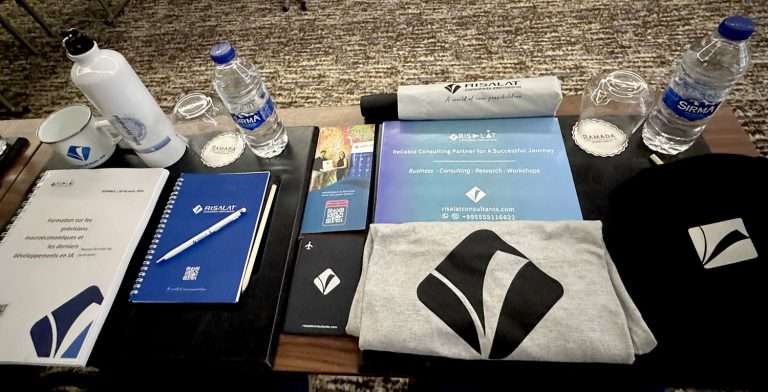
- Risalat Training Kit (Bag, Bottle, Mug, T-Shirt, Cap, Passport Cover, Pens, Notebook, Magnet & Keychain)
- Comprehensive Cybersecurity Fundamentals for Business Leaders Training Manual
- Digital Maturity Checklist
- Data Inventory Template
- Dashboard Planning Template
- Technology Risk Register
- Practical Workshops & Simulations
- Group Discussions & Peer Learning
- Daily Lunch and Refreshments
- Full Access to Training Venue Facilities
- Mini Pad / Tablet with Digital Learning Materials
- Field Visit (where applicable)
- Entertaining City Tour
After the Programme
- Certificate of Completion
- Risalat Programme Participation Recognition Award
- Post-Training Reference Materials
- Data Governance Self-Assessment
- Digital Project Review Checklist
- Post-Training Support & Follow-Up Guidance
- Programme Report
Institutions can also request a tailored in-house version of this programme, delivered at their premises or online. Request a proposal.
Common Challenges in Cybersecurity Fundamentals for Business Leaders, And How This Training Helps
How can institutions plan digital initiatives that solve real problems?
The programme addresses this directly on the first day (Module 1: Introduction to Cybersecurity for Business Leaders), where participants practise the methods involved and adapt them to their own institution, then build it into their action plan.
How can institutions manage data quality, protection and sharing?
The programme addresses this directly on the second day (Module 3: Regulatory and Compliance Frameworks), where participants practise the methods involved and adapt them to their own institution, then build it into their action plan.
How can institutions analyse data and present it clearly?
The programme addresses this directly on the third day (Module 5: Cyber Incident Management and Crisis Response), where participants practise the methods involved and adapt them to their own institution, then build it into their action plan.
How can institutions manage cyber and technology risks?
The programme addresses this directly on the first day (Module 1: Introduction to Cybersecurity for Business Leaders), where participants practise the methods involved and adapt them to their own institution, then build it into their action plan.
How can institutions lead people through digital change?
The programme addresses this directly on the second day (Module 3: Regulatory and Compliance Frameworks), where participants practise the methods involved and adapt them to their own institution, then build it into their action plan.
Frequently Asked Questions
When and where does the Cybersecurity Fundamentals for Business Leaders programme take place?
It runs from 26 Jan 2027 to 28 Jan 2027, in Singapore (Amara Singapore). The registration deadline is shown at the top of this page.
Who should attend?
The programme is designed for CEOs, CFOs, COOs, and Executive Directors, business Owners and Entrepreneurs, department Heads and Senior Managers, risk Management Professionals, and others who want practical skills in digital government, data and technology.
Will I receive a certificate?
Yes. Participants who complete the programme receive a Certificate of Completion from Risalat Consultants International.
Can this programme be delivered for our institution only?
Yes. We can deliver a tailored in-house version at your premises, in another city or online, built around your own cases. Use the proposal request on this page.
Do I need prior experience in digital government, data and technology?
No specialist background is required beyond experience in a related role. A short pre-assessment helps the facilitators adapt the sessions to the group.
Training courses in SingaporeBusiness and Communication training courses
Why Singapore for this programme
Singapore is known for efficient public services, e-government and urban planning, all useful for study visits.
The Cybersecurity Fundamentals for Business Leaders programme in January 2027 brings together officials and professionals from across the Asia region and beyond. Sessions combine short inputs, case studies and group work on participants' own files, and the city's institutions can be added as a study visit on request.
Getting there: Changi (SIN).
Check whether you need a visa with the free Visa Checker, and ask for an invitation letter once you are registered.
The same topic in other cities
- Capacity Building for AI in Local Governments and City Councils (Helsinki )
- Big Data Analytics, Artificial Intelligence and Machine Learning for Financial Institutions (Tokyo)
Other programmes in Singapore
- Integrating AI and EdTech into Primary Classroom Pedagogy in Singapore
- Port Infrastructure Engineering and Marine Works Management in Singapore
- Special Economic Zone Governance and Tech Startup Incubation in Singapore
- National Statistical Strategy Design and NSDS Action Plans in Singapore
- Statistical Data Governance, Anonymisation and Dissemination in Singapore
Plan this programme in a roadmap: why it matters, why to approve it, the dates to plan and the career it builds.