Key facts
- Dates
- 3–6 May 2027 (4 days)
- Where
- Nairobi, Kenya
- Fee per participant
- £2,350 (GBP)
- Payment
- By invoice and bank transfer
- Registration closes
- 24 Mar 2027
- Format
- 4-day short course: a practical capacity-building programme for government, NGO and project teams in Nairobi
- In-house option
- Run it for your team, on your dates
On this page 10 sections
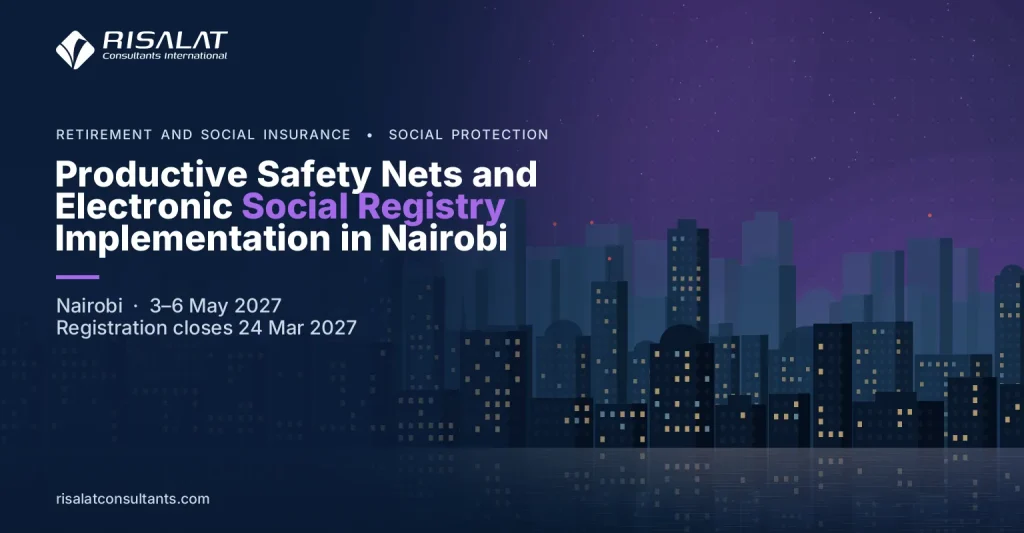
Productive Safety Nets and Electronic Social Registry Implementation in Nairobi
Programme Overview
This intensive four-day professional programme equips social protection practitioners with the operational competencies required to design, implement, and govern modern productive safety nets and integrated electronic social registries. Delivery centres on practical methodologies for socio-economic vulnerability profiling, poverty-targeted public works design, and digital household registration. Participants review dynamic registry architectures aligned with international standard practices, ensuring robust data management across fragile and post-conflict implementation settings while strengthening institutional delivery systems across sub-Saharan Africa.
Free self-check: the project health check gives a score for a project's schedule, budget, risks and reporting, in about 10 minutes.
Delegates examine end-to-end electronic transfer mechanisms, exploring secure digital disbursement options, payment service provider engagement, and financial reconciliation workflows. The curriculum addresses core operational bottlenecks including beneficiary identity authentication, targeting verification protocols, and system interoperability. By evaluating methods that minimise inclusion and exclusion errors, practitioners learn to safeguard programme integrity, strengthen administrative accountability, and standardise transparent selection rules in line with multi-donor funding requirements and international social assistance guidelines.
Watch: a short video on this subject
Electronic Government Procurement: 3-Day Implementation Fix
One minute, practical, made for ministries and project teams.
Through applied exercises and institutional case studies, participants design context-appropriate grievance redress mechanisms, monitor socio-economic asset creation, and integrate livelihood support pathways into core public works activities. Executing social assistance scale-up under the South Sudan Productive Safety Net for Socioeconomic Opportunities Project demands rapid institutional capacity to transition from fragmented relief distributions to consolidated, digital delivery platforms. Delivered by Risalat Consultants International in Nairobi, Kenya, the programme provides actionable frameworks for managing digital transitions, coordinating multi-stakeholder safety net interventions, and establishing sustainable management information systems within national social protection directorates and donor-assisted project delivery units.
The programme strengthens institutional capability in:
- International frameworks for productive safety nets in low-income and fragile contexts
- Community-based targeting versus proxy means testing: methodological tradeoffs
- Public works subproject selection, environmental screening, and asset creation cycles
- Setting labor wage rates, work norms, and seasonal calendar alignment
- Operational planning for shock-responsive horizontal and vertical programme scale-up
- Core functional modules of an integrated social registry and dynamic intake flows
- Computer-Assisted Personal Interviewing (CAPI) tools and offline data capture protocols
- Data protection, privacy principles, and consent frameworks in vulnerable populations
- Digital strategy and transformation planning
- Data governance and data quality
- Data analysis and visualisation
- Cybersecurity basics and risk management
Why this matters now
Organisations increasingly require professionals capable of:
- Plan digital initiatives that solve real problems
- Manage data quality, protection and sharing
- Analyse data and present it clearly
- Manage cyber and technology risks
- Lead people through digital change
Strong digital government, data and technology systems help organisations:
- Deliver faster and more accessible services
- Make better use of data in decisions
- Protect systems and personal data
- Get value from technology investments
- Collect
- Clean
- Store
- Analyse
- Decide
Who Should Attend
This programme is designed for:
- Ministry of Gender, Child and Social Welfare technical officers
- National and state-level social registry coordinators
- Social protection Project Implementation Unit (PIU) specialists
- Public works component managers and field supervisors
- Monitoring, evaluation, and management information system (MIS) officers
- Social safety net payments and digital transfers specialists
- Grievance redress and social accountability focal points
- Targeting and socio-economic verification advisors
- Donor-funded project operations directors and fiduciary leads
- ICT managers and officers
- Digital transformation leads
- Data analysts and statisticians
Tick what your team needs to be able to do.
Programme Objectives
By the end of this programme participants will be able to:
- Design poverty-targeted public works schemes that build community assets and generate sustainable household earnings
- Deploy digital household registration frameworks using mobile data collection tools and verified socio-economic indicators
- Establish targeting verification protocols to improve registry data integrity and reduce inclusion and exclusion errors
- Configure secure electronic beneficiary transfer systems, reconciliations, and payment service provider contracting frameworks
- Formulate interoperable social registry architecture requirements aligned with international data governance standards
- Implement rights-based grievance redress mechanisms and community engagement processes to reinforce accountability
- Structure monitoring and evaluation frameworks to track public works execution and household socio-economic transitions
- Explain the main trends in digital government and data use
- Plan a digital initiative linked to service goals
- Apply data governance and quality principles
Training Structure & Contents
- International frameworks for productive safety nets in low-income and fragile contexts
- Community-based targeting versus proxy means testing: methodological tradeoffs
- Public works subproject selection, environmental screening, and asset creation cycles
- Setting labor wage rates, work norms, and seasonal calendar alignment
- Operational planning for shock-responsive horizontal and vertical programme scale-up
- Small group workshop applying public works design methods to institutional examples
- Core functional modules of an integrated social registry and dynamic intake flows
- Computer-Assisted Personal Interviewing (CAPI) tools and offline data capture protocols
- Data protection, privacy principles, and consent frameworks in vulnerable populations
- Data validation pipelines, deduplication techniques, and national ID integration
- Building civil society and local government roles in household identification
- Practical workshop on dynamic intake and social registry systems application
- Design and deployment of community validation and targeting verification protocols
- Data cleaning algorithms to detect identity anomalies and minimise inclusion errors
- Procurement and oversight of Payment Service Providers (PSPs) and mobile network operators
- Digital payment delivery mechanisms: mobile money, smart cards, and biometrics
- Fiduciary controls, liquidity management, and payment reconciliation processes
- Applied case study analysing targeting integrity and digital payment choices in practice
- Operationalising multi-channel Grievance Redress Mechanisms (GRM) for registries
- Developing Management Information System (MIS) specifications for field operations
- Linking safety net beneficiaries to financial literacy and livelihood opportunities
- Third-Party Monitoring (TPM) integration and donor compliance reporting requirements
- Institutional transition planning from project implementation units to ministry systems
- Action plan formulation and presentation for institutional priorities and first steps
- Digital transformation planning and alignment with national service delivery goals
- Applying data governance frameworks, quality controls, and data sharing protocols
- Data analysis, performance metrics, and visualisation for decision-makers
- Cybersecurity basics and technology risk management in social assistance delivery
- Integrating digital registries with wider national administrative systems
- Institutional synthesis and review of digital government implementation pathways
Full day-by-day contents
First Day | Productive Safety Net Architecture and Public Works Design
- International frameworks for productive safety nets in low-income and fragile contexts
- Community-based targeting versus proxy means testing: methodological tradeoffs
- Public works subproject selection, environmental screening, and asset creation cycles
- Setting labor wage rates, work norms, and seasonal calendar alignment
- Operational planning for shock-responsive horizontal and vertical programme scale-up
- Small group workshop applying public works design methods to institutional examples
Second Day | Electronic Social Registry Systems and Household Data Intake
- Core functional modules of an integrated social registry and dynamic intake flows
- Computer-Assisted Personal Interviewing (CAPI) tools and offline data capture protocols
- Data protection, privacy principles, and consent frameworks in vulnerable populations
- Data validation pipelines, deduplication techniques, and national ID integration
- Building civil society and local government roles in household identification
- Practical workshop on dynamic intake and social registry systems application
Third Day | Targeting Verification, Registry Integrity, and Payment Systems
- Design and deployment of community validation and targeting verification protocols
- Data cleaning algorithms to detect identity anomalies and minimise inclusion errors
- Procurement and oversight of Payment Service Providers (PSPs) and mobile network operators
- Digital payment delivery mechanisms: mobile money, smart cards, and biometrics
- Fiduciary controls, liquidity management, and payment reconciliation processes
- Applied case study analysing targeting integrity and digital payment choices in practice
Fourth Day | Grievance Redress, Monitoring, and Institutional Mainstreaming
- Operationalising multi-channel Grievance Redress Mechanisms (GRM) for registries
- Developing Management Information System (MIS) specifications for field operations
- Linking safety net beneficiaries to financial literacy and livelihood opportunities
- Third-Party Monitoring (TPM) integration and donor compliance reporting requirements
- Institutional transition planning from project implementation units to ministry systems
- Action plan formulation and presentation for institutional priorities and first steps
Fifth Day | Digital Government and Data Strategy Mainstreaming
- Digital transformation planning and alignment with national service delivery goals
- Applying data governance frameworks, quality controls, and data sharing protocols
- Data analysis, performance metrics, and visualisation for decision-makers
- Cybersecurity basics and technology risk management in social assistance delivery
- Integrating digital registries with wider national administrative systems
- Institutional synthesis and review of digital government implementation pathways
Training Methodology
The training is delivered through practical, instructor-led sessions combining operational presentations, system demonstration walkthroughs, and applied group syndicate tasks. Participants examine technical case studies reflecting low-connectivity and fragile country contexts, formulate targeting algorithms, simulate registry data verification workflows, and critique sample standard operating procedures. Peer learning is structured around operational challenges faced by project implementation units, supported by guided plenary debates and daily technical synthesis.
- Expert-led sessions on current practice
- Regional and international case studies
- Group work and practical exercises
- Simulations and role plays where relevant
- Discussion of participants’ own challenges
- Peer learning across institutions and countries
- Practical tools and templates to take back to work
- Daily reflection and action planning
Expected Outcomes
- Strengthened institutional capacity to manage productive safety nets and electronic social registries
- Improved capability to design poverty-targeted public works and sustainable community assets
- Enhanced deployment of secure electronic transfer mechanisms and fiduciary reconciliations
- Operationalised data governance, targeting verification, and grievance redress systems
- Actionable institutional plans for digital transition and sustainable social protection delivery
£2,350 per participant · invoice and bank transfer · groups of 5 or more receive a discount
Five or more from one organisation: ask for the group rate on the invoice request.
Ten or more: an in-house version for your institution may cost less per person. Ask for an in-house quote.
Registration closes in 115 days (24 Mar 2027)
Who Will Deliver This Programme
Each date is delivered by a team assigned from Risalat's expert network for this subject. For this programme we assign:
How we choose them: Experience in the region of the participants or comparable settings; Command of the financier rules that apply (World Bank, ADB, AfDB, EU, UN) where relevant; Delivery in English; other languages on request for in-house groups; No conflict of interest with participants' institutions.
Training courses in NairobiRetirement and Social Insurance training courses
Why Nairobi for this programme
Nairobi hosts UNEP, UN-Habitat and many regional offices, with flights across Africa.
The Productive Safety Nets and Electronic Social Registry Implementation in Nairobi programme in May 2027 brings together officials and professionals from across the Africa region and beyond. Sessions combine short inputs, case studies and group work on participants' own files, and the city's institutions can be added as a study visit on request.
Getting there: Jomo Kenyatta (NBO).
Check whether you need a visa with the free Visa Checker, and ask for an invitation letter once you are registered.
The same topic in other cities
Other programmes in Nairobi
- Sustainable Finance and Green Taxonomies in Nairobi
- AI in Monitoring, Evaluation and Learning Training in Nairobi
- Fraud Detection, Investigation and Prevention in Nairobi
- Sub-National Fiscal Transfers and Local Capital Investment Planning in Nairobi
- Seed Systems, Agronomic Extension and Climate-Resilient Cropping in Nairobi
Questions before you nominate your team? Book a 30-minute call with us, or ask for this programme in-house.
Teams often travel here from Sudan, Somalia, Ethiopia, Kenya, Uganda, Tanzania, Rwanda, South Sudan. Funding, visa letters and group rates are explained on each country page.
Is there social protection training for government officials in Nairobi in May 2027?
Can "Productive Safety Nets and Electronic Social Registry Implementation in Nairobi" be delivered in-house for one organisation?
Which other social protection programmes does Risalat run?
How do organisations register and pay?
For teams and institutions
Bring your team
Teams that learn together apply more at work. Tell us how many people and how you would like to take part: we reply with a group quote within two working days.
Watch: this programme in short


Other dates and cities for this subject: Social Protection and Cash Transfers training courses (44 upcoming dates).
More training courses in Kenya · All programmes in Africa · Full training calendar
Plan this programme in a roadmap: why it matters, why to approve it, the dates to plan and the career it builds.