

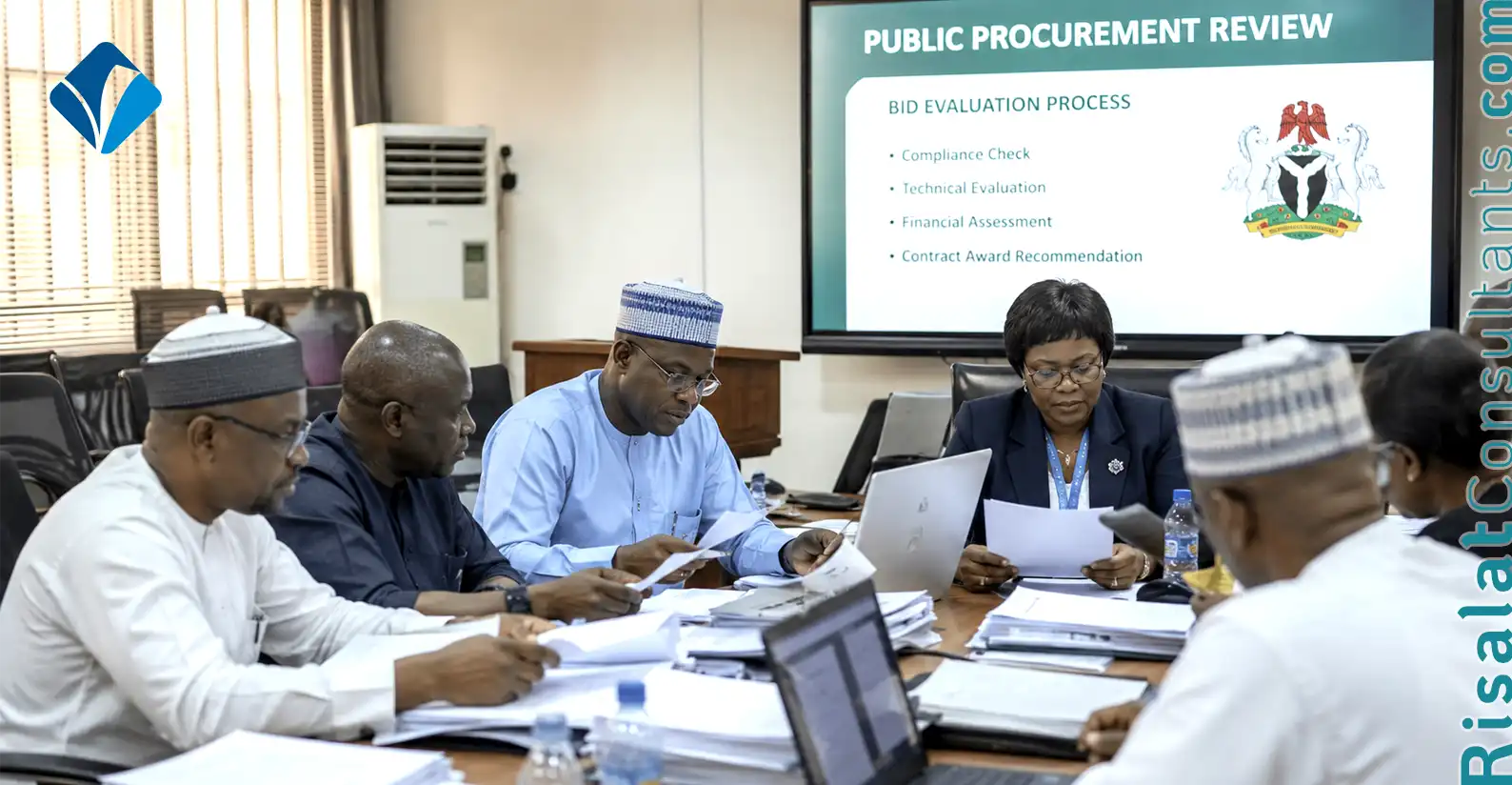
Key Takeaways
Government procurement reform has become a central priority for governments seeking to improve transparency, strengthen accountability, and reduce corruption in public spending. Despite new legislation, digital procurement systems, and stronger oversight mechanisms, government procurement reform often fails to achieve its intended outcomes because institutional, political, and governance challenges remain unresolved.
- Corruption is systemic, not transactional – Procurement corruption operates through sophisticated networks of politicians, officials, and firms that adapt to reforms by shifting tactics rather than disappearing.
- Technical fixes ignore political realities – E-procurement platforms and transparency tools fail when powerful elites depend on corrupt procurement for political financing and patronage networks.
- Capacity gaps undermine implementation – Most developing countries lack skilled procurement professionals, adequate training programs, and competitive salaries to retain talent, making even well-designed reforms unworkable.
- Discretion creates unavoidable trade-offs – Reducing official discretion limits corruption but also prevents capable managers from achieving optimal outcomes, particularly in complex or specialized procurements.
- Reforms require ecosystem support – Sustainable change demands strong political leadership, institutional development beyond individual training, active civil society monitoring, and continuous adjustment over years.
Without addressing these fundamental barriers, particularly the political economy incentives that sustain corruption and the institutional capacity needed for implementation – procurement reforms will continue producing disappointing results regardless of their technical sophistication. Government procurement reform initiatives promise to eliminate corruption, yet the challenge persists on a massive scale. Governments spend an estimated average of $9.5 trillion each year through public procurement, with studies suggesting that 10-25% of public contract values may be lost to corruption. Decades of anti-corruption measures and public procurement transparency efforts have passed, but procurement system failures continue to undermine government accountability. This persistence raises a critical question: why do procurement oversight mechanisms and technical reforms fail to deliver the expected results? The answer lies in understanding the deeper institutional, political, and systemic barriers that technical solutions alone cannot address.
Government Procurement Reform and Procurement Corruption: Beyond the Numbers
The financial toll of procurement corruption extends far beyond simple percentage calculations. Estimates suggest that between 10-30% of investment in publicly funded construction projects disappears through mismanagement and corruption, while broader assessments indicate that 10-20% of overall procurement spending is lost to corrupt practices. These figures represent substantial economic damage. Audit reports from 2015 to 2020 revealed that approximately GHS 13.9 billion was misappropriated by government ministries, departments, and agencies in Ghana alone. Country-level analyzes paint an even starker picture, with Morocco losing an estimated 5% of each contracted purchase value despite positive reforms, while business insiders in the Philippines hypothesize losses reaching up to 50%.
The Real Cost of Corrupt Procurement
Procurement corruption carries severe human consequences beyond monetary losses. Building collapses resulting from flawed construction contracts and counterfeit or substandard medicines failing to meet health needs have cost lives across both developing and developed nations. The devastating earthquakes in China (2008), Haiti (2010), India (2001), and Turkey (1998) produced high death tolls attributed in part to alleged corruption in public building construction, including schools and hospitals. Corrupt practices also impede government efficiency, producing higher fiscal deficits, slower economic growth, substandard infrastructure, and inflated project costs. Project costs can increase by approximately 20-30% when corruption and fraudulent dealings infiltrate procurement.
The connection between international bribery and public contracts underscores the global dimension of this challenge. More than half of foreign bribery cases occurred to get public procurement contracts. Business surveys reinforce this reality, with more than three out of ten companies participating in public tenders reporting that corruption prevented them from winning.
Vulnerability at Every Stage
Unethical practices can emerge throughout the entire public procurement cycle, though each phase presents distinct integrity risks. The pre-tendering phase proves vulnerable through manipulation of needs assessments, which can be inflated or induced to select projects with higher contract values. Projects may be identified to serve the interests of particular bidders or the private interests of procurement officials. Hidden mistakes and fictitious positions can be built into project calculations and designs during planning, affecting terms of reference and creating openings to account for increased costs later or influence selection procedures.
The tendering phase presents abundant corruption opportunities. While evaluation of bids attracts considerable attention as a high-risk moment, the specification phase itself can be designed to limit competition and favor particular bidders. Procurement officers may provide advance information to favored suppliers, draft evaluation criteria to emphasize weaknesses of competitors, or amend criteria after tender receipt. Limited bidding and direct bidding methods emerge as vulnerable to abuse due to reduced transparency, lack of competition, and the possibility of tailoring specifications to suit favored suppliers.
Contract execution receives less scrutiny but offers numerous opportunities for abuse. False invoicing, overbilling, underperforming, and failure to meet specification standards characterize this stage. Common practices include rendering fictitious work, inflating work volumes, using lower-quality materials than specified, supplying goods of lower price and quality than quoted, and delivering contracted services improperly. Corrupt payments made in earlier process stages can be recovered through performing less than agreed services or by altering contracts through successive renegotiations.
Discretion as the Core Challenge
The level of discretionary authority among public officials shapes corruption risk in procurement systems. Several factors heighten vulnerability: the amount of money involved, complexity of technology, urgency to acquire goods, and especially the degree of discretion granted to officials. This discretion creates a paradox for anti-corruption measures. Administrative rules designed to prevent corruption by limiting discretion make it difficult for honest and capable public managers to achieve optimal procurement outcomes at the same time.
Research exploring discretion’s effects reveals mixed implications. Increased discretion causes increases in the probability that the same firm receives project awards from the same public buyer repeatedly. But discretion can also enable procurement of higher-quality products, especially when officials possess technical expertise to distinguish quality differences. The trade-off between price efficiency and quality becomes evident, as discretion may result in 23% higher prices, though roughly half this difference reflects higher quality. Countries with low public sector capacity benefit from stricter procurement regulations that reduce corruption, while high-capacity countries experience increased costs without corresponding corruption reduction when discretion is restricted.
The Misconception of Technical Fixes
The Belief in Simple Solutions
Policymakers and development agencies frequently turn to technological interventions as the main answer to procurement corruption. E-procurement platforms, automated bidding systems, and digital transparency portals appeal because they promise straightforward implementation. An estimated 57% of foreign bribes are paid to secure public contracts. This creates pressure for visible reform actions. Technology offers the appearance of swift progress without confronting deeper structural challenges.
Public procurement processes benefit substantially when technology gets integrated. Greater efficiency, reduced reliance on paper-based procedures, and boosted oversight through immediate data publication are some advantages. A World Bank survey of 34,000 companies across 88 countries found that competition was higher and kickbacks were fewer and smaller where transparent procurement systems, independent complaint procedures, and external auditing mechanisms existed. Technical solutions can resolve corruption issues, or so these findings suggest.
This transformation requires new skills, approaches, and sustained support to realize its full potential and ensure robust anti-corruption safeguards get integrated. A new eGP system, implementation of an advanced analytics tool, or AI solution does not guarantee usable data for anti-corruption purposes, especially when systems focus more on transaction interactions than public transparency and market-level monitoring.
Why Best Practice Models Often Fail
International competitive bidding and standardized procurement frameworks represent widely promoted best practices, yet their effectiveness depends heavily on context. The ICB may not be effective unless necessary institutional conditions are present. Competition, despite being promoted as a life-blood of clean procurement, does not necessarily reduce corruption. Governments can implement competitive bidding procedures while corrupt actors develop sophisticated methods to manipulate outcomes through bid rigging and collusion at the same time.
Policy contexts are nowhere near as simple as previously recognized. Public policies invariably resemble wicked problems that resist change, have multiple possible causes, and potential solutions that vary in place and time according to local context. An intervention successful in one location does not necessarily deliver the same results elsewhere. National-level policies face challenges when they try to ensure consistency in delivery at subnational levels, a process especially fraught where subnational authorities possess separate political power.
The Gap Between Policy and Practice
Well-defined procurement policies struggle to achieve effective execution. This policy-implementation gap leads to unnecessary complexity, wasted public funds, and stagnation. Implementation failures occur not because of platforms alone but when process design, governance, data, and user behavior are not ready for automation.
Fragmented responsibility across government agencies compounds these challenges. Public sector organizations fragment responsibility as a natural consequence of risk aversion. This makes it difficult to pinpoint accountability and limits progress. Project managers spend considerable time navigating issues related to capacity, prioritization, and commitment rather than focusing on value delivery.
Procurement software implementations usually fail because organizations treat them as software deployments rather than business transformation programs. Companies automate broken processes, launch with bad data, ignore integration dependencies, and make new systems harder to use than old workarounds. Politicians tend not to be held accountable for policy outcomes, so their attention is drawn to short-term results rather than engaging with protracted implementation details.
Importing Solutions Without Context
E-procurement as a stand-alone reform is unlikely to bring about positive transformational results. Countries must invest in coherent legal frameworks, training, and oversight capacity to ensure potential benefits of e-procurement are exploited fully. Transparency and accountability must be built into e-procurement specifications and design to allow meaningful analysis of generated information.
Nigeria’s experience illustrates these limitations. Despite complete overhauls that included the 2007 Procurement Acts, establishment of the Bureau for Public Procurement, and launch of the Nigerian Open Contracting Platform in 2018, the country ranked 150 out of 180 countries in the 2022 Transparency International corruption index with a score of 24 out of 100. Incomplete reform implementation, fragmentation across government levels, and lack of political will undermined technical interventions. Significant reforms such as e-procurement and clear dispute resolution guidelines were slow to take effect and impeded the procurement process effectiveness.
Government Procurement Reform and Institutional Capacity
Workforce capacity represents the foundational challenge that undermines government procurement reform across developing and emerging economies. Successful government procurement reform depends on skilled procurement professionals who can implement reforms consistently across institutions.
Low Capacity in Procurement Organizations
Most MENA countries suffer from weak capabilities and competencies in public procurement. Poor quality training programs cause these weaknesses. Low trainer capacity, inappropriate personnel selection for trainings, high turnover of competent practitioners, and rigid organizational settings that prevent implementing learned skills all contribute. The lack of professionalization results in low capacity, high turnover, and implementation deficiencies that sabotage even well-designed procurement systems.
Lebanon illustrates how failure to recognize procurement as a profession perpetuates these challenges. The country did not recognize public procurement as a profession, and procurement officers had limited knowledge of new trends and international good practices. The Lebanese Ministry of Finance eventually acknowledged public procurement as a core component of resource management reform, though establishing this recognition required overcoming decades of institutional neglect.
Creating an enabling environment to nurture and sustain capacity development presents an ongoing challenge. Training effectiveness depends on stakeholders beyond procurement officials, including auditors, internal control authorities, civil society organizations, the private sector, and media. Capacity development efforts remain isolated and struggle to achieve lasting institutional change without this broader ecosystem of support.
Skills Gaps and Training Deficits
A complete skills deficit afflicts procurement organizations around the world. According to a 2021 McKinsey survey, 87% of companies worldwide already have skill gaps or expect them to emerge within five years. A 2019 Deloitte study found that 79% of Chief Procurement Officers believe their current teams lack sufficient skills to deliver on procurement strategy.
The gap between required competencies and actual capabilities continues widening. Procurement leaders identify digital transformation skills as important in five years at 54%, up from 36% today. Similarly, 65% of procurement leaders report relying on external resources for technology skills. This dependency on outside expertise reveals internal capacity limitations that undermine the long-term sustainability of reform initiatives.
Training frequency fails to line up with future priorities. Organizations prove no more likely to upskill in areas of future importance than they are for other competencies on a regular basis. This misalignment stems from two related issues: procurement leaders may not understand their teams’ strengths and weaknesses, or they are not mapping current training to skills that will be most essential going forward. Procurement teams attempt to keep pace with current workloads while understaffed, and effective future skills planning becomes very difficult.
Teams need regular, objective evaluations of competencies to identify abilities and tailor training initiatives to meet future objectives. Organizations struggle to take stock of existing skill levels while priorities evolve, creating a disconnect that hinders their ability to execute future strategies.
Fragmentation Across Government Levels
Procurement systems’ effectiveness depends on integration with other related systems and reform initiatives, including public finance management reforms and e-government initiatives. Fragmentation of systems for public investment management, budgeting, and public procurement leads to weak delivery mechanisms, increased costs, poor performance, cost and time overruns, lack of competition, and underfunded maintenance.
Country-level capacity strengthening remains fragmented, poorly measured, and only partially achieved. It focuses on short-term activities rather than sustaining long-term change. Less than 20% of Country Partnership Frameworks emphasize procurement capacity strengthening by a lot. Capacity strengthening activities concentrate on countries with higher procurement capacity despite lower-capacity countries experiencing more procurement issues. This happens paradoxically. During fiscal year 2017-23, 59% of procurement capacity strengthening activities occurred in countries with high or very high procurement capacity compared with 41% in countries with low or very low procurement capacity.
Cambodia, Guinea-Bissau, and the Republic of Congo rank among countries with the lowest procurement capacity and many procurement issues that affect development portfolios. Yet each country received only one capacity strengthening intervention. This pattern suggests a lack of strategic approach to in-country procurement capacity strengthening.
Inadequate Professional Career Paths
The absence of clear career pathways undermines efforts to build sustainable procurement capacity. Research shows that procurement lacks clear development pathways, making it challenging for young professionals to find their place and become future leaders. Many newcomers enter the profession with backgrounds in general supply chain, business administration, finance, or accounting. But they don’t remain because they view procurement as a steppingstone to other careers.
Financial constraints limit professional development opportunities. Nigeria has identified insufficient capacity in public institutions as a major barrier to effective procurement processes. Only a small fraction of procurement officers has access to on-the-job training and skills development programs. Training budgets vary across ministries. The Federal Ministry of Health and Social Welfare allocated NGN 34.7 million in 2024, while the Ministry of Education received NGN 50.6 million for all training including procurement officers. These amounts prove insufficient for existing capacity needs.
Salary disparities between public and private sectors make retention challenges worse. A comparison of remuneration shows procurement specialists in Nigeria’s public sector earn an average of NGN 364,469 per annum compared to NGN 1,440,000 per annum in the private sector. This gap drives talented professionals toward private employment, depleting government capacity when reform demands increase.
The limited number of training institutions affects capacity development in both public and private sectors. Few specialized centers offer procurement-related courses, so public sector employees have limited opportunities to acquire necessary skills. This results in an underdeveloped workforce that jeopardizes public service delivery. This limitation proves more pronounced at subnational levels due to lack of sub-national government investment in procurement capacity.
Political Economy Challenges in Government Procurement Reform
Beyond technical and capacity constraints lies a more fundamental obstacle: the political economy dynamics that shape how procurement systems actually operate. Politicians and economic elites possess powerful incentives to maintain corrupt procurement practices and create resistance that undermines even well-designed reform efforts.
Economic and Political Elite Interests
Politicians seeking clientelist approaches to achieve political and private gain use control of government contracting as a key tool. The strategic allocation of state resources buys loyalty and helps politicians unite power while gaining advantages over political competitors. This loyalty shows through campaign donations, direct bribes on contracts and in-kind service provision.
The extent of elite control varies based on institutional constraints. Hungary’s political influence proves systematic and far-reaching. Favored companies dominate 50-60% of the procurement market there, while only 10% of the UK market experiences similar concentration. Procuring entities in Hungary face incentives to comply with political instructions because central government controls their budgets. The government weakened accountability institutions by politicizing appointments to the Constitutional Court, State Audit Office and Competition Authority.
Research shows that firms with political connections prove substantially more successful at getting procurement contracts compared to firms lacking such connections. This partisan favoritism undermines both economic and political competition and creates long-term consequences for market economy development and democratic quality.
Procurement as Political Financing Tool
Tight-knit networks of politicians and businessmen collude to allocate public procurement contracts in return for political party donations. The United Nations Office on Drugs and Crime reports that 57% of all foreign bribery cases involve corrupt payments related to public procurement. Allocating government contracts to favored companies represents a prime method for returning campaign donations. Procurement accounts for large public spending amounts, can be centralized and contract award decisions enjoy wide discretion of political office holders.
Incomplete and Delayed Reforms
Nigeria’s procurement reform trajectory shows how political constraints derail technical interventions. The 2007 Procurement Acts established the Bureau for Public Procurement, yet the National Council on Public Procurement has yet to be inaugurated over a decade after the Acts’ passage. Contract and procurement fraud reached about 2.9 trillion naira over 2018-2020 and represented a staggering 10% of total budgetary allocations for that period. This procurement loss surpassed cumulative foreign direct investment between 2018-2020 of 9,285.12 billion naira.
Federal Ministries, Departments and Agencies have been accused of using loopholes to avoid open tender through unjustified selective tendering or splitting contracts to stay below competitive bidding thresholds. The Bureau for Public Procurement has limited capacity to oversee thousands of contracts and has struggled to sanction violators, especially when they are politically connected.
The Challenge of Reforming the Unreformable
Maybe the biggest barrier to effective reform remains lack of political will. Much of the corruption cases brought through the judicial system involve exploitation of loopholes by high-ranking public officials perpetuating procurement fraud. New policies or institutions result in isomorphic mimicry without firm commitment from the political class and create mere appearance of change without substantial transformation.
Widespread public support for boosted anti-corruption measures has not translated into robust political will due to deficiencies in transparency and accountability frameworks. Creating avenues for civil society participation and encouraging greater transparency can mobilize public support. Active scrutiny by civil society organizations, media and the public serves to strengthen government accountability.
Why Government Procurement Reform Cannot Rely on E-Procurement Alone
Digital transparency tools and e-procurement platforms have been promoted as innovative capable of disrupting entrenched corruption networks. The logic appears sound: automating processes reduces face-to-face interactions where bribery occurs, while public data publication enables oversight. But implementation realities across developing economies reveal a more complicated picture.
Mixed Results from Digital Systems
E-procurement adoption faces substantial resistance within government organizations. About 70% of organizational change initiatives fail globally, and procurement digitization encounters strong opposition from stakeholders who fear disruption to established practices. Nigeria’s government hospitals saw 50% of respondents identify resistance to change as the most important barrier, while 48.8% cited lack of top management support.
Technical infrastructure deficits prove equally problematic. Nigerian respondents flagged unreliable power supply (58.8%), poor internet facilities (61.3%), and high costs of e-procurement technologies (45%) as the biggest obstacles. Skills shortages compound these challenges, as many procurement professionals lack technical proficiency required to operate digital systems. Organizations in developing contexts struggle to sell the e-procurement concept to senior management and end-users.
System performance issues undermine user confidence. Suppliers report experiencing technical problems and slow system response times. They also face difficulty submitting required documentation. Transaction fees imposed on suppliers through e-procurement platforms create additional financial burdens, especially when you have small and medium-sized enterprises.
Barriers to Registration and Participation
E-procurement theoretically expands market access, but registration requirements and technical complexity can exclude potential bidders. The limited bidding duration that sometimes results from restrictive procurement methods reduces participant pools and decreases the likelihood of receiving high-quality, cost-effective proposals. Without periodic reviews of procurement methods, governments risk manipulating simplified bidding processes to favor certain vendors or circumvent transparency measures.
Lack of Corruption Baselines
E-procurement’s anti-corruption effect remains problematic to measure due to absent baseline data. Methodologies and guidance exist, yet applicable, objective, comparable data and indicators for robust corruption measurement remain insufficient. Without establishing corruption levels before system implementation, determining whether digital platforms reduce malfeasance becomes impossible. This measurement gap prevents evidence-based policy adjustments and undermines confidence in transparency initiatives.
Shifting from Process to Implementation Corruption
Even when e-procurement increases tender-stage transparency, corruption adapts by migrating to contract execution phases. Audits are not performed regularly and systematically, making corruption detection harder during implementation. Contractors fail to perform according to contracted terms through false invoicing, using lower-quality materials than specified, and rendering fictitious work. Cases of entrenched or systemic corruption show that procurement regulation proves helpless whatever process transparency exists. Over-regulation attempting to prevent corruption can erode officials’ discretion to such extent that governments face inefficient and expensive purchasing.
Systemic and Relational Corruption Challenges
Corruption in public procurement functions not as isolated transactions between individual bribe-payers and recipients, but as sophisticated networks with multiple firms and individuals both inside and outside government. These networks can be strong and entrenched, lasting many years and involving whole markets. This systemic dimension reveals why anti-corruption measures targeting individual actors or specific transactions fail to disrupt broader patterns.
Network-Based Corruption Structures
Procurement corruption operates through bipartite networks linking government actors and private firms through contracting relations. Research that analyzed Guatemala’s construction sector identified over 2,000 firms competing for 33,579 projects between 2012-2020, which suggests competitive market conditions. Despite this apparent competition, spending concentration emerged as a classic corruption red flag. Contracting authorities awarded disproportionate contract shares to specific companies. Political influence proved important as powerful actors manipulated budget distribution procedures through illegal means while simulating legality. Long-serving mayors wielded strong influence to distort processes, and favored local governments received higher contract volumes as a result.
Bulgaria’s procurement market revealed persistent high-risk sectors characterized by closed supplier networks and limited competition. Concentration of risky tenders appeared at municipal levels where favoritism proved prevalent. Network structures remained stable despite political leadership changes, though specific high-profile nodes disappeared and suggested market reconfigurations driven by politics.
Collective Action Problems
Reform efforts confront fundamental collective action dilemmas that traditional principal-agent models cannot address. Where corruption shows itself systemically, few persons or institutions remain committed to integrity and create insufficient enforcement capacity. Trust and reciprocity formed through repeated interactions enable escape from collective action dilemmas. Yet these same mechanisms can sustain corrupt networks.
Adapting and Circumventing Reforms
Corruption networks respond to anti-corruption initiatives by waiting out reforms until political attention moves or by moving corruption’s locus from contracting processes to contract implementation. Countries succeed only when they develop and sustain reforms over time to counter adaptations and defeat circumvention efforts.
The Missing Elements in Reform Approaches
Most procurement reform initiatives focus heavily on process redesign while overlooking fundamental governance elements that determine whether new systems work as intended. Research that dissects reform barriers across 21 studies identifies shortage of staff and lack of capability as the most consistent obstacle, followed closely by resistance to change and limited local support.
Insufficient Attention to Incentives and Authority
Post-reform challenges arise consistently from insufficient mandate and conflicts of interest within oversight authorities. Contract value thresholds create incentives for manipulation, as showed in the Czech Republic where 2016 threshold introductions led to bunching of procurement contracts just below legislative limits. These contracts proved more likely to be awarded to firms with anonymous ownership structures and masked rent-seeking behavior. Audit design similarly distorts incentives, as Chilean procurement officers shifted toward direct contracting methods when open auctions went through more than twice as many checks. Appropriate rewards for procurement staff, including financial compensation and career paths, represent critical anti-corruption instruments that help attract quality staff and reduce susceptibility to bribery.
Weak Complementary Reforms
Procurement interventions require additional non-procurement reforms to achieve sustainability[402]. Nine studies consistently identified this need, yet reform programs rarely integrate procurement changes with broader public finance management or e-government initiatives in a systematic way.
Limited Civil Society and Private Sector Engagement
Although the 2007 Nigerian Procurement Act envisioned formal civil society roles, this has not materialized in an effective way. Civil society organizations can contribute by a lot to strengthened governance through direct monitoring of procurement cycles. But private sector readiness represents another consistent barrier, with nine studies identifying this challenge. About 40% of Open Government Partnership members had private sector participation when designing action plan commitments, though this percentage has declined since 2016.
Absence of Continuous Monitoring and Adjustment
Reformers must acknowledge that one-time reform proves less effective, as compliant-seeming behavior can still undermine procurement processes. Loopholes emerge even from well-laid-out reforms, and we need continuous adjustment. Nigeria’s successful States Fiscal Transparency, Accountability, and Sustainability program shows how subnational reforms through technical assistance and grants can improve procurement transparency. Continuous audit methodologies present possible ways for timely exception detection, especially for governments with limited internal audit resources.
Building Effective Government Procurement Reform
Government procurement reform succeeds only when legal reforms, institutional capacity, political commitment, and accountability mechanisms develop together rather than through isolated interventions. Anti-corruption measures achieve lasting effect only when specific conditions line up.
Strong Leadership and Political Commitment
Sustained reforms need strong leadership from the highest political level to create overall vision and orientation. Administrative leadership establishes institutional space for new processes. Technical leadership demonstrates adoption of new tools and methods.
Institutional Development Over Individual Capacity
Institutional development trumps individual capacity in pursuing reform. Reform proves unsustainable when driven by individuals alone, whatever their organizational position. Reformers must replicate values throughout institutions through measurable objectives and performance indicators that are defined with clarity. Training that extends beyond specialized units becomes essential.
Leveraging Public Support for Political Will
Creating avenues for civil society participation and promoting public procurement transparency can mobilize public support substantially. Active scrutiny by civil society organizations and media bolsters government accountability. It offers favorable incentives to public officials at the same time.
Sector-Specific and Context-Appropriate Solutions
Problem-driven approaches distinguish among procurement types. Addressing local-level corruption in small markets is different from reducing corruption in high-volume standardized goods procurement. Sector-specific orientation recognizes that corruption functions differently in irrigation and wastewater management or education.
Resilience and Long-Term Commitment
Successful efforts build over medium to long term and grow to sustain change against repeated opposition. Government procurement reform represents an ongoing effort. Government procurement reform requires continuous adjustment to identify emerging loopholes, strengthen institutional capacity, and improve procurement system performance over time.
Grassroots and Subnational Reform Efforts
Nigeria’s States Fiscal Transparency, Accountability, and Sustainability program demonstrates how subnational reforms through technical assistance and grants improve procurement transparency. Nigeria’s 36 state governments received support implementing e-procurement systems and improving procurement laws since 2018.
Conclusion
Government procurement reform should be viewed as a continuous institutional transformation that strengthens governance, procurement performance, and public trust over the long term. Developing and emerging economies have showed that anti-corruption efforts work only after addressing institutional capacity deficits and confronting entrenched political economy dynamics that dismantle network-based corruption structures. Technical solutions deliver results when strong political commitment, professional workforce development, and continuous monitoring mechanisms accompany them. Reformers must recognize that corruption adapts to circumvention strategies and makes long-term resilience essential. Context-appropriate solutions tailored to specific sectors and governance environments prove more effective than imported best practices. Successful procurement reform represents an ongoing institutional transformation rather than a one-time policy intervention.
Critical Questions Government Leaders Should Be Asking
Q1. What are the main strategies that can help reduce corruption in public procurement systems?
Multiple interconnected principles work together to reduce procurement corruption, including transparency in processes, broad market access, implementation of e-procurement systems, building organizational capacity, effective risk management, and strong accountability mechanisms. These elements must function together rather than in isolation to safeguard procurement integrity and improve service delivery.
Q2. Why do penalties alone fail to prevent corruption in government contracting?
While penalties and punishments have traditionally been used to deter corrupt behavior, they prove insufficient when corruption operates through entrenched networks involving multiple actors. Corrupt systems adapt by shifting practices to less-monitored areas, and enforcement becomes difficult when oversight institutions lack capacity or political independence. Sustainable anti-corruption requires addressing underlying incentives, institutional weaknesses, and political economy dynamics rather than relying solely on punitive measures.
Q3. What makes public procurement such a critical concern for governments worldwide?
Public procurement represents far more than administrative transactions, it directly affects citizens’ daily lives by determining how governments deliver essential services including healthcare, education, transportation, energy infrastructure, and waste management. With governments spending an estimated $9.5 trillion annually through procurement, the quality and integrity of these processes fundamentally shape public service effectiveness and economic development.
Q4. What corruption risks emerge during the contract execution and supervision phase?
The contract implementation stage presents significant corruption opportunities that receive less scrutiny than the bidding process. Common risks include poor quality or defective work, failure to meet specification standards, false invoicing, overbilling, use of lower-quality materials than contracted, delivery of substandard goods and services, and officials failing to report non-compliance. These practices allow contractors to recover corrupt payments made during earlier procurement stages.
Q5. Why do e-procurement systems often fail to reduce corruption as expected?
Digital procurement platforms face multiple implementation challenges that limit their anti-corruption impact. These include resistance to change within organizations, inadequate technical infrastructure, skills gaps among users, and lack of baseline corruption data to measure effectiveness. More fundamentally, corruption adapts by migrating from transparent tender processes to less-monitored contract execution phases, while entrenched networks find ways to manipulate even automated systems through bid rigging and collusion.
Partners in project success since 2011, diagnostics, advisory support and applied learning for ministries, public agencies and project teams.
Need help putting this into practice?
Start with a free 10-minute diagnostic or talk to our experts.
Leave a comment