Ключевые факты
- Даты
- 25–29 янв. 2027 (5 дней)
- Где
- Sandman Hotel Vancouver City Centre , Vancouver, Canada
- Стоимость на одного участника
- £4 980 (GBP)
- Оплата
- По счету банковским переводом
- Регистрация закрывается
- 6 дек. 2026
- Формат
- 5-day short course: a practical capacity-building programme for government, NGO and project teams in Vancouver
- Сертификат
- Сертификат о прохождении
- Корпоративный формат
- Проведите ее для своей команды в удобные вам даты
На этой странице 14 разделов
Обзор программы
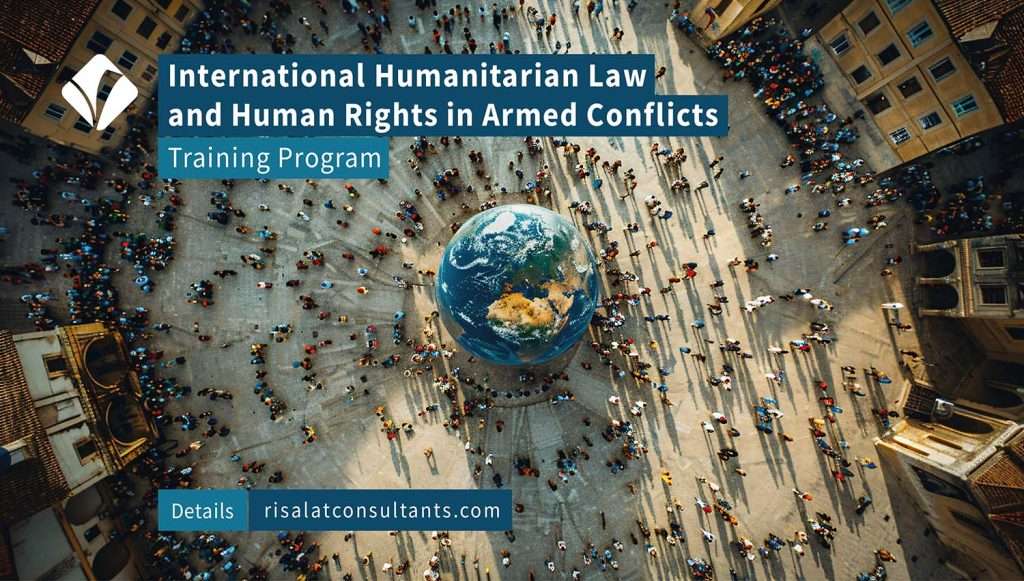
International Humanitarian Law (IHL), also called the law of armed conflict, is the body of treaty and customary rules that limits the effects of armed conflict. It protects people who are not, or are no longer, taking part in hostilities and restricts the means and methods of warfare.
The context in which these rules are applied has changed sharply. The ICRC’s Humanitarian Outlook 2026 counts around 130 armed conflicts in 2024, more than double the number fifteen years earlier, and reports that more than 204 million people live in areas under the full or contested control of armed groups. The same analysis warns that respect for IHL is weakening.
States and humanitarian organisations have responded with a new round of commitments. In May 2024 the UN Security Council adopted resolution 2730 on the protection of humanitarian and UN personnel. In September 2024 the ICRC and six states launched the Global Initiative to galvanise political commitment to IHL, which 99 states had joined by January 2026 and which leads to a High-Level Conference on Humanity in War in Jordan in late 2026. In October 2025 the ICRC completed its updated Commentaries on all four Geneva Conventions.
Этот тренинг по международному гуманитарному праву в Ванкувере дает должностным лицам, гуманитарным менеджерам, юридическим советникам и дипломатам структурированное, практическое владение правилами: откуда они берутся, когда они применяются, что они требуют при ведении боевых действий, задержании, оккупации и гуманитарном доступе, и как государства и организации претворяют их в политику, обучение и подотчетность. Подход является юридическим и гуманитарным; это не курс по военным операциям, и он сохраняет нейтралитет в отношении текущих конфликтов.
Canada offers a useful reference point. It has ratified the Geneva Conventions and all three Additional Protocols, implements them through the Geneva Conventions Act and the Crimes Against Humanity and War Crimes Act.
The Programme Strengthens Institutional Capability
- Identifying the treaty and customary sources that bind a given actor
- Classifying situations as international or non-international armed conflict
- Applying the principles of distinction, proportionality and precaution at policy level
- Protecting civilians, the wounded and sick, and persons deprived of liberty
- Interpreting the law of occupation and its duties towards the population
- Переговоры и обеспечение гуманитарного доступа и операций по оказанию помощи
- Protecting humanitarian, medical and UN personnel under resolution 2730 (2024)
- Using the ICRC customary IHL database and the updated Commentaries
- Understanding the relationship between IHL and international human rights law
- Designing IHL dissemination and training for staff and partners
- Консультирование по национальному исполнительному законодательству и защите эмблем
- Working with national IHL committees and Red Cross and Red Crescent societies
Each day combines legal analysis with exercises drawn from real instruments, reports and national practice, so participants leave with tools they can apply in their own ministries, missions and organisations.
Растущая важность международного гуманитарного права
The pressure on humanitarian space is visible in the data. Humanitarian Outcomes’ Aid Worker Security Database recorded 383 aid workers killed in 2024, the highest number ever recorded, and 350 in 2025, the second-highest. Resolution 2730 responded by demanding that parties to conflict respect their obligations, calling for prompt and impartial investigations, and asking the Secretary-General for recommendations, which he delivered in November 2024.
At the same time, the legal framework is being clarified and updated. The 34th International Conference of the Red Cross and Red Crescent, held in Geneva in October 2024, adopted a resolution on protecting civilians against the human cost of ICT activities during armed conflict. The Global Initiative is running seven workstreams, co-led by 27 states, on topics including prevention and implementation, protection of civilian infrastructure, medical care, new technologies, naval warfare and the contribution of IHL to peace.
Организациям все больше нужны специалисты, способные:
- Explaining which rules apply to a situation and why
- Reading treaty provisions alongside customary rules and Commentaries
- Briefing senior officials on IHL obligations in plain language
- Assessing humanitarian access constraints against legal standards
- Building IHL into operational policies, codes of conduct and partner agreements
- Documenting and reporting incidents affecting civilians and aid workers
- Engaging constructively with armed forces, authorities and armed groups on humanitarian issues
- Distinguishing IHL, human rights law and refugee law obligations
- Supporting national implementation and accountability processes
- Designing dissemination programmes for staff, volunteers and the public
Надежные системы международного гуманитарного права помогают организациям:
- Protect staff, partners and the people they serve
- Negotiate access on a principled and consistent basis
- Reduce legal and reputational risk in conflict settings
- Meet commitments made under resolution 2730 and the Global Initiative
- Respond to incidents with sound documentation and reporting
- Приведение национального законодательства в соответствие с обязательствами по договорам
- Contribute to prevention rather than only response
For ministries of foreign affairs, defence and justice, humanitarian agencies and national societies, a working knowledge of IHL is now a core institutional competence, not a specialist interest. Organisations reviewing staff capability can start with Risalat’s free training needs assessment.
Who Should Attend This International Humanitarian Law Training?
Программа предназначена для:
- Officials of ministries of foreign affairs, justice, defence and interior
- Members and secretariat staff of national IHL committees
- Legal advisers in government, international organisations and NGOs
- Staff of UN peace operations and political missions
- Personnel of intergovernmental and regional organisations
- Humanitarian programme and country directors
- Сотрудники по вопросам защиты, доступа и гражданско-военной координации
- Staff and volunteers of Red Cross and Red Crescent National Societies
- Diplomats covering humanitarian affairs and multilateral negotiations
- Юрисконсульты вооруженных сил и полиции, работающие над вопросами обучения и политики
- Prosecutors, investigators and judicial officials
- Менеджеры по политике и пропаганде в гуманитарных НПО
- Academics and researchers in international law
No prior legal qualification is required. Sessions are pitched for professionals who apply the law in policy, operations and advocacy.
Отметьте, что должна уметь ваша команда.
International Humanitarian Law Training Objectives
Upon successful completion of this International Humanitarian Law Training, participants will be able to:
- Explain the purpose, history and sources of IHL, including customary law
- Classify armed conflicts and identify the rules that apply to each
- Применение принципов различия, соразмерности и предосторожности к конкретным сценариям
- Describe the protections owed to civilians, the wounded and sick, and detainees
- Analyse the main obligations of an occupying power
- Assess legal rules on humanitarian relief and access
- Explain the protections for humanitarian and medical personnel and the content of resolution 2730
- Distinguish IHL from international human rights law and show how they interact
- Outline how serious violations are prosecuted nationally and internationally
- Use the ICRC customary IHL database and updated Commentaries for research
- Design an IHL dissemination and implementation plan for their institution
Цели проверяются с помощью коротких ежедневных упражнений и итогового практического задания, в рамках которого команды представляют план внедрения для своего учреждения.
Содержание и структура программы
- Цель и сфера применения МГП и его место в международном публичном праве
- The four Geneva Conventions of 1949 and their universal ratification
- Additional Protocols I, II and III: content and status of ratification
- Customary IHL: the 2005 ICRC study and its 161 rules
- Using the ICRC customary IHL database, including its 2026 practice update
- International armed conflicts: thresholds and triggers
- Non-international armed conflicts: Common Article 3 and Protocol II thresholds
- The principle of distinction between civilians and combatants
- Civilians, combatant status and direct participation in hostilities
- Military objectives and civilian objects as legal categories
- Принцип соразмерности и меры предосторожности при нападении и защите от последствий нападений
- Prohibited methods: perfidy, ruses of war, denial of quarter, starvation
- Законодательство об оружии: общие принципы и конкретные договорные режимы
- Explosive weapons in populated areas and the 2022 Political Declaration
- Военнопленные: статус, обращение и освобождение в соответствии с Третьей конвенцией
- Civilian internees and security detention under the Fourth Convention
- Fundamental guarantees and detention in non-international armed conflict
- The law of occupation: when it begins and what it requires
- Duties of the occupying power towards public order, property and population
- Relief consignments, consent and the obligation to allow passage
- Обновленный комментарий МККК к Четвертой Женевской конвенции (2025)
- Legal protection of humanitarian, medical and UN personnel
- Security Council resolution 2730 (2024): content and follow-up
- The Secretary-General’s November 2024 recommendations on protection
- Locally recruited staff and the shifting burden of risk
- Aid worker security data and what it shows for 2023–2025
- Protection of the red cross, red crescent and red crystal emblems
- Дезинформация, деятельность в сфере ИКТ и резолюция Международной конференции 2024 года
- State obligations to respect and ensure respect for IHL
- Национальное имплементационное законодательство и режимы серьезных нарушений
- Canada’s model: the Geneva Conventions Act and the 2000 war crimes legislation
- National IHL committees: mandate, membership and working methods
- Добровольные отчеты о внутреннем выполнении, включая доклад Канады за 2024 год
- International criminal law: war crimes, command responsibility and the ICC
- The Global Initiative workstreams and the 2026 High-Level Conference
Полное содержание по дням
The five days move from the foundations of the law to its application and then to implementation and accountability.
- Day 1: sources of IHL and classification of armed conflicts
- День 2: ведение боевых действий, а также защищаемые лица и объекты
- Day 3: detention, occupation and humanitarian access
- Day 4: protecting humanitarian personnel, health care and civilians
- День 5: национальная реализация, подотчетность и итоговая дорожная карта
Полное содержание по дням
First Day | Foundations, Sources and Conflict Classification
- Цель и сфера применения МГП и его место в международном публичном праве
- The four Geneva Conventions of 1949 and their universal ratification
- Additional Protocols I, II and III: content and status of ratification
- Customary IHL: the 2005 ICRC study and its 161 rules
- Using the ICRC customary IHL database, including its 2026 practice update
- International armed conflicts: thresholds and triggers
- Non-international armed conflicts: Common Article 3 and Protocol II thresholds
- Кто обязан соблюдать: государства, вооруженные группы и международные организации
Workshop: Classifying the Situation
Teams receive three fictional scenarios with changing facts: an inter-state clash, a protracted internal confrontation and a foreign intervention supporting a government. For each, they decide whether an armed conflict exists, which type, and which body of rules applies, then defend their reasoning against another team.
Second Day | Conduct of Hostilities and Protected Persons
- The principle of distinction between civilians and combatants
- Civilians, combatant status and direct participation in hostilities
- Military objectives and civilian objects as legal categories
- Принцип соразмерности и меры предосторожности при нападении и защите от последствий нападений
- Prohibited methods: perfidy, ruses of war, denial of quarter, starvation
- Законодательство об оружии: общие принципы и конкретные договорные режимы
- Explosive weapons in populated areas and the 2022 Political Declaration
- Special protection of medical units, cultural property and the environment
Case Study: Tracing a Rule Through State Practice
Working in the customary IHL database, each group traces one rule on the protection of civilians from treaty text to national manuals, legislation and case law. They note how practice from different regions supports the rule and where interpretations differ, then prepare a one-page brief a minister or country director could use.
Третий день | Задержание, оккупация и гуманитарный доступ
- Военнопленные: статус, обращение и освобождение в соответствии с Третьей конвенцией
- Civilian internees and security detention under the Fourth Convention
- Fundamental guarantees and detention in non-international armed conflict
- The law of occupation: when it begins and what it requires
- Duties of the occupying power towards public order, property and population
- Relief consignments, consent and the obligation to allow passage
- Обновленный комментарий МККК к Четвертой Женевской конвенции (2025)
- Displacement in armed conflict and the Kampala Convention in Africa
Workshop: Interpreting Relief Obligations in Good Faith
Using passages from the updated Commentary on the Fourth Convention, which stresses good faith interpretation, teams examine a fictional relief operation that is being slowed by permits and inspections. They identify which obligations apply to each authority, draft a short legal note for a humanitarian negotiator, and agree on the points where the law gives clear answers and where judgement is required.
Fourth Day | Protecting Humanitarian Personnel and Health Care
- Legal protection of humanitarian, medical and UN personnel
- Security Council resolution 2730 (2024): content and follow-up
- Рекомендации Генерального секретаря от ноября 2024 года по защите
- Locally recruited staff and the shifting burden of risk
- Aid worker security data and what it shows for 2023–2025
- Protection of the red cross, red crescent and red crystal emblems
- Дезинформация, деятельность в сфере ИКТ и резолюция Международной конференции 2024 года
- Humanitarian exemptions in sanctions and counterterrorism measures
Case Study: Applying Resolution 2730 in Your Organisation
Participants compare the Secretary-General’s recommendations under resolution 2730, covering legal obligations, access, accountability and support for survivors, with their own organisation’s policies. Each team scores where practice is strong, where it is partial and where it is missing, then selects three changes it could propose on return.
Fifth Day | Implementation, Accountability and National Measures
- State obligations to respect and ensure respect for IHL
- Национальное имплементационное законодательство и режимы серьезных нарушений
- Canada’s model: the Geneva Conventions Act and the 2000 war crimes legislation
- National IHL committees: mandate, membership and working methods
- Voluntary reports on domestic implementation, including Canada’s 2024 report
- International criminal law: war crimes, command responsibility and the ICC
- The Global Initiative workstreams and the 2026 High-Level Conference
- Dissemination, training and building a culture of compliance
Capstone Exercise: National or Institutional IHL Roadmap
Teams build an implementation roadmap for a ministry, national committee or humanitarian organisation, using Canada’s 2024 voluntary report as a structural reference. The roadmap covers treaty status, legislation gaps, training, emblem protection, incident reporting and engagement with the Global Initiative. Groups present to a panel playing senior officials and receive feedback on priorities, sequencing and feasibility.
International Humanitarian Law Training Methodology
Программа преподается как прикладное право. За краткими экспертными выступлениями следует работа с первичными текстами, реальными институциональными документами и вымышленными сценариями, призванными проверить навыки аргументации без комментариев к какому-либо текущему конфликту.
Программа сочетает:
- Short lectures on rules, sources and interpretation
- Close reading of treaty articles and ICRC Commentaries
- Research exercises in the ICRC customary IHL database
- Classification and legal analysis scenarios
- Group case studies on humanitarian access and relief
- Сопоставление политики с рекомендациями резолюции 2730
- Ролевые игры по гуманитарным переговорам и брифингу для высших должностных лиц
- Сравнительный обзор национальной реализации, включая Канаду
- A capstone roadmap presented to a mock senior panel
Facilitators adjust examples to the regions and institutions in the room. All scenarios are constructed for learning and do not provide operational military advice.
Ожидаемые результаты
Upon completion of this International Humanitarian Law Training, participants will be able to:
- Brief colleagues and leaders accurately on which IHL rules apply
- Подготовка кратких юридических записок по вопросам доступа, задержания и защиты
- Use primary sources and the customary IHL database with confidence
- Анализ институциональной политики на соответствие рекомендациям резолюции 2730
- Contribute to national IHL committee work and voluntary reporting
- Design or improve IHL dissemination for staff and partners
- Engage in multilateral IHL discussions with clear institutional positions
- Apply a consistent, principled approach to humanitarian negotiation
Participants also leave with a draft roadmap that can be tested with colleagues and adapted to their institution’s mandate.
£4 980 за участника · оплата по счету банковским переводом · для групп от 5 человек предусмотрена скидка
Пять и более участников от одной организации: укажите групповой тариф в запросе счета.
Ten or more: an in-house version for your institution may cost less per person. Ask for an in-house quote.
Регистрация закрывается через 14 дней (6 дек. 2026 г.)
Institutional Application of International Humanitarian Law Training
Программа помогает организациям укрепить:
- Legal advisory functions in ministries and humanitarian agencies
- National IHL committee coordination and reporting
- Implementing legislation and emblem protection
- Access negotiation strategies and principled engagement
- Staff safety policies linked to legal protection
- Системы документирования инцидентов и отчетности
- Training curricula for staff, volunteers and partners
- Positions for multilateral and Global Initiative processes
- Cooperation with Red Cross and Red Crescent National Societies
- Accountability and referral procedures for serious violations
Участники возвращаются с практическими инструментами для улучшения:
- Conflict classification checklists
- Legal briefing note templates
- Customary IHL research guides
- Resolution 2730 self-assessment matrix
- Humanitarian access negotiation planners
- Incident documentation forms
- National implementation roadmap template
- Dissemination and training plan outline
Institutions planning wider reform can pair the programme with Risalat’s free institutional capacity assessment to set priorities across legal, policy and training functions.
Региональная актуальность и применение
Европа
France is one of the six states that launched the Global Initiative, and European practice continues to feed the customary IHL database: the February 2026 update added practice from Croatia.
Африка
South Africa co-launched the Global Initiative and has worked with the ICRC to build political commitment to IHL across the continent. Africa also has the Kampala Convention, the only binding continent-wide framework for internally displaced persons, ratified by 34 African Union member states, which links IHL with protection of the displaced.
Ближний Восток
Jordan is a founding state of the Global Initiative and will host the High-Level Conference on Humanity in War in the last quarter of 2026.
Азия
China and Kazakhstan are among the founding states of the Global Initiative, and the 2026 database update added practice from Cambodia. Asian ministries and national societies use IHL training to prepare positions for workstreams on new technologies, civilian infrastructure and naval warfare.
Тихоокеанский регион
Australia led the Declaration for the Protection of Humanitarian Personnel, which Canada endorsed in September 2025.
Латинская Америка
Brazil is a founding state of the Global Initiative. Governments and national societies in the region contribute to discussions on prevention, implementation and IHL’s contribution to peace.
Независимо от региона, программа помогает участникам увязать глобальные обязательства с национальными законами, политикой и обучением, которые обеспечивают их выполнение.
Source: ICRC statement to the UN General Assembly Sixth Committee (79th session, 2024)
1. How many rules of customary IHL did the ICRC's 2005 study identify?
The ICRC customary IHL database is built on the 161 rules identified in the 2005 study, with regular updates to the practice it records.
2. What does Security Council resolution 2730 (2024) focus on?
Adopted on 24 May 2024 by 14 votes with one abstention, it addresses the safety and security of humanitarian and UN personnel and asked the Secretary-General for recommendations.
3. Where will the Global Initiative's High-Level Conference on Humanity in War take place in 2026?
The ICRC and the six founding states announced in January 2026 that the conference will be held in Jordan in the fourth quarter of 2026.
Профиль принимающей страны – Канада
Vancouver, on Canada’s Pacific coast, is a well-connected international city with a diverse population and strong universities, making it a practical and comfortable setting for an intensive legal programme. It also has a link to the topic: in November 2017 Canada launched the Vancouver Principles on peacekeeping and the prevention of the recruitment and use of child soldiers there, with 55 countries signing on at launch.
Canada is a useful benchmark for national implementation. It ratified the Geneva Conventions in 1965, Additional Protocols I and II in 1990 and Protocol III in 2007. The Geneva Conventions Act criminalises grave breaches, and the Crimes Against Humanity and War Crimes Act of 2000 implements the Rome Statute. The Canadian National Committee for Humanitarian Law, established in 1998, brings together the Canadian Red Cross and federal departments including Global Affairs Canada, National Defence, Justice and Public Safety, and contributed to Canada’s 2024 voluntary report on domestic implementation.
Most visitors to Canada need either a visitor visa or an electronic travel authorisation (eTA), not both. Visa-exempt nationals flying to Canada need an eTA, while citizens of visa-required countries need a visitor visa; United States citizens are exempt from the eTA. Risalat provides invitation letters and visa guidance.
International Humanitarian Law Training Deliverables
Каждый участник получает полный пакет подготовительных материалов, учебных материалов и последующей поддержки.
До программы
- Предварительная оценка участников
- Оценка готовности к соблюдению норм международного гуманитарного права
- International Humanitarian Law Resource Pack
- Материалы для предварительного чтения
- Бесплатная визовая поддержка и консультации
Во время программы
- Встреча в аэропорту и приветственное сопровождение
- Accommodation with breakfast: 6 nights, check-in Sunday 24 January 2027, check-out Saturday 30 January 2027 (one night before and one night after the programme)
- Приветственный ужин для нетворкинга
- Комплект участника Risalat (сумка, бутылка, кружка, футболка, кепка, обложка для паспорта, ручки, блокнот, магнит и брелок)
- Comprehensive International Humanitarian Law Training Manual
- Conflict Classification Checklist
- Customary IHL Research Guide
- Resolution 2730 Self-Assessment Matrix
- Шаблон юридического примечания о гуманитарном доступе
- Шаблон национального плана реализации
- Практические семинары и симуляции
- Групповые дискуссии и обмен опытом
- Ежедневный обед и кофе-брейки
- Полный доступ к инфраструктуре места проведения
- Мини-планшет с цифровыми учебными материалами
- Выездной визит (при наличии)
- Развлекательная экскурсия по городу
После программы
- Сертификат о прохождении
- Награда Risalat за участие в программе
- Справочные материалы после обучения
- IHL Treaty and Commentary Reference Index
- Шаблон плана распространения результатов
- Поддержка и консультации после обучения
- Отчет по программе
Ministries, national committees, missions and humanitarian organisations can request a tailored in-house version built around their mandate and region. Request a proposal and Risalat will design it with your team.
Common Challenges in International Humanitarian Law, And How This Training Helps
Как сотрудники без юридического образования могут определить, какие правила применяются?
The first day gives a simple classification method and a checklist for deciding whether an armed conflict exists and of what type, so non-lawyers can brief accurately and know when to seek legal advice.
Как быстро найти авторитетные ответы?
The second-day research case study teaches participants to use the ICRC customary IHL database and Commentaries, so they can trace a rule from treaty text to state practice in minutes rather than days.
Как можно вести переговоры о гуманитарном доступе на правовой основе?
The third day covers relief obligations and the good faith interpretation stressed in the 2025 Commentary, and the workshop produces a legal note negotiators can adapt.
How can organisations respond to rising attacks on aid workers?
Четвертый день связывает правовую защиту персонала с резолюцией 2730 и рекомендациями генерального секретаря, а тематическое исследование преобразует их в конкретные изменения политики.
Каким образом государство может устранить пробелы в национальной реализации?
В пятый день рассматриваются вопросы внедрения законодательства, национальных комитетов и добровольной отчетности на примере Канады, а итоговый практический проект завершается созданием приоритетной дорожной карты.
How can we keep training consistent across offices and partners?
The methodology and deliverables include a dissemination plan template and session materials that institutions can reuse for their own staff and volunteers.
How can new issues such as digital operations be addressed?
The fourth day examines the 2024 International Conference resolution on ICT activities and the Global Initiative workstream on new technologies, giving participants a framework for emerging questions. For a wider view of institutional readiness, see Risalat’s governance audit.
Часто задаваемые вопросы
Is this a military operations course?
No. The programme is a legal and humanitarian course on the rules of IHL and how institutions implement them. Scenarios are fictional and it does not give operational military advice.
Нужна ли мне юридическая степень для участия?
No. It is designed for officials, humanitarian managers, diplomats and advisers.
Does the programme cover recent developments?
Yes. It covers Security Council resolution 2730 (2024), the ICRC-led Global Initiative and its 2026 High-Level Conference, the 2024 International Conference resolution on ICT activities and the updated Commentary on the Fourth Geneva Convention.
Why is the programme held in Vancouver?
Canada has a well-documented national IHL system, including implementing legislation, a national committee with the Canadian Red Cross and a 2024 voluntary report, which participants use as a benchmark.
Can we run it in-house for our ministry or organisation?
Yes. Risalat can tailor the content, case material and region of focus for ministries, national committees, missions and humanitarian agencies.
Who Will Deliver This Programme
Each date is delivered by a team assigned from Risalat's expert network for this subject. For this programme we assign:
How we choose them: Experience in the region of the participants or comparable settings; Command of the financier rules that apply (World Bank, ADB, AfDB, EU, UN) where relevant; Delivery in English; other languages on request for in-house groups; No conflict of interest with participants' institutions.
Training courses in VancouverHumanitarians training courses
Why Vancouver for this programme
Vancouver offers relevant exposure to urban planning, environmental regulation and municipal management. Visiting delegations can observe operations at the Port of Vancouver, explore regional sustainability initiatives and engage with leading academic centres such as the University of British Columbia. The city is straightforward to reach through direct international flights connecting to major global hubs.
Программа «Обучение по международному гуманитарному праву в Ванкувере» в январе 2027 года объединяет должностных лиц и специалистов из региона Америки и других стран. Занятия включают краткие вводные лекции, разбор тематических исследований и групповую работу над материалами участников, а по запросу можно организовать учебный визит в учреждения города.
Getting there: Vancouver International Airport (YVR).
Узнайте, нужна ли вам виза, с помощью бесплатного сервиса «Проверка визы» и запросите приглашение после регистрации.
Для команд и организаций
Bring your team
Teams that learn together apply more at work. Tell us how many people and how you would like to take part: we reply with a group quote within two working days.
Другие даты и города по этой теме: учебные курсы по управлению гуманитарными программами (44 предстоящие даты).
Другие учебные курсы в Канаде · Все программы в Америке · Полный календарь обучения
Запланировать эту программу в дорожной карте: почему это важно, зачем это утверждать, даты планирования и карьера, которую это создает.