Programme Overview
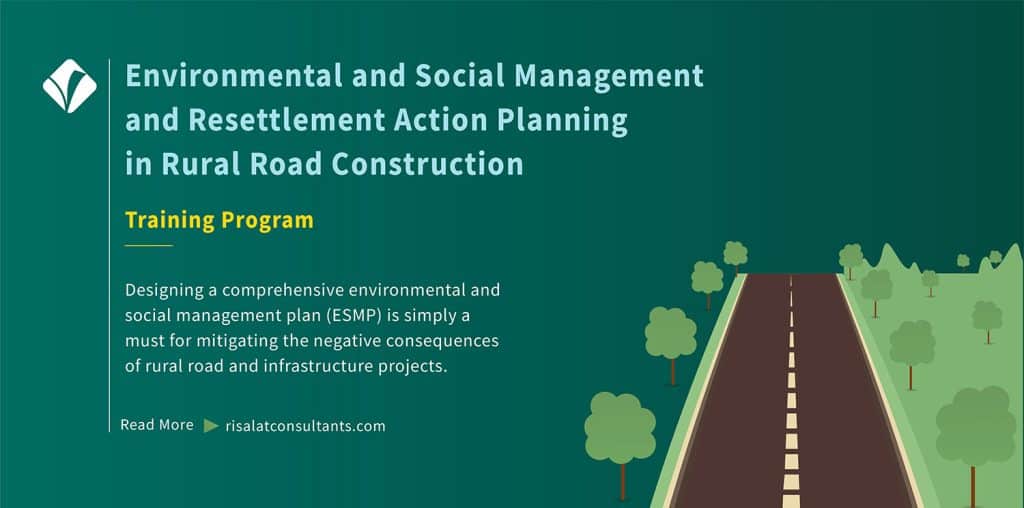
According to the ADB, nearly one billion people globally have limited access to road infrastructure. The absence of roads is particularly critical for the rural population. It not only impedes their mobility but also curbs their potential to benefit from development initiatives. Rural connectivity is a critical pathway to poverty alleviation, serving as the basis for inclusive socioeconomic growth. However, as rural areas frequently host fragile ecosystems and strong social patterns, construction activities might also result in undue harm. Therefore, designing a comprehensive environmental and social management plan (ESMP) is simply a must for the mitigation of such negative consequences.
This training programme has exclusively been developed by Risalat to aid governmental staff and development personnel in the design and implementation of rural road construction projects with environmental and social implications in mind. Programme content is aligned with the guidelines of major donor institutions financing infrastructure development. As a result of this programme, its delegates are expected to demonstrate a detailed understanding of environmental and social management and resettlement action planning. Moreover, they shall develop and enhance key skills required for responsible and sustainable infrastructure expansion groundwork.
Target Audience
Training on Environmental and Social Management and Resettlement Action Planning has primarily been designed for governmental personnel and development practitioners. This is due to the role they play in initiating, coordinating, and implementing infrastructure projects. Having programmatic knowledge is essential for their work performance and is required and expected from international donor institutions. However, training content can prove highly beneficial for a diverse range of professionals including but not limited to:
- Rural road infrastructure project planning heads, managers, and coordinators
- Road engineers and designers
- Environmental and Social Safeguards specialists
- Community development specialists
- Governmental personnel
- Development practitioners
- Resettlement and livelihoods specialists
- Members of NGOs/INGOs
- Financiers and Donor Agencies
- Community leaders
- Contractors and construction workers
Tick what your team needs to be able to do.
Programme Objectives
The programme intends to enable its delegates to effectively manage the environmental, social, and resettlement aspects of rural road projects. Its graduates shall form a part of a well-informed and skilled cohort of professionals who can contribute to responsible, sustainable, and inclusive rural development.
Specific objectives as below can speak for the performance of the programme. Upon the successful completion, delegates are expected to:
- Comprehend the significance of environmental and social management plans for infrastructure development initiatives, particularly rural road projects.
- Analyze potential impacts of rural road projects on the environment, communities, and their livelihoods.
- Understand the regulatory framework governing environmental and social aspects of infrastructure projects and learn how to align E&S and resettlement planning with international donor regulations.
- Employ best practices for avoidance and minimization of negative environmental impacts of rural road construction projects from erosion control, waste management, and habitat preservation to pollution prevention, sustainable use of water resources, and biodiversity preservation.
- Manage social impacts of rural road projects by understanding community dynamics and preserving cultural heritage.
- Develop effective resettlement action plans that support the active rebuilding of livelihoods.
- Engage stakeholders and define an effective communication plan.
- Assess the performance of E&S mitigation measures and plan for improvement.
Programme Contents
- Rural connectivity, infrastructure, and development
- Implications of rural road development – What are the potential environmental and social impacts?
- Legal and regulatory framework for E&S management
- Social and cultural specificities of rural areas
- International standards and guidelines for E&S management
- Environmental and social risk classification
- Overview of Environmental and Social Impact Assessment (ESIA)
- Environmental management in rural road construction
- Erosion control and sedimentation prevention
- Waste management
- Resource efficiency, pollution prevention, and abatement in rural road construction
- Labor and working conditions in rural road construction
- Community health and safety
- Land acquisition and restrictions on land use
- Involuntary resettlement
- Designing a resettlement action plan (RAP)
- Compensation, livelihood restoration, and community support
- Biodiversity conservation and sustainable management of living natural resources
- Indigenous peoples
- Local cultures, traditions, and cultural sensitivity
- Preservation of cultural heritage
- Information disclosure
- Addressing community concerns
- Stakeholder engagement planning and implementation
- Airport Pickup & Welcome Assistance
- Accommodation with Breakfast for the full duration
- Welcome Dinner for networking and connecting with fellow Participants & the Risalat Team
- Risalat Training Kit, including: bag, water bottle, coffee mug, t-shirt, cap, passport cover, pens, notebook, magnet, keychain
- Lunch Provided Daily during training days
- Comprehensive Course Manual & Training Materials
Full day-by-day contents
First day
- Rural connectivity, infrastructure, and development
- Implications of rural road development – What are the potential environmental and social impacts?
- Legal and regulatory framework for E&S management
- Social and cultural specificities of rural areas
- International standards and guidelines for E&S management
- Environmental and social risk classification
- Environmental and Social Commitment Plan
Second Day
- Overview of Environmental and Social Impact Assessment (ESIA)
- Environmental management in rural road construction
- Erosion control and sedimentation prevention
- Waste management
- Resource efficiency, pollution prevention, and abatement in rural road construction
- Labor and working conditions in rural road construction
Third day
- Community health and safety
- Land acquisition and restrictions on land use
- Involuntary resettlement
- Designing a resettlement action plan (RAP)
- Compensation, livelihood restoration, and community support
- Biodiversity conservation and sustainable management of living natural resources
Fourth Day
- Indigenous peoples
- Local cultures, traditions, and cultural sensitivity
- Preservation of cultural heritage
- Information disclosure
- Addressing community concerns
- Stakeholder engagement planning and implementation
Fifth Day – Full-day exposure visit and panel discussions
The last day of the programme shall be dedicated to the exposure visit and study tour to a selected rural road construction site in the host country. Throughout the day, training delegates shall meet subject-matter experts working on the development of rural infrastructure and engage in panel discussions around key challenges and best practices.
Programme Methodology
The programme focuses on enhancing practical skills and knowledge of Environmental and Social Management and Resettlement Action Planning. The presentation, exercises, simulations, case studies, and discussion questions are explicitly tailored to professionals working on E&S management in rural infrastructure development, specifically road projects.
Proven adult-learning methodology and principles guide the entire process intending to maximize the effectiveness of the delivery and create a long-lasting impact. Practical exposure and study tour alongside panel discussions target enhancing real-life capabilities.
Programme-Related Host Country Profile
The kingdom of Cambodia has showcased significant improvements in rural road systems throughout recent years. However, transportation costs are still on the higher end. As roads are the major transportation mode, intensive investments are needed, especially in rural areas. Rural roads represent over 75% of the entire network of which only slightly over 5% have been paved so far.
The Cambodian Government has been actively partnering with the World Bank, the ADB, the EIB, and JICA to accelerate investments in rural road connectivity. The country has accumulated substantial expertise in E&S management of rural road projects including the Resettlement Action Planning and has exhibited success stories over the last decade.
Course Deliverables
Participants will enjoy a full-service experience that covers everything needed before, during, and after the programme:
Before the Programme
- Participant Pre-Assessment to ensure effective preparation
- Complimentary Visa Support & Advisory (E-visa applications are fully processed by our team)
During the Programme
- Airport Pickup & Welcome Assistance
- Accommodation with Breakfast for the full duration
- Welcome Dinner for networking and connecting with fellow Participants & the Risalat Team
- Risalat Training Kit, including: bag, water bottle, coffee mug, t-shirt, cap, passport cover, pens, notebook, magnet, keychain
- Lunch Provided Daily during training days
- Comprehensive Course Manual & Training Materials
- Project-Based Templates, Tools, and Worksheets
- Mini Pad / Tablet for convenient access to digital resources
- Digital Case Studies, Reading Packs & Reference Materials
- Access to Sample Datasets & Practical Exercises
- Field Visit (where applicable)
- Complimentary Refreshments & Full Training Venue Facilities
- Access to Online Learning Resources
- Entertaining City Tour
- Certificate of Completion
- Risalat Programme Participation Recognition Award
After the Programme
- Post-Training Support & Follow-Up Guidance
- Programme Report
£3,750 per participant · invoice and bank transfer · groups of 5 or more receive a discount
Five or more from one organisation: ask for the group rate on the invoice request.
Ten or more: an in-house version for your institution may cost less per person. Ask for an in-house quote.
Registration closes in 5 days (23 Oct 2026)