حقائق رئيسية
- المواعيد
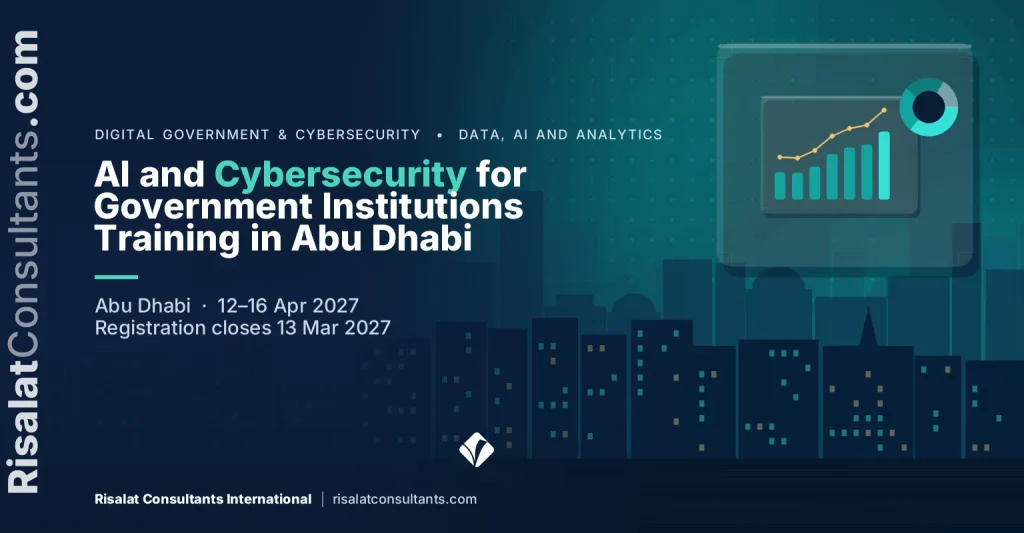
- 12–16 أبريل 2027 (5 أيام)
- المكان
- Abu Dhabi, United Arab Emirates
- الرسوم لكل مشارك
- £3,350 (جنيه إسترليني)
- الدفع
- بالفاتورة والتحويل المصرفي
- إغلاق التسجيل
- 13 Mar 2027
- الشهادة
- شهادة إتمام
- الخيار المؤسسي
- نفّذه لفريقك، في المواعيد التي تناسبك
في هذه الصفحة 16 قسماً
نظرة عامة على البرنامج
Government institutions and donor-funded operations face a dual challenge as artificial intelligence reshapes the cybersecurity landscape. Public sector entities increasingly depend on automated services, digital identity platforms, and data analytics to deliver essential citizen programmes. While artificial intelligence offers significant efficiency gains, it also expands the threat environment. Public sector cyber teams must defend against sophisticated automated attacks while concurrently securing the machine learning pipelines, administrative algorithms, and sensitive national data assets underpinning modern state administration.
Free self-check: the governance self-audit gives a quick check of governance, controls and accountability, in about 10 minutes.
This five-day professional development course delivered in Abu Dhabi provides technical and policy personnel with the competencies required to address artificial intelligence vulnerabilities and defences. Participants examine the mechanics of machine learning exploitation, prompt manipulation, data poisoning, and infrastructure reconnaissance. The curriculum addresses defensive applications of automation, security architectures for public sector systems, and operational mitigation against advanced social engineering campaigns, ensuring institutions establish resilient protective postures that align with recognised international standards and public governance imperatives.
The programme bridges technical execution and public administrative governance, supporting institutions funded by national budgets and international development partners. Attendees review practical methodologies for auditing machine learning models, deploying automated threat detection, managing critical incidents, and drafting internal acceptable use policies. Through structured operational scenarios, participants gain the capability to safeguard public registries, donor-financed project management information systems, and core e-government services from evolving algorithmic threats while maintaining public trust and operational continuity.
Public administrations and donor-financed initiatives supported by institutions such as the World Bank, Asian Development Bank, African Development Bank, European Union, and United Nations are integrating artificial intelligence into citizen services and operational project management. This rapid deployment occurs amidst expanding regulatory expectations, including the OECD AI Principles, the UNESCO Recommendation on the Ethics of Artificial Intelligence, and the European Union AI Act. Public bodies require technical staff and policy officers who can identify AI-specific vulnerabilities, protect public data registries, and implement compliant operational controls immediately.
Delivered by Risalat Consultants International in Abu Dhabi, United Arab Emirates, it combines expert-led sessions, real cases and group work, so that participants can apply what they learn in their own institution.
The Programme Strengthens Institutional Capability
- Analysis of artificial intelligence threats targeting e-government portals and state registries
- Mechanics of automated reconnaissance, vulnerability scanning, and autonomous exploitation
- The NIST AI Risk Management Framework and ISO/IEC 42001 applied to public sector environments
- Mapping attack vectors: Data manipulation, model evasion, and extraction of proprietary administrative algorithms
- Evaluating third-party dependencies, open-source libraries, and digital supply chains in donor-funded systems
- Hardening data pipelines: Ingestion, training data validation, and model storage controls
- Mitigating direct and indirect prompt injection attacks against public administrative chatbots
- Access control, zero trust architecture, and identity management for algorithmic operations
- الاستراتيجية الرقمية وتخطيط التحول
- حوكمة البيانات وجودتها
- تحليل البيانات وتصويرها مرئياً
- أساسيات الأمن السيبراني وإدارة المخاطر
It is designed for chief Information Security Officers (CISOs) in government ministries and municipal bodies, information and Communications Technology (ICT) security officers managing public infrastructure, network administrators and systems engineers in state entities and executive agencies and others who want practical, current skills in digital government, data and technology.
- الجمع
- التنقية
- التخزين
- التحليل
- القرار
The Growing Importance of AI and Cybersecurity for Government Institutions
تُغيّر الخدمات الرقمية والبيانات والتقنيات الجديدة طريقة عمل المؤسسات وطريقة خدمة المواطنين. فإذا أُحسن تطبيقها جعلت الخدمات أسرع وأقل تكلفة وأكثر شفافية، وإذا أُسيء تطبيقها أهدرت الأموال وعرّضت البيانات للخطر.
تحتاج المؤسسات إلى أشخاص قادرين على تخطيط التغيير الرقمي، وإدارة البيانات بمسؤولية، وحماية الأنظمة، واستخدام الأدلة المستمدة من البيانات في القرارات. وباتت هذه المهارات مطلوبة في جميع الوظائف، لا في تقنية المعلومات وحدها.
تحتاج المؤسسات بشكل متزايد إلى مهنيين قادرين على:
- تخطيط مبادرات رقمية تحل مشكلات حقيقية
- إدارة جودة البيانات وحمايتها ومشاركتها
- تحليل البيانات وعرضها بوضوح
- إدارة المخاطر السيبرانية والتقنية
- قيادة الأفراد خلال التغيير الرقمي
تساعد الأنظمة القوية في الحكومة الرقمية والبيانات والتكنولوجيا المؤسسات على:
- تقديم خدمات أسرع وأيسر وصولاً
- تحسين استخدام البيانات في القرارات
- حماية الأنظمة والبيانات الشخصية
- تحقيق القيمة من الاستثمارات التقنية
This AI and Cybersecurity for Government Institutions programme brings these elements together in a practical format, so that participants understand not only what good practice looks like but also how to introduce it in their own setting, with the people and resources they have.
Who Should Attend This AI and Cybersecurity for Government Institutions Training?
صُمم هذا البرنامج من أجل:
- Chief Information Security Officers (CISOs) in government ministries and municipal bodies
- Information and Communications Technology (ICT) security officers managing public infrastructure
- Network administrators and systems engineers in state entities and executive agencies
- Digital government project leads and enterprise architects supervising modernisation schemes
- Cybersecurity incident response team members and security operations centre analysts
- Project directors and technical specialists delivering donor-financed digital transformation programmes
- Data protection officers and public sector IT compliance auditors
- Digital transformation advisors and policy specialists within central government secretariats
- مديرو وموظفو تقنية المعلومات والاتصالات
- قادة التحول الرقمي
- محللو البيانات والإحصائيون
- موظفو أمن المعلومات
يناسب البرنامج المهنيين ذوي الخبرة وكذلك من ينتقلون إلى مسؤوليات جديدة. ونشجع المجموعات التي تضم مؤسسات ودولاً مختلفة، لأن المشاركين يتعلمون الكثير من تجارب بعضهم بعضاً.
حدّد ما يحتاج فريقك إلى القدرة على إنجازه.
AI and Cybersecurity for Government Institutions Training Objectives
Upon successful completion of this AI and Cybersecurity for Government Institutions Training, participants will be able to:
- Assess emerging artificial intelligence attack surfaces across public administration networks and cloud architectures
- Deploy defensive machine learning systems to automate real-time threat detection and security analytics
- Evaluate risks related to deepfakes, synthetic media, and automated social engineering targeting civil servants
- Apply technical safeguards to mitigate prompt injection, training data poisoning, and model evasion vulnerabilities
- Establish structured incident response protocols for breaches involving algorithmic platforms and compromised machine learning pipelines
- Formulate institutional acceptable use policies governing employee interaction with public and enterprise artificial intelligence tools
- Align state cybersecurity operations with international frameworks including ISO/IEC 27001, NIST AI Risk Management Framework, and the EU AI Act
- شرح الاتجاهات الرئيسية في الحكومة الرقمية واستخدام البيانات
- تخطيط مبادرة رقمية مرتبطة بأهداف الخدمات
- تطبيق مبادئ حوكمة البيانات وجودتها
يُطبَّق كل هدف خلال البرنامج من خلال التمارين أو دراسات الحالة أو العمل الجماعي، بحيث يغادر المشاركون وهم قادرون على تنفيذه، لا على وصفه فحسب.
محتوى البرنامج وهيكله
- Analysis of artificial intelligence threats targeting e-government portals and state registries
- Mechanics of automated reconnaissance, vulnerability scanning, and autonomous exploitation
- The NIST AI Risk Management Framework and ISO/IEC 42001 applied to public sector environments
- Mapping attack vectors: Data manipulation, model evasion, and extraction of proprietary administrative algorithms
- Evaluating third-party dependencies, open-source libraries, and digital supply chains in donor-funded systems
- Hardening data pipelines: Ingestion, training data validation, and model storage controls
- Mitigating direct and indirect prompt injection attacks against public administrative chatbots
- Access control, zero trust architecture, and identity management for algorithmic operations
- Addressing data leakage and non-compliance with the OECD AI Principles and data sovereignty mandates
- Security baseline verification for cloud-hosted and on-premise government machine learning models
- Technical analysis of generative voice cloning, video manipulation, and synthetic identity fraud
- Threat actor methodologies targeting public financial management and procurement authorisations
- Cryptographic media verification, watermarking mechanisms, and provenance standards such as C2PA
- Staff verification protocols and defensive controls against targeted administrative impersonation
- Institutional response mechanisms to synthetic media campaigns targeting public service delivery
- Deploying artificial intelligence for automated log analysis, anomaly detection, and SIEM enhancement
- Triaging algorithmic compromises: Identifying poisoned models, data exfiltration, and model inversion
- Developing public sector incident response playbooks tailored to machine learning security failures
- Digital forensics for compromised artificial intelligence systems: Preserving evidence and audit trails
- Coordination frameworks with national Computer Emergency Response Teams (CERTs) during incidents
- Developing internal acceptable use policies for commercial and public generative artificial intelligence tools
- Aligning departmental controls with the EU AI Act, UNESCO Recommendations, and national data laws
- Conducting Algorithmic and Cybersecurity Impact Assessments for donor-financed projects
- Establishing technical oversight committees, audit schedules, and monitoring regimens
- Drafting a comprehensive institutional action plan for secure artificial intelligence integration
المحتوى الكامل يوماً بيوم
يمتد البرنامج على 5 أيام. ويجمع كل يوم بين مداخلات الخبراء والعمل التطبيقي وورشة عمل أو دراسة حالة ختامية:
- First Day: The Evolving AI Threat Environment and Public Sector Attack Surfaces
- Second Day: Securing Machine Learning Architectures and Government Data Assets
- Third Day: Deepfakes, Synthetic Media, and Advanced Social Engineering Countermeasures
- Fourth Day: Defensive Automation, Security Operations, and Incident Response
- Fifth Day: Governance, Institutional Policies, and Acceptable Use Frameworks
المحتوى الكامل يوماً بيوم
First Day | The Evolving AI Threat Environment and Public Sector Attack Surfaces
- Analysis of artificial intelligence threats targeting e-government portals and state registries
- Mechanics of automated reconnaissance, vulnerability scanning, and autonomous exploitation
- The NIST AI Risk Management Framework and ISO/IEC 42001 applied to public sector environments
- Mapping attack vectors: Data manipulation, model evasion, and extraction of proprietary administrative algorithms
- Evaluating third-party dependencies, open-source libraries, and digital supply chains in donor-funded systems
Workshop: The Evolving AI Threat Environment and Public Sector Attack Surfaces: Applying It to Your Institution
يعمل المشاركون في مجموعات صغيرة على تطبيق أساليب اليوم على أمثلة من مؤسساتهم، ويتفقون على خطوات عملية تالية.
Second Day | Securing Machine Learning Architectures and Government Data Assets
- Hardening data pipelines: Ingestion, training data validation, and model storage controls
- Mitigating direct and indirect prompt injection attacks against public administrative chatbots
- Access control, zero trust architecture, and identity management for algorithmic operations
- Addressing data leakage and non-compliance with the OECD AI Principles and data sovereignty mandates
- Security baseline verification for cloud-hosted and on-premise government machine learning models
Workshop: Securing Machine Learning Architectures and Government Data Assets: Applying It to Your Institution
يعمل المشاركون في مجموعات صغيرة على تطبيق أساليب اليوم على أمثلة من مؤسساتهم، ويتفقون على خطوات عملية تالية.
Third Day | Deepfakes, Synthetic Media, and Advanced Social Engineering Countermeasures
- Technical analysis of generative voice cloning, video manipulation, and synthetic identity fraud
- Threat actor methodologies targeting public financial management and procurement authorisations
- Cryptographic media verification, watermarking mechanisms, and provenance standards such as C2PA
- Staff verification protocols and defensive controls against targeted administrative impersonation
- Institutional response mechanisms to synthetic media campaigns targeting public service delivery
Case Study: Deepfakes, Synthetic Media, and Advanced Social Engineering Countermeasures in Practice
يحلل المشاركون حالة واقعية، ويقارنون الخيارات المتخذة بالممارسات الجيدة، ويستخلصون دروساً يمكنهم تطبيقها في بيئة عملهم.
Fourth Day | Defensive Automation, Security Operations, and Incident Response
- Deploying artificial intelligence for automated log analysis, anomaly detection, and SIEM enhancement
- Triaging algorithmic compromises: Identifying poisoned models, data exfiltration, and model inversion
- Developing public sector incident response playbooks tailored to machine learning security failures
- Digital forensics for compromised artificial intelligence systems: Preserving evidence and audit trails
- Coordination frameworks with national Computer Emergency Response Teams (CERTs) during incidents
Workshop: Defensive Automation, Security Operations, and Incident Response: Applying It to Your Institution
يعمل المشاركون في مجموعات صغيرة على تطبيق أساليب اليوم على أمثلة من مؤسساتهم، ويتفقون على خطوات عملية تالية.
Fifth Day | Governance, Institutional Policies, and Acceptable Use Frameworks
- Developing internal acceptable use policies for commercial and public generative artificial intelligence tools
- Aligning departmental controls with the EU AI Act, UNESCO Recommendations, and national data laws
- Conducting Algorithmic and Cybersecurity Impact Assessments for donor-financed projects
- Establishing technical oversight committees, audit schedules, and monitoring regimens
- Drafting a comprehensive institutional action plan for secure artificial intelligence integration
Capstone Exercise: AI and Cybersecurity for Government Institutions Action Plan for Your Institution
يجمع المشاركون حصيلة الأسبوع في خطة عمل لمؤسساتهم، تتضمن الأولويات والمسؤولين والخطوات الأولى، ثم يعرضونها لتلقي ملاحظات الزملاء والميسّرين.
AI and Cybersecurity for Government Institutions Training Methodology
The training employs practical public sector case studies, technical demonstrations, threat-modelling workshops, and institutional policy simulations. Working individually and in small cohorts, participants analyse realistic operational scenarios based on civil registries, national procurement platforms, and donor project environments. Daily sessions combine formal technical briefings with hands-on risk assessment exercises, enabling attendees to evaluate vulnerable model configurations, draft enforceable institutional policies, and construct robust incident response playbooks for their home organisations.
يجمع البرنامج بين:
- جلسات يقودها خبراء حول الممارسات الحالية
- دراسات حالة إقليمية ودولية
- عمل جماعي وتمارين عملية
- محاكاة ولعب أدوار حسب الحاجة
- مناقشة التحديات الخاصة بالمشاركين
- التعلم من الأقران عبر المؤسسات والدول
- أدوات ونماذج عملية تعود بها إلى العمل
- تأمل يومي وتخطيط للعمل
قبل البرنامج، يساعد تقييم مسبق قصير الميسّرين على فهم دور كل مشارك وأولوياته، بحيث يمكن تكييف الأمثلة والتمارين مع المجموعة. ويُختتم كل يوم بتأمل قصير يدوّن فيه المشاركون ما سيطبقونه في العمل.
- المعاملة
- التسجيل
- الرقابة
- الأدلة
- الرأي
النتائج المتوقعة
Upon completion of this AI and Cybersecurity for Government Institutions Training, participants will be able to:
- Identify and remediate technical vulnerabilities specific to machine learning workflows and administrative data systems
- Integrate defensive automation tools within existing government security operations centres to accelerate threat mitigation
- Neutralise risks associated with synthetic media, audio spoofing, and advanced spear-phishing targeting state personnel
- Execute structured incident response procedures to contain and recover from algorithmic security breaches
- Enforce compliant, risk-managed acceptable use policies for generative artificial intelligence within public departments
- Implement governance controls that satisfy requirements from international development partners and global standards
- تخطيط مبادرات رقمية مرتبطة بأهداف الخدمات
- تطبيق مبادئ حوكمة البيانات وجودتها
يغادر المشاركون بخطة عمل شخصية وأدوات عملية يمكنهم استخدامها في مؤسساتهم منذ الأسبوع الأول من عودتهم. ويمكن للمؤسسات التي ترسل عدة مشاركين الاستفادة من البرنامج للاتفاق على أساليب ونماذج مشتركة بين الفرق، مما يسهّل استدامة التحسينات.
£3,350 لكل مشارك · فاتورة وتحويل مصرفي · خصم للمجموعات المكوّنة من 5 مشاركين أو أكثر
خمسة مشاركين أو أكثر من مؤسسة واحدة: اطلبوا سعر المجموعة عند طلب الفاتورة.
Ten or more: an in-house version for your institution may cost less per person. Ask for an in-house quote.
Registration closes in 114 days (13 Mar 2027)
Institutional Application of AI and Cybersecurity for Government Institutions Training
يدعم هذا البرنامج المؤسسات في تعزيز:
- الاستراتيجية الرقمية
- حوكمة البيانات
- القرارات القائمة على البيانات
- الأمن السيبراني
- إدارة التكنولوجيا
يعود المشاركون بأدوات عملية لتحسين:
- سجلات جرد البيانات
- لوحات المتابعة
- سجلات المخاطر
- شراء التقنيات
- خطط التغيير
صُمم البرنامج بحيث ينتقل التعلم من قاعة التدريب إلى المؤسسة. ويعمل المشاركون على عملياتهم ووثائقهم الخاصة كلما أمكن، ويغادرون بخطة عمل يمكن لمديريهم مراجعتها ودعمها.
الأهمية الإقليمية والتطبيق
أوروبا
تطبّق المؤسسات الأوروبية الحكومة الرقمية والبيانات والتكنولوجيا ضمن أطر تنظيمية مفصّلة وأجندات إصلاحية. ويمكن للمشاركين من أوروبا مقارنة ممارساتهم بممارسات زملائهم من مناطق أخرى، واختبار مدى نجاح الأساليب الراسخة في ظروف مختلفة.
أفريقيا
في أنحاء أفريقيا، تعمل الوزارات والهيئات وفرق المشاريع العاملة في الحكومة الرقمية والبيانات والتكنولوجيا بشكل متزايد إلى جانب برامج ممولة من الجهات المانحة تتطلب أنظمة وأدلة واضحة. ويساعد البرنامج المشاركين على تكييف الممارسات الجيدة مع المؤسسات والموارد التي يعملون بها.
الشرق الأوسط
في الشرق الأوسط، تفرض استراتيجيات التنمية الوطنية وخطط التنويع متطلبات متزايدة في مجالات الحكومة الرقمية والبيانات والتكنولوجيا. ويستكشف المشاركون كيفية بناء القدرات التي تحتاجها هذه الخطط داخل الجهات العامة والشركات.
آسيا
تجمع المؤسسات في أنحاء آسيا بين النمو السريع وبرامج التحديث الطموحة. ويمكن للمشاركين من آسيا تبادل خبراتهم في التوسع السريع في الأنظمة والتعلم من المناهج المتبعة في أماكن أخرى.
المحيط الهادئ
تواجه الدول الجزرية الصغيرة ودول المحيط الهادئ قيوداً خاصة تتعلق بالحجم والمسافة والقدرات. ويسلط البرنامج الضوء على مناهج عملية ومتناسبة في الحكومة الرقمية والبيانات والتكنولوجيا تلائم المؤسسات الأصغر حجماً.
Holding the programme in Abu Dhabi, United Arab Emirates brings participants together away from their daily pressures, so they can compare how digital government, data and technology is handled in different settings. The same programme can also be delivered in-house for one institution, in its own country or online, with cases taken from its current work.
لمحة عن البلد المضيف – الإمارات العربية المتحدة
برامج وورش عمل وزيارات ميدانية ودورات تدريبية في أبوظبي، الإمارات العربية المتحدة من Risalat Consultants International
تمنح الدراسة خارج البلد الأصلي المشاركين وقتاً للتركيز، ونظرة جديدة إلى مؤسساتهم، وفرصة لبناء شبكة علاقات مع زملاء من دول أخرى.
AI and Cybersecurity for Government Institutions Training Deliverables
يحصل المشاركون على الدعم قبل البرنامج وأثناءه وبعده، بحيث يشكّل التحضير والتعلم والمتابعة تجربة واحدة متصلة.
قبل البرنامج
- التقييم المسبق للمشاركين
- AI and Cybersecurity for Government Institutions Readiness Assessment
- AI and Cybersecurity for Government Institutions Resource Pack
- مواد قراءة تحضيرية
- دعم واستشارات مجانية بشأن التأشيرة
أثناء البرنامج
- الاستقبال من المطار والمساعدة عند الوصول
- Accommodation with breakfast: 6 nights, check-in Sunday 11 April 2027, check-out Saturday 17 April 2027 (one night before and one night after the programme)
- عشاء ترحيبي للتعارف
- حقيبة Risalat التدريبية (حقيبة، وقارورة، وكوب، وقميص، وقبعة، وغلاف جواز سفر، وأقلام، ودفتر، ومغناطيس وميدالية مفاتيح)
- Comprehensive AI and Cybersecurity for Government Institutions Training Manual
- قائمة التحقق من النضج الرقمي
- نموذج جرد البيانات
- نموذج تخطيط لوحة المتابعة
- سجل المخاطر التقنية
- ورش عمل عملية ومحاكاة
- مناقشات جماعية وتعلم من الأقران
- غداء ومرطبات يومية
- الاستفادة الكاملة من مرافق مكان التدريب
- جهاز Mini Pad / جهاز لوحي مزود بمواد تعليمية رقمية
- زيارة ميدانية (حسب الاقتضاء)
- جولة ترفيهية في المدينة
بعد البرنامج
- شهادة الإتمام
- جائزة Risalat تقديراً للمشاركة في البرنامج
- مواد مرجعية بعد التدريب
- التقييم الذاتي لحوكمة البيانات
- قائمة التحقق لمراجعة المشاريع الرقمية
- الدعم بعد التدريب وإرشادات المتابعة
- تقرير البرنامج
Institutions can also request a tailored in-house version of this programme, delivered at their premises or online. Request a proposal.
Common Challenges in AI and Cybersecurity for Government Institutions, And How This Training Helps
كيف يمكن للمؤسسات تخطيط مبادرات رقمية تحل مشكلات حقيقية؟
The programme addresses this directly on the first day (The Evolving AI Threat Environment and Public Sector Attack Surfaces), where participants practise the methods involved and adapt them to their own institution, then build it into their action plan.
كيف يمكن للمؤسسات إدارة جودة البيانات وحمايتها ومشاركتها؟
The programme addresses this directly on the second day (Securing Machine Learning Architectures and Government Data Assets), where participants practise the methods involved and adapt them to their own institution, then build it into their action plan.
كيف يمكن للمؤسسات تحليل البيانات وعرضها بوضوح؟
The programme addresses this directly on the third day (Deepfakes, Synthetic Media, and Advanced Social Engineering Countermeasures), where participants practise the methods involved and adapt them to their own institution, then build it into their action plan.
كيف يمكن للمؤسسات إدارة المخاطر السيبرانية والتقنية؟
The programme addresses this directly on the fourth day (Defensive Automation, Security Operations, and Incident Response), where participants practise the methods involved and adapt them to their own institution, then build it into their action plan.
كيف يمكن للمؤسسات قيادة الأفراد خلال التغيير الرقمي؟
The programme addresses this directly on the fifth day (Governance, Institutional Policies, and Acceptable Use Frameworks), where participants practise the methods involved and adapt them to their own institution, then build it into their action plan.
الأسئلة الشائعة
When and where does the AI and Cybersecurity for Government Institutions programme take place?
It runs from 12 Apr 2027 to 16 Apr 2027, in Abu Dhabi, United Arab Emirates. The registration deadline is shown at the top of this page.
من ينبغي أن يحضر؟
The programme is designed for chief Information Security Officers (CISOs) in government ministries and municipal bodies, information and Communications Technology (ICT) security officers managing public infrastructure, network administrators and systems engineers in state entities and executive agencies, digital government project leads and enterprise architects supervising modernisation schemes, and others who want practical skills in digital government, data and technology.
هل سأحصل على شهادة؟
نعم. يحصل المشاركون الذين يُتمّون البرنامج على شهادة إتمام من Risalat Consultants International.
هل يمكن تقديم هذا البرنامج لمؤسستنا حصرياً؟
نعم. يمكننا تقديم نسخة مؤسسية مصممة خصيصاً في مقر مؤسستكم أو في مدينة أخرى أو عبر الإنترنت، مبنية حول حالاتكم الخاصة. استخدموا نموذج طلب العرض في هذه الصفحة.
هل أحتاج إلى خبرة سابقة في الحكومة الرقمية والبيانات والتكنولوجيا؟
لا يُشترط أي تخصص سوى الخبرة في دور ذي صلة. ويساعد تقييم مسبق قصير الميسّرين على تكييف الجلسات مع المجموعة.
Who Will Deliver This Programme
Each date is delivered by a team assigned from Risalat's expert network for this subject. For this programme we assign:
How we choose them: Experience in the region of the participants or comparable settings; Command of the financier rules that apply (World Bank, ADB, AfDB, EU, UN) where relevant; Delivery in English; other languages on request for in-house groups; No conflict of interest with participants' institutions.
تتم مشاركة أسماء السير الذاتية المختصرة للخبراء المعينين مع المشاركين المسجلين والجهات الراعية قبل البرنامج، بناءً على الطلب. هل أنت خبير في هذا المجال؟ انضم إلى شبكة خبرائنا.
Training courses in Abu DhabiTechnology training courses
لماذا أبوظبي لهذا البرنامج
أبوظبي عاصمة هادئة ذات مؤسسات قوية في القطاع العام، ما يجعلها مناسبة لبرامج الأداء الحكومي والطاقة.
The AI and Cybersecurity for Government Institutions Training in Abu Dhabi programme in April 2027 brings together officials and professionals from across the Middle East region and beyond. Sessions combine short inputs, case studies and group work on participants' own files, and the city's institutions can be added as a study visit on request.
الوصول: مطار زايد الدولي (AUH).
تحقق مما إذا كنت بحاجة إلى تأشيرة عبر أداة التحقق من التأشيرة المجانية، واطلب خطاب دعوة بعد إتمام تسجيلك.
الموضوع نفسه في مدن أخرى
- Practical AI Tools for Project Teams and Analysts in Geneva (Geneva)
- AI in Education and Skills Systems Training in Helsinki (Helsinki)
- AI for Health Systems and Health Data Training in Geneva (Geneva)
- Prompt Engineering and AI Tools for Professionals Training in Bangkok (Bangkok)
- Data Governance and AI-Ready Data for Institutions Training in Seoul (Seoul)
- AI for Project Management and PIU Teams Training in Kigali (Kigali)
برامج أخرى في أبوظبي
- البرنامج التدريبي لثقافة الخدمة الاستثنائية في أبوظبي
- برنامج تدريبي في إدارة أعمال البناء وتنفيذها في أبوظبي
- GIS Mapping and QGIS Training in Abu Dhabi
ذو صلة: حوكمة الذكاء الاصطناعي للمؤسسات العامة · الجاهزية لحوكمة الذكاء الاصطناعي مجاناً · جميع البرامج
For teams and institutions
Bring your team
Teams that learn together apply more at work. Tell us how many people and how you would like to take part: we reply with a group quote within two working days.
Other dates and cities for this subject: Digital Government and Data Governance training courses (116 upcoming dates).
More training courses in the United Arab Emirates · جميع البرامج في الشرق الأوسط · تقويم التدريب الكامل
تخطيط هذا البرنامج في خارطة طريق: لماذا هو مهم، ولماذا يجب الموافقة عليه، والتواريخ المراد التخطيط لها، والمسار المهني الذي يبنيه.