حقائق رئيسية
- المواعيد
- 15–19 فبراير 2027 (5 أيام)
- المكان
- يُحدَّد لاحقاً، فرانكفورت، ألمانيا
- الرسوم لكل مشارك
- £4,930 (جنيه إسترليني)
- الدفع
- بالفاتورة والتحويل المصرفي
- إغلاق التسجيل
- 31 ديسمبر 2026
- الصيغة
- 5-day short course: a practical capacity-building programme for government, NGO and project teams in Frankfurt
- الشهادة
- شهادة إتمام
- الخيار المؤسسي
- نفّذه لفريقك، في المواعيد التي تناسبك
في هذه الصفحة 16 قسماً
نظرة عامة على البرنامج
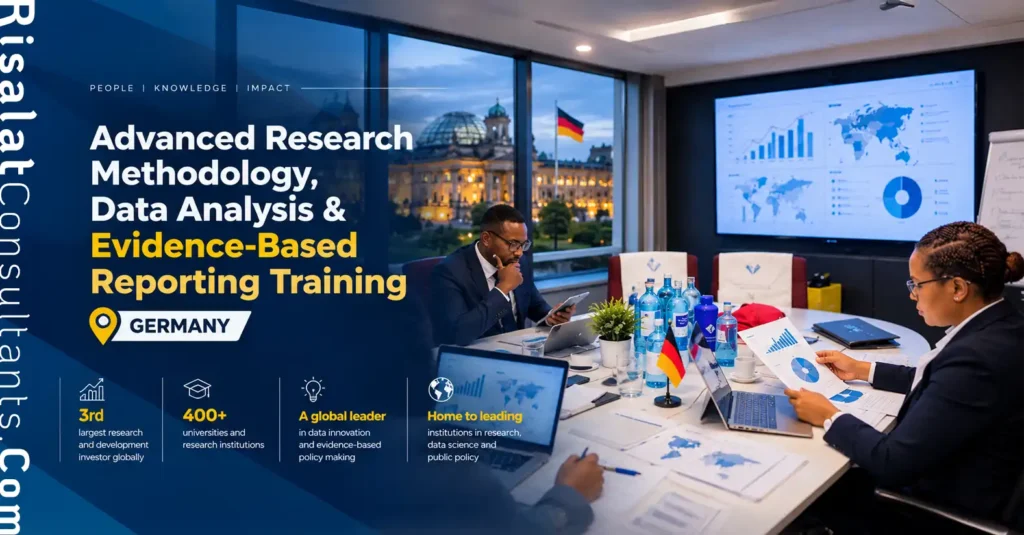
The Research Methods, Data Analysis and Reporting Training in Frankfurt is an applied five-day professional development programme for officials, managers and specialists responsible for decisions, assurance and implementation. It connects technical methods with practical work products that participants can adapt to their own institutions.
Free self-check: the digital readiness assessment gives how ready your institution is for digital services, data and AI, in about 10 minutes.
The programme is hosted in Frankfurt, Germany. It is designed for public institutions, donor-financed project teams, regulators and organisations that need documented decisions and reliable operational controls. The venue is a learning location, not a claim that a local institution is providing a confirmed technical visit.
يعمل المشاركون مع ملفات حالات واقعية ولكنها خيالية تغطي أسئلة البحث، وتصميمات الطرق المختلطة، وقواعد جودة البيانات. تميز التمارين بين المتطلبات التي تتبع ممولاً أو ولاية قضائية معينة وبين الممارسات الجيدة العامة. لا يوجد أي تمويل للمشروع أو ترتيب ترشيح ضمني.
يפתח المنهج الدراسي سيرงาน مستمراً من التقييم الأول والتخطيط إلى جمع الأدلة، وضمان الجودة، وإعداد تقارير الإدارة، والمتابعة المؤسسية. كما يشجع المشاركين على تحديد الثغرات في السياسات القائمة قبل تطبيق أي إطار مرجعي دولي.
The Programme Strengthens Institutional Capability
- Research questions
- Sampling frames
- Research ethics
- تصاميم الطرق المختلطة
- Survey instruments
- Interview protocols
- Data quality rules
- Data dictionaries
- الإحصاء الوصفي
- Inferential reasoning
- الترميز النوعي
- التثليث
- Visualisation
- موجزات السياسات
- Evidence registers
- Decision memos
- Research governance
- Replication files
Each participant builds a portfolio of draft tools and a short implementation plan, with responsibilities, verification points and a timetable for management review.
الأهمية المتزايدة للبحث والتقارير القائمة على الأدلة
Institutions are expected to demonstrate not only that activities have been completed, but that decisions are consistent, traceable and proportionate to risk. In research and evidence-based reporting, weak definitions, fragmented records and unclear accountability can make otherwise sound work difficult to defend or improve.
The reference materials listed below offer official frameworks relevant to parts of this curriculum. They do not establish that any named institution has committed funds to this course. Participants should check the rules governing their own country, employer and financed project before adopting the examples.
تحتاج المؤسسات بشكل متزايد إلى مهنيين قادرين على:
- Assess research questions using documented criteria
- تقييم أطر المعاينة باستخدام معايير موثقة
- تقييم أخلاقيات البحث باستخدام معايير موثقة
- تقييم التصاميم مختلطة الأساليب باستخدام معايير موثقة
- Assess survey instruments using documented criteria
- Assess interview protocols using documented criteria
- Assess data quality rules using documented criteria
- Assess data dictionaries using documented criteria
- Assess descriptive statistics using documented criteria
- Assess inferential reasoning using documented criteria
- Assess qualitative coding using documented criteria
- Assess triangulation using documented criteria
Strong research and evidence-based reporting systems help organisations:
- Improve the consistency of descriptive statistics
- تحسين اتساق الاستدلال الاستقرائي
- تحسين اتساق الترميز النوعي
- Improve the consistency of triangulation
- Improve the consistency of visualisation
- تحسين اتساق موجزات السياسات
- Improve the consistency of evidence registers
- Improve the consistency of decision memos
A workable system needs clear ownership, tested records and decisions that can be reviewed independently. The sessions translate these requirements into small, repeatable routines rather than a one-off report.
Who Should Attend This Research Methods, Data Analysis and Reporting Training?
صُمم هذا البرنامج من أجل:
- Ministry department directors
- Government policy analysts
- Project implementation unit managers
- Project management unit coordinators
- Technical assistance team leaders
- المدققون الداخليون
- Compliance officers
- Procurement specialists
- Finance managers
- Monitoring and evaluation officers
- Data and reporting analysts
- موظفو ضمان جودة البرامج
- Institutional development specialists
- Public sector trainers
- نقاط الاتصال لشركاء التنمية
- الاستشاريون الداعمون للوكالات العامة
Participants should bring a description of one institutional process they wish to improve, without sharing confidential personal or commercial information.
حدّد ما يحتاج فريقك إلى القدرة على إنجازه.
Research Methods, Data Analysis and Reporting Training Objectives
Upon successful completion of this Research Methods, Data Analysis and Reporting Training, participants will be able to:
- Explain the institutional purpose and limitations of research and evidence-based reporting
- Assess existing procedures against relevant documented requirements
- تحديد أصحاب المصلحة الرئيسيين وحقوق القرار
- Prioritise operational risks and quality weaknesses
- Select appropriate methods and tools for the task
- Document assumptions and supporting evidence
- Design practical controls and review checkpoints
- استخدام مجموعات البيانات النموذجية أو ملفات الحالات بطريقة مسؤولة
- Communicate findings to decision-makers
- إعداد خطة عمل وموارد متناسبة
- Monitor follow-up and adjust implementation
The emphasis is on demonstrable workplace outputs, with peer feedback and facilitator review of the methods selected.
محتوى البرنامج وهيكله
- تحديد مشكلة القرار وأسئلة البحث القابلة للاختبار
- Map stakeholder information needs and reporting obligations
- Compare experimental and observational research designs
- Choose qualitative, quantitative or mixed methods
- Build a logic model and analytical framework
- Identify selection bias and confounding risks
- Plan ethical consent and safe data handling
- Construct sampling frames and inclusion criteria
- Calculate practical sample sizes and limitations
- كتابة أسئلة استطلاع محايدة ومقاييس استجابة
- تصميم أدلة المقابلات ومجموعات التركيز
- Configure digital collection and validation checks
- Develop enumerator instructions and supervision rules
- Plan consent, anonymisation and secure storage
- Inspect missing values, duplicates and outliers
- Create a reproducible cleaning log
- Produce descriptive tables and cross-tabulations
- Distinguish correlation from causation
- Apply confidence intervals with stated assumptions
- Code qualitative interviews and identify themes
- Triangulate numerical and narrative findings
- تحويل النتائج إلى ملخص تنفيذي يبدأ بالإجابة أولاً
- Select honest charts and appropriate denominators
- Write transparent methods and limitations
- Separate evidence, interpretation and recommendation
- Prepare policy briefs for senior decision-makers
- Build an accessible results dashboard outline
- Check consistency between tables and conclusions
- Integrate findings into monitoring and evaluation cycles
- Define data ownership and approval workflows
- Set quality controls for recurring reporting
- تصميم قائمة مرجعية لتكليف البحوث
- Build an evidence-to-decision tracking log
- Establish feedback loops with programme teams
- Prioritise a feasible institutional research pipeline
المحتوى الكامل يوماً بيوم
The five-day sequence builds from diagnosis to an institutional improvement proposal. Each day includes guided technical work and a documented practical exercise.
- First Day: Research questions and decision use
- Second Day: Sampling, ethics and field instruments
- اليوم الثالث: تنظيف البيانات والتحليل الإحصائي
- Fourth Day: Interpretation and evidence-based reporting
- Fifth Day: Institutional research and reporting plans
المحتوى الكامل يوماً بيوم
First Day | Research questions and decision use
- تحديد مشكلة القرار وأسئلة البحث القابلة للاختبار
- Map stakeholder information needs and reporting obligations
- Compare experimental and observational research designs
- Choose qualitative, quantitative or mixed methods
- Build a logic model and analytical framework
- Identify selection bias and confounding risks
- Plan ethical consent and safe data handling
- صياغة بروتوكول بحثي وخطة لضمان الجودة
ورشة عمل: أسئلة البحث وتطبيق استخدام القرار
Working in small teams, participants apply the day’s methods to a fictional institutional scenario. They produce a short decision-ready artefact, record key assumptions, identify unresolved evidence gaps and receive structured feedback. The output is retained for the final institutional action plan.
Second Day | Sampling, ethics and field instruments
- Construct sampling frames and inclusion criteria
- Calculate practical sample sizes and limitations
- كتابة أسئلة استطلاع محايدة ومقاييس استجابة
- تصميم أدلة المقابلات ومجموعات التركيز
- Configure digital collection and validation checks
- Develop enumerator instructions and supervision rules
- Plan consent, anonymisation and secure storage
- Pilot instruments and document revisions
Workshop: Sampling, ethics and field instruments application
Working in small teams, participants apply the day’s methods to a fictional institutional scenario. They produce a short decision-ready artefact, record key assumptions, identify unresolved evidence gaps and receive structured feedback. The output is retained for the final institutional action plan.
Third Day | Data cleaning and statistical analysis
- Inspect missing values, duplicates and outliers
- Create a reproducible cleaning log
- Produce descriptive tables and cross-tabulations
- Distinguish correlation from causation
- Apply confidence intervals with stated assumptions
- Code qualitative interviews and identify themes
- Triangulate numerical and narrative findings
- Review limitations and sensitivity checks
Case Study: Data cleaning and statistical analysis application
Working in small teams, participants apply the day’s methods to a fictional institutional scenario. They produce a short decision-ready artefact, record key assumptions, identify unresolved evidence gaps and receive structured feedback. The output is retained for the final institutional action plan.
Fourth Day | Interpretation and evidence-based reporting
- تحويل النتائج إلى ملخص تنفيذي يبدأ بالإجابة أولاً
- Select honest charts and appropriate denominators
- Write transparent methods and limitations
- Separate evidence, interpretation and recommendation
- Prepare policy briefs for senior decision-makers
- Build an accessible results dashboard outline
- Check consistency between tables and conclusions
- Practise communicating uncertainty to stakeholders
ورشة عمل: تفسير وتطبيق التقارير القائمة على الأدلة
Working in small teams, participants apply the day’s methods to a fictional institutional scenario. They produce a short decision-ready artefact, record key assumptions, identify unresolved evidence gaps and receive structured feedback. The output is retained for the final institutional action plan.
Fifth Day | Institutional research and reporting plans
- Integrate findings into monitoring and evaluation cycles
- Define data ownership and approval workflows
- Set quality controls for recurring reporting
- تصميم قائمة مرجعية لتكليف البحوث
- Build an evidence-to-decision tracking log
- Establish feedback loops with programme teams
- Prioritise a feasible institutional research pipeline
- Present a decision memo and implementation plan
Capstone Exercise: Institutional research and reporting plans application
Working in small teams, participants apply the day’s methods to a fictional institutional scenario. They produce a short decision-ready artefact, record key assumptions, identify unresolved evidence gaps and receive structured feedback. The output is retained for the final institutional action plan.
Research Methods, Data Analysis and Reporting Training Methodology
Facilitators use short briefings, individual exercises and group-based problem solving. Case data are illustrative, with assumptions made explicit; the exercises do not represent an audit or certification of any real organisation.
يجمع البرنامج بين:
- Expert-led technical briefings
- مراجعات السياسات والعمليات الميسرة
- ملفات حالات مجهولة المصدر أو وهمية
- Spreadsheet and template exercises
- Small-group scenario analysis
- Role-based decision simulations
- Peer comparison of institutional practices
- Guided risk and control mapping
- Structured facilitator feedback
- تأملات التعلم اليومية
- Action planning and presentation practice
- فالنتات المرجعية مقارنة بالمعايير الأصلية
Participants can adapt worksheets to their own institution after reviewing local legal requirements, confidentiality rules and management approvals.
النتائج المتوقعة
Upon completion of this Research Methods, Data Analysis and Reporting Training, participants will be able to:
- Present a baseline of current institutional practice
- إعداد سجل للمخاطر والقضايا
- Draft a quality assurance checklist
- Explain key requirements to colleagues
- إعداد إحاطة إدارية موثوقة
- بناء خطة للأدلة والسجلات
- Identify priorities for staff development
- Set measurable implementation milestones
- Evaluate whether controls are operating as intended
- تقديم مقترح لتحسين المؤسسة
These are intended learning outcomes, not guaranteed changes in an employer’s systems or compliance status.
£4,930 لكل مشارك · فاتورة وتحويل مصرفي · خصم للمجموعات المكوّنة من 5 مشاركين أو أكثر
خمسة مشاركين أو أكثر من مؤسسة واحدة: اطلبوا سعر المجموعة عند طلب الفاتورة.
Ten or more: an in-house version for your institution may cost less per person. Ask for an in-house quote.
Registration closes in 39 days (31 Dec 2026)
Institutional Application of Research Methods, Data Analysis and Reporting Training
يدعم هذا البرنامج المؤسسات في تعزيز:
- ملكية أسئلة البحث
- ملكية أطر المعاينة
- Ownership of research ethics
- Ownership of mixed-method designs
- ملكية أدوات المسح
- Ownership of interview protocols
- مسؤولية قواعد جودة البيانات
- ملكية قواميس البيانات
- Ownership of descriptive statistics
- Ownership of inferential reasoning
- Ownership of qualitative coding
- Ownership of triangulation
يعود المشاركون بأدوات عملية لتحسين:
- توثيق ومراجعة الإحصاءات الوصفية
- توثيق ومراجعة الاستدلال الاستنتاجي
- توثيق ومراجعة الترميز النوعي
- توثيق ومراجعة التثليث
- Documentation and review of visualisation
- توثيق ومراجعة موجزات السياسات
- توثيق ومراجعة سجلات الأدلة
- توثيق ومراجعة مذكرات القرار
Institutions can use the draft outputs as a starting point for a tailored in-house programme, internal working group or management-approved improvement initiative.
الأهمية الإقليمية والتطبيق
أوروبا
بالنسبة للفرق العاملة في أوروبا، يمكن للبحوث والتقارير المستندة إلى الأدلة دعم ضمان القطاع العام، والامتثال التنظيمي، وإعداد التقارير الخاضعة للمساءلة. تختلف القواعد ذات الصلة وشروط التمويل حسب البلد والمشروع، لذا يستخدم البرنامج طرقاً مقارنة دون افتراض نظام قانوني أو تنظيمي موحد.
أفريقيا
For teams working in Africa, research and evidence-based reporting can support implementation capacity and evidence for financed programmes. The relevant rules and financing conditions differ by country and project, so the programme uses comparative methods without assuming a uniform legal or regulatory system.
الشرق الأوسط
For teams working in Middle East, research and evidence-based reporting can support institutional modernisation and governance of large initiatives. The relevant rules and financing conditions differ by country and project, so the programme uses comparative methods without assuming a uniform legal or regulatory system.
آسيا والمحيط الهادئ
For teams working in Asia and the Pacific, research and evidence-based reporting can support cross-agency coordination and delivery in varied operating contexts. The relevant rules and financing conditions differ by country and project, so the programme uses comparative methods without assuming a uniform legal or regulatory system.
يتيح العمل الجماعي العابر للأقاليم للمشاركين مقارنة النهج العملية مع حماية معلومات المؤسسات السرية.
1. Which approach best supports research questions?
The programme applies documented decisions and evidence checks to research questions; requirements must be checked against the relevant original guidance.
2. أي نهج يدعم بشكل أفضل تصميمات الطرق المختلطة؟
The programme applies documented decisions and evidence checks to mixed-method designs; requirements must be checked against the relevant original guidance.
3. Which approach best supports data quality rules?
The programme applies documented decisions and evidence checks to data quality rules; requirements must be checked against the relevant original guidance.
- الجمع
- التنقية
- التخزين
- التحليل
- القرار
لمحة عن البلد المضيف – ألمانيا
Frankfurt in Germany is the established location for this programme. Training is designed around classroom exercises, group discussion and international peer learning rather than an unverified promise of access to a specific government agency.
The host setting allows participants to examine how research and evidence-based reporting can be organised in a professional training environment. Official frameworks and case materials are reviewed in class; a local organisation is not represented as a programme partner unless separately confirmed.
International participants should verify entry conditions for Germany using official consular channels based on their nationality and residence status. Travel routes, appointment availability, transit requirements and local arrangements can change, so visa assistance is advisory and entry is never guaranteed.
Research Methods, Data Analysis and Reporting Training Deliverables
The following support package and learning materials are designed to help participants prepare, take part and transfer the learning into their workplace.
قبل البرنامج
- التقييم المسبق للمشاركين
- Research and evidence-based reporting Readiness Assessment
- Research and evidence-based reporting Resource Pack
- مواد قراءة تحضيرية
- دعم واستشارات مجانية بشأن التأشيرة
أثناء البرنامج
- الاستقبال من المطار والمساعدة عند الوصول
- Accommodation with breakfast: 6 nights, check-in Sunday 14 February 2027, check-out Saturday 20 February 2027 (one night before and one night after the programme)
- عشاء ترحيبي للتعارف
- حقيبة Risalat التدريبية (حقيبة، وقارورة، وكوب، وقميص، وقبعة، وغلاف جواز سفر، وأقلام، ودفتر، ومغناطيس وميدالية مفاتيح)
- Comprehensive Research and evidence-based reporting Training Manual
- Research Questions Template
- Sampling Frames Template
- Research Ethics Template
- Mixed-Method Designs Template
- Survey Instruments Template
- ورش عمل عملية ومحاكاة
- مناقشات جماعية وتعلم من الأقران
- غداء ومرطبات يومية
- الاستفادة الكاملة من مرافق مكان التدريب
- جهاز Mini Pad / جهاز لوحي مزود بمواد تعليمية رقمية
- Field Visit (where applicable and confirmed)
- جولة ترفيهية في المدينة
بعد البرنامج
- شهادة الإتمام
- جائزة Risalat تقديراً للمشاركة في البرنامج
- مواد مرجعية بعد التدريب
- Research Questions Checklist
- Mixed-Method Designs Working Template
- Data Quality Rules Action Plan
- الدعم بعد التدريب وإرشادات المتابعة
- تقرير البرنامج
Institutions seeking a customised group version can request a tailored proposal. Participants may also explore the programme categories and institutional capacity diagnostic.
Common Challenges in Research and evidence-based reporting, And How This Training Helps
How can we identify the real capability gap?
The first day combines baseline assessment with stakeholder mapping so teams can distinguish a skills gap from a process or accountability problem.
How can we make decisions consistent and defensible?
يقدم اليوم الثاني معايير موثقة، ونماذج عملية، وفحوصات الجودة لتمكين المراجعين من إعادة بناء سبب اختيار خيار معين.
How can we improve data and evidence quality?
The third day uses case records and verification steps to help participants identify missing, contradictory or unreliable information.
كيف يمكننا إعداد تقارير عن النتائج المعقدة للقيادات العليا؟
The fourth day turns technical findings into concise management messages, supporting evidence and clear recommendations.
كيف يمكننا تنسيق الفرق عبر الإدارات المختلفة؟
The programme defines decision rights, handovers and escalation points in a realistic institutional workflow.
كيف يمكننا إدارة عدم اليقين دون اختراع الدقة؟
تتطلب الجلسات من المشاركين توثيق الافتراضات والقيود والتفسيرات البديلة قبل تقديم التوصيات.
How can we sustain improvements after training?
يُخصص مشروع التخرج في اليوم الخامس مالكين، ومحطات رئيسية، ومؤشرات، وعملية مراجعة متابعة لخطة عمل يمكن التحكم فيها.
الأسئلة الشائعة
How can we identify the real capability gap?
The first day combines baseline assessment with stakeholder mapping so teams can distinguish a skills gap from a process or accountability problem.
How can we make decisions consistent and defensible?
يقدم اليوم الثاني معايير موثقة، ونماذج عملية، وفحوصات الجودة لتمكين المراجعين من إعادة بناء سبب اختيار خيار معين.
How can we improve data and evidence quality?
The third day uses case records and verification steps to help participants identify missing, contradictory or unreliable information.
كيف يمكننا إعداد تقارير عن النتائج المعقدة للقيادات العليا؟
The fourth day turns technical findings into concise management messages, supporting evidence and clear recommendations.
كيف يمكننا تنسيق الفرق عبر الإدارات المختلفة؟
The programme defines decision rights, handovers and escalation points in a realistic institutional workflow.
Who Will Deliver This Programme
Each date is delivered by a team assigned from Risalat's expert network for this subject. For this programme we assign:
How we choose them: Experience in the region of the participants or comparable settings; Command of the financier rules that apply (World Bank, ADB, AfDB, EU, UN) where relevant; Delivery in English; other languages on request for in-house groups; No conflict of interest with participants' institutions.
الدورات التدريبية في فرانكفورتالدورات التدريبية في البحوث والإحصاء
لماذا فرانكفورت لهذا البرنامج
Frankfurt is a major European financial centre, hosting institutions such as the European Central Bank and the Deutsche Bundesbank. Visiting delegations can examine international banking operations, regulatory systems, and central transport management. The city is straightforward to reach from across the globe through its extensive rail network and its primary international aviation hub.
The Research Methods, Data Analysis and Reporting Training in Frankfurt programme in February 2027 brings together officials and professionals from across Europe, Africa, the Middle East and Asia. Sessions combine short inputs, case studies and group work on participants' own files, and the city's institutions can be added as a study visit on request.
Getting there: Frankfurt Airport (FRA).
تحقق مما إذا كنت بحاجة إلى تأشيرة عبر أداة التحقق من التأشيرة المجانية، واطلب خطاب دعوة بعد إتمام تسجيلك.
الموضوع نفسه في مدن أخرى
- Mini Degree in Monitoring, Evaluation and Learning in Bangkok (Bangkok)
- Performance Audit for Supreme Audit Institutions in Dubai (Dubai)
- Practical AI Tools for Project Teams and Analysts in Geneva (Geneva)
- AI for Agriculture and Food Security Training in Accra (Accra)
- Prompt Engineering and AI Tools for Professionals Training in Bangkok (Bangkok)
- AI in Monitoring, Evaluation and Learning Training in Nairobi (Nairobi)
برامج أخرى في فرانكفورت
- OECD (منظمة التعاون الاقتصادي والتنمية) OECD
- SDG Indicators Database UN Statistics Division
للفرق والمؤسسات
Bring your team
Teams that learn together apply more at work. Tell us how many people and how you would like to take part: we reply with a group quote within two working days.
Watch: this programme in short



Other dates and cities for this subject: Impact Evaluation and Data Analysis training courses (16 upcoming dates).
المزيد من الدورات التدريبية في ألمانيا · جميع البرامج في أوروبا · تقويم التدريب الكامل
تخطيط هذا البرنامج في خارطة طريق: لماذا هو مهم، ولماذا يجب الموافقة عليه، والتواريخ المراد التخطيط لها، والمسار المهني الذي يبنيه.