حقائق رئيسية
- المواعيد
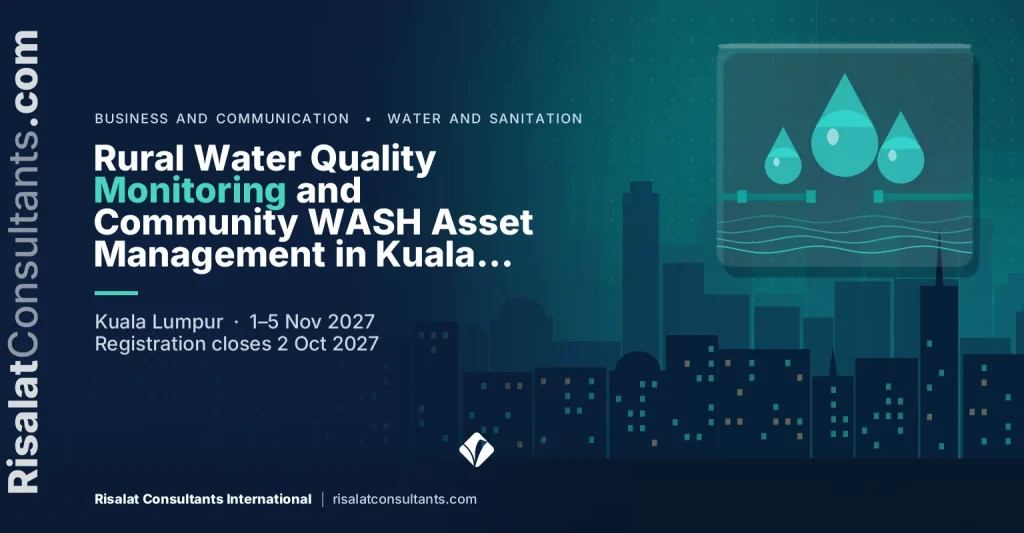
- 1–5 Nov 2027 (5 days)
- المكان
- كوالالمبور، ماليزيا
- الرسوم لكل مشارك
- £3,200 (جنيه إسترليني)
- الدفع
- بالفاتورة والتحويل المصرفي
- إغلاق التسجيل
- 2 Oct 2027
- لمن هذا البرنامج
- Punjab rural municipal service specialists and engineers; Water testing laboratory heads and senior analysts; Community infrastructure and mobilisa…
- الشهادة
- شهادة إتمام
- الخيار المؤسسي
- نفّذه لفريقك، في المواعيد التي تناسبك
في هذه الصفحة 13 قسماً
نظرة عامة على البرنامج
Rural water supply systems and sanitation services require rigorous technical monitoring and sustained local stewardship to protect public health. This 5-day course delivers comprehensive capability in water safety planning, field-level contamination screening, and technical compliance for dispersed settlements. Participants assess physical, chemical, and microbiological water quality parameters against recognised national and international standards. Through targeted technical sessions, the programme ensures rural operators and public engineers can maintain continuous drinking water safety, regulate disinfection procedures, and systematically mitigate environmental risks across distributed community networks.
Free self-check: the M&E and MEAL assessment gives a score for your monitoring, evaluation and learning system and the gaps to close first, in about 10 minutes.
Sustainable service delivery depends equally on practical utility administration, robust asset maintenance, and safe fecal sludge disposal management. The curriculum covers lifecycle maintenance planning, infrastructure registry compilation, and operational revenue collection models appropriate for rural village settings. Delegates examine institutional arrangements that empower community management committees, align local oversight with public service authorities, and secure financial accountability. Practical exercises emphasise preventative servicing schedules, spare parts supply chains, and transparent billing systems designed to prevent asset deterioration and service disruptions in low-capacity rural environments.
Delivered in Kuala Lumpur, the training exposes participants to regional utility management practices, structured water quality laboratory protocols, and modern asset management frameworks. Malaysian technical approaches provide relevant comparative insights into multi-tiered rural infrastructure governance, water quality surveillance, and catchment management. Through interactive case analyses and operational modelling, participants prepare functional tools to implement upon return, reinforcing service reliability, environmental health compliance, and long-term asset sustainability across rural municipal jurisdictions.
Public institutions and donor-funded initiatives, including operations aligned with the Punjab Rural Sustainable Water Supply and Sanitation Project, are making substantial investments to expand infrastructure across rural areas. Without continuous water quality monitoring, effective disinfection, and robust local asset management, installed piped networks and sanitation schemes risk rapid technical failure and contamination. Developing local capacity in chlorination controls, safe fecal sludge treatment chains, and cost-reflective operations and maintenance billing structures is essential to safeguard these investments and guarantee continuous, safe public health services for dispersed rural populations.
Delivered by Risalat Consultants International in Kuala Lumpur, Malaysia, it combines expert-led sessions, real cases and group work, so that participants can apply what they learn in their own institution.
The Programme Strengthens Institutional Capability
- WHO Guidelines for Drinking-water Quality and national regulatory standards for rural water supplies
- Microbiological, physical, and chemical parameter prioritisation for rural source waters
- Field testing methodologies, portable kit calibration, and chain-of-custody sample collection protocols
- Laboratory verification workflows, data integrity, and documentation for public health compliance
- Sanitary inspections and contamination risk identification across ground and surface water sources
- Water Safety Plan development according to international risk assessment frameworks
- Chlorination chemistry, dosage calculations, and contact time requirements for varied water sources
- Operation and routine maintenance of gas, liquid, and solid chlorination dosing units
- نظرية التغيير وسلاسل النتائج
- الأطر المنطقية وأطر النتائج
- المؤشرات الذكية (SMART) وخطوط الأساس والمستهدفات
- أساليب جمع البيانات وأدواتها
It is designed for punjab rural municipal service specialists and engineers, water testing laboratory heads and senior analysts, community infrastructure and mobilisation coordinators and others who want practical, current skills in monitoring and evaluation.
The Growing Importance of Rural Water Quality Monitoring and Community WASH Asset Management in Kuala Lumpur
تريد الحكومات والجهات الممولة أن تعرف ما الذي تغيّر، لا ما أُنفق فحسب. فأطر النتائج والمؤشرات والأدلة الموثوقة باتت اليوم هي التي تحدد كيفية الحكم على البرامج ومدى حصولها على تمويل إضافي.
تجمع فرق كثيرة كميات كبيرة من البيانات لكنها تجد صعوبة في تحويلها إلى قرارات. فالمتابعة والتقييم الفعّالان يربطان الأنشطة بالنتائج، ويُظهران التقدم مبكراً، ويدعمان التعلم على مستوى المؤسسة.
تحتاج المؤسسات بشكل متزايد إلى مهنيين قادرين على:
- تصميم أطر نتائج بمؤشرات قابلة للقياس
- جمع بيانات جديرة بالثقة والتحقق منها
- تحليل التقدم وتفسير الانحرافات
- تخطيط التقييمات وإدارتها
- استخدام الأدلة لتعديل الخطط والإبلاغ عن النتائج
تساعد أنظمة المتابعة والتقييم القوية المؤسسات على:
- عرض النتائج بوضوح على الجهات الممولة والمواطنين
- الكشف المبكر عن التأخيرات والمشكلات
- تحسين جودة القرارات
- استيفاء متطلبات إعداد التقارير والتقييم
This Rural Water Quality Monitoring and Community WASH Asset Management in Kuala Lumpur programme brings these elements together in a practical format, so that participants understand not only what good practice looks like but also how to introduce it in their own setting, with the people and resources they have.
Who Should Attend This Rural Water Quality Monitoring and Community WASH Asset Management in Kuala Lumpur Training?
صُمم هذا البرنامج من أجل:
- Punjab rural municipal service specialists and engineers
- Water testing laboratory heads and senior analysts
- Community infrastructure and mobilisation coordinators
- Rural water supply scheme operations managers
- Public health engineering department technical officers
- Local government and community development specialists
- WASH monitoring and evaluation officers on donor-funded programmes
- Environmental health inspectors overseeing rural sanitation
- Fecal sludge management and treatment plant supervisors
- مسؤولو ومديرو المتابعة والتقييم
- مديرو المشاريع والبرامج
- موظفو وحدات تنفيذ المشاريع المسؤولون عن إعداد التقارير
يناسب البرنامج المهنيين ذوي الخبرة وكذلك من ينتقلون إلى مسؤوليات جديدة. ونشجع المجموعات التي تضم مؤسسات ودولاً مختلفة، لأن المشاركين يتعلمون الكثير من تجارب بعضهم بعضاً.
حدّد ما يحتاج فريقك إلى القدرة على إنجازه.
Rural Water Quality Monitoring and Community WASH Asset Management in Kuala Lumpur Training Objectives
Upon successful completion of this Rural Water Quality Monitoring and Community WASH Asset Management in Kuala Lumpur Training, participants will be able to:
- Evaluate rural drinking water quality against WHO guidelines and national standards using laboratory and field testing protocols
- Design and calibrate rural chlorination systems to maintain adequate residual protection across piped distribution networks
- Formulate operational standards for fecal sludge containment, emptying, transport, and safe disposal in rural settlements
- Establish comprehensive rural WASH infrastructure asset registers with standardised lifecycle condition assessment criteria
- Structure sustainable operations and maintenance tariff models and transparent billing procedures for community schemes
- Draft community-led utility governance charters defining the responsibilities of village water committees and local authorities
- Develop technical audit checklists and environmental compliance frameworks for ongoing rural water quality surveillance
- بناء نظرية التغيير وسلسلة النتائج لبرنامج ما
- تصميم إطار للنتائج بمؤشرات ذكية (SMART)
- تحديد خطوط الأساس والمستهدفات ووسائل التحقق
يُطبَّق كل هدف خلال البرنامج من خلال التمارين أو دراسات الحالة أو العمل الجماعي، بحيث يغادر المشاركون وهم قادرون على تنفيذه، لا على وصفه فحسب.
محتوى البرنامج وهيكله
- WHO Guidelines for Drinking-water Quality and national regulatory standards for rural water supplies
- Microbiological, physical, and chemical parameter prioritisation for rural source waters
- Field testing methodologies, portable kit calibration, and chain-of-custody sample collection protocols
- Laboratory verification workflows, data integrity, and documentation for public health compliance
- Sanitary inspections and contamination risk identification across ground and surface water sources
- Water Safety Plan development according to international risk assessment frameworks
- Chlorination chemistry, dosage calculations, and contact time requirements for varied water sources
- Operation and routine maintenance of gas, liquid, and solid chlorination dosing units
- Free residual chlorine monitoring across storage tanks and dispersed distribution networks
- Emergency response protocols for biological contamination events and seasonal flood disruptions
- Characterisation of rural sanitation systems, pit latrines, and decentralized wastewater assets
- Safe fecal sludge emptying, mechanical and manual transfer protocols, and occupational safety
- Transportation logistics, designated rural transfer stations, and containment integrity
- Low-cost fecal sludge treatment options: drying beds, co-composting, and waste stabilisation ponds
- Environmental compliance, effluent standards, and pathogen barrier verification before land application
- Infrastructure asset register compilation: categorisation, geo-referencing, and condition grading
- Preventative, predictive, and corrective maintenance scheduling for rural pumping and pipe systems
- Supply chain management for critical electro-mechanical spare parts and consumable treatment chemicals
- Asset degradation forecasting and capital replacement fund establishment for rural schemes
- Digital tools and field-based mobile applications for real-time asset tracking and breakdown reporting
- Community management models: legal status, committee structures, and municipal oversight agreements
- Full-cost recovery principles, O&M expenditure forecasting, and volumetric versus flat-rate tariff design
- Revenue collection procedures, transparent record-keeping, and financial auditing at the village level
- Customer grievance mechanisms, dispute resolution, and equity provisions for vulnerable households
- Action planning: integrating water quality testing, asset registers, and billing models into rural project sites
المحتوى الكامل يوماً بيوم
يمتد البرنامج على 5 أيام. ويجمع كل يوم بين مداخلات الخبراء والعمل التطبيقي وورشة عمل أو دراسة حالة ختامية:
- First Day: Day 1: Drinking Water Quality Surveillance and Testing Protocols
- Second Day: Day 2: Disinfection Operations, Chlorination, and Water Safety Planning
- Third Day: Day 3: Rural Sanitation and Fecal Sludge Disposal Chains
- Fourth Day: Day 4: Community WASH Asset Management and Maintenance Planning
- Fifth Day: Day 5: Utility Governance, O&M Billing, and Community Stewardship
المحتوى الكامل يوماً بيوم
First Day | Day 1: Drinking Water Quality Surveillance and Testing Protocols
- WHO Guidelines for Drinking-water Quality and national regulatory standards for rural water supplies
- Microbiological, physical, and chemical parameter prioritisation for rural source waters
- Field testing methodologies, portable kit calibration, and chain-of-custody sample collection protocols
- Laboratory verification workflows, data integrity, and documentation for public health compliance
- Sanitary inspections and contamination risk identification across ground and surface water sources
Workshop: Day 1: Drinking Water Quality Surveillance and Testing Protocols: Applying It to Your Institution
يعمل المشاركون في مجموعات صغيرة على تطبيق أساليب اليوم على أمثلة من مؤسساتهم، ويتفقون على خطوات عملية تالية.
Second Day | Day 2: Disinfection Operations, Chlorination, and Water Safety Planning
- Water Safety Plan development according to international risk assessment frameworks
- Chlorination chemistry, dosage calculations, and contact time requirements for varied water sources
- Operation and routine maintenance of gas, liquid, and solid chlorination dosing units
- Free residual chlorine monitoring across storage tanks and dispersed distribution networks
- Emergency response protocols for biological contamination events and seasonal flood disruptions
Workshop: Day 2: Disinfection Operations, Chlorination, and Water Safety Planning: Applying It to Your Institution
يعمل المشاركون في مجموعات صغيرة على تطبيق أساليب اليوم على أمثلة من مؤسساتهم، ويتفقون على خطوات عملية تالية.
Third Day | Day 3: Rural Sanitation and Fecal Sludge Disposal Chains
- Characterisation of rural sanitation systems, pit latrines, and decentralized wastewater assets
- Safe fecal sludge emptying, mechanical and manual transfer protocols, and occupational safety
- Transportation logistics, designated rural transfer stations, and containment integrity
- Low-cost fecal sludge treatment options: drying beds, co-composting, and waste stabilisation ponds
- Environmental compliance, effluent standards, and pathogen barrier verification before land application
Case Study: Day 3: Rural Sanitation and Fecal Sludge Disposal Chains in Practice
يحلل المشاركون حالة واقعية، ويقارنون الخيارات المتخذة بالممارسات الجيدة، ويستخلصون دروساً يمكنهم تطبيقها في بيئة عملهم.
Fourth Day | Day 4: Community WASH Asset Management and Maintenance Planning
- Infrastructure asset register compilation: categorisation, geo-referencing, and condition grading
- Preventative, predictive, and corrective maintenance scheduling for rural pumping and pipe systems
- Supply chain management for critical electro-mechanical spare parts and consumable treatment chemicals
- Asset degradation forecasting and capital replacement fund establishment for rural schemes
- Digital tools and field-based mobile applications for real-time asset tracking and breakdown reporting
Workshop: Day 4: Community WASH Asset Management and Maintenance Planning: Applying It to Your Institution
يعمل المشاركون في مجموعات صغيرة على تطبيق أساليب اليوم على أمثلة من مؤسساتهم، ويتفقون على خطوات عملية تالية.
Fifth Day | Day 5: Utility Governance, O&M Billing, and Community Stewardship
- Community management models: legal status, committee structures, and municipal oversight agreements
- Full-cost recovery principles, O&M expenditure forecasting, and volumetric versus flat-rate tariff design
- Revenue collection procedures, transparent record-keeping, and financial auditing at the village level
- Customer grievance mechanisms, dispute resolution, and equity provisions for vulnerable households
- Action planning: integrating water quality testing, asset registers, and billing models into rural project sites
Capstone Exercise: Rural Water Quality Monitoring and Community WASH Asset Management in Kuala Lumpur Action Plan for Your Institution
يجمع المشاركون حصيلة الأسبوع في خطة عمل لمؤسساتهم، تتضمن الأولويات والمسؤولين والخطوات الأولى، ثم يعرضونها لتلقي ملاحظات الزملاء والميسّرين.
Rural Water Quality Monitoring and Community WASH Asset Management in Kuala Lumpur Training Methodology
The training applies an adult-learning approach combining interactive lectures, engineering calculation workshops, and guided analysis of technical standards. Participants examine operational case studies from rural infrastructure programmes, evaluate water safety plans, and work through financial models for cost recovery. Working in small groups, delegates use real project data to build water surveillance protocols, fecal sludge management frameworks, and asset registries, concluding with practical action plans to implement directly within their home institutions.
يجمع البرنامج بين:
- جلسات يقودها خبراء حول الممارسات الحالية
- دراسات حالة إقليمية ودولية
- عمل جماعي وتمارين عملية
- محاكاة ولعب أدوار حسب الحاجة
- مناقشة التحديات الخاصة بالمشاركين
- التعلم من الأقران عبر المؤسسات والدول
- أدوات ونماذج عملية تعود بها إلى العمل
- تأمل يومي وتخطيط للعمل
قبل البرنامج، يساعد تقييم مسبق قصير الميسّرين على فهم دور كل مشارك وأولوياته، بحيث يمكن تكييف الأمثلة والتمارين مع المجموعة. ويُختتم كل يوم بتأمل قصير يدوّن فيه المشاركون ما سيطبقونه في العمل.
- المدخلات
- الأنشطة
- المخرجات
- النتائج
- الأثر
النتائج المتوقعة
Upon completion of this Rural Water Quality Monitoring and Community WASH Asset Management in Kuala Lumpur Training, participants will be able to:
- Operate field testing instruments and establish reliable sampling workflows for microbiological and chemical safety parameters
- Calculate and implement precise chemical dosing schedules to maintain target chlorine residuals in piped rural distribution networks
- Deploy safe operational procedures across the entire rural fecal sludge containment, handling, and treatment sequence
- Create and maintain an engineering asset register with standardised lifecycle condition ratings and servicing routines
- Implement an equitable O&M billing framework and transparent financial accounting system for rural water schemes
- Draft enforceable institutional agreements between community water committees and municipal public service departments
- تصميم أطر نتائج بمؤشرات قابلة للقياس
- وضع خطوط أساس ومستهدفات يمكن تتبعها
يغادر المشاركون بخطة عمل شخصية وأدوات عملية يمكنهم استخدامها في مؤسساتهم منذ الأسبوع الأول من عودتهم. ويمكن للمؤسسات التي ترسل عدة مشاركين الاستفادة من البرنامج للاتفاق على أساليب ونماذج مشتركة بين الفرق، مما يسهّل استدامة التحسينات.
£3,200 لكل مشارك · فاتورة وتحويل مصرفي · خصم للمجموعات المكوّنة من 5 مشاركين أو أكثر
خمسة مشاركين أو أكثر من مؤسسة واحدة: اطلبوا سعر المجموعة عند طلب الفاتورة.
Ten or more: an in-house version for your institution may cost less per person. Ask for an in-house quote.
Registration closes in 319 days (2 Oct 2027)
Institutional Application of Rural Water Quality Monitoring and Community WASH Asset Management in Kuala Lumpur Training
يدعم هذا البرنامج المؤسسات في تعزيز:
- أطر النتائج
- أنظمة المؤشرات
- جودة البيانات
- تخطيط التقييم
- الإبلاغ عن النتائج
يعود المشاركون بأدوات عملية لتحسين:
- بطاقات مرجعية للمؤشرات
- أدوات جمع البيانات
- التقارير المرحلية
- الشروط المرجعية للتقييم
- مراجعات التعلم
صُمم البرنامج بحيث ينتقل التعلم من قاعة التدريب إلى المؤسسة. ويعمل المشاركون على عملياتهم ووثائقهم الخاصة كلما أمكن، ويغادرون بخطة عمل يمكن لمديريهم مراجعتها ودعمها.
الأهمية الإقليمية والتطبيق
أوروبا
تطبّق المؤسسات الأوروبية المتابعة والتقييم ضمن أطر تنظيمية مفصلة وأجندات إصلاح. ويمكن للمشاركين من أوروبا مقارنة ممارساتهم بممارسات زملائهم من مناطق أخرى، واختبار مدى نجاح الأساليب الراسخة في ظروف مختلفة.
أفريقيا
في مختلف أنحاء أفريقيا، تعمل الوزارات والجهات وفرق المشاريع المعنية بالمتابعة والتقييم على نحو متزايد إلى جانب برامج ممولة من الجهات المانحة تتوقع أنظمة وأدلة واضحة. ويساعد البرنامج المشاركين على تكييف الممارسات الجيدة مع المؤسسات والموارد التي يعملون بها.
الشرق الأوسط
في الشرق الأوسط، تفرض استراتيجيات التنمية الوطنية وخطط التنويع الاقتصادي متطلبات متزايدة على المتابعة والتقييم. ويستكشف المشاركون كيفية بناء القدرات التي تحتاج إليها هذه الخطط داخل الجهات العامة والشركات.
آسيا
تجمع المؤسسات في أنحاء آسيا بين النمو السريع وبرامج التحديث الطموحة. ويمكن للمشاركين من آسيا تبادل خبراتهم في التوسع السريع في الأنظمة والتعلم من المناهج المتبعة في أماكن أخرى.
المحيط الهادئ
تواجه الدول الجزرية الصغيرة ودول المحيط الهادئ قيوداً خاصة تتعلق بالحجم والمسافة والقدرات. ويسلّط البرنامج الضوء على مقاربات عملية ومتناسبة للمتابعة والتقييم تلائم المؤسسات الأصغر حجماً.
Holding the programme in Kuala Lumpur, Malaysia brings participants together away from their daily pressures, so they can compare how monitoring and evaluation is handled in different settings. The same programme can also be delivered in-house for one institution, in its own country or online, with cases taken from its current work.
لمحة عن البلد المضيف – ماليزيا
برامج وورش عمل وزيارات ميدانية ودورات تدريبية في كوالالمبور، ماليزيا من Risalat Consultants International
تمنح الدراسة خارج البلد الأصلي المشاركين وقتاً للتركيز، ونظرة جديدة إلى مؤسساتهم، وفرصة لبناء شبكة علاقات مع زملاء من دول أخرى.
Rural Water Quality Monitoring and Community WASH Asset Management in Kuala Lumpur Training Deliverables
يحصل المشاركون على الدعم قبل البرنامج وأثناءه وبعده، بحيث يشكّل التحضير والتعلم والمتابعة تجربة واحدة متصلة.
قبل البرنامج
- التقييم المسبق للمشاركين
- Rural Water Quality Monitoring and Community WASH Asset Management in Kuala Lumpur Readiness Assessment
- Rural Water Quality Monitoring and Community WASH Asset Management in Kuala Lumpur Resource Pack
- مواد قراءة تحضيرية
- دعم واستشارات مجانية بشأن التأشيرة
أثناء البرنامج
- الاستقبال من المطار والمساعدة عند الوصول
- Accommodation with breakfast: 6 nights, check-in Sunday 31 October 2027, check-out Saturday 6 November 2027 (one night before and one night after the programme)
- عشاء ترحيبي للتعارف
- حقيبة Risalat التدريبية (حقيبة، وقارورة، وكوب، وقميص، وقبعة، وغلاف جواز سفر، وأقلام، ودفتر، ومغناطيس وميدالية مفاتيح)
- Comprehensive Rural Water Quality Monitoring and Community WASH Asset Management in Kuala Lumpur Training Manual
- نموذج نظرية التغيير
- نموذج البطاقة المرجعية للمؤشر
- قائمة التحقق من جودة البيانات
- نموذج الشروط المرجعية للتقييم
- ورش عمل عملية ومحاكاة
- مناقشات جماعية وتعلم من الأقران
- غداء ومرطبات يومية
- الاستفادة الكاملة من مرافق مكان التدريب
- جهاز Mini Pad / جهاز لوحي مزود بمواد تعليمية رقمية
- زيارة ميدانية (حسب الاقتضاء)
- جولة ترفيهية في المدينة
بعد البرنامج
- شهادة الإتمام
- جائزة Risalat تقديراً للمشاركة في البرنامج
- مواد مرجعية بعد التدريب
- دليل مراجعة إطار النتائج
- نموذج التقرير المرحلي
- الدعم بعد التدريب وإرشادات المتابعة
- تقرير البرنامج
Institutions can also request a tailored in-house version of this programme, delivered at their premises or online. Request a proposal.
Common Challenges in Rural Water Quality Monitoring and Community WASH Asset Management in Kuala Lumpur, And How This Training Helps
كيف يمكن للمؤسسات تصميم أطر نتائج بمؤشرات قابلة للقياس؟
The programme addresses this directly on the first day (Day 1: Drinking Water Quality Surveillance and Testing Protocols), where participants practise the methods involved and adapt them to their own institution, then build it into their action plan.
كيف يمكن للمؤسسات جمع بيانات جديرة بالثقة والتحقق منها؟
The programme addresses this directly on the second day (Day 2: Disinfection Operations, Chlorination, and Water Safety Planning), where participants practise the methods involved and adapt them to their own institution, then build it into their action plan.
كيف يمكن للمؤسسات تحليل التقدم وتفسير الانحرافات؟
The programme addresses this directly on the third day (Day 3: Rural Sanitation and Fecal Sludge Disposal Chains), where participants practise the methods involved and adapt them to their own institution, then build it into their action plan.
كيف يمكن للمؤسسات تخطيط التقييمات وإدارتها؟
The programme addresses this directly on the fourth day (Day 4: Community WASH Asset Management and Maintenance Planning), where participants practise the methods involved and adapt them to their own institution, then build it into their action plan.
كيف يمكن للمؤسسات استخدام الأدلة لتعديل الخطط والإبلاغ عن النتائج؟
The programme addresses this directly on the fifth day (Day 5: Utility Governance, O&M Billing, and Community Stewardship), where participants practise the methods involved and adapt them to their own institution, then build it into their action plan.
الأسئلة الشائعة
When and where does the Rural Water Quality Monitoring and Community WASH Asset Management in Kuala Lumpur programme take place?
It runs from 1 Nov 2027 to 5 Nov 2027, in Kuala Lumpur, Malaysia. The registration deadline is shown at the top of this page.
من ينبغي أن يحضر؟
The programme is designed for punjab rural municipal service specialists and engineers, water testing laboratory heads and senior analysts, community infrastructure and mobilisation coordinators, rural water supply scheme operations managers, and others who want practical skills in monitoring and evaluation.
هل سأحصل على شهادة؟
نعم. يحصل المشاركون الذين يُتمّون البرنامج على شهادة إتمام من Risalat Consultants International.
هل يمكن تقديم هذا البرنامج لمؤسستنا حصرياً؟
نعم. يمكننا تقديم نسخة مؤسسية مصممة خصيصاً في مقر مؤسستكم أو في مدينة أخرى أو عبر الإنترنت، مبنية حول حالاتكم الخاصة. استخدموا نموذج طلب العرض في هذه الصفحة.
هل أحتاج إلى خبرة سابقة في المتابعة والتقييم؟
لا يُشترط أي تخصص سوى الخبرة في دور ذي صلة. ويساعد تقييم مسبق قصير الميسّرين على تكييف الجلسات مع المجموعة.
Who Will Deliver This Programme
Each date is delivered by a team assigned from Risalat's expert network for this subject. For this programme we assign:
How we choose them: Experience in the region of the participants or comparable settings; Command of the financier rules that apply (World Bank, ADB, AfDB, EU, UN) where relevant; Delivery in English; other languages on request for in-house groups; No conflict of interest with participants' institutions.
Names and short CVs of the assigned experts are shared with registered participants and sponsoring organisations before the programme, on request. Are you an expert in this subject? Join our expert network.
Training courses in Kuala LumpurEnergy and Water training courses
لماذا كوالالمبور لهذا البرنامج
تجمع كوالالمبور بين القيمة الجيدة وسهولة الحصول على التأشيرة لمواطني كثير من الدول، ونماذج لوحدات تقديم الخدمات في القطاع العام.
The Rural Water Quality Monitoring and Community WASH Asset Management in Kuala Lumpur programme in November 2027 brings together officials and professionals from across the Asia region and beyond. Sessions combine short inputs, case studies and group work on participants' own files, and the city's institutions can be added as a study visit on request.
الوصول: مطار كوالالمبور الدولي (KUL).
تحقق مما إذا كنت بحاجة إلى تأشيرة عبر أداة التحقق من التأشيرة المجانية، واطلب خطاب دعوة بعد إتمام تسجيلك.
الموضوع نفسه في مدن أخرى
- Lowland Road Embankment Engineering and Culvert Hydraulics in Dakar (Dakar)
- Artisanal Mining Formalisation and Environmental Rehabilitation in Casablanca (Casablanca)
- Crisis-Zone Public Works Asset Verification and Field Safety Protocols in Dakar (Dakar)
- Rural Piped Water Concession Structuring and Private Operator Regulation in Dakar (Dakar)
- Rural Piped Water Supply Schemes and Gravity Network Design in Kigali (Kigali)
- Environmental & Social Instruments for Large Irrigation Infrastructure in Cairo (Cairo)
برامج أخرى في كوالالمبور
- Occupational Health and Safety Management on Public Works Contracts in Kuala Lumpur
- Public Administration Reform and Civil Service Management in Kuala Lumpur
- Public Hospital Infectious Disease Infrastructure & Biosafety in Kuala Lumpur
- Urban Pumping Station Modernisation & Solid Waste Interception in Kuala Lumpur
- Industry-Led TVET Dual-Training Schemes and Apprenticeship Governance in Kuala Lumpur
ذو صلة: المتابعة والتقييم والتعلم · أداة بناء البطاقات المرجعية للمؤشرات المجانية · جميع البرامج
Teams often travel here from Timor-Leste, Maldives, Sri Lanka, Bangladesh, Nepal, Bhutan, Pakistan, Myanmar. Funding, visa letters and group rates are explained on each country page.
- OECD (منظمة التعاون الاقتصادي والتنمية) OECD
- برنامج الأمم المتحدة الإنمائي UNDP
- شراكة التعاقد المفتوح (Open Contracting Partnership) شراكة التعاقد المفتوح (Open Contracting Partnership)
For teams and institutions
Bring your team
Teams that learn together apply more at work. Tell us how many people and how you would like to take part: we reply with a group quote within two working days.
Other dates and cities for this subject: Monitoring and Evaluation training courses (57 upcoming dates).
المزيد من الدورات التدريبية في ماليزيا · جميع البرامج في آسيا · تقويم التدريب الكامل
Plan this programme in a roadmap: why it matters, why to approve it, the dates to plan and the career it builds.