أبرز الخلاصات
- Understanding the Pilot Project Government Trap. In a pilot project government, testing becomes the dominant approach while national implementation remains delayed.
- Root Causes of Endless Government Pilot Projects. Fragmentation creates structural problems with the design, coordination, and delivery of transfer programs that are inherently political.
- How Pilot Projects Fragment Public Sector Reform. Public sector governance reform across developing nations produces disappointing results.
- Sector-by-Sector Analysis of Pilot Project Failures. Software development failures expose critical vulnerabilities in infrastructure pilot projects.
- The Cost of Perpetual Piloting on Institutional Capacity. State capacity represents an important prerequisite for policy implementation, yet institutional capacity, the ability of public institutions to implement specific policy mandates, remains…
باختصار: غالباً ما تفشل النهج الحكومية للمشاريع التجريبية في توسيع نطاق الإصلاحات. تعرف على العوائق التي تعترض التنفيذ المستدام والتغيير المؤسسي.
Free self-check: the procurement maturity assessment gives 30 questions on planning, tendering, contract management, integrity and e-procurement, with a score per area, in about 10 minutes.
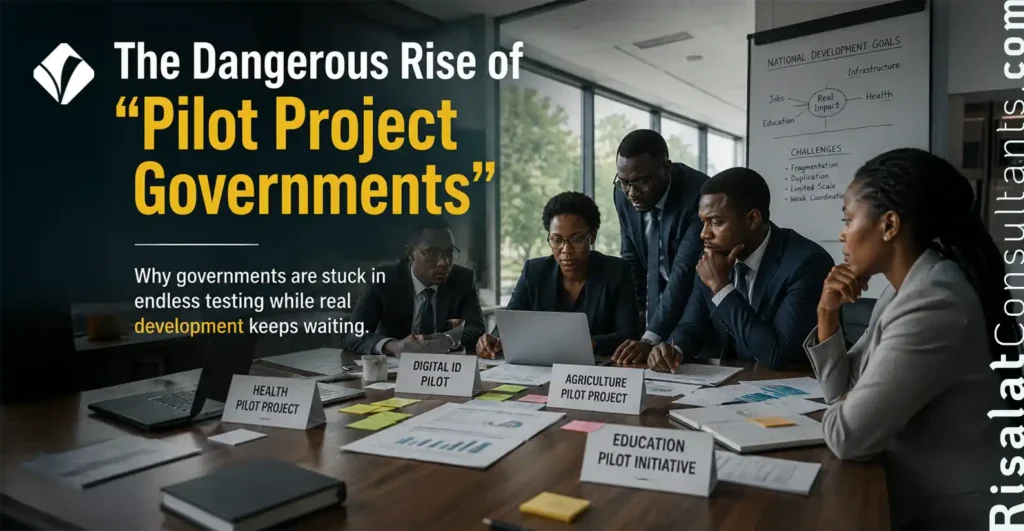
The pilot project government model is becoming increasingly common across developing countries, where governments remain trapped in endless cycles of pilot projects that never scale to national implementation, wasting resources and eroding institutional capacity while failing to deliver sustainable public value.
- فقط 20 إلى 25 بالمئة من المشاريع التجريبية الحكومية تصل إلى مرحلة الإنتاج، مع فشل معظمها بسبب عدم كفاية تخطيط التوسيع، وفجوات التمويل، والمقاومة من الهياكل البيروقراطية القائمة.
- Donor dependency creates unsustainable reform cycles where projects collapse after external funding ends, leaving governments without local capacity or long-term financing models.
- Institutional fragmentation prevents coordination across agencies, resulting in disconnected reforms, repeated feasibility studies, and lack of cross-government integration.
- تتعارض الدورات السياسية مع الاستمرارية حيث تبدأ الإدارات الجديدة مبادرات مماثلة، معاملة التنفيذ كتمرين تقني وليس التزاماً سياسياً مستداماً.
- Breaking free requires institutional ownership from day one, multi-year budget commitments, accountability systems that survive leadership changes, and treating scale-up as a core design requirement.
The solution isn’t more pilots, it’s building government capacity for sustained implementation through integrated systems, long-term financing, and political commitment that extends beyond electoral cycles.
Pilot project governments have become skilled at testing reforms but rarely implement them at scale. Governments in developing nations of all types launch hundreds of donor-funded projects annually, yet few transition beyond their original testing phases. Sub-Saharan Africa and South Asia see this pattern most. This piloting erodes institutional capacity and fragments public sector reform efforts. It undermines project sustainability once external funding ends. The cycle continues as new administrations restart similar initiatives and rebrand failures as breakthroughs. This analysis explores why governance reform remains trapped in pilot mode. It outlines pathways toward sustainable national implementation. This pattern reflects the growing prevalence of the pilot project government model across many developing countries.
Understanding the Pilot Project Government Trap
What Defines a Pilot Project Government
في مشاريع الحكومة التجريبية، يصبح الاختبار النهج السائد بينما يظل التنفيذ الوطني متأخراً. تستخدم الحكومات المشاريع التجريبية كتجارب على نطاق صغير لاختبار نماذج تقديم خدمات جديدة أو سياسات أو تقنيات قبل الالتزام بالتنفيذ الكامل. تمثل المشاريع التجريبية مرحلة الاختبار النهائية قبل النشر الوطني نظرياً، وهي مصممة لتحديد التحديات التشغيلية واللوجستية في بيئات خاضعة للرقابة. تتيح هذه الآليات للأقسام التحقق من جدوى المشروع في مراحل التطوير المختلفة وتمكين تصحيحات المسار التي تحد من التكاليف والوقت عندما تكون النتائج دون التوقعات.
The term “piloting” has come to mean many different things in government agencies. Some initiatives labeled as pilots are testing approaches with genuine experimentation. Others are predetermined policies with fixed delivery mechanisms where the spirit of experimentation is absent. This confusion creates situations where true policy pilots, designed as neutral trials with the potential to influence final products, are conflated with early evaluations of already-decided policies.
Pilot projects sit between policy formulation and implementation and allow small-scale testing in limited locations before broader adoption. Governments consider pilots when transformation involves significant service delivery changes, large scopes, new citizen interactions, possible collateral damage, costly implementation processes, or difficult-to-reverse outcomes. The challenge emerges when these small-scale experiments become permanent fixtures rather than transitional phases.
The Scale of Perpetual Piloting Across Nations
This pattern is a defining characteristic of the modern pilot project government model. The scale of perpetual piloting reveals a global pattern of stalled implementation. Only 20-25% of government AI proof-of-concepts progress to production. Three out of every four pilots fail to deliver sustained public value despite consuming budgets, engaging teams, and demonstrating potential. Research with 492 government leaders in 14 countries found that over 60% cite data privacy and security concerns as primary constraints, while 45% point to inadequate digital infrastructure and 42% identify ethical concerns as impediments.
Organizations routinely underestimate AI project costs by 500% to 1000% when scaling from pilot to production, which is equally troubling. The United Kingdom’s Parliament Public Accounts Committee found the government had no systematic mechanism to bring together learning from pilots and few examples of successful at-scale adoption in government. Clinical AI systems similarly remain confined to short-lived pilots or proof-of-concept demonstrations rather than becoming durable components of routine care.
Donor-funded projects in low and middle-income countries face comparable challenges. One government official in India described the development sector as “a graveyard of pilot projects” and noted that innovations commonly end when project funding stops, thereby limiting longer-term health impacts in countries with weak health systems. A development partner in Nigeria lamented that if a project dies after funding, it cannot be considered successful. Short project periods of three to four years limit achievements and create waste and uncertainty for implementers and governments alike, with one year spent on recruitment and the last six months on winding up.
Why Pilot Projects Rarely Move Beyond the Testing Phase
Several structural factors prevent pilot projects from achieving national scale. Pilots often run in controlled settings that fail to account for real constraints, legacy system issues, or compliance requirements. The observer effect explains some short-term success: individuals participating in pilot projects work harder because managers watch more closely than usual, but performance drops when projects end and organizations revert to old behavioral patterns.
Funding constraints materialize through boundary work that influences whether interventions receive support beyond pilot phases. The relatively short pilot duration of 18 months limits organizations’ ability to fully implement, embed, or expand project outputs, with many locations only fully mobilizing once external support is commissioned. District-level mental health programs demonstrate this trap, where every location demands context-specific customization and creates endless cycles of bespoke pilots that never translate to sustainable programs.
Government systems operate under different optimization parameters than startup-style innovation. Organizations lack structured processes for AI deployment and miss iterative development, continuous learning, and adaptive governance requirements. Teams focus on AI capabilities instead of desired outcomes, while organizations lack complete cost models covering infrastructure, maintenance, training, and ongoing operations. Technically promising systems fail to transition into stable operational use, so ownership structures remain fragmented, accountability boundaries unclear, and deployment depends on temporary resources or individual champions rather than durable institutional arrangements. As a result, the pilot project government cycle continues even when pilots demonstrate positive results.
الأسباب الجذرية لمشاريع التجارب الحكومية التي لا تنتهي
Institutional Fragmentation and Weak Coordination
Fragmentation creates structural problems with the design, coordination, and delivery of transfer programs that are inherently political. Different programs use different targeting approaches, various payment pathways, and separate beneficiary lists in each organization. This results in inefficiencies, inequities, overlaps, and gaps in coverage. Social protection ministries often struggle with weak institutional capacity. Program effectiveness drops and fragmentation increases, which diminishes the profile of responsible ministries and reduces allocated resources. Multiple ministries implementing social transfers in parallel fragment responsibility further, while non-governmental organizations filling government vacuums accelerate additional fragmentation.
تؤثر اخفاقات التنسيق على الأداء الاقتصادي في نظم الحضر. تُظهر الدراسات أن وجود حكومات محلية متعددة يولد تكاليف معاملات أعلى وعوائق أمام نشر سياسات تعزيز النمو. لا يُحمل على حل المشكلات المعقدة إلا بشكل جزئي عندما يتجزأ العمل الحكومي، حيث يقوم التخصص بتقسيم المشكلات بشكل اصطناعي بدلاً من تقديم مفاهيم متكاملة للأسباب والعلاجات. يواجه المواطنون المعرضون للصعوبات الآثار المباشرة لعدم كفاية التنسيق عندما يحاولون الحصول على النطاق الكامل من الخدمات التي يحتاجونها من الحكومة. تُعد التجزئة المؤسسية إحدى السمات المحددة لحكومة المشروع التجريبي.
Donor-Funded Projects and External Dependency
تسعى المبادرات الممولة من الجهات المانحة عادةً إلى تحقيق تحسينات سريعة مع تسليمات طموحة مرتبطة بدورات مشاريع قصيرة الأجل. إن الانتقال إلى الملكية الوطنية نادراً ما يكون تلقائياً. تنجح العديد من البرامج في تجربة ممارسات جديدة ولكنها تفشل في تضمينها ضمن سياسات والتمويل والأعراف المؤسسية. غالباً ما يأتي التمويل من الجهات المانحة الثنائية مثل الوكالة الأمريكية للتنمية الدولية في شرائح تتراوح مدتها بين سنة إلى خمس سنوات مع شروط ثابتة للإنجاز. وأشار أحد المسؤولين الحكوميين إلى أن أي أموال مانحة يجب ألا تقل عن ست أو سبع سنوات لأن سنة واحدة تضيع في التوظيف والستة أشهر الأخيرة تكون في التصفية.
International donor agencies spent approximately $1.36 billion on building boreholes and wells in sub-Saharan Africa that quickly became inoperative. About 50,000 non-functioning water points resulted from poor construction, lack of expertise, failure by users, and poor technology choice. Lack of capacity building underlies many failed donor-funded projects, as implementation represents a battle half won when sponsors fail to think over elements that guarantee long-term value.
غالبًا ما يعزز الاعتماد على الجهات المانحة نموذج المشاريع الحكومية التجريبية من خلال إعطاء الأولوية للمشاريع قصيرة الأجل على حساب أنظمة التنفيذ طويلة الأجل.
Sustainability falters once external support ends. District-level quality improvement teams weakened following donor program conclusions in Ghana. Accreditation reforms stalled after external technical advisors withdrew in Kenya. Provincial quality improvement frameworks failed to be fully embedded within public financing mechanisms in Pakistan. Over-reliance on external technical assistance left critical functions without local support, while domestic funding streams proved insufficient to sustain improvements independently.
Absence of Scale-Up Strategies and Implementation Plans
نادراً ما تأخذ المشاريع التجريبية متطلبات التنفيذ واسع النطاق في الاعتبار أثناء الاختبار الميداني. تميل المشاريع إلى التنفيذ بمستويات من المدخلات والدعم التي لا يمكن الحفاظ عليها لاحقاً عند توسيع نطاق الابتكارات. يتوقف الدعم المالي عادةً بمجرد اختبار الجدوى والفعالية والكفاءة. تفشل الابتكارات الناجحة في التوسع لعدم تأمين الموارد المالية اللازمة.
يعد الانتقال من التجربة الناجحة إلى التنفيذ الوطني أحد أصعب التحديات في التنمية. غالباً ما تكون المشكلة ليست في التدخل نفسه بل في الفجوة بين ظروف البحث والواقع المعقد المحدود الموارد الذي تعمل ضمنه الأنظمة الحكومية. تتلاشى العديد من برامج التنمية بمجرد انتهاء الدعم الخارجي لعدم إرساء ملكية حكومية حقيقية أبداً. يجب أن يبدأ المشاركة الحكومية الحقيقية خلال مرحلة التجربة، وليس بعدها.
Political Cycles and Leadership Discontinuity
غالباً ما تؤثر الدورات الانتخابية على سياسات الحماية الاجتماعية في كل من الدول النامية والمتقدمة. يعتمد السياسيون الحاكمون سياسات مالية توسعية أو يغيرون تكوين الإنفاق الحكومي كسباً لدعم الناخبين قبل الانتخابات. وكلما طال الوقت منذ آخر انتخابات وبالتالي اقترب موعد الانتخابات التالية، زادت حصة ميزانية الجائحة للحماية الاجتماعية المخصصة للمساعدة الاجتماعية وحماية الدخل.
Frequent leadership changes disrupt governance continuity and cause policy reversals and inefficiencies. Leaders with short terms focus on immediate political gains rather than long-term national development. This creates instability that prevents countries from maintaining stable equilibrium. Weak institutional capacity results from insufficient completeness of reform. Health system reforms in most countries fail due to deficiencies in political leadership and long-term commitment to reform programs. Policymaker and manager instability represents a global issue. Frequent changes in political circumstances and management instability cause unfamiliarity of new managers with reform.
How Pilot Projects Fragment Public Sector Reform
Disconnected Reforms Across Government Agencies
تؤدي إصلاحات حوكمة القطاع العام في الدول النامية إلى نتائج مخيبة للآمال. فالعديد من المبادرات تفشل في العمل بشكل جيد على الرغم من استثمار الجهات المانحة الكبير. تعمل الإصلاحات كتدخلات معزولة وليست جهوداً متكاملة لمعالجة التحديات النظامية. تسيطر الإجراءات الخطية التقليدية والتخطيط الاستراتيجي وتتعامل مع الإصلاح باعتباره أنشطة مستقلة غير متصلة بالنظم البيئية المؤسسية الأوسع.
The problem stems from viewing each component of the public sector reform agenda as a separate effort. Reforms are attempts to alter the state’s political economy. Center-of-government reforms in Bosnia and Herzegovina, Indonesia, and other nations focused on policy coordination, ranging from aid coordination to poverty reduction and inter-ministerial commissions. Progress varied depending on political contexts. Bosnia and Herzegovina’s fragmented state saw only technical gains materialize, as non-cooperation and exclusivity characterized relations between component governments.
Organizational reviews and restructuring remain popular across developing countries. Studies conclude that creating new formal institutions fails to replace or sideline old informal ways of doing things. As a result, reforms often produce uneven outcomes even where progress is achieved. The most successful reform appeared in Indonesia’s poverty reduction coordination, driven by strong government leadership, although outcomes of the two poverty programs remained unknown.
دراسات الجدوى المتكررة دون اتخاذ إجراءات
Pilot studies assess the feasibility of methods and procedures for larger studies. Samples are usually small and unrepresentative. Parameter estimates and standard errors may be inaccurate and result in misleading power calculations. The focus has shifted toward exploring feasibility rather than scaling interventions. This creates cycles where governments repeatedly test without implementing.
Implementation trials require partnerships with end-users. Few full implementation randomized controlled trials undertake feasibility and pilot work in advance. Implementation feasibility studies explore strategies to improve intervention implementation across multiple levels, including individuals and organizational systems. The complexity of influencing behavior change extends the role of feasibility studies to identifying potential causal mechanisms and refining intervention strategies iteratively.
تتوفر إرشادات موحدة لتجارب التنفيذ، لكن المعلومات حول إجراء دراسات الجدوى والتدابير التجريبية لتدخلات التنفيذ تظل محدودة. تسهم هذه الفجوة في نقص الأعمال الاستكشافية وقاعدة أدلة محدودة لتصميم تدخلات تنفيذ فعالة. العديد من المراجعات التي يصممها عدد قليل من موظفي الخدمة المدنية في وزارات المالية تمضي قدماً بتفاعل محدود مع المجتمع المدني وأصحاب المصلحة الرئيسيين. وهذا يقيّد فرص تكوين تحالفات الإصلاح.
Lack of Institutional Ownership and Accountability
Temporary islands of excellence emerge from pilot approaches but fail to strengthen government capacity for future delivery. Moreover, these isolated successes bring coordination and principal-agent problems to the forefront, precisely the issues that pay and rationalization reforms ostensibly address. Surveys can identify problems, but whether issues are addressed depends on political will by leaders to act on information.
Systems approaches require working across organizational boundaries and government levels. Governments struggle with this fundamental requirement. Transforming systems may begin with change in one organization, but supporting structures from accompanying services to legal frameworks must reform simultaneously to achieve results. Especially when addressing complex problems, a gap exists between policy design and implementation.
Stubborn problems like corruption and patronage persist despite reform efforts. Building technical competence proves insufficient to guarantee success across all countries where corruption remains a major challenge. Effective public sector governance depends on complex systems of interdependent institutions requiring detailed reform. This makes it difficult to monitor or notice progress at total levels. The success or failure of public sector reform depends not merely on technical know-how or resource availability but on political tasks shaped by political settlement dynamics.
Sector-by-Sector Analysis of Pilot Project Failures
Infrastructure Projects Stuck in Testing Phases
Software development failures expose critical vulnerabilities in infrastructure pilot projects. Crossrail, once Europe’s flagship infrastructure initiative with a budget of roughly £17 billion, experienced delays starting in 2015 when tunneling finished but train and signaling software remained underdeveloped. The project team’s decision to overlap construction with dynamic testing created enormous pressure. Yet few meaningful results could be acquired because software had not reached required development levels. This unsuccessful testing effort consumed spare time and construction space and caused further delays and cost increases.
Railway systems across the United States implementing Positive Train Control faced persistent software challenges. By 2018, nine passenger railroads reported encountering software maturity issues that included bugs during testing. The situation worsened by 2019 when 31 of 37 railroads identified software issues as major or moderate challenges. Infrastructure projects keep underestimating software complexity and treat it as ancillary rather than central to project success.
Governance Reform Initiatives Without Integration
UN integration reforms introduced between 1997 and 2007 failed to increase efficiency in multidimensional peace operations. Reform impact was diminished by absence of accompanying incentives or effective organizational change backed by long-term political engagement. The reforms did not meet efficiency goals of minimizing duplication or effectiveness goals to maximize coherent management of peace operations. These failures stem from lack of motivation for UN agencies to share resources and work together. Rare instances of success resulted from work by outstanding individuals rather than systemic change.
Fragmentation of the UN structure means agencies differ in operating procedures, accountability mechanisms, funding streams and operational mandates. This creates barriers to communication between agencies. Top-down development of peace operation mandates has little input from field staff about feasibility or resource limits. Mandates keep increasing in detail and ignore limited capacity of in-country UN systems.
Health and Education Pilot Programs
Healthcare AI initiatives demonstrate the “pilotitis” syndrome, where high pilot activity produces low policy integration. Despite proliferation of pilots, very few AI initiatives advance to nationwide deployment or long-term institutional adoption. About 80% of AI projects fail to scale beyond the pilot phase in healthcare settings. Many AI projects become isolated, donor driven and unsustainable instead of transforming health systems. Servers go offline and trained staff move on once funding ends.
Interoperability challenges compound these failures. Brazil’s Unified Health System operated with multiple government and private electronic health record platforms that did not communicate with one another. Several sub-Saharan African countries like Kenya, South Africa and Rwanda have vertical health programs for HIV, TB and maternal health that each deploy separate digital tools. AI pilots often integrate with one vertical system but not with broader national architecture and this limits scalability.
Climate Action and Agriculture Pilot Schemes
Developmental researchers call India “a burial ground for pilots” because numerous successful pilots fail to scale. The problem lies in implementation methods rather than feasibility testing. Everyone involved attempts to demonstrate success even when impact is absent. Pilots are implemented in locations with good infrastructure, often on large farmers’ fields. Institutions assume their role is making the pilot succeed rather than testing real-life viability.
Agricultural technology scaling faces complex stakeholder coordination challenges. Solar irrigation pumps in India under PM KUSUM demonstrate institutional silos. The Ministry of New and Renewable Energy oversees implementation even though agriculture falls under state-level responsibility. Karnataka’s agriculture department has no involvement and this creates problems because farmers are more familiar with agriculture departments that handle subsidies and farm necessities.
تجارب التحول الرقمي وإدارة المالية العامة
Government digital transformation surveys with more than 1,200 officials from over 70 countries reveal that only 30% of organizations assess their digital capabilities as ahead of public sector peers. Nearly 70% lag behind the private sector. Financial Management Information Systems projects across more than 80 countries over 30 years provide operational guidance, yet implementation remains challenging. System designs following technical considerations prove less effective in solving budget management problems. Transaction processing through FMIS needs detailed coverage to ensure credible information. The benefits are limited to transactions processed through the system. This illustrates how a pilot project government approach can limit the long-term value of digital reforms.
The Cost of Perpetual Piloting on Institutional Capacity
Erosion of Government Implementation Skills
State capacity represents an important prerequisite for policy implementation, yet institutional capacity, the ability of public institutions to implement specific policy mandates, remains difficult to measure, assess, and reform at the country level. Reform leaders confronting sound policies face the fundamental problem of getting myriad government agencies, staffed by thousands of bureaucrats and state personnel, to deliver. The culture of bureaucracies, including the incentives, beliefs, expectations, and norms shared among state personnel, are the foundations of state capacity.
Policy changes alone won’t bring about sustained improvements in national competitiveness, as reforms can fail unless attention is paid to the capacity of institutions that must carry them out. Capacity building requires governments to understand what they should do, communicate it clearly, and then follow through on implementation, with accountability for results. Governments need capacities to design policies, acquire analytical skills, identify problems, develop implementation skills, and establish monitoring and evaluation mechanisms with feedback loops to improve policy design.
The acquisition of these capacities is critical for policy ownership, as ownership cannot exist for policies that governments did not design. Without capacity to define regulatory frameworks and enforce them, many reforms fail whatever their technical merit. Donors themselves can damage the capacity of the very governments they attempt to assist.
Project Sustainability Challenges After Donor Exit
Sustainability denotes a project’s capacity to remain operational and continue achieving its objectives after donor support has been withdrawn. The anticipation is that any intervention must yield sustainable benefits and impacts on people, yet donor-funded projects in developing minority communities display questionable sustainability.
Studies in Binga District revealed that challenges emerged after donor assistance withdrawal. This resulted in stagnancy or collapse of some projects and affected community development. Most donor-funded projects in Marsabit were unsustainable after withdrawal of funding. The failure of many community development projects, especially after the lapse of external support, calls for in-depth investigation of factors that influence sustainability.
Experience demonstrates that most development projects implemented by NGOs shine and perform well as long as NGOs support such projects. When they withdraw support, projects collapse. When projects collapse, great losses are incurred not only for NGOs but also for community members who lose project benefits and time spent during design and implementation. Some donor-funded projects in Sudan existed and performed activities after foreign assistance withdrawal due to direct involvement of beneficiaries in all project phases, though lack of progress occurred in activities without effective supervision and alternative national support.
District-level quality improvement teams weakened following donor program conclusions in Ghana. Accreditation reforms stalled after external technical advisors withdrew in Kenya. Similar challenges have been observed in other reform initiatives where domestic funding and institutional ownership were insufficient to sustain improvements independently. These patterns reveal how over-reliance on external technical assistance leaves critical functions without local support. Sustainability failures are among the most common outcomes of a pilot project government environment.
Loss of Public Trust in Government Effectiveness
Low levels of trust in major institutions, especially the federal government, represent a persistent problem with serious consequences for democracy. Trust in government has been in decline since the 1960s, with recent years seeing distrust in both government and politicians reach near record levels. When people don’t trust their government, they are more likely to opt out of voting and other types of civic participation. This creates a fundamental disconnect between citizens and the only institution with resources, responsibility, and authority to serve all.
Only 31% now say the federal government’s effect on the U.S. is positive, down from 42% in 2022, while 66% say the effect is negative. Higher percentages characterize the federal government negatively, with 85% agreeing the federal government is wasteful, up 15 percentage points from 2022. About three-quarters of respondents say the government is corrupt, up from 67%, and two-thirds agree the government is incompetent, up from 56%.
Trust in public institutions is associated with road quality and perceived corruption levels. When government produces high-quality public services and is perceived as free from corruption, citizens tend to have more trust. Trust is critical for governance and increases voluntary compliance towards public policies. Compliance via consent, as opposed to compulsion, represents the quickest way to implement effective policies. Political trust during crises has been associated with greater compliance with government policies, making trust a vital asset for delivering effective interventions.
Why Pilot Project Governments Fail to Scale Nationally
Missing Interoperability Between Government Systems
تشبه عمليات نشر الحكومة الإلكترونية رقعة من حلول تكنولوجيا المعلومات والاتصالات غير المتوافقة بدلاً من كونها أصولاً مرنة وقابلة لإعادة الاستخدام. تنشر الوكالات أنظمة تكنولوجيا معلومات واتصالات جديدة بمواصفات ذات صلة احتياجاتها الخاصة ولكن دون اهتمام كافٍ بـ ربط وتبادل وإعادة استخدام البيانات مع أنظمة تكنولوجيا المعلومات والاتصالات التابعة ل وكالات أخرى. أنظمة السجلات الإلكترونية في بوتسوانا غير قابلة للتشغيل البيني داخل أو بين القطاعين العام والخاص. ونتيجة لذلك، يحدث ازدواج في الجهود، ومشاركة يدوية للبيانات، وإجراءات إعداد تقارير غير موحدة، ونفقات غير ضرورية.
تؤدي التحديات البيروقراطية بحكم طبيعة البيروقراطية والاستقلال الذي تتمتع به الوكالات المختلفة إلى تفاقم هذه المشاكل التقنية. تجد الوكالات ذات الثقافات الراسخة التي لا تقدر الانفتاح صعوبة في مشاركة البيانات مع الوكالات الأخرى. أدت مبادرات إصلاح الإدارة العامة الأخيرة التي تؤيد التجزيء إلى منافسة بين الوكالات العامة المختلفة ومنحت مزيداً من الاستقلالية للوحدات التنظيمية. ودون قابلية التشغيل البيني، ينتج نموذج حكومة المشروع التجريبي أنظمة معزولة بدلاً من خدمات عامة متكاملة.
Inadequate Long-Term Financing Models
AI pilots in the Global South are initiated and sustained by donor or NGO funding, which prioritizes breakthroughs but rarely guarantees long-term financing. Governments often lack budgetary space to absorb costs of licensing, cloud infrastructure, or technical support once grants end. This creates a cycle where pilots demonstrate feasibility but collapse due to financial unsustainability. AI-based diagnostic imaging tools piloted in countries such as Kenya and Rwanda showed strong results for TB detection. Hospitals struggled to pay for recurring software subscriptions and data storage when donor funding ended.
Resistance from Established Bureaucratic Structures
يميل الموظفون العموميون، وخاصة أولئك الذين شغلوا مناصب لفترات طويلة، إلى مقاومة السياسات الجديدة والتغييرات الإجرائية التي قد تغير الوضع الراهن. تنبع هذه المقاومة من الخوف من فقدان السلطة أو الأمان الوظيفي أو النفوذ داخل التسلسل الهرمي الإداري. ويبرز التدخل السياسي كعائق آخر. غالباً ما تعتمد تعيينات القطاع العام على الولاء السياسي وليس الجدارة، مما يؤدي إلى بيروقراطية غير كفؤة وتعاظم الاتكالية.
Knowledge Transfer Failures
One in three unsuccessful projects is affected adversely due to untimely or inaccurate knowledge transfer. Incomplete transfer of knowledge occurs when project members must interact with consultants who refuse to sell their knowledge and omit information significant for project success. Loss of team members creates intellectual leaks of great value. Accumulated knowledge and skills related to projects become irreplaceable once personnel leave.
التحرر من دورة المشاريع التجريبية
Building True Institutional Capacity for Reform
To escape perpetual piloting, you need co-creation approaches that include stakeholder needs and point of view from early planning stages. Systems thinking lets you explore multiple influence levels and contextual settings before implementation begins. Seven frameworks reference this point of view explicitly and advocate for systems-grounded frames built with the core team. You must integrate implementation considerations early. Assessment of acceptability to both end-users and stakeholders proves significant for large-scale intervention success. Building implementation capacity is essential for moving beyond the pilot project government mindset.
Establishing Measurable Implementation Frameworks
يجب أن تكون تصميمات التقييم متكررة ودورية. انتبه لتجارب المشاركين في الإبداع طوال العملية. تقر سبع دراسات بالحاجة إلى تقييم دوري. يساعد هذا في ضمان بقاء التدخلات مستدامة في السياقات الواقعية وقابلة للتكرار في أماكن أخرى. يمكن للباحثين معالجة عقبات التنفيذ من خلال تقييم تصورات أصحاب المصلحة وتعديل التدخلات وفقاً لذلك.
Creating Donor Coordination Mechanisms
Coordination among donors prevents duplication and supports identification of synergies. It enables joint initiatives that line up with shared priorities. Formal working groups or taskforces represent the most common coordination structures. National contexts vary, so mechanisms must remain flexible to evolve over time and integrate with emerging cross-boundary coordination activity.
ضمان استمرارية القيادة إلى ما بعد الدورات السياسية
National Development Frameworks that remain independent of political cycles address frequent leadership changes. These changes disrupt governance continuity. The shift from pilot projects to lasting national implementation requires more than funding. It demands institutional capacity and governance systems. Implementation leadership and long-term reform strategies matter too. Explore our executive training and capacity-building programs. These programs are designed for governments, donor-funded projects, public sector institutions, and development professionals. They work to strengthen implementation effectiveness, institutional resilience, and lasting reform outcomes.
متطلبات التنفيذ الوطني المستدام
Institutional Ownership and Cross-Agency Integration
Sustainable national implementation depends on institutionalizing experimentation by embedding it into national programs and frameworks. Vertical scale-up requires working with state stakeholders at the design stage. This ensures government and state institutions play appropriate roles in supporting reforms through legislation, policy and service delivery. Cross-agency integration allows governments to look at sectors, agencies and programs. They can structure spending that best serves national development objectives over time. Replacing the pilot project government approach requires institutional ownership, financing, and accountability mechanisms designed for scale.
Long-Term Budget Allocation and Resource Planning
توفر أطر الإنفاق متعددة السنوات نهجاً منظماً واستراتيجياً ومستشرفاً للمستقبل. فهي تساعد الحكومات على تحديد الأولويات، وتخصيص الموارد، والتحق من تنفيذ الميزانية. تتطابق هذه الأطر مع الأهداف المنشودة وميزانيات سنوية واقعية. وهي تزيد من اليقين التمويلي لأولويات السياسة على المدى المتوسط. يجب أن يغطي تخصيص الموارد الاستثمار في القدرات التنظيمية الأساسية في مجالات المالية، وتكنولوجيا المعلومات، والموارد البشرية، والحماية، وإدارة المخاطر.
Accountability Systems and Progress Monitoring
Accountability mechanisms require monitoring systems, comparison processes and control mechanisms. This helps ensure accountability information is interpreted and used effectively. Social accountability monitoring has participatory budgeting, public expenditure tracking and monitoring of public service delivery.
Policy Experimentation with Built-In Scale-Up Pathways
Clear pathways for scaling up interventions that prove successful or phasing down those that fail are critical. Structures for policy experimentation must remain reversible and adaptable. This will aid scaling up or discontinuing initiatives without major disruption.
الخلاصة
The pilot project government model represents more than poor planning; it reflects deeper institutional and political challenges that prevent governments from moving beyond testing phases. Breaking this cycle requires fundamental changes in how reforms are designed and financed. Technical solutions alone won’t be enough. Governments must build institutional ownership from day one, establish multi-year financing commitments, and create accountability mechanisms that survive political transitions. Donor organizations should change from funding isolated pilots to supporting integrated implementation systems. The path from pilot to national scale exists, but only when stakeholders treat implementation as a political challenge requiring sustained commitment rather than a technical problem requiring another feasibility study.
الأسئلة الشائعة
Q1. What percentage of government AI pilot projects actually make it to full implementation?
Only 20-25% of government AI proof-of-concepts progress to production, meaning approximately three out of every four pilots fail to deliver sustained public value despite consuming budgets and demonstrating potential during testing phases.
س2. لماذا تنهار البرامج التجريبية الناجحة غالباً بعد انتهاء تمويل الجهات المانحة؟
تعتمد المشاريع التجريبية عادةً على تمويل خارجي بجداول زمنية ثابتة تتراوح بين 1-5 سنوات، لكن الحكومات غالباً ما تفتقر إلى القدرة الموازنتية لاستيعاب التكاليف المستمرة مثل تراخيص البرمجيات، وصيانة البنية التحتية، والدعم التقني بمجرد انسحاب مساعدة الجهات المانحة، مما يؤدي إلى انهيار المشروع على الرغم من ثبوت فعاليته.
Q3. How does institutional fragmentation prevent pilot projects from scaling nationally?
Different government agencies use separate systems, targeting approaches, and beneficiary lists without coordination, creating inefficiencies and coverage gaps. This fragmentation means pilot successes in one department cannot easily integrate with other agencies’ systems or scale across government.
س4. ما الدور الذي تلعبه الدورات السياسية في منع مشاريع تجريبية من أن تصبح برامج دائمة؟
Frequent leadership changes and electoral cycles disrupt governance continuity, causing policy reversals and shifting priorities. New administrations often restart similar initiatives rather than continuing existing pilots, as leaders focus on immediate political gains instead of long-term implementation.
Q5. What fundamental changes are needed to move beyond perpetual piloting?
Governments must establish institutional ownership from the start, create multi-year financing commitments independent of donor cycles, build cross-agency coordination mechanisms, and develop accountability systems that survive political transitions rather than treating each pilot as an isolated technical experiment.
شاهد


- World Health Organization World Health Organization
- OECD (منظمة التعاون الاقتصادي والتنمية) OECD
Know people who should read this? Become an Ambassador or write with Risalat.
شركاء في نجاح المشاريع منذ 2011، نقدم التشخيص والدعم الاستشاري والتعلم التطبيقي للوزارات والهيئات العامة وفرق المشاريع.
هل تحتاج إلى مساعدة في تطبيق ذلك عملياً؟
ابدأ بتشخيص مجاني مدته 10 دقائق أو تحدث إلى خبرائنا.