Factos essenciais
- Datas
- 21–25 dez. 2026 (5 dias)
- Local
- A definir, Berlim, Alemanha
- Preço por participante
- £4,340 (GBP)
- Pagamento
- Por fatura e transferência bancária
- Encerramento das inscrições
- 1 nov. 2026
- Certificado
- Certificado de conclusão
- Opção interna
- Realize-o para a sua equipa, nas datas que preferir
Visão geral do programa
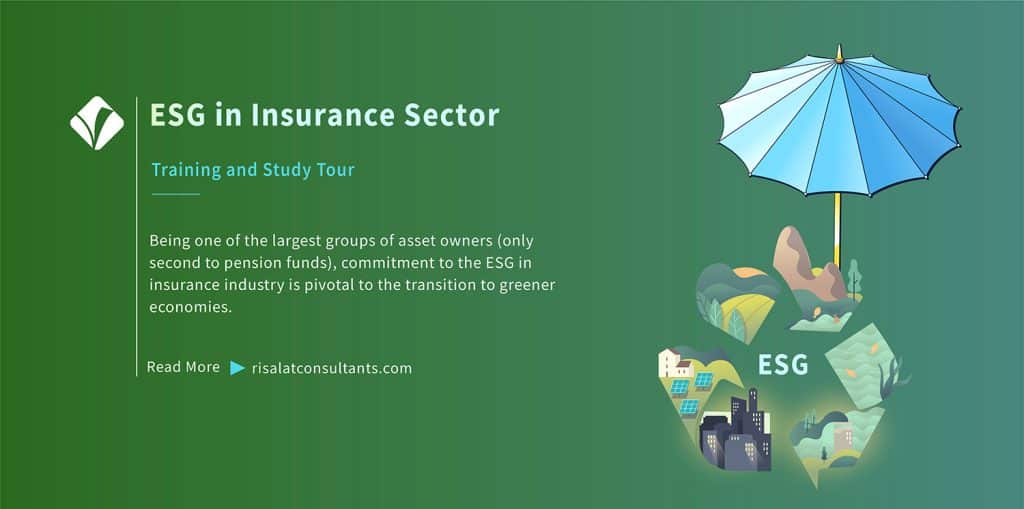
Environmental, social and governance (ESG) factors now reach into every part of an insurer’s business: what it underwrites, how it prices, where it invests its reserves, how it reports and how its board governs risk. Climate change is the most visible driver. Swiss Re Institute estimates that natural catastrophes caused about USD 220 billion in economic losses in 2025, of which USD 107 billion was insured, and that secondary perils such as floods, storms and wildfires accounted for a record 92% of insured catastrophe losses.
Regulation is moving from voluntary commitments to supervisory requirements. The amended Solvency II Directive, Directive (EU) 2025/2, requires insurers to prepare sustainability risk plans with quantifiable targets and actions over the short, medium and long term, applying from 30 January 2027. At the same time, the EU’s Omnibus I package, in force since 18 March 2026, has narrowed the scope of the Corporate Sustainability Reporting Directive (CSRD), and the Commission’s November 2025 proposal to revise the Sustainable Finance Disclosure Regulation (SFDR) would replace today’s disclosure approach with product categories.
Germany offers a direct lesson in why this matters. The July 2021 floods in the Ahr valley and neighbouring regions led to about EUR 8.75 billion in insured damage across some 206,000 claims, according to the German Insurance Association (GDV), yet a large share of homes still lacked natural hazard cover. The debate on mandatory natural hazard insurance that followed is still shaping policy in 2026.
This ESG in Insurance Training and Study Tour in Berlin combines five days of applied learning with technical visits. It is designed for insurers, reinsurers, supervisors and development partners that need to turn ESG commitments into underwriting rules, investment policies, risk plans and credible disclosures.
O programa reforça a capacidade institucional em
- Building an ESG strategy aligned with the insurer’s business model
- Board oversight and ESG governance structures
- Integrating physical and transition risk into the risk management system
- Preparing Solvency II sustainability risk plans
- Climate scenario analysis using NGFS and supervisory scenarios
- Including climate change in the ORSA
- ESG criteria in underwriting and pricing
- Designing ESG-aligned and resilience products
- Reducing natural catastrophe protection gaps
- ESG integration in investment and asset-liability management
- Sustainability disclosure under CSRD, ESRS and SFDR
- ESG data collection, quality and controls
- Stakeholder engagement and claims practices
- Avoiding greenwashing in products and communications
- Applying the UNEP FI Principles for Sustainable Insurance
- Working with public partners on climate risk finance
Participants leave with tools and draft plans they can adapt within their own institution.
The Growing Importance of ESG in Insurance
Supervisors now treat climate risk as a core prudential issue. In November 2024 the European Supervisory Authorities and the European Central Bank published a one-off Fit-for-55 climate scenario analysis covering 2,331 insurers. First-round losses for insurers ranged from 2.2% of exposures in the baseline to 18.8% when transition shocks were combined with macro-financial stress. Transition risk alone was not judged a threat to stability, but the results show why insurers need their own scenario capability.
Protection gaps are the other side of the agenda. EIOPA maintains a dashboard on natural catastrophe protection gaps covering 30 European countries, and in Germany the GDV reports that 57% of residential buildings had natural hazard cover in 2024. Globally, Swiss Re notes that in emerging economies 80% to 90% of catastrophe losses are typically uninsured. Partnerships such as the Insurance Development Forum’s Tripartite Agreement with UNDP and Germany’s development ministry (BMZ) aim to close these gaps in climate-vulnerable countries.
As organizações precisam cada vez mais de profissionais capazes de:
- Reading and applying the amended Solvency II requirements
- Drafting sustainability risk plans with measurable targets
- Running climate scenario analysis and explaining its limits
- Integrating ESG factors into underwriting guidelines
- Pricing climate risk without creating uninsurable markets
- Assessing ESG risk in investment portfolios
- Preparing CSRD, ESRS and SFDR disclosures
- Building ESG data and control frameworks
- Briefing boards on ESG risks and opportunities
- Designing products that reward risk reduction
- Engaging supervisors, clients and investors on ESG
- Testing marketing and product claims against greenwashing rules
Strong ESG in insurance systems help organisations:
- Meet supervisory expectations ahead of deadlines
- Protect solvency against climate and transition shocks
- Keep cover available and affordable for clients
- Reduce reputational and greenwashing risk
- Align investment portfolios with long-term liabilities
- Access new markets in resilience and transition insurance
- Produce consistent, auditable disclosures
- Build trust with policyholders and public partners
Insurers that build these capabilities early can treat ESG as part of sound risk management rather than a reporting exercise.
Who Should Attend This ESG in Insurance Training?
Este programa destina-se a:
- Chief executives, finance directors and other senior insurance executives
- Board members and members of risk and audit committees
- Chief risk officers and risk management teams
- Actuaries and actuarial function holders
- Underwriting and product development managers
- Investment and asset management teams
- Compliance and regulatory affairs specialists
- Sustainability and ESG officers
- Financial reporting and disclosure teams
- Reinsurance and catastrophe risk specialists
- Insurance supervisors and regulators
- Officials of ministries of finance working on disaster risk finance
- Staff of insurance associations and training institutes
- Development partners working on climate risk insurance
- Consultants and advisers to insurance companies
Teams that bring risk, underwriting, investment and reporting staff together gain the most from the cross-functional exercises.
Assinale o que a sua equipa precisa de ser capaz de fazer.
ESG in Insurance Training Objectives
Upon successful completion of this ESG in Insurance Training, participants will be able to:
- Explain the relevance of ESG across underwriting, investment and operations
- Map the current EU and international ESG regulatory landscape for insurers
- Integrate ESG risks into risk appetite, the risk register and the ORSA
- Outline a Solvency II sustainability risk plan
- Apply climate scenarios and interpret the results for decision-making
- Embed ESG criteria in underwriting and pricing
- Design ESG-aligned and resilience-focused insurance products
- Assess ESG risk in investment portfolios
- Prepare disclosures that meet CSRD and SFDR expectations
- Set up board oversight and ESG governance arrangements
- Balance profitability and responsibility in ethical decisions
Each objective links to a practical exercise and to the final capstone.
Conteúdo e estrutura do programa
- ESG definitions and how they developed in insurance
- Insurers as risk carriers and institutional investors
- The UNEP FI Principles for Sustainable Insurance
- EU sustainable finance framework: an overview
- Directive (EU) 2025/2 and sustainability risk plans
- CSRD scope after the Omnibus I changes
- SFDR today and the November 2025 review proposal
- Physical, transition and liability risks for insurers
- Linking ESG risks to existing risk categories
- Materiality assessment and risk appetite
- Climate change in the ORSA
- NGFS scenarios: design, uses and current limitations
- Lessons from the 2024 Fit-for-55 scenario analysis
- Natural catastrophe modelling and protection gaps
- ESG criteria in underwriting guidelines
- Pricing models that reflect climate and ESG risk
- Incentives for risk reduction and adaptation
- Practical examples of ESG-aligned products
- Parametric and index-based insurance
- Public-private partnerships for climate risk finance
- Fair claims handling and vulnerable customers
- Board oversight and ESG governance structures
- Roles of the risk, actuarial and compliance functions
- ESG and ethical decision-making
- ESG integration in investment and asset-liability management
- Portfolio ESG risk assessment and engagement
- CSRD, ESRS and transition plan disclosure
- SFDR product categories and insurance-based investment products
- ESG risk assessment simulation
- Corporate governance and ethical decision-making simulation
- Stakeholder engagement role play
- Technical visit briefings and exchange
- Roundtable on supervisory expectations
- Peer review of team action plans
- Integrating the week’s outputs
Conteúdo completo, dia a dia
The programme moves from regulation to risk, products, governance and investment, and ends with an applied capstone and study tour.
- Day 1: ESG foundations and the regulatory landscape
- Day 2: ESG risk management and scenario analysis
- Day 3: Underwriting, products and stakeholders
- Day 4: Governance, investment and disclosure
- Day 5: Applied exercise, study tour and capstone
Conteúdo completo, dia a dia
First Day | ESG Foundations and the Regulatory Landscape
- ESG definitions and how they developed in insurance
- Insurers as risk carriers and institutional investors
- The UNEP FI Principles for Sustainable Insurance
- EU sustainable finance framework: an overview
- Directive (EU) 2025/2 and sustainability risk plans
- CSRD scope after the Omnibus I changes
- SFDR today and the November 2025 review proposal
- BaFin guidance on dealing with sustainability risks
- Global and regional ESG rules beyond the EU
Workshop: Regulatory Map for Our Institution
Teams build a one-page map of the ESG rules that apply to their insurer or supervisor, with timelines and owners. They compare the EU requirements with their home rules, flag deadlines such as the January 2027 sustainability risk plan requirement where relevant, and identify the three regulatory gaps that need action first.
Second Day | ESG Risk Management and Scenario Analysis
- Physical, transition and liability risks for insurers
- Linking ESG risks to existing risk categories
- Materiality assessment and risk appetite
- Climate change in the ORSA
- NGFS scenarios: design, uses and current limitations
- Lessons from the 2024 Fit-for-55 scenario analysis
- Natural catastrophe modelling and protection gaps
- Building a sustainability risk plan
- Risk metrics, targets and monitoring
Case Study: The 2021 Floods and Natural Hazard Cover in Germany
Participants review the 2021 flood losses reported by the GDV, the share of homes with natural hazard cover and the debate on mandatory insurance. Groups analyse what the event meant for underwriting, reinsurance, claims capacity and public trust, and propose how an insurer in their own market could prepare for a similar event.
Third Day | Underwriting, Products and Stakeholders
- ESG criteria in underwriting guidelines
- Pricing models that reflect climate and ESG risk
- Incentives for risk reduction and adaptation
- Practical examples of ESG-aligned products
- Parametric and index-based insurance
- Public-private partnerships for climate risk finance
- Fair claims handling and vulnerable customers
- Stakeholder engagement and communication
- Greenwashing risk in products and marketing
Workshop: Prototyping an ESG-Aligned Product
Teams design a product for a defined client segment, such as small businesses exposed to flooding or households in a high-risk area. They set eligibility and pricing principles, include risk-reduction incentives, test their marketing claims against greenwashing criteria and present the prototype for peer challenge.
Fourth Day | Governance, Investment and Disclosure
- Board oversight and ESG governance structures
- Roles of the risk, actuarial and compliance functions
- ESG and ethical decision-making
- ESG integration in investment and asset-liability management
- Portfolio ESG risk assessment and engagement
- CSRD, ESRS and transition plan disclosure
- SFDR product categories and insurance-based investment products
- ESG data collection, analysis and controls
- Monitoring ESG trends and supervisory priorities
Workshop: Board Paper on ESG Risk
Using an illustrative insurer with a mixed investment portfolio and climate-exposed property book, teams prepare a short board paper that summarises key ESG risks, proposes targets and sets out the disclosures needed. A simulated board session tests whether the paper supports a clear decision.
Fifth Day | Applied Exercise and Study Tour
- ESG risk assessment simulation
- Corporate governance and ethical decision-making simulation
- Stakeholder engagement role play
- Technical visit briefings and exchange
- Roundtable on supervisory expectations
- Peer review of team action plans
- Integrating the week’s outputs
- Presenting the institutional ESG roadmap
Capstone Exercise: Our ESG Roadmap and Sustainability Risk Plan Outline
Each team combines its regulatory map, risk analysis, product prototype and board paper into an ESG roadmap and a sustainability risk plan outline for its institution. Teams present to a panel, refine their plans with insights from the technical visits and agree priority actions for the first ninety days after the programme.
- Fundos
- Entidade
- Projeto
- Resultados
- MRV
ESG in Insurance Training Methodology
The programme uses adult learning methods tailored to insurance professionals. Short expert inputs are followed by applied work on realistic insurance cases.
O programa combina:
- Expert presentations on regulation and practice
- Case studies of real climate events and regulatory reforms
- Regulatory mapping exercises
- Scenario analysis walk-throughs
- Product design workshops
- Board simulation and governance exercises
- Stakeholder engagement role plays
- Peer review between institutions
- Technical visits and exchanges in Berlin
- Daily feedback sessions
- Development of an institutional ESG roadmap
Facilitators adjust examples to the markets and regulatory regimes participants work in.
Visitas técnicas e programa no terreno
As a study tour, the programme includes technical visits in Berlin. Visits may include briefings with insurance industry bodies, insurers or reinsurers on ESG practice, and exchanges with public institutions working on supervision, sustainable finance or climate risk. Topics typically include natural hazard insurance, sustainability reporting and climate risk management. All visits are confirmed with host organisations closer to the programme dates, and the final schedule is shared with participants in advance.
Resultados esperados
Upon completion of this ESG in Insurance Training, participants will be able to:
- Lead ESG integration across their institution’s main functions
- Outline a sustainability risk plan with targets and actions
- Use climate scenarios to inform strategy and capital planning
- Apply ESG criteria in underwriting and product design
- Assess ESG risk in investment portfolios
- Prepare clearer, better-controlled ESG disclosures
- Brief boards and supervisors on ESG risks
- Identify opportunities to narrow protection gaps
- Reduce greenwashing risk in products and communications
Participants return with a roadmap, tested tools and a network of peers and practitioners.
£4,340 per participant · invoice and bank transfer · groups of 5 or more receive a discount
Cinco ou mais participantes da mesma organização: peça a tarifa de grupo no pedido de fatura.
Ten or more: an in-house version for your institution may cost less per person. Ask for an in-house quote.
Institutional Application of ESG in Insurance Training
Este programa ajuda as organizações a reforçar:
- ESG strategy and business planning
- Board and committee oversight of ESG
- Risk appetite and ESG risk registers
- ORSA and climate scenario analysis
- Sustainability risk plans under Solvency II
- Underwriting guidelines and pricing
- Product governance and greenwashing controls
- Investment policies and stewardship
- Sustainability reporting processes
- ESG data and internal controls
- Natural catastrophe risk management and reinsurance
- Partnerships on climate risk finance
Os participantes regressam com ferramentas práticas para melhorar:
- ESG regulatory map
- ESG materiality matrix
- Sustainability risk plan outline
- Climate scenario analysis template
- ESG underwriting checklist
- Product greenwashing test
- Board ESG paper template
- ESG disclosure readiness checklist
To prepare, institutions can use Risalat’s free governance audit and institutional capacity assessment to identify where ESG governance and skills need most support.
Relevância regional e aplicação
Europa
European insurers face sustainability risk plans from January 2027, a narrower but still demanding CSRD, and a possible new SFDR product regime. Swiss Re reports that severe convective storms are the main driver of insured loss growth in Europe.
África
Most catastrophe losses in emerging economies are uninsured. Initiatives under the Tripartite Agreement between UNDP, BMZ and insurers support sovereign and parametric insurance to build resilience in climate-vulnerable countries.
Médio Oriente
Insurers and supervisors are developing sustainability frameworks while exposure to heat, flooding and transition risk in energy-linked economies grows. EU practice offers a useful reference for regional supervisory approaches.
Ásia
Asian markets combine high natural catastrophe exposure with fast-growing insurance sectors. Scenario analysis, catastrophe modelling and product innovation are central to keeping cover available.
América Latina
Parametric solutions supported through the Tripartite Agreement, including for smallholder farmers and adaptive social protection, show how insurance can support resilience in the region.
Across regions, insurers and supervisors share the same task: price and manage ESG risk while keeping protection affordable.
Source: EIOPA, ESAs and ECB Fit-for-55 one-off climate scenario analysis, November 2024 (share of starting exposures).
1. From when do Solvency II sustainability risk plan requirements apply?
The amended Solvency II Directive requirements on sustainability risk plans take effect from 30 January 2027 (A&L Goodbody).
2. Under Omnibus I, which EU companies remain in CSRD scope?
Omnibus I limits CSRD reporting to entities with more than 1,000 employees and net turnover above EUR 450 million (Latham & Watkins).
3. What share of global insured natural catastrophe losses in 2025 came from secondary perils?
Swiss Re Institute reports that floods, storms and wildfires made up a record 92% of insured losses in 2025 (PreventionWeb).
Perfil do país anfitrião – Alemanha
Berlin is Germany’s capital and home to federal ministries, parliament and many national associations, which makes it a practical base for discussing how insurance, regulation and public policy interact. The city is a major international meeting venue with a wide choice of hotels and conference facilities.
Germany is a useful benchmark for ESG in insurance. Its supervisor BaFin published a guidance notice on dealing with sustainability risks for insurers and other supervised firms in 2019, built on existing governance requirements and covering stress tests and scenario analysis. The 2021 floods, with about EUR 8.75 billion in insured damage, and the continuing debate on mandatory natural hazard insurance give participants a real case on protection gaps, while Germany’s development ministry is a partner in global climate risk insurance initiatives.
Berlin is served by Berlin Brandenburg Airport with connections across Europe and beyond. Germany applies Schengen visa rules, so many participants will need a short-stay Schengen visa; Risalat provides support letters and advice, and participants should confirm current requirements with the German mission in their country.
ESG in Insurance Training Deliverables
Participants receive a full package of support before, during and after the programme.
Antes do programa
- Avaliação prévia dos participantes
- ESG in Insurance Readiness Assessment
- ESG in Insurance Resource Pack
- Materiais de leitura preparatória
- Apoio e aconselhamento gratuitos em matéria de vistos
- Recolha no aeroporto e apoio de boas-vindas
- Alojamento com pequeno-almoço
- Jantar de boas-vindas e networking
Durante o programa
- Kit de formação Risalat (saco, garrafa, caneca, t-shirt, boné, capa de passaporte, canetas, bloco de notas, íman e porta-chaves)
- Comprehensive ESG in Insurance Training Manual
- ESG Regulatory Mapping Template
- Sustainability Risk Plan Outline Template
- Climate Scenario Analysis Worksheet
- ESG Underwriting Checklist
- Product Greenwashing Test
- Board ESG Paper Template
- Workshops práticos e simulações
- Discussões de grupo e aprendizagem entre pares
- Almoço e pausas para café diários
- Acesso total às instalações do local de formação
- Mini tablet com materiais de aprendizagem digitais
- Visita de campo (quando aplicável)
- Passeio recreativo pela cidade
Depois do programa
- Certificado de Conclusão
- Prémio Risalat de Reconhecimento da Participação no Programa
- Materiais de referência pós-formação
- Institutional ESG Roadmap
- Study Tour Briefing Notes
- ESG Disclosure Readiness Checklist
- Apoio pós-formação e orientação de acompanhamento
- Relatório do programa
Insurers, supervisors and associations can request a tailored in-house version of this programme focused on their own market and regulatory regime. Request a proposal to discuss your requirements.
Common Challenges in ESG in Insurance, And How This Training Helps
How can we keep track of fast-changing ESG regulation?
The First Day regulatory mapping workshop gives each team a structured map of current rules, recent changes such as Omnibus I and the SFDR proposal, and deadlines.
How do we prepare a sustainability risk plan under Solvency II?
The Second Day sessions on risk metrics, targets and monitoring, and the capstone outline, give a practical structure for the plan.
How should we use climate scenarios when models are uncertain?
The Second Day session on NGFS scenarios explains their design and current limitations, including the revision of physical damage estimates, and how to use results with judgement.
How can we price climate risk without making cover unaffordable?
The Third Day sessions on pricing, risk-reduction incentives and parametric insurance show options that keep cover available.
How do we avoid greenwashing in products and communications?
The Third Day product workshop includes a greenwashing test for product features and marketing claims.
How can boards oversee ESG effectively?
The Fourth Day board paper exercise shows what information boards need and how to structure decisions.
How do we integrate ESG into investment decisions?
The Fourth Day sessions on investment, asset-liability management and SFDR categories link ESG analysis to portfolio decisions.
Perguntas frequentes
Who should attend this ESG in insurance training?
Insurance executives, board members, risk, actuarial, underwriting, investment, compliance and sustainability teams, as well as supervisors and development partners working on climate risk insurance.
Does the programme cover the new Solvency II sustainability risk plans?
Yes. Day 1 introduces Directive (EU) 2025/2 and Day 2 covers risk metrics, targets and monitoring, and teams prepare a sustainability risk plan outline in the capstone.
Is the training relevant to insurers outside the EU?
Yes. EU rules are used as a benchmark, and the programme also covers the UNEP FI Principles for Sustainable Insurance, NGFS scenarios and climate risk insurance partnerships in emerging markets.
What does the study tour include?
Technical visits in Berlin with insurance industry bodies, insurers or public institutions working on ESG and climate risk. All visits are confirmed with host organisations before the programme.
O programa pode ser realizado internamente?
Yes. Insurers, supervisors and associations can request a tailored version through Risalat's request a proposal form.
Todos os programas em BerlimMais programas de Alterações Climáticas e Ambiente
Porquê Berlim para este programa
Berlim é um centro da cooperação alemã para o desenvolvimento e da reforma da administração pública.
The ESG in Insurance Training and Study Tour in Berlin programme in December 2026 brings together officials and professionals from across Europe, Africa, the Middle East and Asia. Sessions combine short inputs, case studies and group work on participants' own files, and the city's institutions can be added as a study visit on request.
Como chegar: Berlim Brandemburgo (BER).
Verifique se precisa de visto com o Verificador de Vistos gratuito e peça uma carta-convite depois de se inscrever.
O mesmo tema noutras cidades
- Formação em Estratégias de Identificação e Prevenção da Fraude para o Setor Segurador
- Formação em FinTech, Banca Digital e IA nos Serviços Financeiros (Amesterdão)
- Formação para Executivos em Finanças Verdes e de Transição em Pequim (Pequim)
- Formação em Gestão de Crédito Malparado e Estratégias de Recuperação de Dívidas (Hanói)
Outros programas em Berlim
Mais cursos de formação na Alemanha · Todos os programas na Europa · Calendário de formação completo