Factos essenciais
- Datas
- 1–5 fev. 2027 (5 dias)
- Local
- TBD, Kuala Lumpur, Malaysia
- Preço por participante
- £3.250 (GBP)
- Pagamento
- Por fatura e transferência bancária
- Encerramento das inscrições
- 23 dez. 2026
- A quem se destina
- Academic Scholars and Teachers; Graduates, Master and Doctoral Level Students; Market Researchers
- Certificado
- Certificado de conclusão
- Opção interna
- Realize-o para a sua equipa, nas datas que preferir
Visão geral do programa
SPSS is one of the world’s leading statistical analysis software packages, widely used by businesses, governments, research institutions, NGOs, and academic organizations to manage, analyze, and interpret data for informed decision-making.
This highly practical and hands-on training programme provides participants with a clear, step-by-step approach to using SPSS effectively. From importing and managing spreadsheets to performing statistical analysis, creating regression models, generating charts, and interpreting results, the course covers the essential tools and techniques required for real-world data analysis.
Throughout the programme, emphasis is placed on clarity, interpretation, visualization, communication of findings, and practical application, enabling participants to confidently transform raw data into meaningful insights that support evidence-based decisions.
Organizations seeking to strengthen broader data governance and data-driven decision-making may also benefit from our Actionable Data and Data Exchange Strategy Optimization Framework, which complements SPSS by improving organizational data quality, interoperability, and evidence-based decision-making.
- Recursos
- Atividades
- Produtos
- Resultados
- Impacto
Público-alvo
Training on SPSS Statistical Software in Kuala Lumpur, Malaysia will be highly beneficial for any professional who applies SPSS statistical software in daily work life. It is equally useful for students, graduates and postgraduates who need to process and analyze data for their research and studies through SPSS. Some of the target attendees are listed below:
- Academic Scholars and Teachers
- Graduates, Master and Doctoral Level Students
- Market Researchers
- Independent Researchers
- Corporate and Governmental Professionals.
Those undertaking academic research or thesis projects may also find value in our Research Methods, Data Analysis & Report Writing programme.
Assinale o que a sua equipa precisa de ser capaz de fazer.
Learning Objectives
Após a conclusão com êxito deste programa de formação, os participantes serão capazes de:
- Confidently use SPSS for data management, statistical analysis, and reporting.
- Import, organize, clean, and prepare datasets for accurate analysis.
- Select and apply appropriate statistical techniques to answer research and business questions.
- Interpret statistical outputs and communicate findings effectively through tables, charts, and reports.
- Conduct quantitative research and data analysis independently for academic, government, and organizational projects.
- Build and interpret regression models and other commonly used statistical analyses.
- Transform raw data into meaningful insights to support evidence-based decision-making.
- Design, implement, and evaluate research studies using internationally recognized quantitative research methods.
- Apply SPSS confidently in academic research, policy analysis, monitoring and evaluation, and organizational performance assessment.
- Recolher
- Limpar
- Armazenar
- Analisar
- Decidir
Structure and Contents of the Training on SPSS Statistical Software
Module 1 | SPSS Fundamentals & Data Management
- Introduction to the SPSS environment and workflow
- Importing data from Excel, CSV, databases, and other sources
- Variable definition, coding, and data structure
- Data cleaning, validation, and quality assurance
- Missing value analysis and treatment
- Data transformation, recoding, and computation
- Sorting, filtering, merging, splitting, and restructuring datasets
- Preparing datasets for statistical analysis
Module 2 | Descriptive Statistics & Data Visualization
- Descriptive statistics and frequency analysis
- Measures of central tendency and variability
- Cross-tabulation and data summarization
- Histograms, boxplots, scatterplots, and line charts
- Creating effective tables and visualizations
- Identifying patterns and trends within datasets
- Interpreting statistical outputs
- Presenting findings for management, research, and policy reports
Participants interested in applying analytics for fraud detection and organizational integrity may also explore our Power of Data Analytics: Illuminating Fraud Schemes & Corruption programme.
Module 3 | Statistical Testing & Group Comparisons
- Statistical inference and confidence intervals
- Testing assumptions and data normality
- Outlier detection and data diagnostics
- Hypothesis testing principles
- One-sample, independent, and paired t-tests
- Analysis of Variance (ANOVA) and post-hoc testing
- Chi-square and non-parametric statistical tests
- Selecting appropriate statistical techniques for different research objectives
Module 4 | Correlation, Regression & Predictive Analytics
- Correlation analysis and relationship assessment
- Linear and multiple regression analysis
- Logistic regression techniques
- Model diagnostics and goodness-of-fit assessment
- Predictive modelling and forecasting
- Interpretation of regression outputs
- Applying statistical models to business, research, and public sector decision-making
Module 5 | Advanced Analytics & Applied Research
- Exploratory Factor Analysis (EFA)
- Principal Component Analysis (PCA)
- Survey data analysis and questionnaire validation
- Research design and quantitative data analysis
- Monitoring and Evaluation (M&E) datasets
- Public policy and organizational performance analytics
- Preparing publication-quality statistical outputs
- Communicating statistical findings to decision-makers
These analytical techniques are also highly valuable for professionals working in Monitoring & Evaluation, supporting evidence generation, project performance measurement, and impact assessment.
Practical Case Studies & Applied Data Analytics
Participants will analyse real-world datasets from sectors such as:
- Government and Public Administration
- Development and Humanitarian Projects
- Public Health
- Educação
- Finance and Banking
- Monitoring & Evaluation (M&E)
- Business Performance and Operations
- Social and Market Research
These analytical approaches also support digital transformation initiatives where organizations increasingly rely on integrated data for strategic planning and service delivery.
Using SPSS, participants will develop practical skills to generate evidence-based insights, support strategic decision-making, and produce professional analytical reports for management, research, and policy applications.
Participants will also learn how statistical analysis supports evidence-based policy using publicly available datasets such as those provided through the World Bank Open Data platform.
Metodologia do programa
The SPSS Statistical Software Training in Malaysia is delivered through a highly interactive, hands-on, and application-focused learning approach. The programme combines essential statistical concepts with practical SPSS exercises, enabling participants to immediately apply the techniques learned to real-world datasets.
Each session integrates concise theoretical explanations with live demonstrations, guided practical exercises, case studies, and participant discussions to reinforce learning outcomes.
Participants are encouraged to bring their own datasets, research projects, or organizational data to receive practical guidance and explore solutions tailored to their specific analytical challenges. Throughout the programme, emphasis is placed on interpretation of results, evidence-based decision-making, effective data visualization, and communicating findings with confidence.
The methodology ensures participants leave the programme with practical skills that can be immediately applied in government, development, research, academic, and business environments.
Resultados do curso
Os participantes beneficiam de um serviço completo, que cobre tudo o que é necessário antes, durante e depois do programa:
Antes do programa
- Avaliação prévia dos participantes para garantir uma preparação eficaz
- Apoio e aconselhamento gratuitos em matéria de vistos (os pedidos de visto eletrónico são integralmente tratados pela nossa equipa)
Durante o programa
- Recolha no aeroporto e apoio de boas-vindas
- Alojamento com pequeno-almoço durante toda a estadia
- Jantar de boas-vindas para networking e convívio com os outros participantes e a equipa Risalat
- Kit de formação Risalat, que inclui: saco, garrafa de água, caneca, t-shirt, boné, capa de passaporte, canetas, bloco de notas, íman e porta-chaves
- Almoço incluído em todos os dias de formação
- Manual completo do curso e materiais de formação
- Modelos, ferramentas e fichas de trabalho baseados em projetos
- Mini tablet para acesso prático aos recursos digitais
- Estudos de caso digitais, dossiês de leitura e materiais de referência
- Acesso a conjuntos de dados de exemplo e exercícios práticos
- Visita de campo (quando aplicável)
- Pausas para café gratuitas e acesso total às instalações do local de formação
- Acesso a recursos de aprendizagem online
- Passeio recreativo pela cidade
- Certificado de Conclusão
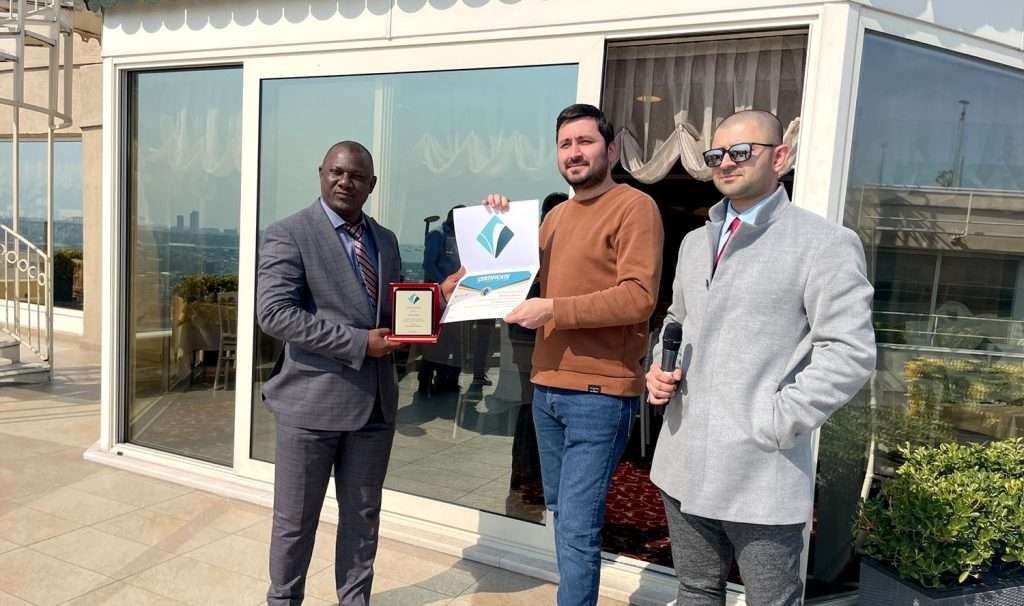
- Prémio Risalat de Reconhecimento da Participação no Programa
Depois do programa
- Apoio pós-formação e orientação de acompanhamento
- Relatório do programa
Todos os programas em Kuala LumpurMore Research & Statistics programmes
Porquê Kuala Lumpur para este programa
Kuala Lumpur alia uma boa relação qualidade-preço, vistos fáceis para muitos países e exemplos de unidades de execução do setor público.
The Training on SPSS Statistical Software in Kuala Lumpur programme in February 2027 brings together officials and professionals from across the Asia region and beyond. Sessions combine short inputs, case studies and group work on participants' own files, and the city's institutions can be added as a study visit on request.
Como chegar: Aeroporto Internacional de Kuala Lumpur (KUL).
Verifique se precisa de visto com o Verificador de Vistos gratuito e peça uma carta-convite depois de se inscrever.
£3.250 por participante · fatura e transferência bancária · grupos de 5 ou mais pessoas beneficiam de desconto
Cinco ou mais participantes da mesma organização: peça a tarifa de grupo no pedido de fatura.
Ten or more: an in-house version for your institution may cost less per person. Ask for an in-house quote.
Registration closes in 51 days (23 Dec 2026)
Outros programas em Kuala Lumpur
Mais cursos de formação na Malásia · Todos os programas na Ásia · Calendário de formação completo