Ключевые факты
- Даты
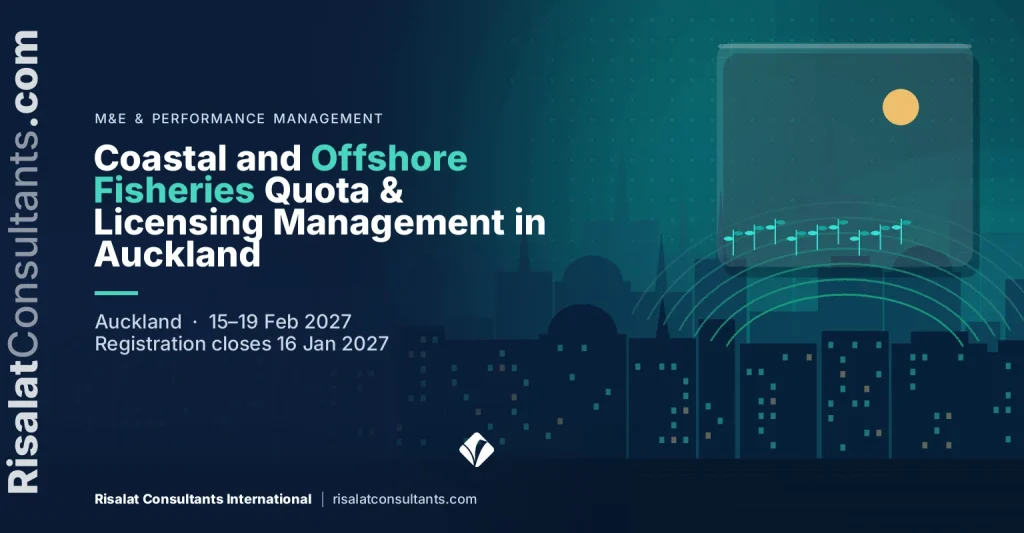
- 15–19 февр. 2027 (5 дней)
- Где
- Auckland, New Zealand
- Стоимость на одного участника
- £3 250 (GBP)
- Оплата
- По счету банковским переводом
- Регистрация закрывается
- 16 янв. 2027
- Сертификат
- Сертификат о прохождении
- Корпоративный формат
- Проведите ее для своей команды в удобные вам даты
На этой странице 15 разделов
Обзор программы
Sustainable fisheries governance demands robust administrative systems capable of balancing ecological limits with economic returns. Coastal and Offshore Fisheries Quota and Licensing Management provides public officials with actionable methodologies to regulate inshore and deepwater marine resources. Held in Auckland, this five-day course introduces operational mechanisms to calibrate national harvest allowances, oversee offshore access agreements, and administer clear permitting structures. Participants engage with modern fisheries management practices, drawing relevant insights from comparative Pacific governance frameworks and internationally recognised standards for maritime resource stewardship.
The curriculum addresses the technical challenges of marine resource oversight, focusing directly on vessel monitoring architectures, catch documentation, and electronic licensing frameworks. Participants examine legal and institutional requirements for designing automated registry platforms, managing offshore fleet applications, and enforcing national coastal boundaries. Through structured policy exercises, attendees learn to standardise reporting protocols, verify vessel movement data, and build surveillance networks that reduce illicit harvesting while safeguarding artisanal and commercial fishing grounds across diverse territorial waters and exclusive economic zones.
Special attention is devoted to public financial management, quota allocation models, and inter-agency compliance coordination. Delegates evaluate economic instruments, licensing fee structures, and transparent revenue-collection mechanisms that align fisheries receipts with broader public finance goals. By exploring real-world compliance mechanisms, enforcement tracking workflows, and regional cooperation channels, the programme equips regulatory personnel, enforcement authorities, and policy economists with the administrative tools necessary to enhance transparency, eliminate administrative bottlenecks, and protect sovereign maritime assets effectively.
Coastal nations and island administrations face growing urgency to protect maritime revenue and marine biodiversity from overfishing and unmonitored extraction. This programme strengthens core fisheries governance capabilities targeted under the 145 million dollar central agency and fisheries component of the First Development Policy Operation (DPO). Implementing clear quota allocations, dependable electronic licensing platforms, and audited monitoring mechanisms is vital for public institutions seeking to improve fiscal sustainability, fulfil statutory commitments, and satisfy the rigorous governance baselines set by international development finance institutions.
Delivered by Risalat Consultants International in Auckland, New Zealand, it combines expert-led sessions, real cases and group work, so that participants can apply what they learn in their own institution.
The Programme Strengthens Institutional Capability
- International and national legal frameworks for territorial seas and exclusive economic zones
- Principles of Total Allowable Catch (TAC) and Total Allowable Commercial Catch (TACC) setting
- Balancing coastal customary rights, artisanal harvesting, and commercial offshore quotas
- Statutory requirements under the FAO Code of Conduct for Responsible Fisheries
- Case review of administrative decision-making in multi-species fisheries management
- Designing administrative workflows for inshore, coastal, and offshore licensing categories
- Transitioning from paper-based registries to secure automated licensing platforms
- Vessel safety, seaworthiness, and flag-state verification prerequisites for licence issuance
- Стратегическое мышление и определение направления
- Руководство командами и их развитие
- Принятие решений и решение проблем
- Коммуникация и влияние
It is designed for ministry of Fisheries regulatory and licensing officers, marine enforcement personnel and naval maritime surveillance officers, fisheries policy economists and natural resource analysts and others who want practical, current skills in leadership, management and communication.
- Операция
- Учет
- Контроль
- Доказательства
- Заключение
The Growing Importance of Coastal and Offshore Fisheries Quota & Licensing Management in Auckland
Организации меняются быстрее, чем когда-либо: новые политики, технологии и ожидания граждан и партнеров. Именно руководители и менеджеры, способные задавать направление, формировать команды и управлять изменениями, превращают планы в результаты.
Сильное лидерство представляет собой набор практических навыков: принимать решения, общаться, вести переговоры, развивать людей и руководить изменениями. Этим навыкам можно научиться и совершенствовать их с помощью практики и обратной связи.
Организациям все больше нужны специалисты, способные:
- Задавать четкое направление и приоритеты
- Руководить командами и мотивировать их в период изменений
- Эффективно общаться и вести переговоры
- Справедливо управлять эффективностью
- Принимать взвешенные решения в условиях давления
Сильные системы лидерства, менеджмента и коммуникации помогают организациям:
- Превращать стратегии в результаты
- Формировать мотивированные и компетентные команды
- Управлять изменениями с меньшим сопротивлением
- Улучшать отношения с партнерами и заинтересованными сторонами
This Coastal and Offshore Fisheries Quota & Licensing Management in Auckland programme brings these elements together in a practical format, so that participants understand not only what good practice looks like but also how to introduce it in their own setting, with the people and resources they have.
Who Should Attend This Coastal and Offshore Fisheries Quota & Licensing Management in Auckland Training?
Программа предназначена для:
- Ministry of Fisheries regulatory and licensing officers
- Marine enforcement personnel and naval maritime surveillance officers
- Fisheries policy economists and natural resource analysts
- Inshore fisheries management specialists and local authority administrators
- Offshore fisheries compliance monitors and vessel tracking specialists
- Public revenue officers handling natural resource licensing and fee collection
- State legal advisers responsible for maritime boundary and fisheries legislation
- Monitoring, Control, and Surveillance (MCS) operational planners
- Public sector project coordinators working on donor-funded fisheries reforms
- Директора и руководители высшего звена
- Руководители департаментов и отделов
- Руководители среднего звена и тимлиды
Программа подходит как опытным специалистам, так и тем, кто переходит к новым обязанностям. Приветствуются группы из разных организаций и стран, поскольку участники многому учатся на опыте друг друга.
Отметьте, что должна уметь ваша команда.
Coastal and Offshore Fisheries Quota & Licensing Management in Auckland Training Objectives
Upon successful completion of this Coastal and Offshore Fisheries Quota & Licensing Management in Auckland Training, participants will be able to:
- Evaluate total allowable catch limits and quota allocation principles using established fisheries science and governance models
- Design streamlined, automated licensing frameworks that reduce administrative discretion and improve application tracking
- Examine operational workflows for vessel monitoring systems, automatic identification systems, and electronic catch documentation
- Construct transparent revenue management structures for coastal permitting, commercial licensing, and offshore access fees
- Implement coordinated enforcement tracking protocols that connect marine surveillance units with national judicial systems
- Apply international maritime obligations, including the FAO Port State Measures Agreement and regional fisheries management conventions
- Develop multi-agency compliance strategies that integrate fisheries ministries, tax authorities, customs, and maritime police
- Объяснять современные подходы к лидерству в государственных и частных организациях
- Задавать направление и приоритеты для своей команды
- Руководить людьми, мотивировать и развивать их
Каждая цель отрабатывается в ходе программы на упражнениях, кейсах или в групповой работе, чтобы участники умели это делать, а не только описывать.
Содержание и структура программы
- International and national legal frameworks for territorial seas and exclusive economic zones
- Principles of Total Allowable Catch (TAC) and Total Allowable Commercial Catch (TACC) setting
- Balancing coastal customary rights, artisanal harvesting, and commercial offshore quotas
- Statutory requirements under the FAO Code of Conduct for Responsible Fisheries
- Case review of administrative decision-making in multi-species fisheries management
- Designing administrative workflows for inshore, coastal, and offshore licensing categories
- Transitioning from paper-based registries to secure automated licensing platforms
- Vessel safety, seaworthiness, and flag-state verification prerequisites for licence issuance
- Access agreements, foreign fleet negotiations, and non-discriminatory fee calculations
- Establishing public, auditable vessel registries to reduce administrative irregularities
- Economics of access agreements, quota transfers, and auctioning mechanisms
- Structuring resource rents, licensing tariffs, and statutory export levies
- Integrating natural resource fee collection with central treasury reporting systems
- Mitigating revenue leakage in offshore transhipment and high-seas extraction
- Financial auditing procedures for fisheries licensing authorities and marine revenue units
- Operational integration of Vessel Monitoring Systems (VMS) and Automatic Identification Systems (AIS)
- Electronic monitoring standards, onboard observer coverage, and port inspection protocols
- Implementing the FAO Agreement on Port State Measures (PSMA) to combat IUU fishing
- Catch documentation schemes (CDS) and full supply chain traceability from net to market
- Data verification techniques to detect deliberate reporting discrepancies and illegal transhipments
- Cross-agency intelligence sharing between fisheries officers, maritime police, and customs
- Standard operating procedures for vessel interdiction, evidence gathering, and administrative sanctions
- Managing judicial prosecution chains and legal compliance in marine enforcement actions
- Institutional change strategies for fisheries directorates undergoing donor-assisted modernisation
- Development and presentation of institutional action plans for quota and licensing reform
Полное содержание по дням
Программа длится 5 дней. Каждый день сочетает выступления экспертов, практическую работу и заключительный семинар или разбор кейса:
- First Day: Day 1: Fisheries Governance, Statutory Frameworks, and Quota Determination
- Second Day: Day 2: Licensing Frameworks and Automated Application Architecture
- Third Day: Day 3: Quota Allocation, Public Revenue, and Economic Instruments
- Fourth Day: Day 4: Monitoring, Control, and Surveillance (MCS) Operations
- Fifth Day: Day 5: Inter-Agency Enforcement, Compliance Tracking, and Action Planning
Полное содержание по дням
First Day | Day 1: Fisheries Governance, Statutory Frameworks, and Quota Determination
- International and national legal frameworks for territorial seas and exclusive economic zones
- Principles of Total Allowable Catch (TAC) and Total Allowable Commercial Catch (TACC) setting
- Balancing coastal customary rights, artisanal harvesting, and commercial offshore quotas
- Statutory requirements under the FAO Code of Conduct for Responsible Fisheries
- Case review of administrative decision-making in multi-species fisheries management
Workshop: Day 1: Fisheries Governance, Statutory Frameworks, and Quota Determination: Applying It to Your Institution
Работая в небольших группах, участники применяют методы дня к примерам из своих организаций и согласовывают практические дальнейшие шаги.
Second Day | Day 2: Licensing Frameworks and Automated Application Architecture
- Designing administrative workflows for inshore, coastal, and offshore licensing categories
- Transitioning from paper-based registries to secure automated licensing platforms
- Vessel safety, seaworthiness, and flag-state verification prerequisites for licence issuance
- Access agreements, foreign fleet negotiations, and non-discriminatory fee calculations
- Establishing public, auditable vessel registries to reduce administrative irregularities
Workshop: Day 2: Licensing Frameworks and Automated Application Architecture: Applying It to Your Institution
Работая в небольших группах, участники применяют методы дня к примерам из своих организаций и согласовывают практические дальнейшие шаги.
Third Day | Day 3: Quota Allocation, Public Revenue, and Economic Instruments
- Economics of access agreements, quota transfers, and auctioning mechanisms
- Structuring resource rents, licensing tariffs, and statutory export levies
- Integrating natural resource fee collection with central treasury reporting systems
- Mitigating revenue leakage in offshore transhipment and high-seas extraction
- Financial auditing procedures for fisheries licensing authorities and marine revenue units
Case Study: Day 3: Quota Allocation, Public Revenue, and Economic Instruments in Practice
Участники анализируют реалистичный кейс, сравнивают принятые решения с передовой практикой и извлекают уроки, применимые в своих условиях.
Fourth Day | Day 4: Monitoring, Control, and Surveillance (MCS) Operations
- Operational integration of Vessel Monitoring Systems (VMS) and Automatic Identification Systems (AIS)
- Electronic monitoring standards, onboard observer coverage, and port inspection protocols
- Implementing the FAO Agreement on Port State Measures (PSMA) to combat IUU fishing
- Catch documentation schemes (CDS) and full supply chain traceability from net to market
- Data verification techniques to detect deliberate reporting discrepancies and illegal transhipments
Workshop: Day 4: Monitoring, Control, and Surveillance (MCS) Operations: Applying It to Your Institution
Работая в небольших группах, участники применяют методы дня к примерам из своих организаций и согласовывают практические дальнейшие шаги.
Fifth Day | Day 5: Inter-Agency Enforcement, Compliance Tracking, and Action Planning
- Cross-agency intelligence sharing between fisheries officers, maritime police, and customs
- Standard operating procedures for vessel interdiction, evidence gathering, and administrative sanctions
- Managing judicial prosecution chains and legal compliance in marine enforcement actions
- Institutional change strategies for fisheries directorates undergoing donor-assisted modernisation
- Development and presentation of institutional action plans for quota and licensing reform
Capstone Exercise: Coastal and Offshore Fisheries Quota & Licensing Management in Auckland Action Plan for Your Institution
Участники объединяют итоги недели в план действий для своей организации с приоритетами, ответственными и первыми шагами и представляют его коллегам и ведущим для обратной связи.
Coastal and Offshore Fisheries Quota & Licensing Management in Auckland Training Methodology
The training employs participatory policy workshops, structured operational reviews, and technical simulation exercises. Participants work with real administrative scenarios to evaluate quota calculation models, review draft licence documentation, and map cross-agency enforcement processes. Facilitated working sessions encourage delegates to scrutinise institutional governance gaps, analyse comparative administrative models, and produce immediate, practical solutions aligned with public sector requirements and donor accountability criteria.
Программа сочетает:
- Занятия под руководством экспертов по актуальной практике
- Региональные и международные кейсы
- Групповая работа и практические упражнения
- Симуляции и ролевые игры, где это уместно
- Обсуждение собственных задач участников
- Обмен опытом между организациями и странами
- Практические инструменты и шаблоны для работы
- Ежедневная рефлексия и планирование действий
Перед программой короткая предварительная оценка помогает ведущим понять роль и приоритеты каждого участника, чтобы адаптировать примеры и упражнения к группе. Каждый день завершается короткой рефлексией, в ходе которой участники отмечают, что они применят в работе.
Ожидаемые результаты
Upon completion of this Coastal and Offshore Fisheries Quota & Licensing Management in Auckland Training, participants will be able to:
- Ability to calculate, administer, and review catch quotas using empirical fisheries indicators
- Capacity to draft technical specifications for automated online fisheries licensing registries
- Practical skill in auditing vessel monitoring outputs and catch logbooks to detect non-compliance
- Implementation of robust financial reporting workflows that safeguard coastal and offshore public revenues
- Standardised enforcement handoff protocols linking maritime patrols to public legal authorities
- Formulation of a targeted institutional improvement plan ready for immediate ministerial deployment
- Задавать четкое направление и приоритеты
- Руководить командами и развивать их
Участники уходят с личным планом действий и практическими инструментами, которые можно применять в своей организации с первой же недели после возвращения. Организации, направляющие нескольких участников, могут использовать программу, чтобы согласовать общие методы и шаблоны для разных команд: так улучшения легче закрепить.
£3 250 за участника · счет и банковский перевод · группам от 5 человек предоставляется скидка
Пять и более участников от одной организации: укажите групповой тариф в запросе счета.
Десять и более человек: корпоративная версия для вашей организации может обойтись дешевле в расчете на одного участника. Запросите расчет корпоративной программы.
Registration closes in 65 days (16 Jan 2027)
Institutional Application of Coastal and Offshore Fisheries Quota & Licensing Management in Auckland Training
Программа помогает организациям укрепить:
- Лидерство и менеджмент
- Развитие команды
- Управление изменениями
- Коммуникация
- Управление эффективностью
Участники возвращаются с практическими инструментами для улучшения:
- Планы команды
- Коучинг
- Планы изменений
- Коммуникация с заинтересованными сторонами
- Оценка результатов работы
Программа построена так, чтобы знания переходили из учебной аудитории в организацию. По возможности участники работают с собственными процессами и документами и уходят с планом действий, который их руководители могут рассмотреть и поддержать.
Региональная актуальность и применение
Европа
Европейские организации применяют лидерство, менеджмент и коммуникацию в рамках детально проработанной нормативной базы и программ реформ. Участники из Европы могут сравнить свою практику с опытом коллег из других регионов и проверить, как устоявшиеся методы работают в иных условиях.
Африка
По всей Африке министерства, ведомства и проектные команды, работающие в сфере лидерства, менеджмента и коммуникации, все чаще действуют параллельно с программами, финансируемыми донорами, которые требуют четких систем и доказательной базы. Программа помогает участникам адаптировать передовую практику к своим организациям и имеющимся ресурсам.
Ближний Восток
На Ближнем Востоке национальные стратегии развития и планы диверсификации предъявляют растущие требования к лидерству, менеджменту и коммуникации. Участники изучают, как сформировать необходимый для этих планов потенциал в государственных органах и компаниях.
Азия
Организации в Азии сочетают быстрый рост с амбициозными программами модернизации. Участники из Азии могут поделиться опытом быстрого масштабирования систем и узнать о подходах, применяемых в других странах.
Тихоокеанский регион
Малые островные государства и страны Тихоокеанского региона сталкиваются с особыми ограничениями, связанными с размером, удаленностью и потенциалом. Программа предлагает практичные и соразмерные подходы к лидерству, менеджменту и коммуникации, подходящие для небольших организаций.
Holding the programme in Auckland, New Zealand brings participants together away from their daily pressures, so they can compare how leadership, management and communication is handled in different settings. The same programme can also be delivered in-house for one institution, in its own country or online, with cases taken from its current work.
Профиль принимающей страны – Новая Зеландия
Risalat Consultants International runs open-enrolment training programmes in Auckland, New Zealand for officials, project teams and professionals from across the region. Dates, fees and what each programme covers are listed above, and any programme can also be delivered in-house for your institution.
Обучение за пределами своей страны дает участникам время сосредоточиться, по-новому взглянуть на свою организацию и выстроить сеть контактов с коллегами из других стран.
Coastal and Offshore Fisheries Quota & Licensing Management in Auckland Training Deliverables
Участники получают поддержку до, во время и после программы, поэтому подготовка, обучение и последующее сопровождение складываются в единый непрерывный процесс.
До программы
- Предварительная оценка участников
- Coastal and Offshore Fisheries Quota & Licensing Management in Auckland Readiness Assessment
- Coastal and Offshore Fisheries Quota & Licensing Management in Auckland Resource Pack
- Материалы для предварительного чтения
- Бесплатная визовая поддержка и консультации
Во время программы
- Встреча в аэропорту и приветственное сопровождение
- Проживание с завтраком
- Приветственный ужин для нетворкинга
- Комплект участника Risalat (сумка, бутылка, кружка, футболка, кепка, обложка для паспорта, ручки, блокнот, магнит и брелок)
- Comprehensive Coastal and Offshore Fisheries Quota & Licensing Management in Auckland Training Manual
- Самооценка лидерских качеств
- Шаблон плана развития команды
- Шаблон плана изменений
- Лист подготовки к переговорам
- Практические семинары и симуляции
- Групповые дискуссии и обмен опытом
- Ежедневный обед и кофе-брейки
- Полный доступ к инфраструктуре места проведения
- Мини-планшет с цифровыми учебными материалами
- Выездной визит (при наличии)
- Развлекательная экскурсия по городу
После программы
- Сертификат о прохождении
- Награда Risalat за участие в программе
- Справочные материалы после обучения
- Шаблон плана личного развития
- Руководство по коучинговой беседе
- Поддержка и консультации после обучения
- Отчет по программе
Организации также могут заказать адаптированную корпоративную версию этой программы с проведением на своей территории или онлайн. Запросить предложение.
Common Challenges in Coastal and Offshore Fisheries Quota & Licensing Management in Auckland, And How This Training Helps
Как организациям задавать четкое направление и приоритеты?
The programme addresses this directly on the first day (Day 1: Fisheries Governance, Statutory Frameworks, and Quota Determination), where participants practise the methods involved and adapt them to their own institution, then build it into their action plan.
Как организациям руководить командами и мотивировать их в период изменений?
The programme addresses this directly on the second day (Day 2: Licensing Frameworks and Automated Application Architecture), where participants practise the methods involved and adapt them to their own institution, then build it into their action plan.
Как организациям эффективно общаться и вести переговоры?
The programme addresses this directly on the third day (Day 3: Quota Allocation, Public Revenue, and Economic Instruments), where participants practise the methods involved and adapt them to their own institution, then build it into their action plan.
Как организациям справедливо управлять эффективностью?
The programme addresses this directly on the fourth day (Day 4: Monitoring, Control, and Surveillance (MCS) Operations), where participants practise the methods involved and adapt them to their own institution, then build it into their action plan.
Как организациям принимать взвешенные решения в условиях давления?
The programme addresses this directly on the fifth day (Day 5: Inter-Agency Enforcement, Compliance Tracking, and Action Planning), where participants practise the methods involved and adapt them to their own institution, then build it into their action plan.
Часто задаваемые вопросы
When and where does the Coastal and Offshore Fisheries Quota & Licensing Management in Auckland programme take place?
It runs from 15 Feb 2027 to 19 Feb 2027, in Auckland, New Zealand. The registration deadline is shown at the top of this page.
Кому стоит участвовать?
The programme is designed for ministry of Fisheries regulatory and licensing officers, marine enforcement personnel and naval maritime surveillance officers, fisheries policy economists and natural resource analysts, inshore fisheries management specialists and local authority administrators, and others who want practical skills in leadership, management and communication.
Получу ли я сертификат?
Да. Участники, завершившие программу, получают сертификат о прохождении от Risalat Consultants International.
Можно ли провести эту программу только для нашей организации?
Да. Мы можем провести адаптированную корпоративную версию в вашей организации, в другом городе или онлайн на основе ваших собственных кейсов. Воспользуйтесь формой запроса предложения на этой странице.
Нужен ли мне опыт в области лидерства, менеджмента и коммуникации?
Специальная подготовка не требуется, достаточно опыта работы в смежной должности. Короткая предварительная оценка помогает ведущим адаптировать занятия к группе.
Who Will Deliver This Programme
Each date is delivered by a team assigned from Risalat's expert network for this subject. For this programme we assign:
How we choose them: Experience in the region of the participants or comparable settings; Command of the financier rules that apply (World Bank, ADB, AfDB, EU, UN) where relevant; Delivery in English; other languages on request for in-house groups; No conflict of interest with participants' institutions.
Names and short CVs of the assigned experts are shared with registered participants and sponsoring organisations before the programme, on request. Are you an expert in this subject? Join our expert network.
Training courses in AucklandAgriculture & Forestry training courses
Why Auckland for this programme
Auckland is New Zealand's commercial centre, offering visiting delegations access to key public agencies, Auckland Council, and the Port of Auckland. Participants can observe established practices in infrastructure, biosecurity, and urban management. The city is straightforward to reach through direct long-haul flights connecting the Pacific, Asia, and the Americas.
The Coastal and Offshore Fisheries Quota & Licensing Management in Auckland programme in February 2027 brings together officials and professionals from across the Oceania and the Pacific region and beyond. Sessions combine short inputs, case studies and group work on participants' own files, and the city's institutions can be added as a study visit on request.
Getting there: Auckland Airport (AKL).
Узнайте, нужна ли вам виза, с помощью бесплатного сервиса «Проверка визы» и запросите приглашение после регистрации.
Та же тема в других городах
- Tuna Fishery Traceability, Catch Documentation and Quota Enforcement in Kuala Lumpur (Kuala Lumpur)
- Marine Spatial Data Infrastructure and Ecosystem-Based Quotas in Colombo (Colombo)
Other programmes in Auckland
- Ocean Data Governance and Commercial Offshore Fisheries Compliance in Auckland
- Technical and Vocational Education Reform for Overseas Labour Mobility in Auckland
- Climate-Resilient Maritime and Port Infrastructure Engineering in Auckland
- Public Health Emergency Operations and Surveillance Logistics in Auckland
- Credit Guarantee Scheme Design and MSME Finance Expansion in Auckland
- ОЭСР (Организация экономического сотрудничества и развития) OECD
- Программа развития Организации Объединенных Наций ПРООН
- Open Contracting Partnership Open Contracting Partnership
For teams and institutions
Bring your team
Teams that learn together apply more at work. Tell us how many people and how you would like to take part: we reply with a group quote within two working days.
Other dates and cities for this subject: Agriculture, Value Chains and Food Security training courses (95 upcoming dates).
Другие учебные курсы в Новой Зеландии · Все программы в Тихоокеанском регионе · Полный календарь обучения
Plan this programme in a roadmap: why it matters, why to approve it, the dates to plan and the career it builds.