Ключевые факты
- Даты
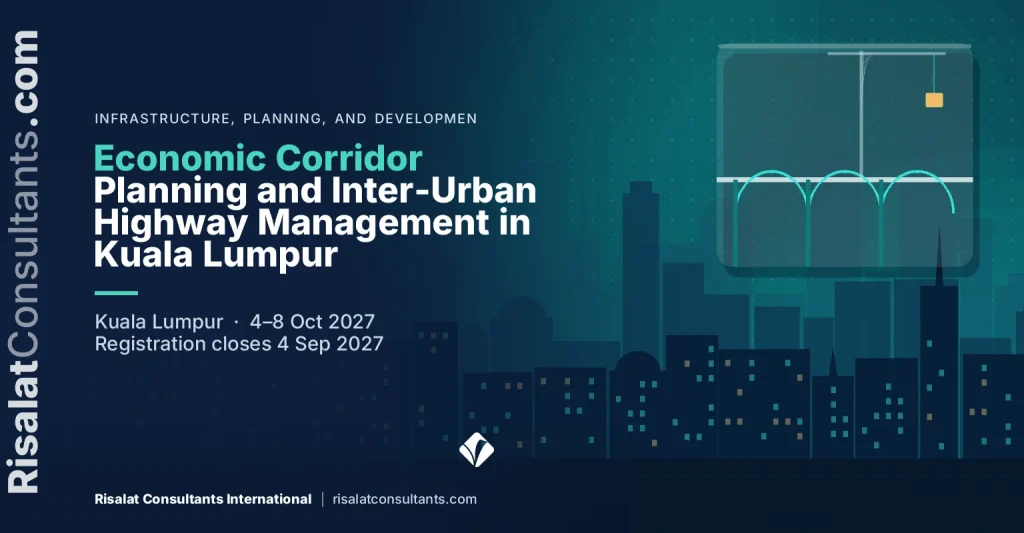
- 4–8 Oct 2027 (5 days)
- Где
- Куала-Лумпур, Малайзия
- Стоимость на одного участника
- £3 250 (GBP)
- Оплата
- По счету банковским переводом
- Регистрация закрывается
- 4 Sep 2027
- Сертификат
- Сертификат о прохождении
- Корпоративный формат
- Проведите ее для своей команды в удобные вам даты
На этой странице 14 разделов
Обзор программы
Economic corridor planning and inter-urban highway management are essential disciplines for regional economic integration and high-volume freight mobility. This five-day executive programme in Kuala Lumpur provides public sector engineers, transport economists, and corridor managers with operational frameworks to design, operate, and maintain strategic transport spines. Participants evaluate highway planning approaches, access management controls, and intermodal logistics integration necessary to convert traditional inter-urban roads into transformative, competitive economic corridors that sustain manufacturing, international trade, and local community access.
The curriculum addresses the technical challenges of managing multi-lane inter-urban arterials carrying heterogeneous vehicle streams under rising commercial demand. Drawing upon international engineering standards and modern traffic management systems, sessions explore asset preservation, performance-based road maintenance, corridor safety audits, and intelligent transport systems. Delegates assess spatial planning mechanisms to balance linear transport efficiency with nodal development, ensuring that arterial highways connect effectively with inland container depots, economic processing zones, maritime ports, and rural feeder roads across national and cross-border territories.
Hosted in Kuala Lumpur, the training exposes participants to advanced regional transport infrastructure and integrated corridor administration models. Through practical appraisals of high-capacity highways and multimodal freight hubs, officials gain firsthand perspective on operational coordination, axle-load enforcement, and automated tolling architectures. The course equips road agencies and development project implementation units with rigorous tools to prepare, evaluate, and supervise major capital works financed by international financing institutions such as the World Bank and Asian Development Bank.
Rapid industrial decentralisation and cross-border trade expansion require modernised arterial networks capable of moving high-capacity freight without chronic congestion or structural deterioration. This programme directly addresses the technical delivery scope of large-scale regional investments such as the US$500m Western Economic Corridor and Regional Enhancement Programme. Transport ministries, national highway agencies, and regional planning authorities must enhance their engineering and operational oversight to deliver resilient highway assets, manage complex intermodal freight linkages, and implement automated corridor operations that align with multilateral development bank standards.
Delivered by Risalat Consultants International in Kuala Lumpur, Malaysia, it combines expert-led sessions, real cases and group work, so that participants can apply what they learn in their own institution.
The Programme Strengthens Institutional Capability
- Principles of transport corridor delimitation and economic impact zoning
- Functional road classification and inter-urban arterial network hierarchy
- Spatial integration of growth poles, industrial clusters, and agricultural basins
- Multimodal corridor alignment: balancing through-traffic with regional access
- Evaluating economic rates of return and traffic demand forecasting models
- AASHTO and international design criteria for high-speed inter-urban arterials
- Interchange typology, grade separation, and service road configuration
- Access management policies and control of ribbon development along corridors
- Планирование и приоритизация инфраструктуры
- Экспертиза проектов и технико-экономические обоснования
- Варианты финансирования и государственно-частное партнерство
- Закупки и заключение контрактов на работы
It is designed for highway authority senior engineers and technical directors, intermodal logistics planners and freight network analysts, road corridor project directors and implementation unit managers and others who want practical, current skills in infrastructure, urban development and partnerships.
The Growing Importance of Economic Corridor Planning and Inter-Urban Highway Management in Kuala Lumpur
Инфраструктура и городские услуги определяют рост, здоровье и возможности. Проекты масштабны, сложны и рассчитаны на долгий срок, а слабые места в планировании, финансировании или реализации потом дорого исправлять.
Правительства все чаще сочетают государственные инвестиции, партнерства с частным сектором и новые технологии. Команды, которые умеют планировать, оценивать, закупать и управлять такими инвестициями, создают более качественные активы и услуги.
Организациям все больше нужны специалисты, способные:
- Планировать инфраструктурные инвестиции и определять их приоритеты
- Проводить экспертизу проектов и готовить технико-экономические обоснования
- Выбирать модели финансирования и реализации
- Осуществлять надзор за работами с точки зрения сроков, стоимости и качества
- Управлять активами на протяжении их жизненного цикла
Сильные системы в области инфраструктуры, городского развития и партнерств помогают организациям:
- Выбирать правильные инвестиции
- Реализовывать проекты в срок и в рамках бюджета
- Привлекать финансирование и партнеров
- Продлевать срок эффективной работы активов
This Economic Corridor Planning and Inter-Urban Highway Management in Kuala Lumpur programme brings these elements together in a practical format, so that participants understand not only what good practice looks like but also how to introduce it in their own setting, with the people and resources they have.
Who Should Attend This Economic Corridor Planning and Inter-Urban Highway Management in Kuala Lumpur Training?
Программа предназначена для:
- Highway authority senior engineers and technical directors
- Intermodal logistics planners and freight network analysts
- Road corridor project directors and implementation unit managers
- Transport planning officials from national ministries of transport and communications
- Road design engineers and bridge asset management specialists
- Traffic operations managers and Intelligent Transport Systems coordinators
- Public works procurement officers and project monitoring specialists
- Transport economists and regional spatial development planners
- Road safety auditors and geometric design appraisal specialists
- Специалисты по планированию инфраструктуры и городов
- Инженеры и технические руководители
- Руководители проектов и программ
Программа подходит как опытным специалистам, так и тем, кто переходит к новым обязанностям. Приветствуются группы из разных организаций и стран, поскольку участники многому учатся на опыте друг друга.
Отметьте, что должна уметь ваша команда.
Economic Corridor Planning and Inter-Urban Highway Management in Kuala Lumpur Training Objectives
Upon successful completion of this Economic Corridor Planning and Inter-Urban Highway Management in Kuala Lumpur Training, participants will be able to:
- Appraise regional corridor spatial plans using established transport network hierarchy principles
- Design high-capacity inter-urban highway alignments in accordance with international geometric and safety standards
- Integrate intermodal freight transfer nodes and inland container terminals into national road networks
- Deploy intelligent transport systems and incident management protocols for regional arterial highways
- Implement weigh-in-motion technologies and axle-load regulatory enforcement frameworks
- Evaluate corridor performance and climate resilience using multilateral development bank appraisal guidelines
- Formulate performance-based road maintenance contracts for long-term arterial asset preservation
- Объяснять, как планируется инфраструктура и определяются ее приоритеты
- Проводить экспертизу проектов и готовить технико-экономическое обоснование
- Сравнивать модели финансирования и реализации, включая партнерства
Каждая цель отрабатывается в ходе программы на упражнениях, кейсах или в групповой работе, чтобы участники умели это делать, а не только описывать.
Содержание и структура программы
- Principles of transport corridor delimitation and economic impact zoning
- Functional road classification and inter-urban arterial network hierarchy
- Spatial integration of growth poles, industrial clusters, and agricultural basins
- Multimodal corridor alignment: balancing through-traffic with regional access
- Evaluating economic rates of return and traffic demand forecasting models
- AASHTO and international design criteria for high-speed inter-urban arterials
- Interchange typology, grade separation, and service road configuration
- Access management policies and control of ribbon development along corridors
- Road Safety Audits (RSA) and Road Safety Inspection (RSI) protocols
- Design for climate resilience: drainage capacity, slope stability, and flood margins
- Planning interfaces between arterial highways, dry ports, and rail freight terminals
- Geometric design of heavy-vehicle access points, turning radii, and deceleration lanes
- Logistics park circulation, parking staging areas, and customs clearance gate design
- Axle-load monitoring infrastructure and High-Speed Weigh-in-Motion (HS-WIM) systems
- Last-mile connectivity and secondary feeder road integration strategies
- Intelligent Transport Systems (ITS) architecture for inter-urban expressways
- Real-time traffic monitoring, CCTV deployment, and incident management systems
- Electronic toll collection (ETC), open road tolling, and revenue assurance systems
- Dynamic speed management, variable message signs, and lane control systems
- Work zone traffic management and arterial safety during major rehabilitation works
- Pavement management systems (PMS) and non-destructive structural condition surveys
- Design and supervision of Performance-Based Road Maintenance Contracts (OPRC)
- Donor procurement guidelines and FIDIC contract conditions for major corridor works
- Environmental and Social Framework (ESF) compliance in highway construction
- Action planning: integrating corridor management tools into national project pipelines
Полное содержание по дням
Программа длится 5 дней. Каждый день сочетает выступления экспертов, практическую работу и заключительный семинар или разбор кейса:
- First Day: Day 1: Spatial Planning, Corridor Economics, and Network Hierarchy
- Second Day: Day 2: Geometric Design, Safety Audits, and Access Management
- Third Day: Day 3: Intermodal Freight Terminals and Logistics Node Integration
- Fourth Day: Day 4: Intelligent Transport Systems, Tolling, and Traffic Operations
- Fifth Day: Day 5: Asset Management, Performance-Based Maintenance, and Project Delivery
Полное содержание по дням
First Day | Day 1: Spatial Planning, Corridor Economics, and Network Hierarchy
- Principles of transport corridor delimitation and economic impact zoning
- Functional road classification and inter-urban arterial network hierarchy
- Spatial integration of growth poles, industrial clusters, and agricultural basins
- Multimodal corridor alignment: balancing through-traffic with regional access
- Evaluating economic rates of return and traffic demand forecasting models
Workshop: Day 1: Spatial Planning, Corridor Economics, and Network Hierarchy: Applying It to Your Institution
Работая в небольших группах, участники применяют методы дня к примерам из своих организаций и согласовывают практические дальнейшие шаги.
Second Day | Day 2: Geometric Design, Safety Audits, and Access Management
- AASHTO and international design criteria for high-speed inter-urban arterials
- Interchange typology, grade separation, and service road configuration
- Access management policies and control of ribbon development along corridors
- Road Safety Audits (RSA) and Road Safety Inspection (RSI) protocols
- Design for climate resilience: drainage capacity, slope stability, and flood margins
Workshop: Day 2: Geometric Design, Safety Audits, and Access Management: Applying It to Your Institution
Работая в небольших группах, участники применяют методы дня к примерам из своих организаций и согласовывают практические дальнейшие шаги.
Third Day | Day 3: Intermodal Freight Terminals and Logistics Node Integration
- Planning interfaces between arterial highways, dry ports, and rail freight terminals
- Geometric design of heavy-vehicle access points, turning radii, and deceleration lanes
- Logistics park circulation, parking staging areas, and customs clearance gate design
- Axle-load monitoring infrastructure and High-Speed Weigh-in-Motion (HS-WIM) systems
- Last-mile connectivity and secondary feeder road integration strategies
Case Study: Day 3: Intermodal Freight Terminals and Logistics Node Integration in Practice
Участники анализируют реалистичный кейс, сравнивают принятые решения с передовой практикой и извлекают уроки, применимые в своих условиях.
Fourth Day | Day 4: Intelligent Transport Systems, Tolling, and Traffic Operations
- Intelligent Transport Systems (ITS) architecture for inter-urban expressways
- Real-time traffic monitoring, CCTV deployment, and incident management systems
- Electronic toll collection (ETC), open road tolling, and revenue assurance systems
- Dynamic speed management, variable message signs, and lane control systems
- Work zone traffic management and arterial safety during major rehabilitation works
Workshop: Day 4: Intelligent Transport Systems, Tolling, and Traffic Operations: Applying It to Your Institution
Работая в небольших группах, участники применяют методы дня к примерам из своих организаций и согласовывают практические дальнейшие шаги.
Fifth Day | Day 5: Asset Management, Performance-Based Maintenance, and Project Delivery
- Pavement management systems (PMS) and non-destructive structural condition surveys
- Design and supervision of Performance-Based Road Maintenance Contracts (OPRC)
- Donor procurement guidelines and FIDIC contract conditions for major corridor works
- Environmental and Social Framework (ESF) compliance in highway construction
- Action planning: integrating corridor management tools into national project pipelines
Capstone Exercise: Economic Corridor Planning and Inter-Urban Highway Management in Kuala Lumpur Action Plan for Your Institution
Участники объединяют итоги недели в план действий для своей организации с приоритетами, ответственными и первыми шагами и представляют его коллегам и ведущим для обратной связи.
Economic Corridor Planning and Inter-Urban Highway Management in Kuala Lumpur Training Methodology
The training is delivered through interactive lectures, technical case studies, and engineering appraisal workshops. Officials review international best practices and apply design frameworks to practical corridor exercises. Participants engage in peer-to-peer technical reviews, examine diagnostic software methodologies, and dissect operational models from operational Malaysian and international highway corridors to translate strategic corridor concepts into bankable, deliverable capital projects.
Программа сочетает:
- Занятия под руководством экспертов по актуальной практике
- Региональные и международные кейсы
- Групповая работа и практические упражнения
- Симуляции и ролевые игры, где это уместно
- Обсуждение собственных задач участников
- Обмен опытом между организациями и странами
- Практические инструменты и шаблоны для работы
- Ежедневная рефлексия и планирование действий
Перед программой короткая предварительная оценка помогает ведущим понять роль и приоритеты каждого участника, чтобы адаптировать примеры и упражнения к группе. Каждый день завершается короткой рефлексией, в ходе которой участники отмечают, что они применят в работе.
Ожидаемые результаты
Upon completion of this Economic Corridor Planning and Inter-Urban Highway Management in Kuala Lumpur Training, participants will be able to:
- Formulate integrated economic corridor master plans aligned with national transport policies
- Apply geometric design standards to manage high-speed, heavy-vehicle arterial traffic safely
- Specify technical requirements for dry ports, logistics transfer yards, and intermodal interfaces
- Develop operational specifications for Intelligent Transport Systems, automated tolling, and WIM stations
- Structure performance-based maintenance contracts to ensure the lifecycle preservation of road assets
- Ensure project documentation complies with multilateral donor engineering, safety, and environmental safeguards
- Планировать инфраструктурные инвестиции и определять их приоритеты
- Проводить экспертизу проектов и готовить технико-экономические обоснования
Участники уходят с личным планом действий и практическими инструментами, которые можно применять в своей организации с первой же недели после возвращения. Организации, направляющие нескольких участников, могут использовать программу, чтобы согласовать общие методы и шаблоны для разных команд: так улучшения легче закрепить.
£3 250 за участника · счет и банковский перевод · группам от 5 человек предоставляется скидка
Пять и более участников от одной организации: укажите групповой тариф в запросе счета.
Десять и более человек: корпоративная версия для вашей организации может обойтись дешевле в расчете на одного участника. Запросите расчет корпоративной программы.
Registration closes in 295 days (4 Sep 2027)
Institutional Application of Economic Corridor Planning and Inter-Urban Highway Management in Kuala Lumpur Training
Программа помогает организациям укрепить:
- Инвестиционное планирование
- Экспертиза проектов
- Управление партнерствами
- Надзор за работами
- Управление активами
Участники возвращаются с практическими инструментами для улучшения:
- Технико-экономические обоснования
- Распределение рисков
- Управление контрактами
- Планирование технического обслуживания
- Мониторинг услуг
Программа построена так, чтобы знания переходили из учебной аудитории в организацию. По возможности участники работают с собственными процессами и документами и уходят с планом действий, который их руководители могут рассмотреть и поддержать.
Региональная актуальность и применение
Европа
Европейские организации работают в сфере инфраструктуры, городского развития и партнерств в рамках детально проработанной нормативной базы и программ реформ. Участники из Европы могут сравнить свою практику с опытом коллег из других регионов и проверить, как устоявшиеся методы работают в иных условиях.
Африка
По всей Африке министерства, ведомства и проектные команды, работающие в сфере инфраструктуры, городского развития и партнерств, все чаще взаимодействуют с программами, финансируемыми донорами, которые требуют четких систем и подтверждающих данных. Программа помогает участникам адаптировать передовую практику к своим организациям и имеющимся ресурсам.
Ближний Восток
На Ближнем Востоке национальные стратегии развития и планы диверсификации предъявляют все более высокие требования к инфраструктуре, городскому развитию и партнерствам. Участники изучают, как сформировать в государственных органах и компаниях потенциал, необходимый для реализации этих планов.
Азия
Организации в Азии сочетают быстрый рост с амбициозными программами модернизации. Участники из Азии могут поделиться опытом быстрого масштабирования систем и узнать о подходах, применяемых в других странах.
Тихоокеанский регион
Малые островные и тихоокеанские государства сталкиваются с особыми ограничениями, связанными с размером, удаленностью и потенциалом. Программа уделяет особое внимание практичным и соразмерным подходам к инфраструктуре, городскому развитию и партнерствам, подходящим для небольших организаций.
Holding the programme in Kuala Lumpur, Malaysia brings participants together away from their daily pressures, so they can compare how infrastructure, urban development and partnerships is handled in different settings. The same programme can also be delivered in-house for one institution, in its own country or online, with cases taken from its current work.
- Операция
- Учет
- Контроль
- Доказательства
- Заключение
Профиль принимающей страны – Малайзия
Программы, семинары, ознакомительные поездки и учебные курсы в Куала-Лумпуре (Малайзия) от Risalat Consultants International
Обучение за пределами своей страны дает участникам время сосредоточиться, по-новому взглянуть на свою организацию и выстроить сеть контактов с коллегами из других стран.
Economic Corridor Planning and Inter-Urban Highway Management in Kuala Lumpur Training Deliverables
Участники получают поддержку до, во время и после программы, поэтому подготовка, обучение и последующее сопровождение складываются в единый непрерывный процесс.
До программы
- Предварительная оценка участников
- Economic Corridor Planning and Inter-Urban Highway Management in Kuala Lumpur Readiness Assessment
- Economic Corridor Planning and Inter-Urban Highway Management in Kuala Lumpur Resource Pack
- Материалы для предварительного чтения
- Бесплатная визовая поддержка и консультации
Во время программы
- Встреча в аэропорту и приветственное сопровождение
- Проживание с завтраком
- Приветственный ужин для нетворкинга
- Комплект участника Risalat (сумка, бутылка, кружка, футболка, кепка, обложка для паспорта, ручки, блокнот, магнит и брелок)
- Comprehensive Economic Corridor Planning and Inter-Urban Highway Management in Kuala Lumpur Training Manual
- Шаблон экспертизы проекта
- Матрица распределения рисков в ГЧП
- Контрольный список надзора за работами
- Шаблон плана управления активами
- Практические семинары и симуляции
- Групповые дискуссии и обмен опытом
- Ежедневный обед и кофе-брейки
- Полный доступ к инфраструктуре места проведения
- Мини-планшет с цифровыми учебными материалами
- Выездной визит (при наличии)
- Развлекательная экскурсия по городу
После программы
- Сертификат о прохождении
- Награда Risalat за участие в программе
- Справочные материалы после обучения
- Контрольный список проверки технико-экономического обоснования
- Шаблон плана технического обслуживания
- Поддержка и консультации после обучения
- Отчет по программе
Организации также могут заказать адаптированную корпоративную версию этой программы с проведением на своей территории или онлайн. Запросить предложение.
Common Challenges in Economic Corridor Planning and Inter-Urban Highway Management in Kuala Lumpur, And How This Training Helps
Как организациям планировать инвестиции в инфраструктуру и определять их приоритеты?
The programme addresses this directly on the first day (Day 1: Spatial Planning, Corridor Economics, and Network Hierarchy), where participants practise the methods involved and adapt them to their own institution, then build it into their action plan.
Как организациям оценивать проекты и готовить экономическое обоснование?
The programme addresses this directly on the second day (Day 2: Geometric Design, Safety Audits, and Access Management), where participants practise the methods involved and adapt them to their own institution, then build it into their action plan.
Как организациям выбирать модели финансирования и реализации?
The programme addresses this directly on the third day (Day 3: Intermodal Freight Terminals and Logistics Node Integration), where participants practise the methods involved and adapt them to their own institution, then build it into their action plan.
Как организациям осуществлять надзор за работами с точки зрения сроков, стоимости и качества?
The programme addresses this directly on the fourth day (Day 4: Intelligent Transport Systems, Tolling, and Traffic Operations), where participants practise the methods involved and adapt them to their own institution, then build it into their action plan.
Как организациям управлять активами на протяжении всего срока их службы?
The programme addresses this directly on the fifth day (Day 5: Asset Management, Performance-Based Maintenance, and Project Delivery), where participants practise the methods involved and adapt them to their own institution, then build it into their action plan.
Часто задаваемые вопросы
When and where does the Economic Corridor Planning and Inter-Urban Highway Management in Kuala Lumpur programme take place?
It runs from 4 Oct 2027 to 8 Oct 2027, in Kuala Lumpur, Malaysia. The registration deadline is shown at the top of this page.
Кому стоит участвовать?
The programme is designed for highway authority senior engineers and technical directors, intermodal logistics planners and freight network analysts, road corridor project directors and implementation unit managers, transport planning officials from national ministries of transport and communications, and others who want practical skills in infrastructure, urban development and partnerships.
Получу ли я сертификат?
Да. Участники, завершившие программу, получают сертификат о прохождении от Risalat Consultants International.
Можно ли провести эту программу только для нашей организации?
Да. Мы можем провести адаптированную корпоративную версию в вашей организации, в другом городе или онлайн на основе ваших собственных кейсов. Воспользуйтесь формой запроса предложения на этой странице.
Нужен ли мне предварительный опыт в области инфраструктуры, городского развития и партнерств?
Специальная подготовка не требуется, достаточно опыта работы в смежной должности. Короткая предварительная оценка помогает ведущим адаптировать занятия к группе.
Who Will Deliver This Programme
Each date is delivered by a team assigned from Risalat's expert network for this subject. For this programme we assign:
How we choose them: Experience in the region of the participants or comparable settings; Command of the financier rules that apply (World Bank, ADB, AfDB, EU, UN) where relevant; Delivery in English; other languages on request for in-house groups; No conflict of interest with participants' institutions.
Names and short CVs of the assigned experts are shared with registered participants and sponsoring organisations before the programme, on request. Are you an expert in this subject? Join our expert network.
Training courses in Kuala LumpurInfrastructure, Planning, and Development training courses
Почему эта программа проходит в Куала-Лумпуре
Куала-Лумпур сочетает доступные цены, упрощенный визовый режим для многих стран и примеры работы подразделений по обеспечению результатов в госсекторе.
The Economic Corridor Planning and Inter-Urban Highway Management in Kuala Lumpur programme in October 2027 brings together officials and professionals from across the Asia region and beyond. Sessions combine short inputs, case studies and group work on participants' own files, and the city's institutions can be added as a study visit on request.
Как добраться: Международный аэропорт Куала-Лумпура (KUL).
Узнайте, нужна ли вам виза, с помощью бесплатного сервиса «Проверка визы» и запросите приглашение после регистрации.
Та же тема в других городах
- Secondary Road Rehabilitation and Climate-Proof Pavement Design in Tbilisi (Tbilisi)
- Road Safety Engineering and Black-Spot Remediation in Istanbul (Istanbul)
- Inter-Urban Freight Corridor Logistics and Rural Road Asset Maintenance in Seoul (Seoul)
- Economic Corridor Development and Regional Highway Asset Operations in Kuala Lumpur (Kuala Lumpur)
Другие программы в Куала-Лумпуре
- Public Administration Reform and Civil Service Management in Kuala Lumpur
- Public Hospital Infectious Disease Infrastructure & Biosafety in Kuala Lumpur
- Urban Pumping Station Modernisation & Solid Waste Interception in Kuala Lumpur
- Industry-Led TVET Dual-Training Schemes and Apprenticeship Governance in Kuala Lumpur
- Vaccine Cold Chain Fleet Monitoring and Temperature Integrity in Kuala Lumpur
For teams and institutions
Bring your team
Teams that learn together apply more at work. Tell us how many people and how you would like to take part: we reply with a group quote within two working days.
Other dates and cities for this subject: Infrastructure, Roads and Transport Projects training courses (161 upcoming dates).
Другие учебные курсы в Малайзии · Все программы в Азии · Полный календарь обучения
Plan this programme in a roadmap: why it matters, why to approve it, the dates to plan and the career it builds.