Ключевые факты
- Даты
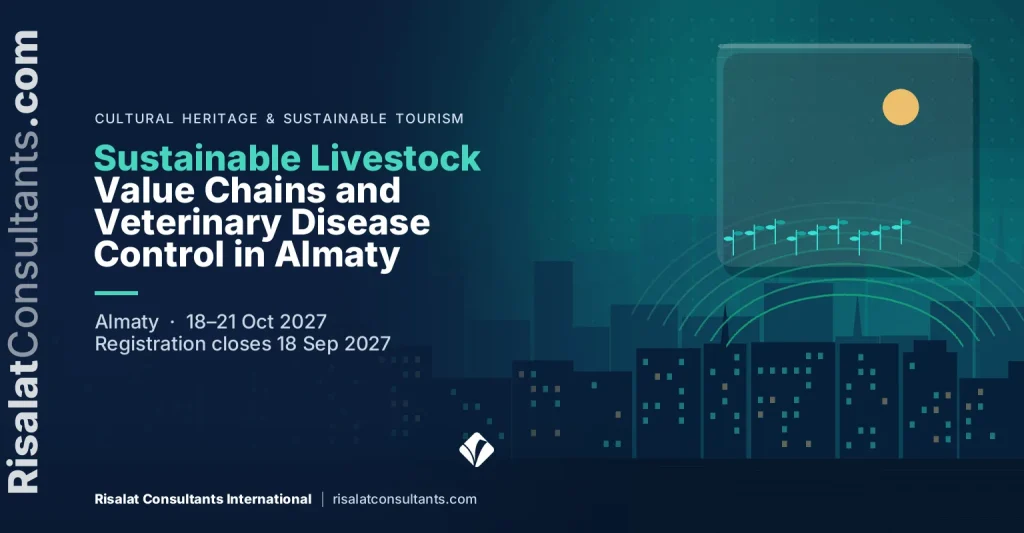
- 18–21 Oct 2027 (4 days)
- Где
- Алматы, Казахстан
- Стоимость на одного участника
- £2 100 (GBP)
- Оплата
- По счету банковским переводом
- Регистрация закрывается
- 18 Sep 2027
- Сертификат
- Сертификат о прохождении
- Корпоративный формат
- Проведите ее для своей команды в удобные вам даты
На этой странице 14 разделов
Обзор программы
Livestock production is central to rural livelihoods, food security, and agricultural trade across Central Asia. This intensive four-day programme in Almaty equips professionals with technical competencies to modernise animal production systems, reinforce public veterinary services, and construct resilient value chains. Participants examine modern production models alongside international disease containment frameworks, ensuring national livestock strategies align with both commercial investment demands and stringent cross-border sanitary standards.
The curriculum addresses the full market system, moving systematically from farm-level animal husbandry and commercial nutrition to midstream aggregation and processing. Delegates examine animal health protocols, biosecurity measures, and cold chain integrity required to reduce post-harvest losses and safeguard public health. Emphasis is placed on transforming smallholder producers into structured commercial suppliers capable of meeting formal market requirements through cooperative structures, improved breeding strategies, and verifiable safety guarantees.
Facilitated through practical case analyses and structured policy exercises, the course examines the implementation of World Organisation for Animal Health standards and modern value chain management tools. Delegates will evaluate real-world trade bottlenecks, laboratory diagnostic workflows, and digital identification frameworks. By addressing structural vulnerabilities in Central Asian pastoral and intensive systems, the course prepares public and private sector leaders to steer livestock programmes toward environmental sustainability and commercial viability.
Central Asian livestock economies, particularly in Uzbekistan, face pressing imperatives to upgrade sanitary oversight, expand processing capacity, and satisfy growing urban demand for animal-source foods. Public institutions and international development initiatives, including operations aligned with the Second Livestock Sector Development Project, require personnel capable of integrating disease surveillance with market-driven agribusiness investments. Rapid regional trade integration, coupled with transboundary animal health risks, demands that veterinary authorities and project officers apply rigorous biosecurity, modern feed management, and certified traceability systems to safeguard sector investments and unlock high-value export pathways.
Delivered by Risalat Consultants International in Almaty, Kazakhstan, it combines expert-led sessions, real cases and group work, so that participants can apply what they learn in their own institution.
The Programme Strengthens Institutional Capability
- Structure and economics of Central Asian livestock value chains: mapping actors and margins
- Commercial feed formulation: nutritional balancing, alternative protein sources, and roughage management
- Rangeland management, pasture rotation strategies, and climate-resilient fodder production
- Smallholder integration models: aggregation hubs, service cooperatives, and contract farming
- Investment prioritisation and economic appraisal for livestock infrastructure subprojects
- Epidemiology of priority transboundary animal diseases: FMD, PPR, brucellosis, and anthrax
- World Organisation for Animal Health standards and the Terrestrial Animal Health Code requirements
- Farm-level and abattoir biosecurity protocols: design, barrier management, and disinfection routines
- Скрининг экологических и социальных рисков
- Инструменты оценки и планы управления
- Планирование взаимодействия с заинтересованными сторонами
- Действенные механизмы рассмотрения жалоб
It is designed for veterinary department leaders and senior state veterinary inspectors, livestock policy specialists and planning directors from ministries of agriculture, agribusiness project officers managing donor-funded livestock interventions and others who want practical, current skills in environmental, social and stakeholder management.
The Growing Importance of Sustainable Livestock Value Chains and Veterinary Disease Control in Almaty
Сегодня финансирующие организации требуют, чтобы проекты с самого начала выявляли экологические и социальные риски, управляли ими и вовлекали затрагиваемых людей. Слабое управление гарантиями приводит к задержкам, приостановке выплат и долгосрочному ущербу для местных сообществ.
Грамотная практика взаимодействия с заинтересованными сторонами, рассмотрения жалоб, обеспечения инклюзивности и переселения защищает людей и позволяет проектам идти по плану. Команды, которые понимают стандарты и применяют их на раннем этапе, экономят время и укрепляют доверие.
Организациям все больше нужны специалисты, способные:
- Проводить скрининг и классификацию экологических и социальных рисков
- Готовить и реализовывать планы управления
- Содержательно взаимодействовать с заинтересованными сторонами на протяжении всего проекта
- Обеспечивать работу механизмов рассмотрения жалоб, которые действительно решают проблемы
- Отслеживать выполнение обязательств перед финансирующими организациями и отчитываться о нем
Сильные системы экологического и социального управления и работы с заинтересованными сторонами помогают организациям:
- Избегать задержек и приостановки выплат
- Защищать местные сообщества и работников
- Соответствовать стандартам и обязательствам перед финансирующими организациями
- Укреплять доверие затрагиваемых людей и общественности
This Sustainable Livestock Value Chains and Veterinary Disease Control in Almaty programme brings these elements together in a practical format, so that participants understand not only what good practice looks like but also how to introduce it in their own setting, with the people and resources they have.
Who Should Attend This Sustainable Livestock Value Chains and Veterinary Disease Control in Almaty Training?
Программа предназначена для:
- Veterinary department leaders and senior state veterinary inspectors
- Livestock policy specialists and planning directors from ministries of agriculture
- Agribusiness project officers managing donor-funded livestock interventions
- Managers of animal health laboratories and diagnostic facilities
- Trade facilitation officers overseeing animal and animal product cross-border movements
- Commercial livestock farm managers and agribusiness enterprise directors
- Livestock value chain analysts and agricultural extension supervisors
- Procurement and technical officers from rural development agencies
- Operations specialists supporting smallholder commercialisation programmes
- Специалисты по экологическим и социальным вопросам
- Специалисты по гарантиям в ГРП
- Руководители проектов и программ
Программа подходит как опытным специалистам, так и тем, кто переходит к новым обязанностям. Приветствуются группы из разных организаций и стран, поскольку участники многому учатся на опыте друг друга.
Отметьте, что должна уметь ваша команда.
Sustainable Livestock Value Chains and Veterinary Disease Control in Almaty Training Objectives
Upon successful completion of this Sustainable Livestock Value Chains and Veterinary Disease Control in Almaty Training, participants will be able to:
- Appraise national livestock value chains using international market systems and value chain analysis methodologies
- Formulate risk-based veterinary disease surveillance strategies compliant with World Organisation for Animal Health international standards
- Design practical animal traceability and livestock identification schemes for commercial and smallholder production systems
- Evaluate cold chain infrastructure, slaughterhouse hygiene, and hazard analysis critical control point protocols in meat and dairy processing
- Develop balanced livestock feed formulations and rangeland grazing management plans that optimise cost and nutrient conversion
- Construct operational linkages between smallholder livestock keepers, commercial aggregators, and institutional off-takers
- Establish monitoring and evaluation frameworks for livestock sector interventions financed by international development institutions
- Объяснять экологические и социальные стандарты, применимые к их проектам
- Проводить скрининг и классификацию рисков и воздействий
- Готовить ключевые инструменты и планы управления
Каждая цель отрабатывается в ходе программы на упражнениях, кейсах или в групповой работе, чтобы участники умели это делать, а не только описывать.
Содержание и структура программы
- Structure and economics of Central Asian livestock value chains: mapping actors and margins
- Commercial feed formulation: nutritional balancing, alternative protein sources, and roughage management
- Rangeland management, pasture rotation strategies, and climate-resilient fodder production
- Smallholder integration models: aggregation hubs, service cooperatives, and contract farming
- Investment prioritisation and economic appraisal for livestock infrastructure subprojects
- Epidemiology of priority transboundary animal diseases: FMD, PPR, brucellosis, and anthrax
- World Organisation for Animal Health standards and the Terrestrial Animal Health Code requirements
- Farm-level and abattoir biosecurity protocols: design, barrier management, and disinfection routines
- Surveillance network design: syndromic reporting, active sero-monitoring, and diagnostic sample transport
- Public-private veterinary partnerships for service delivery and mass vaccination campaigns
- National livestock identification and traceability systems: ear-tagging, RFID, and digital databases
- Movement controls, quarantine station operations, and transit permitting for live animals
- Sanitary and phytosanitary border inspection protocols under WTO SPS Agreement guidelines
- Laboratory information management systems and reference laboratory confirmation pathways
- Contingency planning, outbreak simulation, and emergency response operations for veterinary services
- Hygiene standard operating procedures and HACCP implementation in slaughtering and milk collection
- Cold chain infrastructure: milk chilling centres, refrigerated transport, and temperature logging
- Grading systems, carcass yield assessment, and quality-based payment schemes for producers
- Export certification, sanitary equivalence agreements, and international trade compliance
- Action planning: integrating animal health and value chain upgrades into public investment projects
Полное содержание по дням
Программа длится 4 дня. Каждый день сочетает выступления экспертов, практическую работу и завершающий практикум или кейс:
- First Day: Day 1: Livestock Value Chain Dynamics and Commercial Feed Optimisation
- Second Day: Day 2: Transboundary Animal Diseases, Biosecurity, and Veterinary Governance
- Third Day: Day 3: Livestock Traceability, Identification, and Sanitary Border Measures
- Fourth Day: Day 4: Processing Standards, Cold Chain Logistics, and Market Access
Полное содержание по дням
First Day | Day 1: Livestock Value Chain Dynamics and Commercial Feed Optimisation
- Structure and economics of Central Asian livestock value chains: mapping actors and margins
- Commercial feed formulation: nutritional balancing, alternative protein sources, and roughage management
- Rangeland management, pasture rotation strategies, and climate-resilient fodder production
- Smallholder integration models: aggregation hubs, service cooperatives, and contract farming
- Investment prioritisation and economic appraisal for livestock infrastructure subprojects
Workshop: Day 1: Livestock Value Chain Dynamics and Commercial Feed Optimisation: Applying It to Your Institution
Работая в небольших группах, участники применяют методы дня к примерам из своих организаций и согласовывают практические дальнейшие шаги.
Second Day | Day 2: Transboundary Animal Diseases, Biosecurity, and Veterinary Governance
- Epidemiology of priority transboundary animal diseases: FMD, PPR, brucellosis, and anthrax
- World Organisation for Animal Health standards and the Terrestrial Animal Health Code requirements
- Farm-level and abattoir biosecurity protocols: design, barrier management, and disinfection routines
- Surveillance network design: syndromic reporting, active sero-monitoring, and diagnostic sample transport
- Public-private veterinary partnerships for service delivery and mass vaccination campaigns
Workshop: Day 2: Transboundary Animal Diseases, Biosecurity, and Veterinary Governance: Applying It to Your Institution
Работая в небольших группах, участники применяют методы дня к примерам из своих организаций и согласовывают практические дальнейшие шаги.
Third Day | Day 3: Livestock Traceability, Identification, and Sanitary Border Measures
- National livestock identification and traceability systems: ear-tagging, RFID, and digital databases
- Movement controls, quarantine station operations, and transit permitting for live animals
- Sanitary and phytosanitary border inspection protocols under WTO SPS Agreement guidelines
- Laboratory information management systems and reference laboratory confirmation pathways
- Contingency planning, outbreak simulation, and emergency response operations for veterinary services
Case Study: Day 3: Livestock Traceability, Identification, and Sanitary Border Measures in Practice
Участники анализируют реалистичный кейс, сравнивают принятые решения с передовой практикой и извлекают уроки, применимые в своих условиях.
Fourth Day | Day 4: Processing Standards, Cold Chain Logistics, and Market Access
- Hygiene standard operating procedures and HACCP implementation in slaughtering and milk collection
- Cold chain infrastructure: milk chilling centres, refrigerated transport, and temperature logging
- Grading systems, carcass yield assessment, and quality-based payment schemes for producers
- Export certification, sanitary equivalence agreements, and international trade compliance
- Action planning: integrating animal health and value chain upgrades into public investment projects
Capstone Exercise: Sustainable Livestock Value Chains and Veterinary Disease Control in Almaty Action Plan for Your Institution
Участники объединяют итоги недели в план действий для своей организации с приоритетами, ответственными и первыми шагами и представляют его коллегам и ведущим для обратной связи.
Sustainable Livestock Value Chains and Veterinary Disease Control in Almaty Training Methodology
The training combines structured technical lectures with interactive policy simulation exercises, value chain mapping sessions, and risk assessment workshops. Participants review operational case studies reflecting Central Asian operating environments and work in peer groups to draft practical standard operating procedures and disease contingency plans. Applied problem-solving exercises ensure participants immediately translate international guidelines and technical standards into concrete public sector interventions and project delivery mechanisms.
Программа сочетает:
- Занятия под руководством экспертов по актуальной практике
- Региональные и международные кейсы
- Групповая работа и практические упражнения
- Симуляции и ролевые игры, где это уместно
- Обсуждение собственных задач участников
- Обмен опытом между организациями и странами
- Практические инструменты и шаблоны для работы
- Ежедневная рефлексия и планирование действий
Перед программой короткая предварительная оценка помогает ведущим понять роль и приоритеты каждого участника, чтобы адаптировать примеры и упражнения к группе. Каждый день завершается короткой рефлексией, в ходе которой участники отмечают, что они применят в работе.
Ожидаемые результаты
Upon completion of this Sustainable Livestock Value Chains and Veterinary Disease Control in Almaty Training, participants will be able to:
- Ability to map and diagnose livestock value chain inefficiencies using structured analytical tools
- Competence to design risk-based surveillance programmes for major transboundary animal diseases
- Capacity to specify functional requirements for national animal identification and traceability databases
- Skill in auditing dairy and red meat cold chains for hygiene, temperature compliance, and food safety
- Proficiency in developing commercial ration plans that balance cost efficiency with livestock productivity
- Readiness to formulate bankable project interventions that align with donor procurement and safeguards
- Проводить скрининг и классификацию экологических и социальных рисков
- Готовить и применять планы управления
Участники уходят с личным планом действий и практическими инструментами, которые можно применять в своей организации с первой же недели после возвращения. Организации, направляющие нескольких участников, могут использовать программу, чтобы согласовать общие методы и шаблоны для разных команд: так улучшения легче закрепить.
£2 100 за участника · оплата по счету банковским переводом · для групп от 5 человек предусмотрена скидка
Пять и более участников от одной организации: укажите групповой тариф в запросе счета.
Ten or more: an in-house version for your institution may cost less per person. Ask for an in-house quote.
Registration closes in 310 days (18 Sep 2027)
Institutional Application of Sustainable Livestock Value Chains and Veterinary Disease Control in Almaty Training
Программа помогает организациям укрепить:
- Управление экологическими и социальными рисками
- Взаимодействие с заинтересованными сторонами
- Рассмотрение жалоб
- Управление подрядчиками
- Включение уязвимых групп
Участники возвращаются с практическими инструментами для улучшения:
- Планы управления
- Планы взаимодействия
- Журналы жалоб
- Отчеты о мониторинге
- Сообщение об инцидентах
Программа построена так, чтобы знания переходили из учебной аудитории в организацию. По возможности участники работают с собственными процессами и документами и уходят с планом действий, который их руководители могут рассмотреть и поддержать.
Региональная актуальность и применение
Европа
Европейские организации ведут экологическое и социальное управление и работу с заинтересованными сторонами в рамках детально проработанного регулирования и программ реформ. Участники из Европы могут сравнить свою практику с опытом коллег из других регионов и проверить, как устоявшиеся методы работают в иных условиях.
Африка
По всей Африке министерства, ведомства и проектные команды в сфере экологического и социального управления и работы с заинтересованными сторонами все чаще работают параллельно с программами, финансируемыми донорами, которые ожидают четких систем и фактических данных. Программа помогает участникам адаптировать лучшую практику к своим организациям и имеющимся ресурсам.
Ближний Восток
На Ближнем Востоке национальные стратегии развития и планы диверсификации предъявляют все более высокие требования к экологическому и социальному управлению и работе с заинтересованными сторонами. Участники изучают, как сформировать потенциал, необходимый для этих планов, внутри государственных органов и компаний.
Азия
Организации в Азии сочетают быстрый рост с амбициозными программами модернизации. Участники из Азии могут поделиться опытом быстрого масштабирования систем и узнать о подходах, применяемых в других странах.
Тихоокеанский регион
Малые островные и тихоокеанские государства сталкиваются с особыми ограничениями, связанными с размером, удаленностью и потенциалом. Программа показывает практичные и соразмерные подходы к экологическому и социальному управлению и работе с заинтересованными сторонами, подходящие для небольших организаций.
Holding the programme in Almaty, Kazakhstan brings participants together away from their daily pressures, so they can compare how environmental, social and stakeholder management is handled in different settings. The same programme can also be delivered in-house for one institution, in its own country or online, with cases taken from its current work.
Профиль принимающей страны – Казахстан
Программы, семинары, ознакомительные поездки и учебные курсы в Алматы (Казахстан) от Risalat Consultants International
Обучение за пределами своей страны дает участникам время сосредоточиться, по-новому взглянуть на свою организацию и выстроить сеть контактов с коллегами из других стран.
Sustainable Livestock Value Chains and Veterinary Disease Control in Almaty Training Deliverables
Участники получают поддержку до, во время и после программы, поэтому подготовка, обучение и последующее сопровождение складываются в единый непрерывный процесс.
До программы
- Предварительная оценка участников
- Sustainable Livestock Value Chains and Veterinary Disease Control in Almaty Readiness Assessment
- Sustainable Livestock Value Chains and Veterinary Disease Control in Almaty Resource Pack
- Материалы для предварительного чтения
- Бесплатная визовая поддержка и консультации
Во время программы
- Встреча в аэропорту и приветственное сопровождение
- Проживание с завтраком
- Приветственный ужин для нетворкинга
- Комплект участника Risalat (сумка, бутылка, кружка, футболка, кепка, обложка для паспорта, ручки, блокнот, магнит и брелок)
- Comprehensive Sustainable Livestock Value Chains and Veterinary Disease Control in Almaty Training Manual
- Контрольный список для скрининга рисков
- Шаблон плана взаимодействия с заинтересованными сторонами
- Шаблон журнала жалоб
- Шаблон экологического и социального мониторинга
- Практические семинары и симуляции
- Групповые дискуссии и обмен опытом
- Ежедневный обед и кофе-брейки
- Полный доступ к инфраструктуре места проведения
- Мини-планшет с цифровыми учебными материалами
- Выездной визит (при наличии)
- Развлекательная экскурсия по городу
После программы
- Сертификат о прохождении
- Награда Risalat за участие в программе
- Справочные материалы после обучения
- Таблица отслеживания обязательств
- Контрольный список соблюдения требований подрядчиками
- Поддержка и консультации после обучения
- Отчет по программе
Institutions can also request a tailored in-house version of this programme, delivered at their premises or online. Request a proposal.
Common Challenges in Sustainable Livestock Value Chains and Veterinary Disease Control in Almaty, And How This Training Helps
Как организациям проводить скрининг и классификацию экологических и социальных рисков?
The programme addresses this directly on the first day (Day 1: Livestock Value Chain Dynamics and Commercial Feed Optimisation), where participants practise the methods involved and adapt them to their own institution, then build it into their action plan.
Как организациям готовить и реализовывать планы управления?
The programme addresses this directly on the second day (Day 2: Transboundary Animal Diseases, Biosecurity, and Veterinary Governance), where participants practise the methods involved and adapt them to their own institution, then build it into their action plan.
Как организациям содержательно взаимодействовать с заинтересованными сторонами на протяжении всего проекта?
The programme addresses this directly on the third day (Day 3: Livestock Traceability, Identification, and Sanitary Border Measures), where participants practise the methods involved and adapt them to their own institution, then build it into their action plan.
Как организациям обеспечивать работу механизмов рассмотрения жалоб, которые действительно решают проблемы?
The programme addresses this directly on the fourth day (Day 4: Processing Standards, Cold Chain Logistics, and Market Access), where participants practise the methods involved and adapt them to their own institution, then build it into their action plan.
Как организациям отслеживать выполнение обязательств перед финансирующими организациями и отчитываться о нем?
The programme addresses this directly on the first day (Day 1: Livestock Value Chain Dynamics and Commercial Feed Optimisation), where participants practise the methods involved and adapt them to their own institution, then build it into their action plan.
Часто задаваемые вопросы
When and where does the Sustainable Livestock Value Chains and Veterinary Disease Control in Almaty programme take place?
It runs from 18 Oct 2027 to 21 Oct 2027, in Almaty, Kazakhstan. The registration deadline is shown at the top of this page.
Кому стоит участвовать?
The programme is designed for veterinary department leaders and senior state veterinary inspectors, livestock policy specialists and planning directors from ministries of agriculture, agribusiness project officers managing donor-funded livestock interventions, managers of animal health laboratories and diagnostic facilities, and others who want practical skills in environmental, social and stakeholder management.
Получу ли я сертификат?
Да. Участники, завершившие программу, получают сертификат о прохождении от Risalat Consultants International.
Можно ли провести эту программу только для нашей организации?
Да. Мы можем провести адаптированную корпоративную версию в вашей организации, в другом городе или онлайн на основе ваших собственных кейсов. Воспользуйтесь формой запроса предложения на этой странице.
Нужен ли мне предварительный опыт в области экологического, социального управления и работы с заинтересованными сторонами?
Специальная подготовка не требуется, достаточно опыта работы в смежной должности. Короткая предварительная оценка помогает ведущим адаптировать занятия к группе.
Who Will Deliver This Programme
Each date is delivered by a team assigned from Risalat's expert network for this subject. For this programme we assign:
How we choose them: Experience in the region of the participants or comparable settings; Command of the financier rules that apply (World Bank, ADB, AfDB, EU, UN) where relevant; Delivery in English; other languages on request for in-house groups; No conflict of interest with participants' institutions.
Names and short CVs of the assigned experts are shared with registered participants and sponsoring organisations before the programme, on request. Are you an expert in this subject? Join our expert network.
Training courses in AlmatyAgriculture & Forestry training courses
Почему эта программа проходит в Алматы
Алматы – удобный хаб для делегаций из Центральной Азии с хорошими площадками и разумными ценами.
The Sustainable Livestock Value Chains and Veterinary Disease Control in Almaty programme in October 2027 brings together officials and professionals from across the Central Asia region and beyond. Sessions combine short inputs, case studies and group work on participants' own files, and the city's institutions can be added as a study visit on request.
Как добраться: международный аэропорт Алматы (ALA).
Узнайте, нужна ли вам виза, с помощью бесплатного сервиса «Проверка визы» и запросите приглашение после регистрации.
Та же тема в других городах
- Livestock Pastoral Systems and Dairy Value Chain Competitiveness in Kigali (Kigali)
- Climate-Smart Livestock Systems and Extension Delivery in Zanzibar (Zanzibar)
- Pastoral Rangeland Management and Livestock Value Chain Resilience in Nairobi (Nairobi)
- Livestock Value Chain Commercialisation and Dairy Productivity in Bangkok (Bangkok)
Другие программы в Алматы
- Resilient School Construction and Seismic Retrofitting Supervision in Almaty
- Preschool Physical Infrastructure and Early Child Nutrition Systems in Almaty
- Power Transmission Asset Reliability and SCADA Modernisation in Almaty
- Apprenticeship Systems and Work-Based Learning Frameworks in Almaty
- TVET Curriculum Development and Industry Alignment in Almaty
For teams and institutions
Bring your team
Teams that learn together apply more at work. Tell us how many people and how you would like to take part: we reply with a group quote within two working days.
Other dates and cities for this subject: Agriculture, Value Chains and Food Security training courses (95 upcoming dates).
Другие учебные курсы в Казахстане · Все программы в Азии · Полный календарь обучения
Plan this programme in a roadmap: why it matters, why to approve it, the dates to plan and the career it builds.