

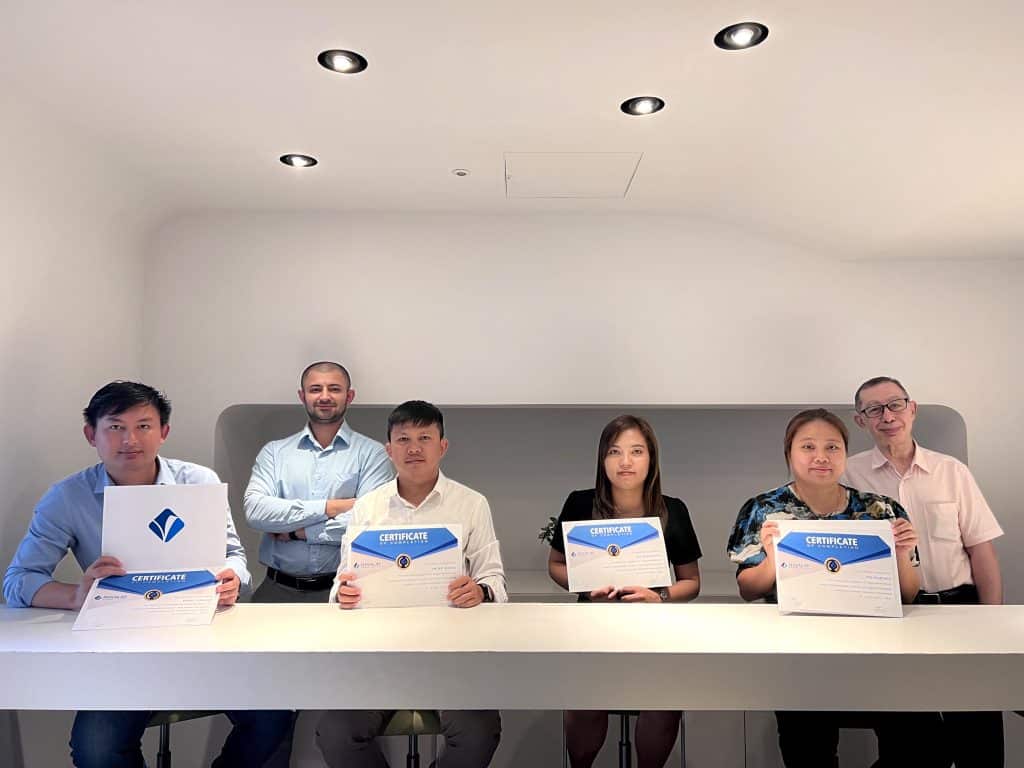
Project Sustainability, Closure, and Impact Evaluation Training conducted in Tokyo, Japan over 3 days during 12-15 June, 2023 to Chief of Bureau, Deputy Chief of Bureau and other members of Ministry of Commerce from Cambodia.
The program addressed the stated gap in the knowledge and skills covering core thematic areas of project sustainability and impact evaluation. It also focused on targeted competencies and skills to help transition passive knowledge into successful practical applications in real-life projects.
Contents covered during the program
- A brief overview of key project concepts
- Understanding project sustainability and its importance
- Project Planning Process and Sustainability
- Integrating Sustainability in the project lifecycle
- Steps to Project Closure and phase-out
- Planning for time and resources for project closure
- Obligations after project closure
- Supporting Project Legacy
- Characteristics of project sustainability
- Project Sustainability Management (PSM)
- Designing PSM plan
- Sustainability in program mission, vision, and values
- Stakeholder Identification
- Results-focused project management
- Adopting results framework
- Developing a system for data collection and analysis
- Using data from improvement
- Communicating results
- Defining success and failure
- Progress measurement and performance evaluation
- Project Financial planning and analysis
- Adaptation to changes
- Project Monitoring and Evaluation
- Indicators of effectiveness, efficiency, and impact
- Project Sustainability Analysis
- Continuous quality improvement
- PSM Checklist
- M&E vs Impact Evaluation
- The results chain and the theory of change
By the end of this program participants were familiar with sustainability analysis integrated into project design to determine its relevancy, viability, and adaptability. As the project nears its end, the exit strategy must be developed with sustainability in mind to ensure the desired impact and justify the effectiveness of the investment.
During Project Sustainability, Closure, and Impact Evaluation Training in Tokyo, participants also explored that sustainability is a fundamental competence of any effective project. It balances different and oftentimes conflicting interests from environmental concerns and societal challenges to financial soundness and affordability. It is particularly important that sustainability underlies every step in the project lifecycle.