Programme Overview
Government officials today operate in an increasingly complex landscape, balancing national interests, donor expectations, private sector demands, and community concerns. Effective negotiation and stakeholder diplomacy are essential for advancing reforms, securing resources, resolving conflicts, and building trust across diverse partners.
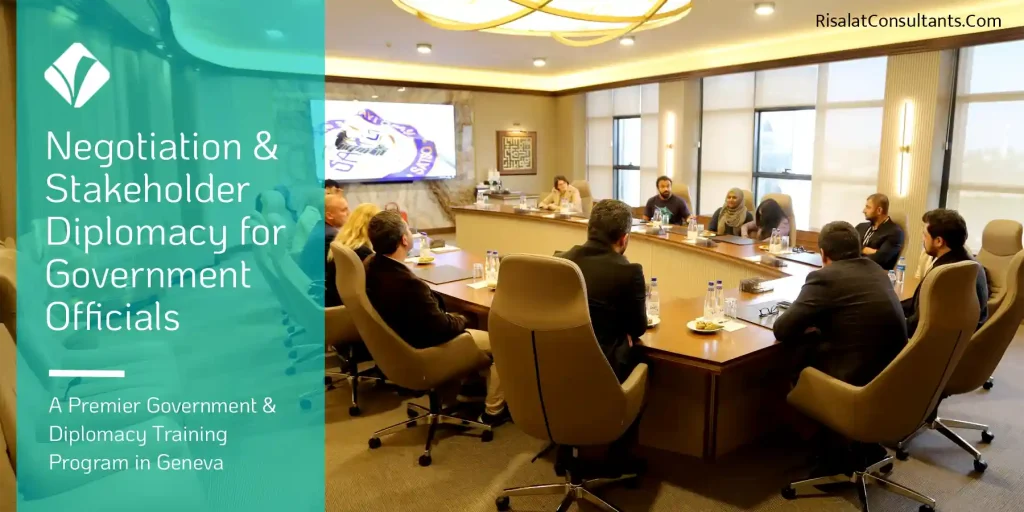
This specialized 5-day programme equips government leaders, PIU teams, and public-sector professionals with the diplomatic negotiation capabilities required to navigate high-stakes discussions, manage multi-stakeholder environments, and represent their institutions with authority and cultural intelligence. Delivered in Geneva, one of the world’s most respected diplomatic capitals. Participants gain exposure to international negotiation practices and learn frameworks rooted in statecraft, diplomacy, and development cooperation.
Target Audience
This Premier Government & Diplomacy Training Programme on Negotiation & Stakeholder Diplomacy for Government Officials is designed for senior professionals who engage in complex negotiations, multi-stakeholder dialogue, and high-level public-sector decision-making, including:
- Government officials and policymakers
- PIU staff in donor-funded projects
- Ministry and agency directors/managers
- Public affairs officers
- Representatives engaged in international cooperation
- Regulatory authorities
- Local government officials working with communities and private firms
Tick what your team needs to be able to do.
Course Objectives
By the end of this high level programme, the participants will be able to:
- Apply modern negotiation frameworks tailored for government and public-sector realities
- Engage donors, contractors, communities, and international partners with diplomacy
- Manage conflict, competing agendas, and sensitive political dynamics
- Build consensus across multi-stakeholder groups
- Conduct negotiations with cultural intelligence, confidence, and strategic clarity
- Represent their ministry or agency with professionalism in national and international forums
Programme Contents
- Principles of negotiation for public officials
- Harvard Model, BATNA, ZOPA, interest vs. position
- Public-sector negotiation constraints & ethics
- Exercise: Internal negotiation within government structures
- Stakeholder mapping and influence analysis
- Tools for building diplomatic relationships
- Strategies for maintaining political neutrality
- Workshop: Stakeholder engagement plan for a real project
- How WB, ADB, EBRD negotiate with governments
- Balancing national priorities with donor requirements
- Negotiating scope, timelines, cost variations & claims
- Simulation: Government–donor–contractor negotiation
- Cultural intelligence (CQ) for international negotiations
- High-context vs low-context negotiation styles
- Conflict de-escalation and mediation techniques
- Role-play: Resolving conflict with external partners
- Facilitating agreement among diverse stakeholders
- Communicating decisions with clarity and authority
- Managing high-pressure or politicized negotiations
- Final negotiation: Multi-stakeholder diplomatic scenario
Full day-by-day contents
First Day – Foundations of Government Negotiation
- Principles of negotiation for public officials
- Harvard Model, BATNA, ZOPA, interest vs. position
- Public-sector negotiation constraints & ethics
- Exercise: Internal negotiation within government structures
Second Day – Stakeholder Diplomacy & Power Dynamics
- Stakeholder mapping and influence analysis
- Tools for building diplomatic relationships
- Strategies for maintaining political neutrality
- Workshop: Stakeholder engagement plan for a real project
Third Day – Negotiating with Donors, Contractors & International Partners
- How WB, ADB, EBRD negotiate with governments
- Balancing national priorities with donor requirements
- Negotiating scope, timelines, cost variations & claims
- Simulation: Government–donor–contractor negotiation
Fourth Day – Cross-Cultural Diplomacy & Conflict Resolution
- Cultural intelligence (CQ) for international negotiations
- High-context vs low-context negotiation styles
- Conflict de-escalation and mediation techniques
- Role-play: Resolving conflict with external partners
Fifth Day – Consensus Building, Strategic Communication & Final Simulation
- Facilitating agreement among diverse stakeholders
- Communicating decisions with clarity and authority
- Managing high-pressure or politicized negotiations
- Final negotiation: Multi-stakeholder diplomatic scenario
Programme Methodology
- Facilitated strategic dialogues based on international negotiation practice.
- Case-based diplomatic analysis using real government and donor scenarios.
- Structured negotiation simulations replicating high-level engagements.
- Collaborative roundtable exercises for peer learning and inter-agency insight.
- Guided reflection sessions to refine personal negotiation style.
- Applied negotiation laboratories addressing realistic, scenario-driven challenges.
Expected Outcome
Key Outcomes of the Negotiation & Stakeholder Diplomacy for Government Officials in Geneva
- Participants develop a practical, donor-aligned Change Management Plan
- Improved leadership and communication during reform rollouts
- Reduced resistance and smoother adoption of donor-introduced reforms
- Strengthened institutional readiness for sustainability and transition
- Enhanced alignment between donor priorities and government ownership
Host Country Profile
Geneva stands as one of the world’s foremost centers for diplomacy, negotiation, and multilateral cooperation. Home to the United Nations, WTO, WHO, ILO, UNHCR, and more than 40 international organizations, it provides an unparalleled environment for government officials seeking to elevate their negotiation capabilities. The city’s culture of neutrality, discretion, and international engagement makes it the ideal location for a programme focused on high-level diplomacy, donor relations, and stakeholder management.
Course Deliverables
Participants will enjoy a full-service experience that covers everything needed before, during, and after the programme:
Before the Programme
- Participant Pre-Assessment to tailor the learning journey to individual and institutional needs
- VIP Airport Reception & Protocol Welcome upon arrival
- Dedicated Concierge Support for travel coordination, accommodation, and local arrangements
- Premium Accommodation with Breakfast provided for the full duration of the programme
- State-Level Welcome Dinner & Diplomatic Networking Reception with fellow participants, distinguished guests, and the Risalat leadership team
- Special Orientation Briefing on Geneva’s diplomatic landscape and programme expectations
During the Programme
- Risalat Executive Training Kit, including premium branded items.
- Daily Lunch & Refreshments in a professional training environment
- Comprehensive Course Manual & Executive Training Materials
- Project-Based Templates, Tools, and Worksheets designed for government negotiations
- Mini Pad / Tablet for accessing digital resources and course materials
- Digital Case Studies, Reading Packs & Reference Materials
- Access to Sample Datasets & Practical Exercises
- Diplomatic Field Visit (UN, WTO, or Geneva-based institution, where applicable)
- Full Access to Training Venue Facilities during the programme
- Exclusive City Tour of Geneva highlighting diplomatic and historical landmarks
- Certificate of Completion awarded during a formal closing session
- Risalat Programme Participation Recognition Award for exceptional engagement and contribution
After the Programme
- Post-Training Advisory & Support for applying negotiation and diplomacy skills in real government contexts
- Programme Report & Recommendations summarizing key insights, participant performance, and practical next steps
- Access to Online Resources including follow-up readings, negotiation templates, and updated materials
- Continued Engagement Opportunities through alumni circles, expert consultations, and invitations to advanced diplomatic programmes
£7,850 per participant · invoice and bank transfer · groups of 5 or more receive a discount
Five or more from one organisation: ask for the group rate on the invoice request.
Ten or more: an in-house version for your institution may cost less per person. Ask for an in-house quote.
Registration closes in 5 days (23 Oct 2026)