Programme Overview
Conflict rarely begins with a formal dispute. This Conflict Management Training Stockholm programme addresses the situations that often come first: competing priorities, unclear expectations, resource constraints, difficult relationships, organizational change, contractual pressures and negotiations that fail to address underlying interests.
The Strategic Negotiation, Conflict Management & Dispute Resolution Training equips professionals with practical frameworks for managing these situations before they damage relationships, performance, projects or institutional outcomes. As a practical conflict management training in Stockholm, the programme focuses on challenges professionals encounter in real organizational environments.
Participants work through realistic negotiation and conflict scenarios involving teams, management, partners, suppliers, contractors, clients and other stakeholders. The Conflict Management Training Stockholm approach emphasizes practical application – how to diagnose conflict, prepare negotiation strategies, manage power dynamics, communicate under pressure, deal with difficult counterparts and move from entrenched positions toward workable agreements.
The emphasis is not simply on “winning” negotiations. Participants develop stronger approaches to conflict management, negotiation and dispute resolution while learning to achieve defensible outcomes that protect relationships, institutional interests, implementation feasibility and long-term cooperation.
Explore This Programme
Interactive overview
Tick what your team needs to be able to do.
Conflict Management Training for Real Organizational Challenges
This programme is particularly relevant when organizations face situations such as:
- Teams or departments repeatedly competing over priorities, authority, budgets or resources
- Negotiations becoming positional, personal or unnecessarily confrontational
- Managers avoiding difficult conversations until problems escalate
- Projects being delayed by disagreements among partners, contractors, communities or other stakeholders
- Procurement, commercial or contract discussions reaching deadlock
- Cross-cultural communication creating misunderstanding, mistrust or inconsistent expectations
- Managers needing to influence and negotiate with people over whom they have little formal authority
- Agreements being reached but failing during implementation because responsibilities or expectations remain unclear
- Internal disputes consuming management time and affecting morale, productivity or organizational performance
Participants are encouraged to connect these challenges to their own professional environment throughout the programme.
Common Negotiation & Conflict Management Challenges
“Our teams keep returning to the same disagreements. Why aren’t they being resolved?”
Recurring conflict often means the visible disagreement is not the underlying issue. Participants learn to identify interests, incentives, relationship dynamics and structural causes before choosing how to intervene.
“How do we negotiate firmly without damaging an important relationship?”
The programme develops techniques for protecting organizational interests while preserving trust, identifying trade-offs and creating outcomes that remain workable after the negotiation ends.
“What should we do when the other side refuses to compromise?”
Participants learn how to assess BATNA, leverage, reservation points and underlying interests, respond to positional tactics and explore alternative routes when negotiations reach deadlock.
“How can managers handle difficult conversations before they become formal disputes?”
Participants practise structured conversations, active listening, reframing and de-escalation techniques for addressing sensitive issues earlier and more constructively.
“How do we manage conflict involving several departments, partners or stakeholders?”
The training introduces stakeholder and interest mapping, multi-party negotiation and facilitated approaches for situations where objectives, authority and expectations differ.
“Our agreements look good on paper but problems return during implementation. Why?”
Reaching agreement is only part of the process. Participants learn to translate negotiated outcomes into clear responsibilities, expectations, milestones and follow-through.
“When should we negotiate, and when is mediation or another approach more appropriate?”
The programme helps participants distinguish between direct negotiation, facilitated negotiation, mediation and other dispute-resolution approaches and understand when each may be appropriate.
“Can we work on an actual challenge from our organization?”
Yes. Participants are encouraged to bring a current or recent negotiation or conflict situation and apply the programme’s frameworks to develop a practical response strategy.
Conflict Management Training Objectives
- Build a structured approach to diagnosing and managing organizational conflict
- Strengthen preparation and decision-making before important negotiations begin
- Develop practical skills for creating value while protecting organizational interests
- Improve communication, questioning, listening and de-escalation in difficult situations
- Strengthen participants’ ability to negotiate across organizational, professional and cultural boundaries
- Equip participants to choose appropriately between negotiation, facilitated negotiation, mediation and other dispute-resolution approaches
- Translate negotiated agreements into clear, implementable commitments
Learning Outcomes
By the end of this Conflict Management Training, participants will be able to:
- Diagnose the underlying interests, triggers and dynamics behind organizational conflict
- Distinguish positions from interests and identify potential areas of agreement
- Prepare systematically for complex and high-stakes negotiations
- Assess BATNA, alternatives, negotiation leverage, risks and acceptable outcomes
- Apply distributive and integrative negotiation strategies appropriately
- Use anchoring, concessions, package offers and trade-offs more deliberately
- Manage difficult, aggressive, resistant or highly positional counterparts
- Use questioning, active listening and reframing to uncover information and reduce misunderstanding
- De-escalate emotionally charged workplace and stakeholder disputes
- Navigate team, multi-party and cross-cultural negotiations
- Recognize when mediation or another dispute-resolution mechanism may be more appropriate
- Turn negotiated agreements into clear responsibilities, actions and follow-through
Who Should Attend
The Conflict Management Training Stockholm programme is particularly relevant to professionals who regularly negotiate, manage competing interests or resolve disagreements across teams and stakeholders.
- Senior Managers, Executives and Department Heads
- Government Officials and Public-Sector Managers
- HR, People Management and Organizational Development Professionals
- Project and Programme Managers
- Procurement, Supply Chain and Contract Management Professionals
- Legal, Compliance, Governance and Risk Professionals
- Partnership, Stakeholder and External Relations Managers
- Development, Humanitarian and Donor-Funded Project Professionals
- Team Leaders, Supervisors and Professionals preparing for management responsibilities
Conflict Management Training Stockholm | Five-Day Programme
Day 1 – Understanding Conflict Before Trying to Resolve It
- Conflict in organizational life: when disagreement becomes a performance issue
- Common sources of workplace, project and stakeholder conflict
- Constructive versus destructive conflict
- Conflict escalation: triggers, patterns and early intervention
- Positions, interests, needs and underlying concerns
- Conflict-management styles and when each approach helps or harms
- Stakeholder and relationship mapping
- Diagnosing a conflict before choosing an intervention
- Practical exercise: Conflict Diagnostic Map
Day 2 – Preparing for High-Stakes Negotiations
- Negotiation as a strategic decision process
- Defining objectives, priorities and acceptable outcomes
- BATNA: understanding the best alternative to a negotiated agreement
- Reservation points, negotiation range and walk-away decisions
- Assessing the other side’s interests, constraints and alternatives
- Sources of negotiation leverage and how power shifts
- Information strategy: what to ask, reveal, protect and test
- Distributive versus integrative negotiation
- Creating a negotiation plan before entering the room
- Practical exercise: Negotiation Preparation Canvas
Day 3 – Negotiating Under Pressure
- Creating value and claiming value without destroying relationships
- Anchoring, offers, counteroffers and concession strategy
- Package deals, trade-offs and multiple equivalent offers
- Questioning techniques that reveal interests and constraints
- Active listening, reframing and summarizing
- Managing emotion without losing strategic focus
- Responding to pressure, ultimatums and difficult tactics
- Working through impasse and deadlock
- Ethical influence and maintaining credibility
- Simulation: High-Stakes Organizational Negotiation
Day 4 – Resolving Difficult Organizational Disputes
- Difficult conversations: addressing issues without escalating personalities
- De-escalation techniques for emotionally charged situations
- Managing internal conflict between teams, managers and functions
- Negotiating with suppliers, contractors, partners and external stakeholders
- Multi-party and team negotiations
- Negotiation, mediation, arbitration and litigation: understanding the differences
- Mediation as facilitated negotiation
- Core mediator techniques: framing, issue identification, option generation and reality testing
- When managers should mediate, and when they should not
- Practical simulation: Facilitated Dispute Resolution
Day 5 – Cross-Cultural Negotiation & Organizational Application
- How culture can shape expectations, communication and decision-making
- Avoiding stereotypes while preparing for international negotiations
- Building trust across institutional and cultural boundaries
- Negotiating virtually and across distributed teams
- Maintaining relationships after difficult negotiations
- From agreement to implementation: responsibilities, milestones and accountability
- Complex team negotiation simulation
- Lessons learned and structured negotiation debrief
- Individual application plan: applying the tools to a real professional challenge
Practical Negotiation & Conflict Management Methodology
The programme is highly interactive and application-oriented. Concepts are introduced only to the extent needed to support better professional decisions and behavior. Participants learn through facilitated discussion, realistic cases, structured tools and repeated practice.
- Short expert-led inputs and facilitated discussion
- Organizational and project-based case studies
- Individual and team negotiation simulations
- Role plays and difficult-conversation exercises
- Conflict-style and negotiation self-assessments
- Peer learning and structured debriefs
- Practical worksheets and decision tools
- Application of concepts to participants’ own organizational situations
Bring a Real Challenge
Participants are encouraged to bring a current or recent negotiation, workplace conflict, stakeholder disagreement or contractual challenge from their professional environment. During the programme, they will have opportunities to analyze the situation using the frameworks introduced and develop a practical strategy for addressing it. Sensitive cases can be anonymized and discussed without identifying individuals or organizations.
Practical Tools Participants Take Back
Participants work with practical tools that can be reused after the programme, including:
- Negotiation Preparation Canvas
- Conflict Diagnostic Framework
- Stakeholder & Interest Map
- BATNA and Negotiation Range Worksheet
- Negotiation Risk & Leverage Assessment
- Difficult Conversation Planner
- Conflict Escalation Assessment
- Negotiation Debrief Template
- Agreement-to-Implementation Checklist
- Personal Negotiation & Conflict Action Plan
Organizational Value of Conflict Management Training
The programme is designed not only to develop individual negotiation skills but also to strengthen how organizations handle disagreement, stakeholder relationships and difficult decisions. Organizations sponsoring participants can use the programme to build a more consistent approach to negotiation preparation, conflict escalation, cross-functional collaboration and agreement implementation.
International Learning Experience
As an international conflict management training in Stockholm , the programme combines professional learning with opportunities for international exposure and peer exchange.The final format is confirmed for each cohort and may vary according to participant profile and institutional access.
Customized & Exclusive Group Delivery
Organizations may request an exclusive version of this programme for their own team. Risalat can adapt the cases, simulations, sector examples and learning objectives to the organization’s actual operating environment. Customized delivery can be arranged in Stockholm, another international destination, at the client’s premises, or online.
For institutional groups, the programme can also be integrated with relevant study visits, benchmarking meetings, executive sessions or organization-specific problem-solving workshops.
Suggested Customization Themes
- Negotiation and conflict management for government institutions
- Procurement and contract negotiation
- Project and contractor dispute management
- Leadership and difficult workplace conversations
- Labor-management and HR conflict
- Stakeholder and community negotiation
- Multi-agency and interdepartmental negotiation
- Cross-cultural and international negotiation
- Negotiation for donor-funded and development projects
Assessment & Certification
Learning is reinforced through participation in simulations, case analysis, practical exercises and an individual application plan. Participants who successfully complete the programme receive a Certificate of Completion from Risalat Consultants International.
Further Reading
For participants who want to explore the academic foundations of the negotiation frameworks used in this programme, RCI recommends the Programme on Negotiation at Harvard Law School, a leading academic consortium (Harvard, MIT and Tufts) publishing free negotiation research, teaching case studies and the Negotiation Journal.
Course Deliverables
Participants will enjoy a full-service experience that covers everything needed before, during, and after the programme:
- Participant Pre-Assessment to ensure effective preparation
- Complimentary Visa Support & Advisory (E-visa applications are fully processed by our team)
- Airport Pickup & Welcome Assistance
- Accommodation with Breakfast for the full duration
- Welcome Dinner for networking and connecting with fellow Participants & the Risalat Team
During the Programme
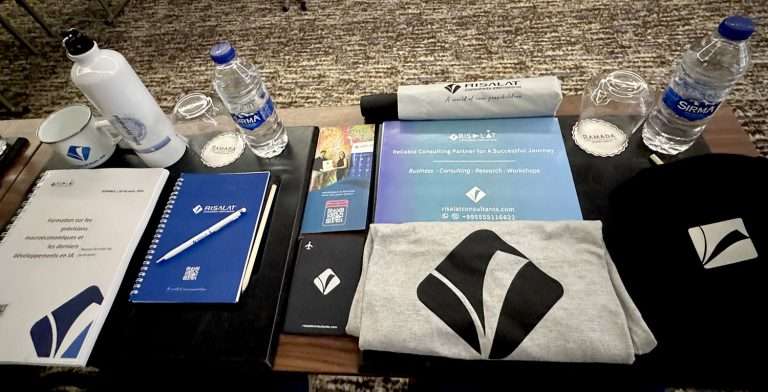
- Risalat Training Kit, including: bag, water bottle, coffee mug, t-shirt, cap, passport cover, pens, notebook, magnet, keychain
- Lunch Provided Daily during training days
- Comprehensive Course Manual & Training Materials
- Project-Based Templates, Tools, and Worksheets
- Mini Pad / Tablet for convenient access to digital resources
- Digital Case Studies, Reading Packs & Reference Materials
- Access to Sample Datasets & Practical Exercises
- Field Visit (where applicable)
- Complimentary Refreshments & Full Training Venue Facilities
- Access to Online Learning Resources
- Entertaining City Tour
After the Programme
- Certificate of Completion
- Risalat Programme Participation Recognition Award
- Post-Training Support & Follow-Up Guidance
- Programme Report