Programme Introduction
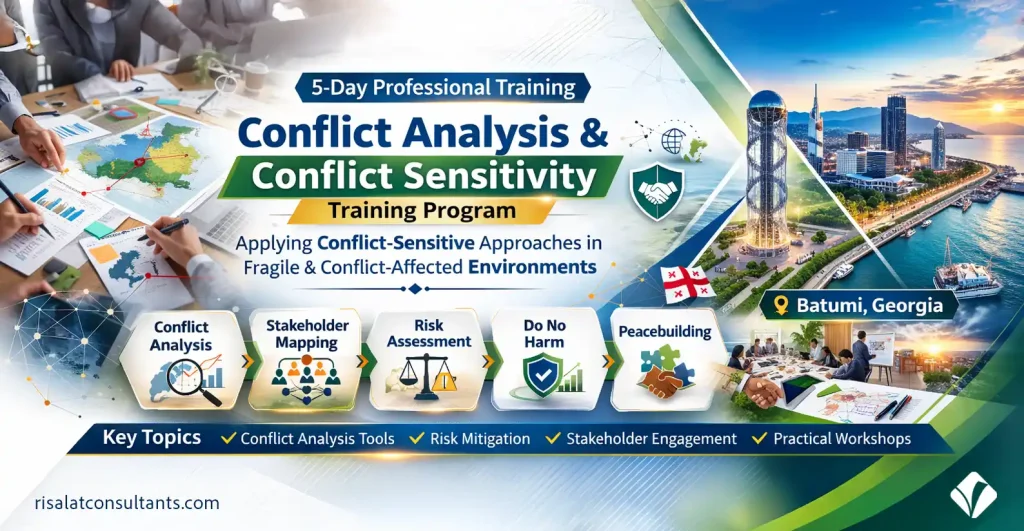
Conflict Analysis & Conflict Sensitivity Training focuses on strengthening the analytical and operational capacities required to design and implement programmes in fragile, conflict-affected, and politically sensitive environments. In many development, humanitarian, and governance contexts, projects operate in complex environments where social, political, and economic tensions influence programme outcomes. Understanding conflict dynamics and applying conflict-sensitive approaches are therefore essential to ensure that interventions do not unintentionally exacerbate tensions.
This Conflict Analysis & Conflict Sensitivity Training equips professionals with practical tools to assess conflict drivers, map key actors, and integrate conflict-sensitive approaches into project planning and implementation. Participants will explore analytical frameworks used in development and humanitarian programming to understand conflict dynamics, stakeholder relationships, and structural drivers of instability.
The programme introduces practical conflict analysis tools such as conflict mapping, stakeholder analysis, conflict tree analysis, and context mapping techniques used by international organizations. Participants will learn how to interpret conflict dynamics and apply “Do No Harm” principles to ensure that development or humanitarian interventions contribute positively to social stability and peacebuilding.
The training emphasizes applied learning through case studies, group exercises, and scenario-based simulations that allow participants to practice conflict analysis techniques and integrate conflict-sensitive strategies within project management processes.
Organizations working in fragile and conflict-affected environments must integrate conflict-sensitive planning into development interventions. Professionals seeking broader approaches to peacebuilding and conflict resolution may also explore our Conflict Management & Peacebuilding Course in Istanbul.
This programme reflects internationally recognized conflict sensitivity and peacebuilding approaches widely used in development cooperation, humanitarian programming, governance reform, and community development initiatives.
Target Audience for Conflict Analysis & Conflict Sensitivity Training
This programme is designed for professionals working in development, humanitarian, governance, and community-based programmes operating in fragile or conflict-sensitive environments, including:
- Development and Humanitarian Programme Managers
- Conflict Prevention and Peacebuilding Specialists
- Project and Programme Officers
- NGO and International Organization Staff
- Monitoring and Evaluation Specialists
- Government Officials involved in community development programmes
- Policy Advisors and Governance Experts
- Field Coordinators and Community Development Practitioners
- Researchers working on conflict and social stability
Tick what your team needs to be able to do.
Programme Objectives of Conflict Analysis & Conflict Sensitivity Training
Upon successful completion of this training, participants will be able to:
- Understand key concepts and frameworks used in conflict analysis
- Identify structural drivers, triggers, and dynamics of conflict
- Map key stakeholders and actors influencing conflict situations
- Apply conflict analysis tools to development and humanitarian programmes
- Integrate conflict sensitivity approaches within programme design and implementation
- Apply “Do No Harm” principles in fragile and conflict-affected contexts
- Strengthen risk analysis and conflict mitigation strategies
- Improve programme effectiveness in conflict-sensitive environments
Programme Structure & Content – Conflict Analysis Framework
- Introduction to conflict theory and conflict dynamics
- Understanding structural and proximate causes of conflict
- Conflict drivers and conflict triggers
- Understanding fragility and political economy of conflict
- Actors and stakeholder analysis
- Conflict Tree Analysis
- Conflict Mapping Techniques
- Conflict Iceberg Model
- Conflict Escalation Framework
- Stakeholder and power analysis
- Gender dimensions in conflict analysis
- Understanding conflict sensitivity in development programming
- Dividers and connectors analysis
- Identifying unintended programme impacts
- Integrating conflict-sensitive approaches into project planning
- Peace and Conflict Impact Assessment (PCIA)
- Conflict-sensitive programme design
- Conflict risk assessment in development projects
- Stakeholder engagement strategies in fragile contexts
- Conflict-sensitive budgeting and resource allocation
- Adaptive programming in dynamic conflict environments
- Conflict-sensitive monitoring and evaluation
- Early warning indicators and conflict monitoring systems
- Managing operational risks in fragile environments
- Community engagement and dialogue mechanisms
- Institutional strategies for conflict-sensitive programming
Full day-by-day contents
First Day | Foundations of Conflict Analysis
- Introduction to conflict theory and conflict dynamics
- Understanding structural and proximate causes of conflict
- Conflict drivers and conflict triggers
- Understanding fragility and political economy of conflict
- Actors and stakeholder analysis
Applied Exercise: Conflict context mapping
Second Day | Conflict Analysis Tools and Frameworks
- Conflict Tree Analysis
- Conflict Mapping Techniques
- Conflict Iceberg Model
- Conflict Escalation Framework
- Stakeholder and power analysis
- Gender dimensions in conflict analysis
Workshop: Conflict analysis tool application
Conflict-sensitive development also requires strong monitoring and evaluation systems that assess how programmes influence local dynamics and community outcomes. Participants interested in strengthening results measurement approaches may also explore our Monitoring & Evaluation for Community Development Projects Training in Taiwan.
Third Day | Conflict Sensitivity and the “Do No Harm” Approach
- Understanding conflict sensitivity in development programming
- Dividers and connectors analysis
- Identifying unintended programme impacts
- Integrating conflict-sensitive approaches into project planning
- Peace and Conflict Impact Assessment (PCIA)
Simulation: Do No Harm programming exercise
A relevant case study on applying conflict sensitivity during public health emergencies, developed by CDA, provides practical guidance from the COVID-19 pandemic and other crises.
Integrating conflict-sensitive approaches into project planning
Fourth Day | Integrating Conflict Analysis into Project Design
- Conflict-sensitive programme design
- Conflict risk assessment in development projects
- Stakeholder engagement strategies in fragile contexts
- Conflict-sensitive budgeting and resource allocation
- Adaptive programming in dynamic conflict environments
Practical Exercise: Conflict-sensitive project design
Fifth Day | Monitoring Conflict Dynamics and Programme Impact
- Conflict-sensitive monitoring and evaluation
- Early warning indicators and conflict monitoring systems
- Managing operational risks in fragile environments
- Community engagement and dialogue mechanisms
- Institutional strategies for conflict-sensitive programming
Capstone Exercise: Conflict-sensitive action planning
Training Methodology – Conflict Analysis Training Approach
This Conflict Analysis & Conflict Sensitivity Training uses an applied learning methodology combining:
- Expert-led technical sessions
- Real conflict case studies from development and humanitarian contexts
- Scenario-based group exercises
- Conflict mapping and stakeholder analysis workshops
- Practical simulations and role-play exercises
- Peer discussions and collaborative problem-solving
Participants leave with practical analytical tools and conflict-sensitive programming strategies that can be applied within their organizations and field operations.
Expected Outcomes of Conflict Analysis & Conflict Sensitivity Training
Through this training, participants will strengthen their ability to analyze conflict dynamics and integrate conflict-sensitive approaches into development and humanitarian programming.
Participants will be able to:
- Conduct structured conflict analysis in fragile environments
- Identify conflict drivers and assess political economy dynamics
- Apply conflict-sensitive planning within project design
- Strengthen stakeholder engagement strategies
- Reduce risks of unintended negative programme impacts
- Integrate conflict-sensitive monitoring and evaluation practices
- Improve programme effectiveness in fragile and conflict-affected contexts
Participants return equipped to design programmes that are more responsive to local dynamics and contribute to stability, resilience, and sustainable development outcomes.
Risalat Consultants has delivered specialized training programmes on conflict analysis and sensitivity for development practitioners and institutional partners. Learn more about previous implementations in our Conflict Analysis & Sensitivity Training Portfolio.
£3,525 per participant · invoice and bank transfer · groups of 5 or more receive a discount
Five or more from one organisation: ask for the group rate on the invoice request.
Ten or more: an in-house version for your institution may cost less per person. Ask for an in-house quote.
Registration closes in 5 days (23 Oct 2026)
Institutional Application
Participants will return with practical conflict analysis frameworks, stakeholder mapping tools, and conflict-sensitive programming strategies that can be directly applied within development and humanitarian projects.
This Conflict Analysis & Conflict Sensitivity Training supports organizations in strengthening risk-aware programme design and ensuring that development interventions contribute to stability, resilience, and social cohesion in fragile contexts.
Related capacity development initiatives are also available across our Humanitarian, Governance, and Community Development training portfolio, supporting institutions working in complex and politically sensitive operating environments.
Professionals interested in strengthening leadership and decision-making capabilities in complex environments may also explore our Dynamics of Leadership Workshop in Skopje, which focuses on leadership strategies for navigating organizational and stakeholder challenges.
Host Country Profile – Batumi, Georgia
Batumi, located on the Black Sea coast of Georgia, has emerged as a dynamic regional destination for international training, professional conferences, and development dialogue. The city combines modern infrastructure with a growing economic environment, making it an attractive setting for global learning events and professional capacity-building programmes.
Batumi’s strategic position connecting Europe, Central Asia, and the wider Caucasus region provides a meaningful context for discussions on governance, regional cooperation, and conflict-sensitive development approaches. Hosting this programme in Batumi allows participants to exchange international perspectives while learning in an engaging coastal environment that supports professional networking and knowledge exchange.
Course Deliverables
Before the Programme
- Pre-training needs assessment
- Programme briefing and preparatory materials
- Conflict analysis readiness checklist
- Logistics and participation guidance
During the Programme
- Welcome networking session with facilitators and participants
- Accommodation with daily breakfast
- Comprehensive conflict analysis training manual
- Conflict analysis toolkits and templates
- Case studies and applied simulations
- Training materials and stationery
- Access to training facilities and learning resources
- Draft conflict-sensitive programme action plans
- Mini Pad / Tablet for digital materials (participants keep it)
- Daily lunch and refreshments
- Certificate of Completion
- Programme Participation Recognition Award
After the Programme
- Post-training reference materials
- Conflict analysis tools and templates
- Guidance on integrating conflict sensitivity into projects
- Recommendations for institutional conflict risk management
- Continued engagement through follow-up professional support
To maintain a focused and high-quality learning environment, participation in this programme is limited to a defined cohort size. Early confirmation is recommended to secure placement.
This Conflict Analysis & Conflict Sensitivity Training may also be delivered on alternative dates or customized to align with specific institutional mandates, sector priorities, or regional operational contexts.
Organizations seeking tailored delivery formats or in-country implementation are welcome to contact Risalat Consultants International to discuss programme adaptation.