أبرز الخلاصات
- The climate risks facing Pacific islands. Low-lying atolls and coastal settlements face higher baseline sea levels, erosion, saltwater intrusion and extreme sea-level events.
- Water, food and health security. Salinisation, drought and intense rainfall can undermine rainwater storage, groundwater and farming.
- Adaptation choices and trade-offs. Mangroves, reefs and watershed restoration can provide multiple benefits, but effectiveness depends on site conditions, ecological health and community rights.
- Financing and institutional readiness. A concept note needs a credible climate rationale, baseline, alternatives, costs and measurable outcomes.
- Public agencies and donor-funded projects. Transport, water, agriculture and health PIUs should incorporate climate risk at design, procurement and supervision stages, not only in an environmental annex.
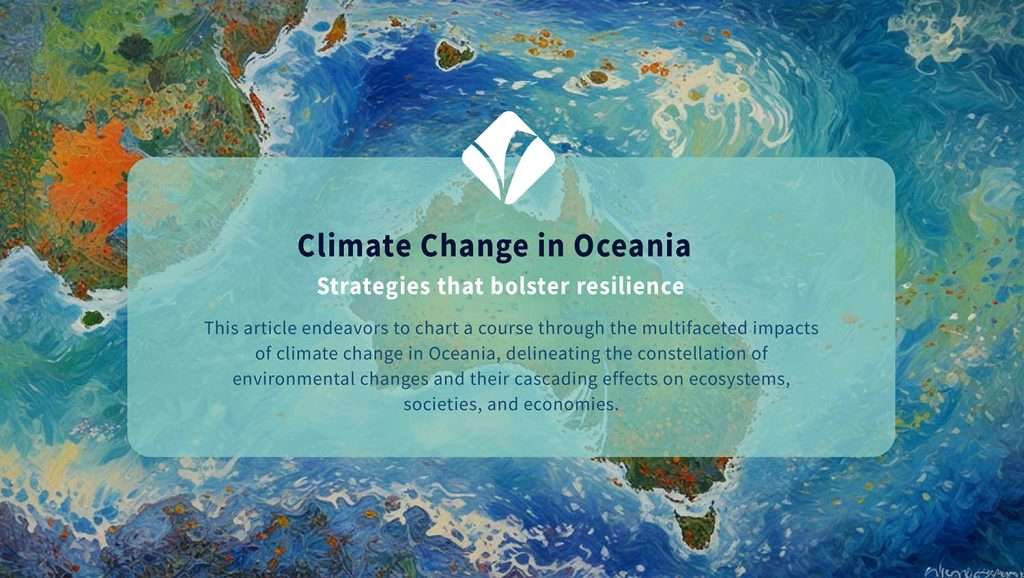
In short: Climate change in oceania is best understood through practical decisions, institutional responsibilities and evidence of results. This guide explains the mechanisms, trade-offs and safeguards that determine whether policies and projects deliver lasting benefits. It updates the earlier Risalat article without treating historical forecasts or unsourced figures as current facts.
Climate Change in Oceania: Risks and Resilience Strategies is not a single solution or a universal recipe. Results depend on the context, the capabilities of implementing organisations and the people affected. The sections below distinguish what is established, what must be tested locally and what project teams can do before making irreversible commitments.
The climate risks facing Pacific islands
Sea-level rise and coastal exposure
Low-lying atolls and coastal settlements face higher baseline sea levels, erosion, saltwater intrusion and extreme sea-level events. Exposure differs sharply between volcanic islands, reef islands and large continental states.
Practical example: Map essential roads, clinics, schools and water sources against locally relevant flood scenarios rather than applying one regional elevation threshold.
A useful first step is to distinguish the observable condition from its presumed cause. Teams should document who supplied the evidence, which time period it covers and what alternative explanation could produce the same pattern. This makes recommendations more defensible when circumstances change.
Before deciding, identify the decision-maker, the affected users and the cost of being wrong. A small pilot or a review of comparable cases is often less costly than adopting a permanent system on the strength of a presentation.
Ocean warming and ecosystems
Marine heatwaves, coral bleaching and ocean acidification threaten reefs and fisheries. Damage to reefs can affect livelihoods, biodiversity and the natural protection that coastal communities receive.
Practical example: A fisheries agency can combine reef monitoring with catch records and community observations to identify where livelihood support is needed.
Implementation should begin with a baseline and a description of the current workflow. Without that baseline, a later improvement may simply reflect different demand, a temporary funding increase or a change in reporting rather than the intervention itself.
Responsibilities should be written in operational terms: who collects the information, who approves an exception and who has authority to stop unsafe or ineffective work. The answer should be visible to staff, suppliers and oversight bodies.
Water, food and health security
Freshwater and agriculture
Salinisation, drought and intense rainfall can undermine rainwater storage, groundwater and farming. The right response depends on island size, geology and maintenance capacity.
Practical example: Compare rainwater harvesting, leakage reduction and groundwater protection before funding expensive desalination that lacks a sustainable operating budget.
Decision-makers need to consider both immediate benefits and downstream obligations. Capital spending is only one part of the cost; training, maintenance, replacement, accessibility and grievance handling may determine whether the investment remains useful.
A credible options appraisal includes a lower-cost alternative and a scenario in which expected demand or performance fails to materialise. Publishing the assumptions makes it possible to revise the plan without hiding the original uncertainty.
Disasters and essential services
Cyclones and floods can interrupt health care, education, ports and power supplies. Recovery costs rise when the same vulnerable asset is rebuilt without considering future conditions.
Practical example: A ministry can require climate-informed design standards and maintenance plans for every rehabilitated school and clinic.
Evidence should be interpreted at the right level. An improvement for one facility, neighbourhood or organisation may not transfer to another with different infrastructure, staffing, incentives or exposure to risk.
Project managers can test transferability by listing the conditions that made an earlier intervention work and checking whether those conditions exist locally. Where they do not, adapt the design rather than copy the headline result.
Adaptation choices and trade-offs
Ecosystem-based adaptation
Mangroves, reefs and watershed restoration can provide multiple benefits, but effectiveness depends on site conditions, ecological health and community rights. Planting alone is not evidence of reduced risk.
Practical example: Compare a mangrove restoration site with a nearby control location and monitor survival, shoreline change and local use.
Stakeholder engagement is most useful before major choices are locked in. Consultation can uncover operating constraints, informal practices and distributional effects that are absent from administrative data.
Record not only how many people were consulted but which concerns changed the design. Where views conflict, explain the trade-off and the appeal or complaints mechanism in language that affected people can understand.
Protection, accommodation and relocation
Seawalls, elevated buildings, land-use changes and planned relocation carry different costs and social consequences. Relocation can affect customary land, cultural heritage and livelihoods, so it must not be treated as an engineering decision alone.
Practical example: Conduct inclusive consultations and document land tenure, host-community services and long-term livelihood options before proposing relocation.
A useful first step is to distinguish the observable condition from its presumed cause. Teams should document who supplied the evidence, which time period it covers and what alternative explanation could produce the same pattern. This makes recommendations more defensible when circumstances change.
Before deciding, identify the decision-maker, the affected users and the cost of being wrong. A small pilot or a review of comparable cases is often less costly than adopting a permanent system on the strength of a presentation.
Decision checklist:
- Define the problem and the people affected.
- Confirm the baseline and its limitations.
- Compare at least two feasible options.
- Assign a named owner to each major risk.
- Specify a measurable outcome and review date.
Financing and institutional readiness
Turning adaptation plans into investable projects
A concept note needs a credible climate rationale, baseline, alternatives, costs and measurable outcomes. Weak coordination between environment and finance ministries can delay otherwise promising proposals.
Practical example: Use one project-preparation checklist for climate data, economic appraisal, safeguards, procurement and operating responsibilities.
Implementation should begin with a baseline and a description of the current workflow. Without that baseline, a later improvement may simply reflect different demand, a temporary funding increase or a change in reporting rather than the intervention itself.
Responsibilities should be written in operational terms: who collects the information, who approves an exception and who has authority to stop unsafe or ineffective work. The answer should be visible to staff, suppliers and oversight bodies.
Local leadership and climate information
Community knowledge and scientific projections serve different purposes and should inform one another. A national forecast that cannot be translated into a local action may have little practical value.
Practical example: Test warnings with villages and schools, measuring whether people understand the message and can act in time.
Decision-makers need to consider both immediate benefits and downstream obligations. Capital spending is only one part of the cost; training, maintenance, replacement, accessibility and grievance handling may determine whether the investment remains useful.
A credible options appraisal includes a lower-cost alternative and a scenario in which expected demand or performance fails to materialise. Publishing the assumptions makes it possible to revise the plan without hiding the original uncertainty.
الهيئات العامة والمشاريع الممولة من الجهات المانحة
Integrating adaptation into portfolios
Transport, water, agriculture and health PIUs should incorporate climate risk at design, procurement and supervision stages, not only in an environmental annex.
Practical example: Include climate resilience milestones in contract specifications and review them during site inspections.
Evidence should be interpreted at the right level. An improvement for one facility, neighbourhood or organisation may not transfer to another with different infrastructure, staffing, incentives or exposure to risk.
Project managers can test transferability by listing the conditions that made an earlier intervention work and checking whether those conditions exist locally. Where they do not, adapt the design rather than copy the headline result.
Tracking resilience outcomes
Count reduced exposure, service continuity and adaptive capacity, not just kilometres of seawall or numbers trained. Establish baselines and avoid claiming that one project prevents every future loss.
Practical example: A donor project can monitor days of water interruption after storms and the proportion of critical facilities with tested continuity plans.
Stakeholder engagement is most useful before major choices are locked in. Consultation can uncover operating constraints, informal practices and distributional effects that are absent from administrative data.
Record not only how many people were consulted but which concerns changed the design. Where views conflict, explain the trade-off and the appeal or complaints mechanism in language that affected people can understand.
Worked implementation exercise: Assemble a cross-functional group with a service owner, technical specialist, finance representative and one person able to speak for intended users. Give them a realistic constraint: limited funding, incomplete information and a decision due within one month. Ask each participant to propose one action, one alternative and one reason their preferred option might fail. Agree on the smallest safe test, its budget, the evidence that would justify expansion and the condition that would trigger suspension. At the next review, separate what the team actually observed from assumptions and opinions. Document the reasons for changing course. This exercise is deliberately more demanding than a general awareness workshop because it tests decision rights, evidence quality, operational feasibility and the ability to respond to adverse findings. It can be adapted to an individual facility or a multi-agency programme without pretending that every context has the same constraints.
For ministries and project implementation units, the next step is to convert these principles into a short action plan. Identify one bottleneck, the evidence needed to verify it, the responsible official, the first corrective action and the date on which management will review the result. The Risalat Diagnostic Centre can support a structured initial discussion, while the programme categories provide routes for developing staff capability. Organisations requiring tailored support can request a proposal.
Selected original sources for further verification:
الأسئلة الشائعة
What does climate change in Oceania mean in practice?
It means making context-specific choices based on reliable information, clear responsibilities and measurable outcomes rather than relying on a single technology or policy.
How should an organisation begin work on climate change in Oceania?
Establish a baseline, consult affected groups, compare feasible options and assign a decision owner before spending significant resources.
What are the main risks to manage?
Common risks include weak data, insufficient capability, hidden operating costs, unequal effects and lack of accountability for corrective action.
How can project teams measure results?
Use a small set of baseline and follow-up indicators, verify records independently where practical and report limitations alongside achievements.
How can public agencies apply these lessons?
Integrate the approach into procurement, budgets, safeguards, reporting and long-term operations, with named owners and periodic management review.
هل تعرف أشخاصاً ينبغي أن يقرؤوا هذا؟ كن سفيراً لـ Risalat أو اكتب مقالاً مع Risalat باسمك الشخصي.
شركاء في نجاح المشاريع منذ 2011، نقدم التشخيص والدعم الاستشاري والتعلم التطبيقي للوزارات والهيئات العامة وفرق المشاريع.
هل تحتاج إلى مساعدة في تطبيق ذلك عملياً؟
ابدأ بتشخيص مجاني مدته 10 دقائق أو تحدث إلى خبرائنا.