حقائق رئيسية
- المواعيد
- 18–22 يناير 2027 (5 أيام)
- المكان
- Shared on registration, Dubai, United Arab Emirates
- الرسوم لكل مشارك
- £3,630 (GBP)
- الدفع
- بالفاتورة والتحويل المصرفي
- إغلاق التسجيل
- 9 ديسمبر 2026
- الصيغة
- 5-day short course: a practical capacity-building programme for government, NGO and project teams in Dubai
- الشهادة
- شهادة إتمام
- الخيار المؤسسي
- نفّذه لفريقك، في المواعيد التي تناسبك
في هذه الصفحة 15 قسماً
نظرة عامة على البرنامج
Electricity distribution companies sit at the point where a power sector either recovers its costs or passes them on to the national budget. Every unmetered connection, unread meter, uncollected bill and unreconciled power purchase invoice ends up as a shortfall that someone must finance. In Ghana and Zambia this question now shapes the fiscal position as much as the energy agenda.
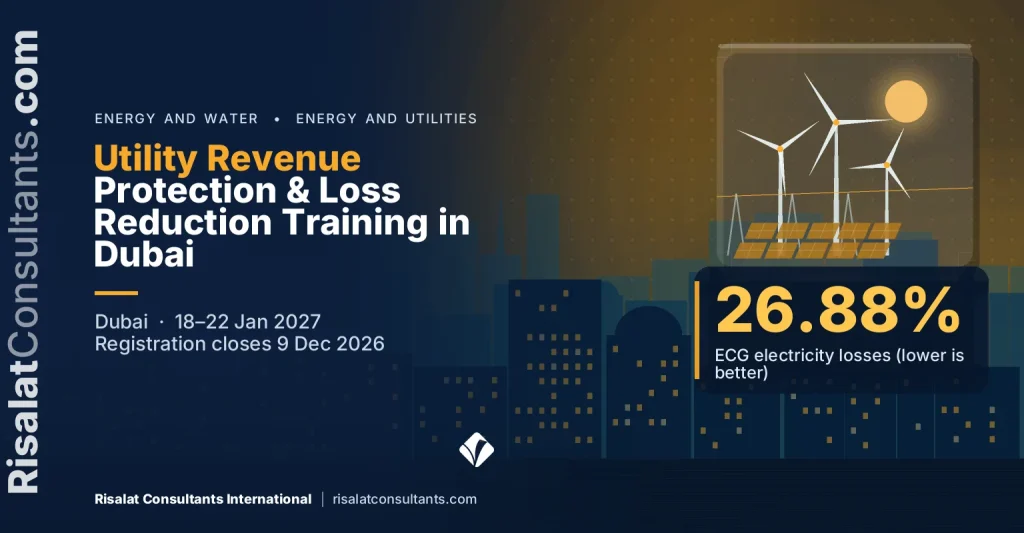
في غانا، قيّم تقرير حالة التنفيذ ونتائج البنك الدولي لشهر يونيو 2026 برنامج تعافي قطاع الطاقة في غانا من أجل النتائج بأنه غير مرضٍ. ويسجل خسائر الكهرباء لشركة شبكة الكهرباء في غانا (ECG) بنسبة 26.88% مقابل هدف ديسمبر 2027 البالغ 19.20%، وخسائر مالية مجتمعة لشركة (ECG) وشركة (NEDCo) بحوالي 1.52 مليار دولار أمريكي مقابل هدف قدره 525 مليون دولار أمريكي، وعدم تركيب عداد ذكي حتى الآن في إطار البرنامج اعتباراً من مايو 2026. وفي زامبيا، يضع تحديث زامبيا الاقتصادي لشهر مايو 2026 الصادر عن البنك الدولي الهشاشة المالية لشركة الكهرباء الوطنية الزامبية (ZESCO) في مركز تحدي الكهرباء ويدعو إلى خفض خسائر النظام، وتعزيز التحصيل وتسوية المتأخرات.
This five-day programme, designed by Risalat Consultants International, works through the commercial and operational systems that close this gap: energy accounting from feeder to customer, metering and customer indexing, revenue protection, billing and collection, invoice management for independent power producers, and the reporting that results-based financiers verify before they disburse. Each day uses the indicators and disbursement-linked results of live programmes as working material, so participants practise on the type of targets their own institutions are measured against.
Dubai gives the group a working reference point. The Dubai Electricity and Water Authority (DEWA) reports transmission and distribution losses of 2%, which allows participants to compare practices, systems and governance, not just headline numbers.
يعزز البرنامج القدرات المؤسسية في:
- Energy accounting and loss measurement at feeder, transformer and district level
- Separating technical and commercial losses and targeting each correctly
- Metering strategy, prepaid and smart meter roll-out, and meter data management
- Customer indexing and the quality of the customer information system
- Revenue protection, inspection and regularisation of irregular connections
- Billing accuracy, collection efficiency and arrears recovery, including public sector accounts
- Managing power purchase invoices and payment priorities across the value chain
- Tariff, subsidy and shortfall analysis for finance ministries and regulators
- Disbursement-linked indicators, verification and evidence for results-based financing
- Performance dashboards that link district results to company finances
- Coordination between utilities, finance ministries and regulators on approvals
The programme is designed for distribution utilities, transmission companies, energy ministries, finance ministries and regulators in Ghana, Zambia and neighbouring countries, and for teams in programme implementation units that manage World Bank, AfDB and other financed energy operations.
Why Utility Revenue Protection Matters Now
The Ghana Programme is a results-based operation: money is released when agreed results are verified. Its June 2026 report shows how quickly delays in one link of the chain affect everything else. ECG had implemented district energy accounting in 20% of districts against a 100% target, collection efficiency stood at 85% against 93%, and the report repeatedly cites the lack of Commitment Authorisations from the Ministry of Finance, new procurement directives and disbursement caps as reasons for delay. The World Bank noted at approval that the Government of Ghana transfers about 2% of GDP each year to cover the sector’s shortfall.
In Zambia, the World Bank-financed National Energy Advancement and Transformation Programme aims to improve the financial sustainability of the sector, and the Zambia Economic Update recommends implementing the Multi-Year Tariff Framework to reach cost-reflective tariffs by 2027, alongside lower losses and stronger collection. Both countries have also adopted national energy compacts under Mission 300, which tie new investment in access to a financially sound distribution sector.
تحتاج المؤسسات بشكل متزايد إلى مهنيين قادرين على:
- Build an energy balance that management trusts, from bulk supply point to customer bill
- Explain where losses occur and what each intervention will recover
- تصميم برامج العدادات التي تحسن التحصيل، وليس فقط عدد العدادات
- Prepare verifiable evidence for disbursement-linked results
- Manage invoices and payment priorities for power purchases in a transparent way
- Work with finance ministries on approvals and budget releases for programme activities
- Report sector finances clearly to boards, regulators and financiers
تساعد القدرات القوية المؤسسات على:
- Reduce the shortfall that the national budget has to cover
- صرف التمويل المستند إلى النتائج في وقته المحدد
- Improve customer service and confidence in bills
- دعم الجهات التنظيمية ببيانات موثوقة عن التكاليف والخسائر لقرارات التعريفة
- Attract private investment into generation and access
- الجمع
- التنقية
- التخزين
- التحليل
- القرار
Who Should Attend This Utility Revenue Protection Training
صُمم هذا البرنامج من أجل:
- Commercial, customer service and revenue protection managers of distribution utilities
- District and regional managers responsible for losses and collection
- مديرو العدادات، وبيانات العدادات، وأنظمة معلومات العملاء
- Finance directors, treasury and credit control managers of utilities
- Programme implementation unit coordinators and M&E specialists on energy operations
- Energy ministry planning and sector finance officers
- Finance ministry officers responsible for energy sector transfers and fiscal risk
- موظفو التنظيم العاملون في مجال التعريفات، ومعايير الأداء، وبدلات الفاقد
- موظفو الشؤون التجارية والتسوية في شركات نقل الطاقة
- Internal auditors and risk managers in power sector entities
حدّد ما يحتاج فريقك إلى القدرة على إنجازه.
أهداف البرنامج
بنهاية هذا البرنامج سيتمكن المشاركون من:
- Build and interpret an energy balance down to feeder and district level
- فصل الخسائر الفنية والتجارية واختيار التدخلات لكل منهما
- Design a metering and customer indexing plan linked to revenue targets
- Run a revenue protection programme with clear inspection and regularisation rules
- Improve billing accuracy and collection, including arrears of public institutions
- Set up controls for verifying and paying power purchase invoices
- Translate disbursement-linked indicators into work plans, data and evidence
- Anticipate approval and budget bottlenecks and agree a joint plan with the finance ministry
- Present utility performance and sector shortfall data to decision makers
- إعداد خطة عمل لمدة 90 يوماً لمؤسساتهم
Utility Revenue Protection Training Structure & Contents
- The revenue chain from generation and power purchase to the customer bill
- How losses, collection gaps and below-cost tariffs combine into a sector shortfall
- Reading a results framework: losses, collection rate and cash recovery index
- Case study: the Ghana Energy Sector Recovery Programme and its 2027 targets
- Case study: ZESCO’s financial recovery in the Zambia Economic Update
- Group exercise: mapping the shortfall for a sample utility
- Building an energy balance at feeder, transformer and district level
- الخسائر التقنية مقابل التجارية: طرق القياس والتقدير
- Metering strategy: prepaid, smart and bulk meters, and where each pays back
- Customer indexing and cleaning the customer information system
- تخطيط المشتريات والطرح لبرامج العدادات واسعة النطاق
- Simulation: district energy accounting from raw data
- Designing inspection programmes using data analytics and loss hot spots
- تنظيم الوصلات غير النظامية بشكل عادل وشفاف
- Billing accuracy, disputes and customer communication
- Collecting from government and large customers, and managing arrears
- Customer satisfaction surveys as a performance tool
- Benchmarking session: utility performance practices in Dubai
- Verifying and paying power purchase and IPP invoices with integrated systems
- Payment priority mechanisms across the value chain, such as cash waterfalls
- Tariff paths, cost-reflective tariffs and protection for vulnerable customers
- Audited financial statements and transparency on set-offs and subsidies
- Working with finance ministries: commitment authorisations and budget releases
- Group work: a shortfall reduction plan for a sample sector
- How Programme-for-Results financing works: DLIs, verification and disbursement
- تحويل كل مؤشر مرتبط بالأداء (DLI) إلى مهام، والمالكين، ومصادر البيانات، وملفات الأدلة
- Building a monthly loss and collection dashboard for management and boards
- منصات التنسيق بين مرافق الخدمات والوزارات والهيئات التنظيمية
- Individual 90-day action plans and peer review
- Closing session and certificates
المحتوى الكامل يوماً بيوم
اليوم الأول | أين تذهب الأموال: الخسائر والتحصيل وعجز القطاع
- The revenue chain from generation and power purchase to the customer bill
- How losses, collection gaps and below-cost tariffs combine into a sector shortfall
- Reading a results framework: losses, collection rate and cash recovery index
- Case study: the Ghana Energy Sector Recovery Programme and its 2027 targets
- Case study: ZESCO’s financial recovery in the Zambia Economic Update
- Group exercise: mapping the shortfall for a sample utility
Second Day | Energy accounting, metering and customer indexing
- Building an energy balance at feeder, transformer and district level
- الخسائر التقنية مقابل التجارية: طرق القياس والتقدير
- Metering strategy: prepaid, smart and bulk meters, and where each pays back
- Customer indexing and cleaning the customer information system
- تخطيط المشتريات والطرح لبرامج العدادات واسعة النطاق
- Simulation: district energy accounting from raw data
Third Day | Revenue protection, billing and collection
- Designing inspection programmes using data analytics and loss hot spots
- تنظيم الوصلات غير النظامية بشكل عادل وشفاف
- Billing accuracy, disputes and customer communication
- Collecting from government and large customers, and managing arrears
- Customer satisfaction surveys as a performance tool
- Benchmarking session: utility performance practices in Dubai
Fourth Day | Sector finance, power purchase invoices and regulation
- Verifying and paying power purchase and IPP invoices with integrated systems
- Payment priority mechanisms across the value chain, such as cash waterfalls
- Tariff paths, cost-reflective tariffs and protection for vulnerable customers
- Audited financial statements and transparency on set-offs and subsidies
- Working with finance ministries: commitment authorisations and budget releases
- Group work: a shortfall reduction plan for a sample sector
Fifth Day | Results-based financing, dashboards and action planning
- How Programme-for-Results financing works: DLIs, verification and disbursement
- تحويل كل مؤشر مرتبط بالأداء (DLI) إلى مهام، والمالكين، ومصادر البيانات، وملفات الأدلة
- Building a monthly loss and collection dashboard for management and boards
- منصات التنسيق بين مرافق الخدمات والوزارات والهيئات التنظيمية
- Individual 90-day action plans and peer review
- Closing session and certificates
منهجية التدريب
البرنامج عملي وقائم على البيانات. تجمع الجلسات بين المدخلات القصيرة للخبراء والعمل على مؤشرات حقيقية ومجموعات بيانات نموذجية ووثائق من عمليات ممولة حية، بحيث يغادر المشاركون ومعهم أدوات يمكنهم تطبيقها في الأسبوع التالي.
- Regional case studies from Ghana, Zambia and other utilities in Africa
- Simulations using sample energy balance, billing and collection data
- Group work on shortfall reduction and metering plans
- جلسات بقيادة خبراء حول العمليات التجارية للمرافق وتمويل القطاع
- Benchmarking discussion on Dubai’s utility performance practices
- تخطيط عمل فردي مع ملاحظات الأقران
التطبيق المؤسسي
يدعم هذا البرنامج المؤسسات في تعزيز:
- Loss reduction and revenue protection programmes
- Metering, customer indexing and customer information systems
- Collection and arrears management
- التحقق من الفواتير وضوابط الدفع
- Results-based financing delivery and verification
- Coordination with finance ministries and regulators
يعود المشاركون بأدوات عملية لتحسين:
- District energy balances and loss reporting
- Inspection targeting and regularisation procedures
- Monthly management dashboards
- خطط عمل مؤشرات صرف الدعم (DLI) وملفات الأدلة
- Board and ministry reporting on sector finances
الأهمية الإقليمية والتطبيق
In Ghana, the Energy Sector Recovery Programme for Results was approved in June 2024 with a US$250 million IDA credit and a US$10 million ESMAP grant, and became effective in March 2025. Its June 2026 report shows that one result has been achieved, ECG’s publication of audited financial statements, while others are behind: the energy accounting system covers 20% of districts, smart meter installation has not started, and the integrated invoicing system for power producers is not yet in place. The World Bank expects delivery to accelerate with better coordination on approvals between implementing agencies and the Government. These are exactly the areas this programme covers.
في زامبيا، أدت موجة الجفاف لعام 2024 إلى تقليل الطاقة المتاحة بنوالي الثلث، وفقاً للبنك الدولي، في نظام تشكل الطاقة الكهرومائية فيه أكثر من ثلاثة أرباع القدرة المركبة. يذكر تقرير التحديث الاقتصادي لزامبيا أن التعريفات ظلت لفترة طويلة محددة دون مستوى استرداد التكاليف، وأن الخسائر وضضعف التحصيل أدى إلى توتر سيولة شركة زيسكو، وأنه يجب حل المتأخرات الحكومية المستحقة لشركة زيسكو والمتأخرات المستحقة لمنتجي الطاقة المستقلين. ستجد فرق العمل من ملاوي، زيمبابوي، سيراليون، ليبيا وغيرها من البلدان التي تواجه تحديات توزيع مماثلة نفس الأدوات ذات صلة مباشرة.
المصدر: تقرير حالة التنفيذ والنتائج الصادر عن البنك الدولي، برنامج إنعاش قطاع الطاقة في غانا (P173258)، 30 يونيو 2026 (القيم اعتباراً من مايو 2026).
1. In the World Bank's June 2026 report, what were ECG's electricity losses compared with the December 2027 target?
The ISR for the Ghana Energy Sector Recovery Programme records ECG losses of 26.88% against a 19.20% target for December 2027.
2. Which reason does the World Bank repeatedly cite for delays to the Ghana Programme's targets?
The June 2026 ISR repeatedly notes that no Commitment Authorisation from the Ministry of Finance allowed the disbursements needed to reach targets.
3. ما هو إصلاح التعريفة الذي يوصي به تقرير التحديث الاقتصادي لزامبيا الصادر عن World Bank في مايو 2026؟
The update recommends cost-reflective tariffs by 2027 under the Multi-Year Tariff Framework, with targeted protection for vulnerable households.
لمحة عن البلد المضيف – الإمارات العربية المتحدة
Dubai is a regional hub with frequent air connections to West, East and Southern Africa, and it hosts one of the most closely watched utilities in the world. DEWA reports that its electricity transmission and distribution network losses have been 2% since 2023, down from 3.3% in 2021, and that its customer minutes lost reached 0.82 minutes per customer in 2025. Its water network losses were reported at 4.4%.
أفادت هيئة كهرباء ومياه دبي أيضاً بتركيب أكثر من مليوني عداد ذكي للكهرباء والمياه، وتذكر وكالة أنباء الإمارات أنها تستثمر 7 مليارات درهم في استراتيجيتها للشبكة الذكية حتى عام 2035 لتحسين كفاءة الشبكة وتقليل الخسروات. بالنسبة للمرافق التي تعمل على القياس، ومحاسبة الطاقة وتقليل الفاقد، تقدم دبي معياراً مفيداً لما يمكن أن يحققه الاستثمار المستمر في البيانات والقياس وإدارة الشبكات، وفرصة لمناقشة ما يمكن تكييفه مع ظروف تشغيلية مختلفة جداً.
Expected Outcomes of Utility Revenue Protection Training
سيتمكن المشاركون من:
- Produce a reliable district energy balance and loss report
- إعطاء الأولوية لإجراءات تقليل الفاقد حسب القيمة المستردة
- Plan metering and customer indexing linked to collection targets
- Strengthen controls on power purchase invoices and payments
- Translate results-based financing indicators into practical work plans
- Present a clear 90-day action plan to their management
Institutions that send a team from commercial, finance and programme units together gain the most, because the programme is built around the links between those functions.
£3,630 لكل مشارك · فاتورة وتحويل مصرفي · تحصل المجموعات المكونة من 5 مشاركين أو أكثر على خصم
خمسة مشاركين أو أكثر من مؤسسة واحدة: اطلبوا سعر المجموعة عند طلب الفاتورة.
Ten or more: an in-house version for your institution may cost less per person. Ask for an in-house quote.
يُغلق باب التسجيل خلال 17 يوماً (9 ديسمبر 2026)
Who Will Deliver This Programme
Each date is delivered by a team assigned from Risalat's expert network for this subject. For this programme we assign:
How we choose them: Experience in the region of the participants or comparable settings; Command of the financier rules that apply (World Bank, ADB, AfDB, EU, UN) where relevant; Delivery in English; other languages on request for in-house groups; No conflict of interest with participants' institutions.
مخرجات الدورة
قبل البرنامج
- التقييم المسبق للمشاركين
- تقييم جاهزية حماية إيرادات المرافق
- حزمة موارد الحد من خسائر المرافق
- مواد قراءة تحضيرية
- دعم واستشارات مجانية بشأن التأشيرة
أثناء البرنامج
- الاستقبال من المطار والمساعدة عند الوصول
- Accommodation with breakfast: 6 nights, check-in Sunday 17 January 2027, check-out Saturday 23 January 2027 (one night before and one night after the programme)
- عشاء ترحيبي للتعارف
- حقيبة Risalat التدريبية (حقيبة، وقارورة، وكوب، وقميص، وقبعة، وغلاف جواز سفر، وأقلام، ودفتر، ومغناطيس وميدالية مفاتيح)
- Comprehensive Utility Revenue Protection Training Manual
- District Energy Balance Template
- Loss Reduction Prioritisation Tool
- DLI Work Plan and Evidence Tracker
- Collection and Arrears Dashboard Template
- ورش عمل عملية ومحاكاة
- مناقشات جماعية وتعلم من الأقران
- غداء ومرطبات يومية
- الاستفادة الكاملة من مرافق مكان التدريب
- جهاز Mini Pad / جهاز لوحي مزود بمواد تعليمية رقمية
- زيارة ميدانية (حسب الاقتضاء)
- جولة ترفيهية في المدينة
بعد البرنامج
- شهادة الإتمام
- جائزة Risalat تقديراً للمشاركة في البرنامج
- مواد مرجعية بعد التدريب
- مراجعة خطة العمل لمدة 90 يوماً
- Sample Revenue Protection Procedures
- الدعم بعد التدريب وإرشادات المتابعة
- تقرير البرنامج
Institutions that want a version tailored to their own data and districts can request an in-house programme. Teams can also start with our free project health check.
الأسئلة الشائعة
لمن مخصص تدريب الحد من فقد المرافق هذا؟
Commercial, metering, finance and PIU staff of distribution utilities, plus energy ministry, finance ministry and regulatory officers working on sector finances.
Does the programme cover results-based financing?
Yes. The fifth day covers Programme-for-Results operations, disbursement-linked indicators, verification and evidence files, using the Ghana Energy Sector Recovery Programme as a case.
لماذا يُعقد البرنامج في دبي؟
DEWA reports transmission and distribution losses of 2% and has invested heavily in smart metering and grid management, which gives participants a practical benchmark.
هل يمكن تقديمه داخل المؤسسة؟
Yes. Institutions can request a tailored in-house version using their own district data through the Risalat request for proposal form.
الدورات التدريبية في دبيEnergy and Water training courses
لماذا دبي لهذا البرنامج
دبي مركز يربط أفريقيا وآسيا وأوروبا برحلة واحدة، مع إجراءات تأشيرة ميسّرة لكثير من الجنسيات وأماكن تدريب حديثة.
The Utility Revenue Protection & Loss Reduction Training in Dubai programme in January 2027 brings together officials and professionals from across the Middle East region and beyond. Sessions combine short inputs, case studies and group work on participants' own files, and the city's institutions can be added as a study visit on request.
الوصول: مطار دبي الدولي (DXB).
تحقق مما إذا كنت بحاجة إلى تأشيرة عبر أداة التحقق من التأشيرة المجانية، واطلب خطاب دعوة بعد إتمام تسجيلك.
الموضوع نفسه في مدن أخرى
- Water Utility Corporate Turnaround and Performance Contract Oversight in Lisbon (Lisbon)
- Power Utility Commercial Loss Reduction and Billing Collection in Istanbul (Istanbul)
- Electricity Distribution Grid Digitalisation and Smart Metering in Casablanca (Casablanca)
- Medium and Low Voltage Grid Electrification and Substation Works in Dakar (Dakar)
- Groundwater Security and Urban-Rural Sanitation Network Expansion in Geneva (Geneva)
- Commercial Water Loss Reduction & Smart Metering Infrastructure in Dubai (Dubai)
برامج أخرى في دبي
غالباً ما تسافر الفرق إلى هنا من المالديف، وسريلانكا، وبنغلاديش، ونيبال، وباكستان، وأفغانستان، وكازاخستان، وأوزبكستان. يتم شرح التمويل، وخطابات التأشيرة، الأسعار الجماعية في صفحة كل دولة.
للفرق والمؤسسات
Bring your team
Teams that learn together apply more at work. Tell us how many people and how you would like to take part: we reply with a group quote within two working days.
Watch: this programme in short


تواريخ ومدن أخرى لهذا الموضوع: دورات التدريب على إدارة المالية العامة (64 تاريخاً قادماً).
المزيد من الدورات التدريبية في الإمارات العربية المتحدة · جميع البرامج في الشرق الأوسط · تقويم التدريب الكامل
تخطيط هذا البرنامج في خارطة طريق: لماذا هو مهم، ولماذا يجب الموافقة عليه، والتواريخ المراد التخطيط لها، والمسار المهني الذي يبنيه.