أبرز الخلاصات
- إعادة تصور المساحات التعليمية. تعمل الواقع الافتراضي على تغيير طريقة عمل المساحات التعليمية اليوم بشكل جذري.
- Enhancing Collaborative Learning. VR in education opens new dimensions to collaboration.
- إمكانية الوصول والشمول. لقد أحدثت الواقع الافتراضي في التعليم تحولاً في طريقة إنشاء بيئات تعلم شاملة.
- Measuring Educational Impact. VR in education does more than just deliver content – it lets us measure and analyze learning in ways we never could before.
- تعليم جاهز للمستقبل. بالنظر إلى مستقبل الواقع الافتراضي في التعليم، نشهد تطورات رائدة تعيد صياغة كيفية تفكيرنا في مساحات التعلم.
In short: VR in education transforms teaching and learning methods, offering immersive experiences beyond classroom walls.
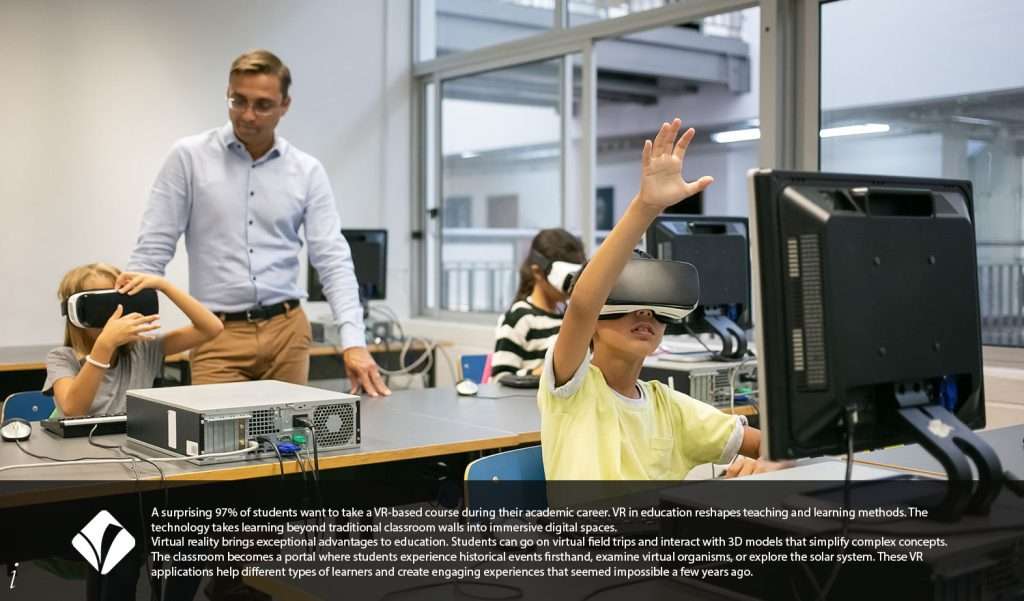
A surprising 97% of students want to take a VR-based course during their academic career. VR in education reshapes teaching and learning methods. The technology takes learning beyond traditional classroom walls into immersive digital spaces.
Virtual reality brings exceptional advantages to education. Students can go on virtual field trips and interact with 3D models that simplify complex concepts. The classroom becomes a portal where students experience historical events firsthand, examine virtual organisms, or explore the solar system. These VR applications help different types of learners and create engaging experiences that seemed impossible a few years ago.
يوضح هذا المقال كيف تغير الواقع الافتراضي ديناميكيات الفصل الدراسي وتفيد كل من الطلاب والمعلمين من خلال أمثلة ميدانية ناجحة في البيئات التعليمية. تدعم التكنولوجيا إمكانية الوصول وتخلق فرص تعلم مستنيرة. يصبح الطلاب أكثر استعدادًا لمستقبل مدفوع بالكنولوجيا من خلال هذه الابتكارات.
إعادة تصور الفضاءات التعليمية
Virtual reality is radically altering how educational spaces work today. Let’s take a closer look at how VR creates learning environments that are way beyond the reach and influence of traditional classroom walls.
Beyond Physical Classroom Limitations
يظهر عملنا مع المؤسسات التعليمية أن الواقع الافتراضي في تكنولوجيا التعليم يكسر الحواجز الجغرافية والزمنية بطرق غير مسبوقة. يتعلم الطلاب من خلال التجربة الآن، مما يزيد من الاحتفاظ المعرفي بنسبة تصل إلى 75%. أصبحت الفصول الدراسية مساحات ديناميكية حيث يمكن للطلاب التجربة بأمان والتعلم من الأخطاء دون مخاطر واقعية.
Creating Interactive Learning Environments
تساعد طرق التعلم التقليدية الطلاب على تذكر 10% فقط مما يقرؤونه، بينما يحتفظون بـ 90% مما يختبرونه. تنشئ الواقع الافتراضي في التعليم بيئات يستطيع الطلاب من خلالها:
- رؤية المفاهيم المعقدة من خلال نماذج ثلاثية الأبعاد
- إجراء تجارب خطيرة بأمان
- Learn hands-on without physical limits
- Get customized learning experiences
Virtual Field Trips and Simulations
Virtual field trips (VFTs) have become one of our most powerful tools in VR education. They work especially well because they cost less, take less time, and need minimal planning compared to traditional field trips. These virtual experiences combine various media like text, photographs, podcasts, and interactive simulations.
تتألق الجولات الافتراضية بطريقتها الفريدة لتوفير الوصول إلى الأماكن البعيدة أو التي يصعب الوصول إليها. يمكن للطلاب استكشاف المواقع التاريخية، أو رؤية العوالم المجهرية، أو السفر عبر الفضاء الخارجي أثناء البقاء في بيئة تعليمية آمنة ومتحكم بها.
هذه المساحات الافتراضية تفعل أكثر من مجرد عرض الأشياء. يثبت تطبيق الواقع الافتراضي في المدارس أنه يمكن أن يعزز أداء الطلاب، حيث ترتفع درجات الامتحانات بنسبة تصل إلى ٢٠٪. تتيح محاكاة الواقع الافتراضي في التعليم للطلاب إجراء التجارب واستكشاف المفاهيم العلمية بطرق لا تستطيع البيئات التقليدية مجاراتها ببساطة.
Enhancing Collaborative Learning
VR in education opens new dimensions to collaboration. VR technology creates unique opportunities for students to work together, whatever their physical location.
المشاريع الجماعية الافتراضية
Virtual group projects let students work together in ways never seen before. To name just one example, students now work on virtual science experiments and develop vital teamwork skills while contributing different elements. Students from Harvard and Zhejiang University worked on an anthropological project about Egyptian hieroglyphics, which shows how VR eliminates geographical barriers.
Cross-Cultural Connections
Cross-cultural VR in education yields remarkable results. Research shows that immersive virtual reality experiences help students become more culturally sensitive and better at cross-cultural cooperation. VR-based lessons help students:
- رؤية المواقف من وجهات نظر ثقافية مختلفة
- بناء الوعي الذاتي ومهارات التعاطف
- Handle cross-cultural situations better
- Learn about culture both mentally and emotionally
التعلم الاجتماعي في الواقع الافتراضي
VR’s role in developing social competence shows great promise. A newer study, published in, shows that VR-assisted social competence education helps children develop social skills better than traditional learning methods. Students can practice social interactions in a safe, controlled environment and apply their learning to real-life situations.
VR creates realistic scenarios that feel authentic, which makes it perfect for social learning. Students experience a genuine sense of presence in virtual environments that improves their learning experience. This immersive quality helps develop important social skills, and studies show better social competencies and perceived social support.
VR in education technology creates opportunities for students to take part in meaningful shared experiences that traditional settings cannot offer. It helps build teamwork skills and cultural understanding that students need in today’s connected world.
Accessibility and Inclusion
VR in education has transformed the way we create inclusive learning environments. The technology brings unique advantages that help students with different learning needs and abilities.
Supporting Special Educational Needs
VR creates safe, controlled environments where students with disabilities can practice life skills. Students with autism benefit from VR simulations that help them handle sensory overload through distraction-free learning spaces. VR lets students practice job interviews and direct themselves through public spaces on their own. This builds vital life skills in a supportive setting.
Breaking Geographic Barriers
VR removes traditional education roadblocks. Virtual field trips are now available to everyone, no matter their physical, financial, or logistical limits. Here’s what we found:
- يمكن للطلاب تجربة ما هو مستحيل (استكشاف الفضاء، النظم البيئية تحت الماء)
- Budget-friendly alternatives replace expensive field trips
- Every student gets the same learning opportunities
- Students explore dangerous environments safely
Customizable Learning Experiences
تتكيف الواقع الافتراضي (VR) بشكل جيد مع احتياجات التعلم لكل طالب. يستخدم المعلمون تحليل البيانات الحديث لتتبع تقدم الطلاب وتعديل تدريسهم. يتعلم الطلاب وفقاً لوتيرتهم وأسلوبهم الخاص، مما يخلق رحلة تعليمية مخصصة.
VR in education works well because it engages multiple senses. Haptic feedback devices help visually impaired students interact with virtual objects. Students who struggle with attention find focused learning spaces that keep them involved while reducing distractions.
Special education programs show better social skills among students who use VR compared to traditional methods. Students practice scenarios repeatedly, and teachers adjust these based on individual progress. This creates consistent learning opportunities in a controlled setting.
Schools report that VR technology removes physical and cognitive barriers that once stymied learning experiences. Students now have equal access to educational content, whatever their physical abilities or location. This creates inclusive educational spaces that work for everyone.
قياس الأثر التعليمي
VR in education does more than just deliver content – it lets us measure and analyze learning in ways we never could before. Our work with VR technology has given us an explanation of how students learn and involve themselves with educational materials.
تحليلات التعلم القائمة على البيانات
VR learning environments create massive amounts of educational data that helps us understand student learning patterns. Research shows learning value stands out as the strongest predictor of students’ behavioral intention to use VR technology. These environments give us a unique chance to collect and analyze student interactions, which helps us understand learning patterns at a deeper level.
Student Progress Tracking
ساعد الواقع الافتراضي في التعليم الكثيرين على بناء أنظمة تتبع كاملة تراقب كيفية تفاعل الطلاب. النوع الذي أحبه في منصات الواقع الافتراضي هو قدرتها على تتبع:
- مدة وتكرار مشاركة الطلاب
- Interactive element usage
- Help-seeking patterns
- Focus areas and attention spans
- مقاييس الأداء عبر المهام المختلفة
The data reveals something exciting – there’s a strong positive correlation (0.525) between students’ concentration levels and their final performance scores. VR offers more precise tracking than traditional e-learning because students can’t multitask or get distracted by outside factors.
التقييم السلوكي
Behavioral assessments have shown interesting patterns in student interactions with VR environments. Research points to high-performing students showing distinct behavioral patterns, especially when they verify their ideas after problem-solving.
VR assessment stands out because it measures what students actually do rather than what they say, which paints a more accurate picture of their abilities. Our scoring metrics merge with game tasks naturally. This allows us to assess student performance without interrupting their learning experience.
The Health Point (HP) system we created now simulates ground consequences of decisions without putting students at risk, which gives valuable feedback about their practical skills and decision-making.
Future-Ready Education
Looking ahead at the future of virtual reality in education, we’re seeing groundbreaking developments that are reshaping how we think about learning spaces. Research and implementation experiences have revealed exciting possibilities that extend far beyond current applications.
تقنيات الواقع الافتراضي الناشئة
We’re witnessing significant advancements in VR technology that are making it more available and effective for educational purposes. Data shows that students using VR for learning achieve an average final test score of 85, compared to 78 in traditional in-person settings. These improvements are particularly notable in subjects requiring complex visualization and hands-on experience.
Integration with AI and Machine Learning
يؤدي الجمع بين تقنيات الواقع الافتراضي والواقع المعزز إلى خلق إمكانيات تعليمية جديدة وقوية. لقد حددنا عدة اعتبارات رئيسية:
- Ethical implications of AI chatbots in educational settings
- Need for proper instructor training and support
- Development of clear evaluation criteria
- Protection of student data privacy
We’ve observed that deep learning models are particularly effective when combined with VR technology, allowing us to create more intuitive and responsive learning environments. Our implementation shows that AI can analyze student interactions in real-time, providing personalized feedback and adjusting content delivery methods based on individual learning patterns.
Preparing for the Metaverse
We’re actively learning the educational potential of the metaverse, which represents the next rise of virtual learning environments. By implementing metaverse technologies, we’ve seen remarkable results at institutions like Japan’s N and S high schools, where more than 6,000 students are already learning in VR environments.
What makes this particularly exciting is the potential for breaking down traditional barriers. We’ve found that virtual environments can help students with specific challenges, such as those with agoraphobia and PTSD, who report feeling more comfortable participating in virtual classrooms.
شاهد


Know people who should read this? Become an Ambassador or write with Risalat.
شركاء في نجاح المشاريع منذ 2011، نقدم التشخيص والدعم الاستشاري والتعلم التطبيقي للوزارات والهيئات العامة وفرق المشاريع.
هل تحتاج إلى مساعدة في تطبيق ذلك عملياً؟
ابدأ بتشخيص مجاني مدته 10 دقائق أو تحدث إلى خبرائنا.