Factos essenciais
- Datas
- 1–5 fev. 2027 (5 dias)
- Local
- Royal Plaza, Erevã, Arménia
- Preço por participante
- £2.740 (GBP)
- Pagamento
- Por fatura e transferência bancária
- Encerramento das inscrições
- 23 dez. 2026
- Formato
- 5-day short course: a practical capacity-building programme for government, NGO and project teams in Yerevan
- Certificado
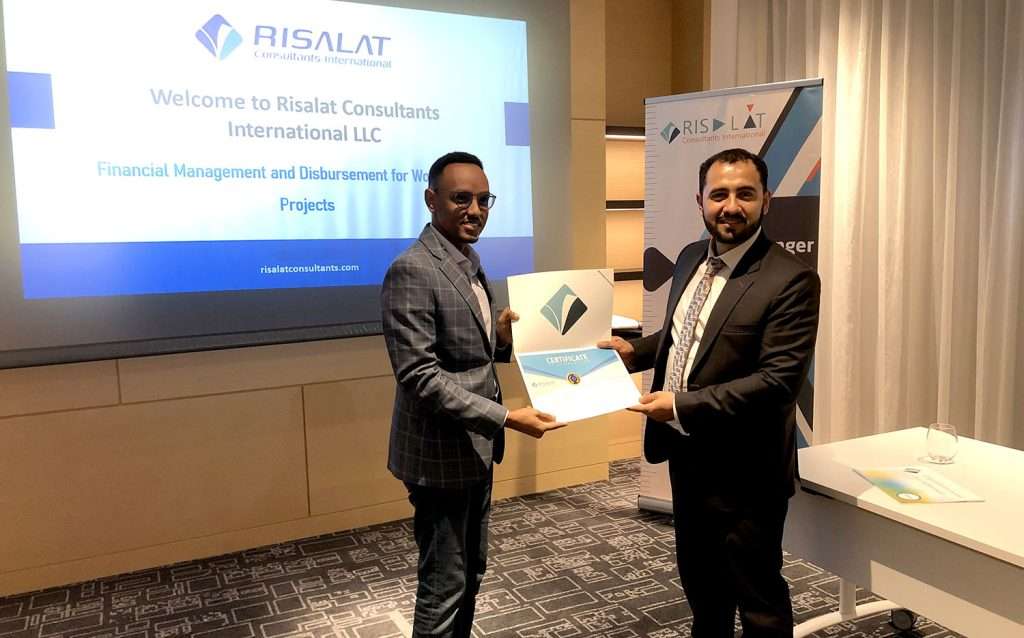
- Certificado de conclusão
- Opção interna
- Realize-o para a sua equipa, nas datas que preferir
Nesta página 16 secções
Visão geral do programa
The Project Financial Management and Investment Apprai Training in Yerevan is an applied five-day professional development programme for officials, managers and specialists responsible for decisions, assurance and implementation. It connects technical methods with practical work products that participants can adapt to their own institutions.
Free self-check: the procurement maturity assessment gives 30 questions on planning, tendering, contract management, integrity and e-procurement, with a score per area, in about 10 minutes.
O programa é sediado em Yerevan, Armênia. É projetado para instituições públicas, equipes de projetos financiados por doadores, reguladores e organizações que precisam de decisões documentadas e controles operacionais confiáveis. O local é um local de aprendizado, não uma afirmação de que uma instituição local está fornecendo uma visita técnica confirmada.
Os participantes trabalham com processos de casos realistas, mas fictícios, que abrangem linhas de base de custos, controlo de compromissos e demonstrações financeiras. Os exercícios distinguem os requisitos que seguem um determinado financiador ou jurisdição das boas práticas gerais. Não está implícito qualquer financiamento de projetos ou acordo de nomeação.
O currículo desenvolve um fluxo de trabalho contínuo desde a avaliação inicial e planejamento até a coleta de evidências, garantia de qualidade, relatórios de gestão e acompanhamento institucional. Também incentiva os participantes a identificar lacunas nas políticas existentes antes de aplicar qualquer referencial internacional.
The Programme Strengthens Institutional Capability
- Cost baselines
- Estruturas orçamentais
- Cash-flow forecasts
- Commitment control
- Disbursement tracking
- Variance analysis
- Financial statements
- Controlos internos
- Preparação para auditorias
- NPV
- IRR
- Sensitivity analysis
- Whole-life costing
- Contingency
- Relato financeiro
- Fiduciary risk
Each participant builds a portfolio of draft tools and a short implementation plan, with responsibilities, verification points and a timetable for management review.
- Transação
- Registo
- Controlo
- Evidência
- Parecer
The Growing Importance of Project financial management
Institutions are expected to demonstrate not only that activities have been completed, but that decisions are consistent, traceable and proportionate to risk. In project financial management, weak definitions, fragmented records and unclear accountability can make otherwise sound work difficult to defend or improve.
The reference materials listed below offer official frameworks relevant to parts of this curriculum. They do not establish that any named institution has committed funds to this course. Participants should check the rules governing their own country, employer and financed project before adopting the examples.
As organizações precisam cada vez mais de profissionais capazes de:
- Assess cost baselines using documented criteria
- Assess budget structures using documented criteria
- Assess cash-flow forecasts using documented criteria
- Assess commitment control using documented criteria
- Assess disbursement tracking using documented criteria
- Assess variance analysis using documented criteria
- Assess financial statements using documented criteria
- Assess internal controls using documented criteria
- Assess audit readiness using documented criteria
- Assess NPV using documented criteria
- Assess IRR using documented criteria
- Assess sensitivity analysis using documented criteria
Strong project financial management systems help organisations:
- Improve the consistency of audit readiness
- Improve the consistency of NPV
- Improve the consistency of IRR
- Improve the consistency of sensitivity analysis
- Improve the consistency of whole-life costing
- Improve the consistency of contingency
- Melhorar a consistência do relato financeiro
- Melhorar a consistência do risco fiduciário
A workable system needs clear ownership, tested records and decisions that can be reviewed independently. The sessions translate these requirements into small, repeatable routines rather than a one-off report.
1. Which approach best supports cost baselines?
The programme applies documented decisions and evidence checks to cost baselines; requirements must be checked against the relevant original guidance.
2. Which approach best supports commitment control?
The programme applies documented decisions and evidence checks to commitment control; requirements must be checked against the relevant original guidance.
3. Which approach best supports financial statements?
The programme applies documented decisions and evidence checks to financial statements; requirements must be checked against the relevant original guidance.
Who Should Attend This Project Financial Management and Investment Appraisal Training?
Este programa destina-se a:
- Ministry department directors
- Government policy analysts
- Project implementation unit managers
- Project management unit coordinators
- Technical assistance team leaders
- Auditores internos
- Compliance officers
- Procurement specialists
- Finance managers
- Monitoring and evaluation officers
- Data and reporting analysts
- Pessoal de garantia de qualidade de programas
- Institutional development specialists
- Public sector trainers
- Pontos focais de parceiros de desenvolvimento
- Consultants supporting public agencies
Participants should bring a description of one institutional process they wish to improve, without sharing confidential personal or commercial information.
Assinale o que a sua equipa precisa de ser capaz de fazer.
Objetivos de Formação em Gestão Financeira de Projetos e Avaliação de Investimentos
Upon successful completion of this Project Financial Management and Investment Appraisal Training, participants will be able to:
- Explain the institutional purpose and limitations of project financial management
- Assess existing procedures against relevant documented requirements
- Identificar partes interessadas críticas e direitos de decisão
- Prioritise operational risks and quality weaknesses
- Select appropriate methods and tools for the task
- Document assumptions and supporting evidence
- Design practical controls and review checkpoints
- Use sample datasets or case files responsibly
- Communicate findings to decision-makers
- Preparar um plano de ação e de recursos proporcional
- Monitor follow-up and adjust implementation
The emphasis is on demonstrable workplace outputs, with peer feedback and facilitator review of the methods selected.
Conteúdo e estrutura do programa
- Map project life-cycle financial decisions
- Ligar os resultados e planos de trabalho às estimativas de custos
- Distinguir despesas de capital e correntes
- Define financial roles and approval limits
- Identificar despesas elegíveis e documentação
- Build a financial risk register
- Set chart-of-accounts and cost codes
- Construir uma estrutura analítica de custos do trabalho
- Estimate unit costs and assumptions
- Plan contingencies and escalation allowances
- Allocate direct, indirect and overhead costs
- Build annual and quarterly expenditure forecasts
- Link procurement plans to budgets
- Define budget revision and approval rules
- Forecast receipts, payments and cash balances
- Track commitments, invoices and disbursements
- Analyse actual versus planned expenditure
- Identify causes of budget and schedule variance
- Develop corrective action and reforecast rules
- Avaliar a exposição cambial e de liquidez
- Design monthly financial dashboards
- Explain project-specific reporting requirements
- Reconcile bank, ledger and project records
- Conceber controlos de autorização de pagamentos
- Maintain supporting documents and audit trails
- Preparar demonstrações financeiras e relatórios de doadores
- Track advances, assets and liabilities
- Review audit findings and management responses
- Compare options using net present value
- Explicar as limitações da taxa interna de retorno
- Aplicar taxas de desconto e pressupostos de forma transparente
- Assess sensitivity and scenario analysis
- Include operations and maintenance costs
- Evaluate affordability and fiscal exposure
- Prepare a financial decision paper
Conteúdo completo, dia a dia
The five-day sequence builds from diagnosis to an institutional improvement proposal. Each day includes guided technical work and a documented practical exercise.
- First Day: Project financial planning and controls
- Second Day: Budget preparation and cost structures
- Terceiro Dia: Fluxo de caixa, compromissos e análise de variância
- Fourth Day: Financial reporting and fiduciary assurance
- Fifth Day: Investment appraisal and financial decisions
Conteúdo completo, dia a dia
First Day | Project financial planning and controls
- Map project life-cycle financial decisions
- Ligar os resultados e planos de trabalho às estimativas de custos
- Distinguir despesas de capital e correntes
- Define financial roles and approval limits
- Identificar despesas elegíveis e documentação
- Build a financial risk register
- Set chart-of-accounts and cost codes
- Draft a financial management plan
Workshop: Project financial planning and controls application
Working in small teams, participants apply the day’s methods to a fictional institutional scenario. They produce a short decision-ready artefact, record key assumptions, identify unresolved evidence gaps and receive structured feedback. The output is retained for the final institutional action plan.
Second Day | Budget preparation and cost structures
- Construir uma estrutura analítica de custos do trabalho
- Estimate unit costs and assumptions
- Plan contingencies and escalation allowances
- Allocate direct, indirect and overhead costs
- Build annual and quarterly expenditure forecasts
- Link procurement plans to budgets
- Define budget revision and approval rules
- Prepare a baseline budget workbook
Workshop: Budget preparation and cost structures application
Working in small teams, participants apply the day’s methods to a fictional institutional scenario. They produce a short decision-ready artefact, record key assumptions, identify unresolved evidence gaps and receive structured feedback. The output is retained for the final institutional action plan.
Third Day | Cash flow, commitments and variance analysis
- Forecast receipts, payments and cash balances
- Track commitments, invoices and disbursements
- Analyse actual versus planned expenditure
- Identify causes of budget and schedule variance
- Develop corrective action and reforecast rules
- Avaliar a exposição cambial e de liquidez
- Design monthly financial dashboards
- Preparar um cenário de recuperação de fluxo de caixa
Estudo de Caso: Aplicação de fluxo de caixa, compromissos e análise de variância
Working in small teams, participants apply the day’s methods to a fictional institutional scenario. They produce a short decision-ready artefact, record key assumptions, identify unresolved evidence gaps and receive structured feedback. The output is retained for the final institutional action plan.
Fourth Day | Financial reporting and fiduciary assurance
- Explain project-specific reporting requirements
- Reconcile bank, ledger and project records
- Conceber controlos de autorização de pagamentos
- Maintain supporting documents and audit trails
- Preparar demonstrações financeiras e relatórios de doadores
- Track advances, assets and liabilities
- Review audit findings and management responses
- Develop a financial close checklist
Workshop: Financial reporting and fiduciary assurance application
Working in small teams, participants apply the day’s methods to a fictional institutional scenario. They produce a short decision-ready artefact, record key assumptions, identify unresolved evidence gaps and receive structured feedback. The output is retained for the final institutional action plan.
Fifth Day | Investment appraisal and financial decisions
- Compare options using net present value
- Explicar as limitações da taxa interna de retorno
- Aplicar taxas de desconto e pressupostos de forma transparente
- Assess sensitivity and scenario analysis
- Include operations and maintenance costs
- Evaluate affordability and fiscal exposure
- Prepare a financial decision paper
- Apresentar um trabalho final de avaliação de investimentos
Capstone Exercise: Investment appraisal and financial decisions application
Working in small teams, participants apply the day’s methods to a fictional institutional scenario. They produce a short decision-ready artefact, record key assumptions, identify unresolved evidence gaps and receive structured feedback. The output is retained for the final institutional action plan.
Project Financial Management and Investment Appraisal Training Methodology
Facilitators use short briefings, individual exercises and group-based problem solving. Case data are illustrative, with assumptions made explicit; the exercises do not represent an audit or certification of any real organisation.
O programa combina:
- Expert-led technical briefings
- Facilitated policy and process reviews
- Anonymised or fictional case dossiers
- Spreadsheet and template exercises
- Small-group scenario analysis
- Role-based decision simulations
- Peer comparison of institutional practices
- Guided risk and control mapping
- Structured facilitator feedback
- Daily learning reflections
- Action planning and presentation practice
- Verificações de referência em relação às normas originais
Participants can adapt worksheets to their own institution after reviewing local legal requirements, confidentiality rules and management approvals.
Resultados esperados
Upon completion of this Project Financial Management and Investment Appraisal Training, participants will be able to:
- Present a baseline of current institutional practice
- Produce a risk and issue register
- Draft a quality assurance checklist
- Explain key requirements to colleagues
- Preparar um briefing de gestão credível
- Build an evidence and records plan
- Identify priorities for staff development
- Set measurable implementation milestones
- Evaluate whether controls are operating as intended
- Present an institutional improvement proposal
These are intended learning outcomes, not guaranteed changes in an employer’s systems or compliance status.
£2.740 por participante · fatura e transferência bancária · grupos de 5 ou mais pessoas beneficiam de desconto
Cinco ou mais participantes da mesma organização: peça a tarifa de grupo no pedido de fatura.
Ten or more: an in-house version for your institution may cost less per person. Ask for an in-house quote.
As inscrições encerram em 31 dias (23 dez 2026)
Formação em Aplicação Institucional de Gestão Financeira de Projetos e Avaliação de Investimentos
Este programa ajuda as organizações a reforçar:
- Ownership of cost baselines
- Ownership of budget structures
- Ownership of cash-flow forecasts
- Ownership of commitment control
- Ownership of disbursement tracking
- Ownership of variance analysis
- Ownership of financial statements
- Titularidade dos controlos internos
- Ownership of audit readiness
- Ownership of NPV
- Ownership of IRR
- Ownership of sensitivity analysis
Os participantes regressam com ferramentas práticas para melhorar:
- Documentation and review of audit readiness
- Documentation and review of NPV
- Documentation and review of IRR
- Documentation and review of sensitivity analysis
- Documentation and review of whole-life costing
- Documentation and review of contingency
- Documentation and review of financial reporting
- Documentation and review of fiduciary risk
Institutions can use the draft outputs as a starting point for a tailored in-house programme, internal working group or management-approved improvement initiative.
Relevância regional e aplicação
Europa
For teams working in Europe, project financial management can support public-sector assurance, regulatory alignment and accountable reporting. The relevant rules and financing conditions differ by country and project, so the programme uses comparative methods without assuming a uniform legal or regulatory system.
África
For teams working in Africa, project financial management can support implementation capacity and evidence for financed programmes. The relevant rules and financing conditions differ by country and project, so the programme uses comparative methods without assuming a uniform legal or regulatory system.
Médio Oriente
Para equipas que trabalham no Médio Oriente, a gestão financeira de projetos pode apoiar a modernização institucional e a governação de grandes iniciativas. As regras relevantes e as condições de financiamento diferem consoante o país e o projeto, pelo que o programa utiliza métodos comparativos sem assumir um sistema legal ou regulamentar uniforme.
Asia and the Pacific
For teams working in Asia and the Pacific, project financial management can support cross-agency coordination and delivery in varied operating contexts. The relevant rules and financing conditions differ by country and project, so the programme uses comparative methods without assuming a uniform legal or regulatory system.
O trabalho de grupo inter-regional permite aos participantes comparar abordagens práticas, protegendo simultaneamente informações institucionais confidenciais.
Host Country Profile – Armenia
Yerevan in Armenia is the established location for this programme. Training is designed around classroom exercises, group discussion and international peer learning rather than an unverified promise of access to a specific government agency.
The host setting allows participants to examine how project financial management can be organised in a professional training environment. Official frameworks and case materials are reviewed in class; a local organisation is not represented as a programme partner unless separately confirmed.
International participants should verify entry conditions for Armenia using official consular channels based on their nationality and residence status. Travel routes, appointment availability, transit requirements and local arrangements can change, so visa assistance is advisory and entry is never guaranteed.
Resultados da Formação em Gestão Financeira de Projetos e Avaliação de Investimentos
The following support package and learning materials are designed to help participants prepare, take part and transfer the learning into their workplace.
Antes do programa
- Avaliação prévia dos participantes
- Project financial management Readiness Assessment
- Pacote de Recursos de Gestão Financeira de Projetos
- Materiais de leitura preparatória
- Apoio e aconselhamento gratuitos em matéria de vistos
Durante o programa
- Recolha no aeroporto e apoio de boas-vindas
- Accommodation with breakfast: 6 nights, check-in Sunday 31 January 2027, check-out Saturday 6 February 2027 (one night before and one night after the programme)
- Jantar de boas-vindas e networking
- Kit de formação Risalat (saco, garrafa, caneca, t-shirt, boné, capa de passaporte, canetas, bloco de notas, íman e porta-chaves)
- Comprehensive Project financial management Training Manual
- Modelo de linhas de base de custos
- Budget Structures Template
- Cash-Flow Forecasts Template
- Commitment Control Template
- Disbursement Tracking Template
- Workshops práticos e simulações
- Discussões de grupo e aprendizagem entre pares
- Almoço e pausas para café diários
- Acesso total às instalações do local de formação
- Mini tablet com materiais de aprendizagem digitais
- Field Visit (where applicable and confirmed)
- Passeio recreativo pela cidade
Depois do programa
- Certificado de Conclusão
- Prémio Risalat de Reconhecimento da Participação no Programa
- Materiais de referência pós-formação
- Cost Baselines Checklist
- Commitment Control Working Template
- Plano de Ação para Demonstrações Financeiras
- Apoio pós-formação e orientação de acompanhamento
- Relatório do programa
Institutions seeking a customised group version can request a tailored proposal. Participants may also explore the programme categories and institutional capacity diagnostic.
Common Challenges in Project financial management, And How This Training Helps
How can we identify the real capability gap?
The first day combines baseline assessment with stakeholder mapping so teams can distinguish a skills gap from a process or accountability problem.
How can we make decisions consistent and defensible?
O segundo dia introduz critérios documentados, modelos práticos e verificações de qualidade para que os revisores possam reconstruir o motivo pelo qual uma opção foi escolhida.
How can we improve data and evidence quality?
The third day uses case records and verification steps to help participants identify missing, contradictory or unreliable information.
Como podemos relatar conclusões complexas a altos dirigentes?
The fourth day turns technical findings into concise management messages, supporting evidence and clear recommendations.
Como podemos coordenar equipas entre departamentos?
The programme defines decision rights, handovers and escalation points in a realistic institutional workflow.
Como podemos gerir a incerteza sem inventar precisão?
Sessions require participants to document assumptions, limitations and alternative interpretations before making recommendations.
How can we sustain improvements after training?
O projeto final do quinto dia atribui proprietários, marcos, indicadores e um processo de revisão de acompanhamento a um plano de ação gerível.
Perguntas frequentes
How can we identify the real capability gap?
The first day combines baseline assessment with stakeholder mapping so teams can distinguish a skills gap from a process or accountability problem.
How can we make decisions consistent and defensible?
O segundo dia introduz critérios documentados, modelos práticos e verificações de qualidade para que os revisores possam reconstruir o motivo pelo qual uma opção foi escolhida.
How can we improve data and evidence quality?
The third day uses case records and verification steps to help participants identify missing, contradictory or unreliable information.
Como podemos relatar conclusões complexas a altos dirigentes?
The fourth day turns technical findings into concise management messages, supporting evidence and clear recommendations.
Como podemos coordenar equipas entre departamentos?
The programme defines decision rights, handovers and escalation points in a realistic institutional workflow.
Who Will Deliver This Programme
Each date is delivered by a team assigned from Risalat's expert network for this subject. For this programme we assign:
How we choose them: Experience in the region of the participants or comparable settings; Command of the financier rules that apply (World Bank, ADB, AfDB, EU, UN) where relevant; Delivery in English; other languages on request for in-house groups; No conflict of interest with participants' institutions.
Cursos de formação em ErevanCursos de formação em Contabilidade e Finanças
Porquê Erevã para este programa
Yerevan is home to key national institutions, including government ministries, the Central Bank of Armenia, and the TUMO Centre for Creative Technologies. Visiting delegations can study public administration reforms, regional trade arrangements, and digital education models. The city is accessible via direct and connecting flights arriving at Zvartnots International Airport.
The Project Financial Management and Investment Apprai Training in Yerevan programme in February 2027 brings together officials and professionals from across the Central Asia and the Caucasus region and beyond. Sessions combine short inputs, case studies and group work on participants' own files, and the city's institutions can be added as a study visit on request.
Getting there: Zvartnots International Airport (EVN).
Verifique se precisa de visto com o Verificador de Vistos gratuito e peça uma carta-convite depois de se inscrever.
O mesmo tema noutras cidades
- Disaster Risk Management and Early Warning Systems in Sapporo (Sapporo)
- Mini Degree in Climate Finance and Resilience in Copenhagen (Copenhagen)
- Disaster Risk Management and Early Warning Systems in Hiroshima (Hiroshima)
- Mini Degree in Donor-Funded Project Management in Dubai (Dubai)
- Disaster Risk Management and Early Warning Systems in Sendai (Sendai)
- Carbon Accounting and Net-Zero Planning for Institutions in Kuala Lumpur (Kuala Lumpur)
Outros programas em Erevã
For teams and institutions
Bring your team
Teams that learn together apply more at work. Tell us how many people and how you would like to take part: we reply with a group quote within two working days.
Watch: this programme in short

Other dates and cities for this subject: Financial Management for Donor-Funded Projects training courses (66 upcoming dates).
Mais cursos de formação na Arménia · Todos os programas na Ásia · Calendário de formação completo
Planear este programa num roteiro: porque importa, porque o aprovar, as datas a planear e a carreira que constrói.