Ключевые выводы
- Design the system around a complete transaction. A roadside reader can identify a vehicle through a radio-frequency identification tag.
- Обеспечение функциональной совместимости между организациями. Когда автомобилист использует один счет на дороге другого оператора, считывание данных у дороги , это только первый шаг.
- Move users in stages. Electronic tolling can reduce stops and queues at plazas.
- Protect revenue, privacy and accountability. Make the tariff rules and exemptions visible to users, and maintain a controlled record of changes.
- What ministries, public agencies and donor-funded projects can do. A ministry or road agency can procure a staged implementation, with payments linked to demonstrations of billing accuracy, settlement, service availability and dispute handling.
In short: Plan electronic toll collection from roadside detection to settlement, with controls for interoperability, user access, privacy and a phased rollout.
Free self-check: the governance self-audit gives a quick check of governance, controls and accountability, in about 10 minutes.
In short. Electronic toll collection works when the operator can identify and classify a vehicle, apply the correct tariff, collect the payment and resolve exceptions. Road authorities should test that whole chain before expanding a system or removing cash lanes. Users need practical ways to enrol, pay and challenge an error.
Design the system around a complete transaction
Start with detection and classification
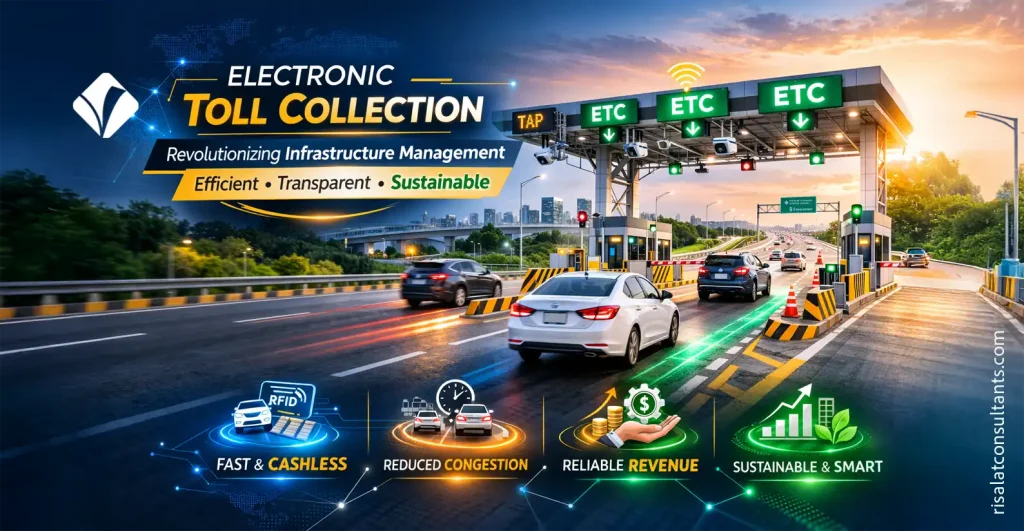
A roadside reader can identify a vehicle through a radio-frequency identification tag. Passive tags draw energy from the reader's signal, while active tags contain their own power source. Cameras can supply a plate image when a tag is absent or unreadable. Sensors and image-based methods can help determine the vehicle class. The tariff engine combines these inputs with the applicable charging rules. It may need to consider vehicle category, the location and time of passage, exemptions or discounts. Specify how conflicting observations are handled and how much confidence is needed before a charge is raised.
Test difficult cases using a planned set of examples. Include closely spaced vehicles, a vehicle towing a trailer, vehicles moving between lanes, an obscured plate and a valid tag in a vehicle whose class has changed. Ask what the roadside equipment records and what the back office ultimately bills. A good acceptance test compares the actual vehicle and applicable tariff with the result at the end of the process. A high tag-read rate can coexist with costly classification mistakes or duplicate charges.
Проектирование для восстановления и доказательная база
Фактом проезда должна считаться уникальная запись со ссылкой, отметкой времени и достаточным количеством подтверждающих доказательств для отслеживания платы. Бэк-офис должен уметь обрабатывать временные сбои сети, запоздалые сообщения и повторные отправки. Если рамка сохраняет данные о проезде при отсутствии связи, протестируйте, как она пересылает их и как система предотвращает двойную оплату. Проверьте, что происходит при сбое часов в дорожном пункте. Разница в несколько минут может повлиять на применение тарифов в схеме с зависимостями от времени.
Satellite positioning can support distance-based charging where the scheme needs to measure travel across a network. It brings a different set of decisions about location data, device availability, coverage and enforcement. Choose the architecture by looking at the charging objective, user groups and cost of managing errors. A well-run fixed gantry can suit one corridor while a network charge may need a different approach. The project should explain which data it must retain for billing and disputes and for how long.
Make interoperability work across organisations
Agree operating rules as well as technology
When a motorist uses one account on another operator's road, the roadside read is only the first step. The operator must recognise the issuing organisation, exchange the transaction, agree the applicable amount and receive settlement. Both parties need a way to reconcile adjustments and investigate errors. The customer needs to know who can explain the bill and reverse an incorrect charge. Specify the exchange format, responsibilities and service levels before testing the interface.
Национальное управление автомобильных дорог Индии публикует руководящие принципы схемы интеграции государственных и городских плаз в программу Национального электронного сбора платы за проезд. Департамент транспорта штата Техас описывает соглашение о региональной совместимости, благодаря которому клиенты участвующих ведомств могут использовать подходящие метки в поддерживаемых сетях. Эти два примера показывают, почему властям следует проверять как сеть участвующих организаций, так и условия принятия. Такая метка, как «совместимый», дает водителю мало информации, если она не указывает, где работает метка или что происходит при наличии задолженности по счету.
Test settlement with realistic exceptions
Представьте, что оператор регистрирует действительный проезд с помощью метки, выданной в другом месте. Эмитент отклоняет претензию, поскольку учетная запись была закрыта в период между проездом и обработкой. Оператору необходимо определить, кто берет на себя риск и как с водителя будет взыскана плата по согласованным правилам. Отработайте этот сценарий перед запуском. Включите дублирующее сообщение, исправление класса транспортного средства, спорный сбор и возврат средств, уже осуществленный другой стороной. Отчеты о взаиморасчетах должны показывать, почему валовая стоимость сборов отличается от полученной чистой суммы.
The reconciliation team can sample trips from the roadside system and trace them to an account, a mailed bill or an authorised exception. It should also trace selected bank receipts back to the billed or settled transactions. Compare the results with the accounting ledger by day and operator. Differences should have categories and resolution times. This exercise can reveal whether a problem lies in the reader, an external exchange, the tariff engine or accounting.
Move users in stages
Make enrolment and payment workable
Электронная система сбора платы за проезд позволяет сократить количество остановок и очередей на пунктах взимания платы. Ее эффект зависит от проектирования дорог, характера движения транспорта и реакции людей на схему оплаты. Если водителям трудно получить транспондер или поддерживать баланс счета, очереди могут сместиться в пункты регистрации, а количество споров может возрасти. Смоделируйте, как дорогой будут пользоваться местные жители, коммерческие автопарки, случайные посетители и люди, не имеющие удобного доступа к банковским услугам. Предоставьте четкую информацию о сроках оплаты, тарифах и каналах поддержки до вступления изменений в силу.
New York's Metropolitan Transportation Authority documents how E-ZPass and Tolls by Mail apply in its Congestion Relief Zone. The operational distinction is useful beyond New York: a tag account and a plate-based bill each need a reliable way to identify the liable account and communicate the charge. A plate fallback will depend on the quality of images and the lawful availability of accurate vehicle records. Test how rental and fleet vehicles are handled, including how a driver can recognise a charge passed on by another organisation.
Measure the pilot against a baseline
Пилотный проект должен охватывать репрезентативный трафик, погодные условия и часы работы. Перед его началом зафиксируйте длину очереди или время в пути, количество транзакций, сверку выручки, объем жалоб и стоимость обработки. Во время пилотного проекта отслеживайте корректность считывания, правильность классификации и начислений, нечитаемые номера, отклоненные платежи, задержки расчетов и время разрешения споров. Включите выборку, которая сравнивает решения системы с проверенными наблюдениями. Предоставьте руководителям пороговые значения для продления пилотного проекта или устранения конкретного сбоя перед переходом к следующему этапу.
For example, a hypothetical pilot records very few unreadable tags but a high rate of disputes from commercial vehicles. A sample finds that trailers are recognised correctly when vehicles are separated and misclassified when two pass close together. The operator can tune detection, retest the scenario and temporarily send low-confidence transactions for review. Simply reporting the aggregate tag-read rate would give the board little reason to delay expansion while this defect is investigated.
Protect revenue, privacy and accountability
Set rules for tariffs, exceptions and disputes
Make the tariff rules and exemptions visible to users, and maintain a controlled record of changes. Require independent approval for changes to tariff tables and check effective dates before deployment. Audit privileged activity, including cancellations, write-offs and refunds. If a human reviewer can override a classification, retain the reason and enough evidence for review. Design a dispute process with clear time limits and an accessible route to correction. Charging errors can compound if a disputed transaction automatically generates further fees before anyone reviews it.
Plate and journey records can reveal information about where people travel. Establish a lawful basis and a specific purpose for collecting data, set retention periods and limit staff and supplier access. Keep the evidence needed for a dispute without retaining every image indefinitely. Test whether staff can recover records after an outage and whether access can be revoked promptly when roles change. Where payment services are outsourced, map who can see account information and who must respond to an incident.
Сравнить варианты финансирования с использованием реалистичных затрат
An authority may buy the equipment and operate the back office, buy a managed service or include tolling within a broader concession. Compare the total cost of each arrangement, including communications, renewals, enforcement, call centres, disputes and supplier transition. Specify which party bears losses for errors and delayed settlement. A payment per processed transaction can reward volume, while service measures tied to correctly resolved events can make the operator accountable for quality. Audit access and data portability matter whichever financing structure is chosen.
Model the revenue case under different traffic and compliance assumptions. Report which changes result from the tariff, which reflect transaction accuracy and which come from traffic diversion or growth. If one of the objectives is to reduce emissions or congestion, measure outcomes at the network level where possible. Faster passage at one gantry tells the authority little about queuing or traffic displaced to nearby streets.
What ministries, public agencies and donor-funded projects can do
Specify end-to-end acceptance
A ministry or road agency can procure a staged implementation, with payments linked to demonstrations of billing accuracy, settlement, service availability and dispute handling. Use contract tests that include external account issuers and real operating conditions. Require a documented fallback plan, secure transfer of records and a way to operate the service during a transition between suppliers. Separate the decision to accept installed hardware from the decision to use it for live charging.
Оценка цифровой готовности может помочь проверить, сможет ли агентство управлять бэк-офисом и безопасно обмениваться данными. Оценка зрелости закупок может помочь проекту выявить пробелы в оценке, приемке и мониторинге контрактов до объявления торгов.
Give the public authority control of performance
A donor-funded project can support transaction testing, independent revenue assurance and improvements to payment access. Agree who will fund support, maintain interfaces and update the tariff after the project closes. Ask the operator to demonstrate a full month-end reconciliation and provide a sample of closed complaints. Publish aggregate measures and describe how the operator verifies them. The agency should be able to explain a disputed charge and reconcile the money received even when a contractor operates the technology.
Часто задаваемые вопросы
How does electronic toll collection identify vehicles?
It can use a radio-frequency tag, plate recognition and other sensors to associate a passage with an account or bill and determine the tariff class.
Требует ли функциональная совместимость одинакового оборудования повсюду?
It requires compatible identification and agreed transaction, settlement and dispute procedures. Participants can use different systems if their interfaces work together.
Что должно проверить пилотное тестирование?
Проверьте правильность выставления счетов, восстановления после сбоев, доступа к платежам, межсетевых расчетов, средств контроля конфиденциальности и обработки споров, а также производительности оборудования.
How can occasional users pay?
The available options depend on the scheme. They may include a tag account, plate-based billing or an approved payment channel.
Смотреть



Know people who should read this? Become an Ambassador or write with Risalat.
Партнеры в успехе проектов с 2011 года: диагностика, консультационная поддержка и прикладное обучение для министерств, государственных ведомств и проектных команд.
Нужна помощь, чтобы применить это на практике?
Начните с бесплатной 10-минутной диагностики или обратитесь к нашим экспертам.