Points essentiels
- Design the system around a complete transaction. A roadside reader can identify a vehicle through a radio-frequency identification tag.
- Make interoperability work across organisations. When a motorist uses one account on another operator's road, the roadside read is only the first step.
- Move users in stages. Electronic tolling can reduce stops and queues at plazas.
- Protect revenue, privacy and accountability. Make the tariff rules and exemptions visible to users, and maintain a controlled record of changes.
- What ministries, public agencies and donor-funded projects can do. A ministry or road agency can procure a staged implementation, with payments linked to demonstrations of billing accuracy, settlement, service availability and dispute handling.
In short: Plan electronic toll collection from roadside detection to settlement, with controls for interoperability, user access, privacy and a phased rollout.
Free self-check: the governance self-audit gives a quick check of governance, controls and accountability, in about 10 minutes.
In short. Electronic toll collection works when the operator can identify and classify a vehicle, apply the correct tariff, collect the payment and resolve exceptions. Road authorities should test that whole chain before expanding a system or removing cash lanes. Users need practical ways to enrol, pay and challenge an error.
Design the system around a complete transaction
Start with detection and classification
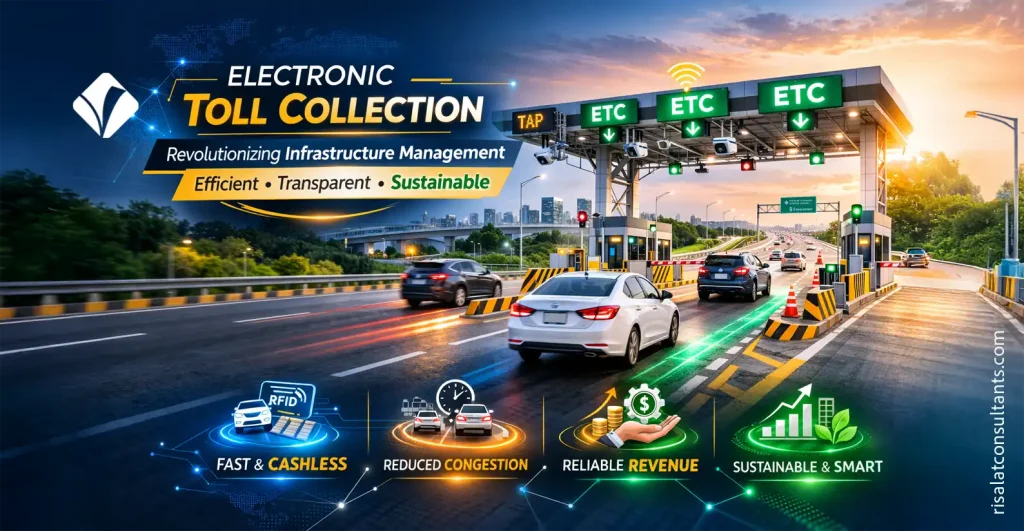
A roadside reader can identify a vehicle through a radio-frequency identification tag. Passive tags draw energy from the reader's signal, while active tags contain their own power source. Cameras can supply a plate image when a tag is absent or unreadable. Sensors and image-based methods can help determine the vehicle class. The tariff engine combines these inputs with the applicable charging rules. It may need to consider vehicle category, the location and time of passage, exemptions or discounts. Specify how conflicting observations are handled and how much confidence is needed before a charge is raised.
Test difficult cases using a planned set of examples. Include closely spaced vehicles, a vehicle towing a trailer, vehicles moving between lanes, an obscured plate and a valid tag in a vehicle whose class has changed. Ask what the roadside equipment records and what the back office ultimately bills. A good acceptance test compares the actual vehicle and applicable tariff with the result at the end of the process. A high tag-read rate can coexist with costly classification mistakes or duplicate charges.
Design for recovery and evidence
A toll event should have a unique reference, a timestamp and enough authorised evidence to trace the charge. The back office should be able to handle temporary network failures, late messages and repeat submissions. If a gantry stores events while connectivity is down, test how it forwards them and how the system prevents double billing. Check what happens when the clock at a roadside location drifts. A difference of a few minutes can affect tariff treatment in a scheme with time-dependent rates.
Satellite positioning can support distance-based charging where the scheme needs to measure travel across a network. It brings a different set of decisions about location data, device availability, coverage and enforcement. Choose the architecture by looking at the charging objective, user groups and cost of managing errors. A well-run fixed gantry can suit one corridor while a network charge may need a different approach. The project should explain which data it must retain for billing and disputes and for how long.
Make interoperability work across organisations
Agree operating rules as well as technology
When a motorist uses one account on another operator's road, the roadside read is only the first step. The operator must recognise the issuing organisation, exchange the transaction, agree the applicable amount and receive settlement. Both parties need a way to reconcile adjustments and investigate errors. The customer needs to know who can explain the bill and reverse an incorrect charge. Specify the exchange format, responsibilities and service levels before testing the interface.
India's National Highways Authority publishes scheme guidelines for bringing state and city plazas into the National Electronic Toll Collection programme. The Texas Department of Transportation describes a regional interoperability arrangement through which customers of participating agencies can use eligible tags across supported networks. The two cases show why authorities should verify both the network of participating organisations and the terms of acceptance. A label such as compatible tells a driver little if it does not identify where the tag works or what happens when the account is in arrears.
Test settlement with realistic exceptions
Imaginez qu'un opérateur enregistre un passage valide à l'aide d'un badge émis ailleurs. L'émetteur rejette la réclamation parce que le compte a été fermé entre le passage et le traitement. L'opérateur doit déterminer qui prend le risque et comment le conducteur sera facturé selon les règles convenues. Exécutez ce scénario avant le lancement. Incluez un message dupliqué, une correction de la classe de véhicule, un péage contesté et un remboursement déjà émis par l'autre partie. Les rapports de règlement doivent montrer pourquoi la valeur brute des charges diffère du montant net reçu.
The reconciliation team can sample trips from the roadside system and trace them to an account, a mailed bill or an authorised exception. It should also trace selected bank receipts back to the billed or settled transactions. Compare the results with the accounting ledger by day and operator. Differences should have categories and resolution times. This exercise can reveal whether a problem lies in the reader, an external exchange, the tariff engine or accounting.
Move users in stages
Make enrolment and payment workable
Electronic tolling can reduce stops and queues at plazas. Its effect depends on road design, traffic patterns and how people respond to the charging scheme. If drivers struggle to obtain a tag or keep an account funded, queues may shift to enrolment points and disputes can grow. Map how residents, commercial fleets, occasional visitors and people without convenient access to banking will use the road. Give clear information about payment deadlines, charges and support channels before the change takes effect.
New York's Metropolitan Transportation Authority documents how E-ZPass and Tolls by Mail apply in its Congestion Relief Zone. The operational distinction is useful beyond New York: a tag account and a plate-based bill each need a reliable way to identify the liable account and communicate the charge. A plate fallback will depend on the quality of images and the lawful availability of accurate vehicle records. Test how rental and fleet vehicles are handled, including how a driver can recognise a charge passed on by another organisation.
Measure the pilot against a baseline
A pilot should cover representative traffic, weather and operating hours. Before it starts, record queue length or travel time, transaction counts, revenue reconciliation, complaint volume and processing cost. During the pilot, monitor valid reads, correct classifications and charges, unreadable plates, rejected payments, settlement delays and time to resolve disputes. Include a sample that compares system decisions with verified observations. Give managers thresholds for extending the pilot or fixing a specific failure before moving to the next stage.
For example, a hypothetical pilot records very few unreadable tags but a high rate of disputes from commercial vehicles. A sample finds that trailers are recognised correctly when vehicles are separated and misclassified when two pass close together. The operator can tune detection, retest the scenario and temporarily send low-confidence transactions for review. Simply reporting the aggregate tag-read rate would give the board little reason to delay expansion while this defect is investigated.
Protect revenue, privacy and accountability
Set rules for tariffs, exceptions and disputes
Make the tariff rules and exemptions visible to users, and maintain a controlled record of changes. Require independent approval for changes to tariff tables and check effective dates before deployment. Audit privileged activity, including cancellations, write-offs and refunds. If a human reviewer can override a classification, retain the reason and enough evidence for review. Design a dispute process with clear time limits and an accessible route to correction. Charging errors can compound if a disputed transaction automatically generates further fees before anyone reviews it.
Plate and journey records can reveal information about where people travel. Establish a lawful basis and a specific purpose for collecting data, set retention periods and limit staff and supplier access. Keep the evidence needed for a dispute without retaining every image indefinitely. Test whether staff can recover records after an outage and whether access can be revoked promptly when roles change. Where payment services are outsourced, map who can see account information and who must respond to an incident.
Comparer les options de financement à l'aide de coûts réalistes
An authority may buy the equipment and operate the back office, buy a managed service or include tolling within a broader concession. Compare the total cost of each arrangement, including communications, renewals, enforcement, call centres, disputes and supplier transition. Specify which party bears losses for errors and delayed settlement. A payment per processed transaction can reward volume, while service measures tied to correctly resolved events can make the operator accountable for quality. Audit access and data portability matter whichever financing structure is chosen.
Model the revenue case under different traffic and compliance assumptions. Report which changes result from the tariff, which reflect transaction accuracy and which come from traffic diversion or growth. If one of the objectives is to reduce emissions or congestion, measure outcomes at the network level where possible. Faster passage at one gantry tells the authority little about queuing or traffic displaced to nearby streets.
What ministries, public agencies and donor-funded projects can do
Specify end-to-end acceptance
A ministry or road agency can procure a staged implementation, with payments linked to demonstrations of billing accuracy, settlement, service availability and dispute handling. Use contract tests that include external account issuers and real operating conditions. Require a documented fallback plan, secure transfer of records and a way to operate the service during a transition between suppliers. Separate the decision to accept installed hardware from the decision to use it for live charging.
Une évaluation de la maturité numérique peut aider à vérifier si l'organisme est en mesure de faire fonctionner les services administratifs et de partager des données en toute sécurité. Une évaluation de la maturité des marchés publics peut aider le projet à identifier les lacunes en matière d'évaluation, d'acceptation et de suivi des contrats avant la publication des avis d'appel d'offres.
Give the public authority control of performance
A donor-funded project can support transaction testing, independent revenue assurance and improvements to payment access. Agree who will fund support, maintain interfaces and update the tariff after the project closes. Ask the operator to demonstrate a full month-end reconciliation and provide a sample of closed complaints. Publish aggregate measures and describe how the operator verifies them. The agency should be able to explain a disputed charge and reconcile the money received even when a contractor operates the technology.
Questions fréquentes
How does electronic toll collection identify vehicles?
It can use a radio-frequency tag, plate recognition and other sensors to associate a passage with an account or bill and determine the tariff class.
L'interopérabilité exige-t-elle un équipement identique partout ?
It requires compatible identification and agreed transaction, settlement and dispute procedures. Participants can use different systems if their interfaces work together.
Que doit tester un projet pilote ?
Test correct billing, failure recovery, payment access, cross-network settlement, privacy controls and dispute handling as well as equipment performance.
How can occasional users pay?
The available options depend on the scheme. They may include a tag account, plate-based billing or an approved payment channel.
Regarder



Know people who should read this? Become an Ambassador or write with Risalat.
Partenaires de la réussite des projets depuis 2011 : diagnostics, conseil et apprentissage appliqué pour les ministères, les organismes publics et les équipes de projet.
Besoin d'aide pour passer à la pratique ?
Commencez par un diagnostic gratuit de 10 minutes ou échangez avec nos experts.