要点总结
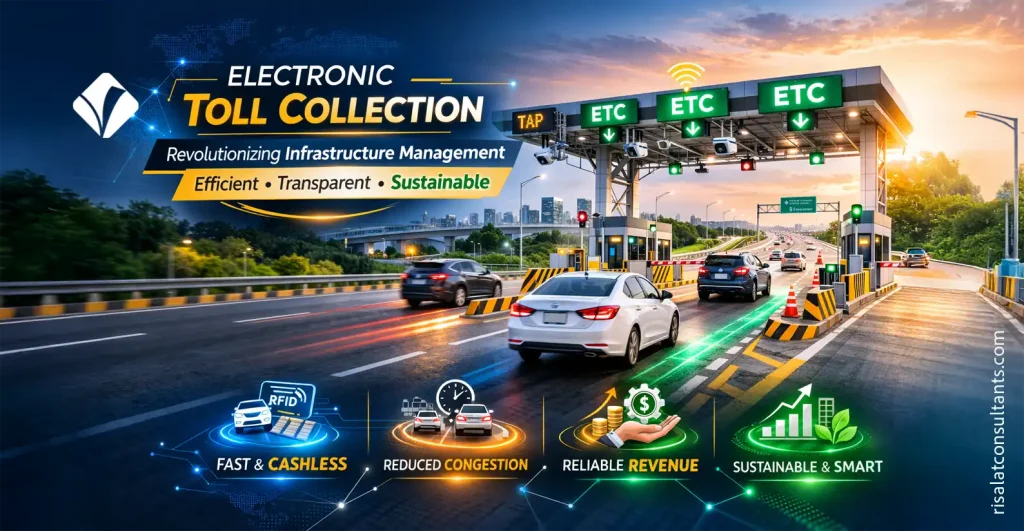
- Design the system around a complete transaction. A roadside reader can identify a vehicle through a radio-frequency identification tag.
- 使互操作性在各组织之间发挥作用。当驾车者在另一家运营商的公路上使用一个账户时,路侧读取只是第一步。
- Move users in stages. Electronic tolling can reduce stops and queues at plazas.
- Protect revenue, privacy and accountability. Make the tariff rules and exemptions visible to users, and maintain a controlled record of changes.
- What ministries, public agencies and donor-funded projects can do. A ministry or road agency can procure a staged implementation, with payments linked to demonstrations of billing accuracy, settlement, service availability and dispute handling.
In short: Plan electronic toll collection from roadside detection to settlement, with controls for interoperability, user access, privacy and a phased rollout.
Free self-check: the governance self-audit gives a quick check of governance, controls and accountability, in about 10 minutes.
In short. Electronic toll collection works when the operator can identify and classify a vehicle, apply the correct tariff, collect the payment and resolve exceptions. Road authorities should test that whole chain before expanding a system or removing cash lanes. Users need practical ways to enrol, pay and challenge an error.
Design the system around a complete transaction
Start with detection and classification
A roadside reader can identify a vehicle through a radio-frequency identification tag. Passive tags draw energy from the reader's signal, while active tags contain their own power source. Cameras can supply a plate image when a tag is absent or unreadable. Sensors and image-based methods can help determine the vehicle class. The tariff engine combines these inputs with the applicable charging rules. It may need to consider vehicle category, the location and time of passage, exemptions or discounts. Specify how conflicting observations are handled and how much confidence is needed before a charge is raised.
Test difficult cases using a planned set of examples. Include closely spaced vehicles, a vehicle towing a trailer, vehicles moving between lanes, an obscured plate and a valid tag in a vehicle whose class has changed. Ask what the roadside equipment records and what the back office ultimately bills. A good acceptance test compares the actual vehicle and applicable tariff with the result at the end of the process. A high tag-read rate can coexist with costly classification mistakes or duplicate charges.
恢复与证据设计
收费事件应具有唯一的参考编号、时间戳以及足够的授权证据来追踪费用。后台应能够处理临时的网络故障、延迟的消息和重复提交。如果门架在连接断开时存储事件,请测试其如何转发事件以及系统如何防止重复计费。检查路侧位置的时钟发生漂移时会发生什么。在实行按时间计费的方案中,几分钟的差异可能会影响费率处理。
Satellite positioning can support distance-based charging where the scheme needs to measure travel across a network. It brings a different set of decisions about location data, device availability, coverage and enforcement. Choose the architecture by looking at the charging objective, user groups and cost of managing errors. A well-run fixed gantry can suit one corridor while a network charge may need a different approach. The project should explain which data it must retain for billing and disputes and for how long.
Make interoperability work across organisations
Agree operating rules as well as technology
When a motorist uses one account on another operator's road, the roadside read is only the first step. The operator must recognise the issuing organisation, exchange the transaction, agree the applicable amount and receive settlement. Both parties need a way to reconcile adjustments and investigate errors. The customer needs to know who can explain the bill and reverse an incorrect charge. Specify the exchange format, responsibilities and service levels before testing the interface.
印度国家公路管理局发布了将州和城市收费广场纳入国家电子收费计划的方案指南。德克萨斯州交通运输部描述了一种区域互操作性安排,通过该安排,参与机构的客户可以在支持的网络中使用符合条件的标签。这两个案例表明,主管部门应核实参与组织的网络和接受条款。如果诸如兼容之类的标签未能标明标签的工作地点或账户欠费时的处理方式,它对驾驶员而言便毫无意义。
Test settlement with realistic exceptions
Imagine an operator logs a valid passage using a tag issued elsewhere. The issuer rejects the claim because the account was closed between the passage and processing. The operator needs to determine who takes the risk and how the driver will be billed under the agreed rules. Run that scenario before launch. Include a duplicate message, a correction to the vehicle class, a disputed toll and a refund already issued by the other party. Settlement reports should show why the gross value of charges differs from the net amount received.
The reconciliation team can sample trips from the roadside system and trace them to an account, a mailed bill or an authorised exception. It should also trace selected bank receipts back to the billed or settled transactions. Compare the results with the accounting ledger by day and operator. Differences should have categories and resolution times. This exercise can reveal whether a problem lies in the reader, an external exchange, the tariff engine or accounting.
Move users in stages
Make enrolment and payment workable
电子不停车收费可以减少广场上的停车和排队。其效果取决于道路设计、交通模式以及人们对收费方案的反应。如果驾驶员难以获得标签或保持账户有余额,排队可能会转移到注册点,争议也可能增加。绘制居民、商业车队、偶访者以及无法便捷使用银行服务的人群将如何使用道路。在变更生效之前,提供有关付款期限、费用和支持渠道的清晰信息。
New York's Metropolitan Transportation Authority documents how E-ZPass and Tolls by Mail apply in its Congestion Relief Zone. The operational distinction is useful beyond New York: a tag account and a plate-based bill each need a reliable way to identify the liable account and communicate the charge. A plate fallback will depend on the quality of images and the lawful availability of accurate vehicle records. Test how rental and fleet vehicles are handled, including how a driver can recognise a charge passed on by another organisation.
Measure the pilot against a baseline
试点应涵盖具代表性的交通、天气和运营时间。在开始之前,记录排队长度或行程时间、交易次数、收入对账、投诉量和处理成本。在试点期间,监督有效读取、正确的分类和收费、无法读取的车牌、拒绝的支付、结算延迟以及解决争议的时间。包括一个将系统决策与验证观察进行比较的样本。为管理者提供将试点延长或在进入下一阶段之前解决特定故障的阈值。
For example, a hypothetical pilot records very few unreadable tags but a high rate of disputes from commercial vehicles. A sample finds that trailers are recognised correctly when vehicles are separated and misclassified when two pass close together. The operator can tune detection, retest the scenario and temporarily send low-confidence transactions for review. Simply reporting the aggregate tag-read rate would give the board little reason to delay expansion while this defect is investigated.
Protect revenue, privacy and accountability
Set rules for tariffs, exceptions and disputes
Make the tariff rules and exemptions visible to users, and maintain a controlled record of changes. Require independent approval for changes to tariff tables and check effective dates before deployment. Audit privileged activity, including cancellations, write-offs and refunds. If a human reviewer can override a classification, retain the reason and enough evidence for review. Design a dispute process with clear time limits and an accessible route to correction. Charging errors can compound if a disputed transaction automatically generates further fees before anyone reviews it.
Plate and journey records can reveal information about where people travel. Establish a lawful basis and a specific purpose for collecting data, set retention periods and limit staff and supplier access. Keep the evidence needed for a dispute without retaining every image indefinitely. Test whether staff can recover records after an outage and whether access can be revoked promptly when roles change. Where payment services are outsourced, map who can see account information and who must respond to an incident.
Compare financing options using realistic costs
An authority may buy the equipment and operate the back office, buy a managed service or include tolling within a broader concession. Compare the total cost of each arrangement, including communications, renewals, enforcement, call centres, disputes and supplier transition. Specify which party bears losses for errors and delayed settlement. A payment per processed transaction can reward volume, while service measures tied to correctly resolved events can make the operator accountable for quality. Audit access and data portability matter whichever financing structure is chosen.
Model the revenue case under different traffic and compliance assumptions. Report which changes result from the tariff, which reflect transaction accuracy and which come from traffic diversion or growth. If one of the objectives is to reduce emissions or congestion, measure outcomes at the network level where possible. Faster passage at one gantry tells the authority little about queuing or traffic displaced to nearby streets.
What ministries, public agencies and donor-funded projects can do
Specify end-to-end acceptance
A ministry or road agency can procure a staged implementation, with payments linked to demonstrations of billing accuracy, settlement, service availability and dispute handling. Use contract tests that include external account issuers and real operating conditions. Require a documented fallback plan, secure transfer of records and a way to operate the service during a transition between suppliers. Separate the decision to accept installed hardware from the decision to use it for live charging.
A digital readiness assessment can help check whether the agency can operate the back office and share data safely. A procurement maturity assessment can help the project identify gaps in evaluation, acceptance and contract monitoring before it advertises.
Give the public authority control of performance
A donor-funded project can support transaction testing, independent revenue assurance and improvements to payment access. Agree who will fund support, maintain interfaces and update the tariff after the project closes. Ask the operator to demonstrate a full month-end reconciliation and provide a sample of closed complaints. Publish aggregate measures and describe how the operator verifies them. The agency should be able to explain a disputed charge and reconcile the money received even when a contractor operates the technology.
常见问题
How does electronic toll collection identify vehicles?
It can use a radio-frequency tag, plate recognition and other sensors to associate a passage with an account or bill and determine the tariff class.
Does interoperability require identical equipment everywhere?
It requires compatible identification and agreed transaction, settlement and dispute procedures. Participants can use different systems if their interfaces work together.
What should a pilot test?
测试正确的计费、故障恢复、支付接入、跨网络结算、隐私控制、纠纷处理以及设备性能。
How can occasional users pay?
The available options depend on the scheme. They may include a tag account, plate-based billing or an approved payment channel.
观看



- 国际内部审计师协会(IIA) IIA
- 最高审计机关国际组织(INTOSAI) INTOSAI
Know people who should read this? Become an Ambassador or write with Risalat.
自2011年以来始终是项目成功的合作伙伴,为政府部委、公共机构和项目团队提供诊断评估、咨询支持与应用型学习。