Ключевые выводы
- Understanding the issue and its evidence. Regional mapping identifies rock formations and potential mineralisation.
- Design choices and technical delivery. Copper and iron feature prominently in historical geological assessments.
- Financing, procurement and governance. Exploration reports have discussed rare-earth and lithium potential, but headline comparisons with major producing countries can be misleading.
- Implementation, safeguards and measurement. Licensing, beneficial ownership disclosure, production measurement, tax administration and independent audits determine whether extraction creates public value.
- Application to public agencies and donor-funded projects. An apparently rich deposit may be uneconomic without reliable power, roads, rail connections and secure logistics.
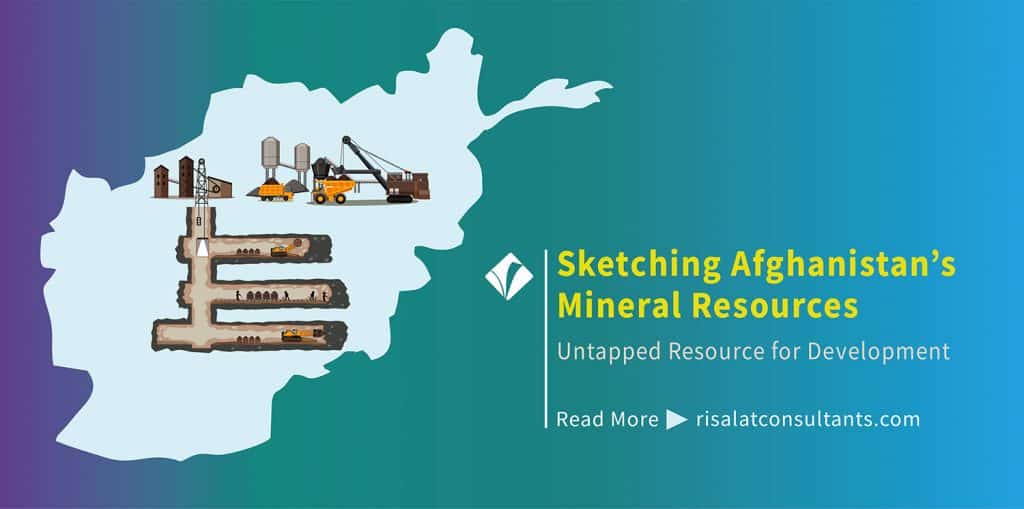
In short: Afghanistan has documented deposits and prospective areas for copper, iron, gemstones, industrial minerals and other resources. Geological potential is not the same as an economically recoverable reserve, and claims of trillions of dollars in mineral wealth should not be treated as bankable valuations.
The US Geological Survey and Afghanistan Geological Survey undertook extensive assessments in the 2000s, identifying known occurrences and areas warranting further investigation. Commercial decisions still require current surveys, feasibility work and transparent governance.
This updated guide revisits the original Risalat article while separating established concepts from claims that require fresh evidence. It is written for practitioners who must decide what to fund, procure, regulate or measure. Illustrative scenarios below are teaching examples, not reports of completed projects.
The earlier article also highlighted a continuing consideration: Dimension Stones – Granite, Marble, Limestone, and Sandstone occur in abundance in the Mountains of Afghanistan, especially in the provinces of Badakhshan, Baghlan, and Herat. The practical implication is to test this proposition against current local evidence before applying it as policy.
The earlier article also highlighted a continuing consideration: Other Industrial Metals: Additional deposits of asbestos, barite, celestite, clay, pegmatite, and potash are available across Afghanistan. The practical implication is to test this proposition against current local evidence before applying it as policy.
The earlier article also highlighted a continuing consideration: Gemstones – Historically being one of the world’s premier sources of gemstones, the country has a lot to offer to the gemstone market from emeralds, rubies, and sapphires to turquoise and lapis. The majority of gemstones come from northeast Afghanistan – Badakhshan, Nuristan, and Konar Provinces. The practical implication is to test this proposition against current local evidence before applying it as policy.
The earlier article also highlighted a continuing consideration: Other Primary Metals – significant amounts of lead, zinc, tin, tungsten, and mercury are found in the country. The largest lead/zinc deposit is in Kandahar province while mercury deposits are available in southwestern Afghanistan. The practical implication is to test this proposition against current local evidence before applying it as policy.
Understanding the issue and its evidence
What geological surveys establish
Regional mapping identifies rock formations and potential mineralisation. It does not by itself confirm grade, tonnage, extraction cost or legal access for a specific mine.
Before setting a target for what geological surveys establish, the responsible team should define the population or asset covered, the current condition and the source of its baseline information. A useful baseline records both what is known and what remains uncertain. In a project appraisal, this prevents a plausible narrative from being mistaken for evidence of demand or impact.
Resources versus reserves
A resource estimate describes mineralisation under stated geological assumptions; a reserve requires further technical and economic assessment. Reporting standards, qualified professionals and transparent uncertainty are essential.
The practical test for resources versus reserves is whether two independent reviewers would reach a similar conclusion using the same records. Specify the definition of success, the relevant technical standard and the point at which a design needs reconsideration. Document exceptions openly rather than averaging away difficult cases.
Design choices and technical delivery
Copper and iron opportunities
Copper and iron feature prominently in historical geological assessments. Development would depend on transport, electricity, water, processing routes, land arrangements and viable international markets.
Consider a hypothetical pilot focused on copper and iron opportunities. The implementation team should begin with a narrowly defined use case, test it under ordinary operating conditions and record user experience alongside technical performance. Procurement should permit correction of design defects before large-scale roll-out.
Gemstones and industrial minerals
Lapis lazuli, emeralds, marble, talc and other materials have different value chains. Smaller operations may need better traceability, cutting and processing skills rather than the infrastructure required by large metal mines.
Operational readiness for gemstones and industrial minerals includes trained staff, a maintenance budget, reliable data and a route for complaints. If one of these is missing, the project may meet its construction or installation milestone while failing to deliver the intended service. Acceptance criteria should therefore include observed performance, not just equipment delivery.
Financing, procurement and governance
Rare earths and lithium
Exploration reports have discussed rare-earth and lithium potential, but headline comparisons with major producing countries can be misleading. Deposits must be characterised by grade, recoverability, processing requirements and environmental costs.
For rare earths and lithium, a business case should distinguish initial investment from recurring costs. Compare alternatives on a common time horizon, including training, replacement, supervision and the cost of service interruptions. The cheapest compliant tender may not provide the lowest whole-life cost.
Hydrocarbons and mineral distinctions
Oil and gas prospects should be evaluated separately from hard-rock minerals. Exploration risk, infrastructure and fiscal arrangements differ substantially between these sectors.
Governance of hydrocarbons and mineral distinctions should clarify who approves changes, who holds the supplier accountable and who pays when assumptions prove wrong. A decision log helps explain trade-offs to auditors and affected communities. Material changes should be reflected in the budget, schedule and risk register before approval.
Decision check: Has the team compared a do-nothing baseline, a limited pilot and a scaled intervention using the same cost, risk and outcome criteria? Record the assumptions behind each option and the reason for selecting one.
Implementation, safeguards and measurement
Governance and revenue management
Licensing, beneficial ownership disclosure, production measurement, tax administration and independent audits determine whether extraction creates public value. Weak institutions can allow revenue leakage and disputes.
A practical control for governance and revenue management is to assign an owner, a reporting interval and an action threshold. Monitoring is useful only when findings lead to a decision: investigate, correct, redesign or stop. The threshold should be established before the data are reviewed to reduce pressure to declare success.
Экологические и социальные меры защиты
Mining can affect water, land, ecosystems and nearby communities. Baseline studies, consultation, grievance mechanisms, rehabilitation bonds and mine-closure plans should precede major approvals.
Evaluation of environmental and social safeguards should look for unintended effects as well as intended benefits. Record who gains access, who bears costs and whether outcomes differ across locations or user groups. When attribution is uncertain, describe the limitations instead of presenting a correlation as proof of impact.
Practical exercise: Give a cross-functional team the baseline, budget and two alternative designs. Ask it to prepare a one-page decision note identifying the main uncertainty, three implementation risks, the evidence required for approval and the trigger for corrective action.
Application to public agencies and donor-funded projects
Infrastructure and market access
An apparently rich deposit may be uneconomic without reliable power, roads, rail connections and secure logistics. Feasibility should compare export of raw material with local processing on a realistic cost basis.
A ministry or project implementation unit addressing infrastructure and market access can start with a short diagnostic: map mandates, list approvals, identify missing skills and test whether the proposed intervention fits existing operating arrangements. The result should be a prioritised workplan with named owners, deadlines and verifiable deliverables.
Development partner priorities
Technical assistance can strengthen geological data management, transparent tendering, environmental oversight and community benefit systems. No donor should treat speculative valuations as guaranteed fiscal income.
In donor-financed work, development partner priorities should be reflected in procurement specifications, financial planning, stakeholder engagement and reporting where relevant. The financing agreement and applicable national law determine the actual obligations. Teams should verify those instruments rather than assume a single donor procedure applies everywhere.
First 30 days: Verify the baseline and consult affected users or operators. Review the first four issues in this guide against available local data. Produce a short list of evidence gaps and decisions that cannot safely be deferred.
Days 31 to 60: Test one feasible intervention, refine the technical specification and confirm whole-life financing. Agree responsibilities between policy owners, implementing agencies, suppliers and oversight bodies. Publish a risk register and a monitoring plan that can be maintained with existing capacity.
Days 61 to 90: Review early results with users and independent specialists, correct weak assumptions and decide whether to expand, redesign or discontinue the intervention. Preserve the lessons in procurement templates and operating procedures so the next project does not repeat avoidable mistakes.
For a field review of governance and revenue management, collect the relevant operating records and speak separately with service users, front-line personnel and the budget holder. Compare their descriptions of the problem and record where they disagree. A discrepancy can indicate a missing measurement, an incentive problem or a genuine difference in experience. A pilot should be designed to resolve that specific uncertainty before public funds are committed to expansion.
For a field review of environmental and social safeguards, collect the relevant operating records and speak separately with service users, front-line personnel and the budget holder. Compare their descriptions of the problem and record where they disagree. A discrepancy can indicate a missing measurement, an incentive problem or a genuine difference in experience. A pilot should be designed to resolve that specific uncertainty before public funds are committed to expansion.
Risalat supports institutions with diagnostic assessments, applied learning and advisory services. Teams can begin with the institutional capacity assessment, explore the diagnostic centre and request a tailored proposal where external support is justified.
Evidence and further reading: The following primary sources informed this update. Readers should consult the underlying publications for scope, dates and methodological limitations.
- USGS, Preliminary Assessment of Non-Fuel Mineral Resources of Afghanistan
- USGS, Afghanistan Mineral Resource Assessment
Часто задаваемые вопросы
What should institutions check about what geological surveys establish?
Regional mapping identifies rock formations and potential mineralisation. It does not by itself confirm grade, tonnage, extraction cost or legal access for a specific mine. Check the local baseline, technical requirements and responsibilities before scaling a proposed solution.
What should institutions check about copper and iron opportunities?
Copper and iron feature prominently in historical geological assessments. Development would depend on transport, electricity, water, processing routes, land arrangements and viable international markets. Check the local baseline, technical requirements and responsibilities before scaling a proposed solution.
What should institutions check about rare earths and lithium?
Exploration reports have discussed rare-earth and lithium potential, but headline comparisons with major producing countries can be misleading. Deposits must be characterised by grade, recoverability, processing requirements and environmental costs. Check the local baseline, technical requirements and responsibilities before scaling a proposed solution.
What should institutions check about governance and revenue management?
Licensing, beneficial ownership disclosure, production measurement, tax administration and independent audits determine whether extraction creates public value. Weak institutions can allow revenue leakage and disputes. Check the local baseline, technical requirements and responsibilities before scaling a proposed solution.
What should institutions check about infrastructure and market access?
An apparently rich deposit may be uneconomic without reliable power, roads, rail connections and secure logistics. Feasibility should compare export of raw material with local processing on a realistic cost basis. Check the local baseline, technical requirements and responsibilities before scaling a proposed solution.
Знаете тех, кому стоит это прочитать? Станьте амбассадором Risalat или напишите статью вместе с Risalat под своим именем.
Партнеры в успехе проектов с 2011 года: диагностика, консультационная поддержка и прикладное обучение для министерств, государственных ведомств и проектных команд.
Нужна помощь, чтобы применить это на практике?
Начните с бесплатной 10-минутной диагностики или обратитесь к нашим экспертам.