Key facts
- Dates
- 1–5 Feb 2027 (5 days)
- Where
- Salana Boutique Hotel, Vientiane, Laos
- Fee per participant
- £3,565 (GBP)
- Payment
- By invoice and bank transfer
- Registration closes
- 23 Dec 2026
- Who it is for
- Practitioners, Decision and Policy Makers working in development, climate change and environmental protection sectors; Members of Governmental and…
- Certificate
- Certificate of completion
- In-house option
- Run it for your team, on your dates
Programme Overview
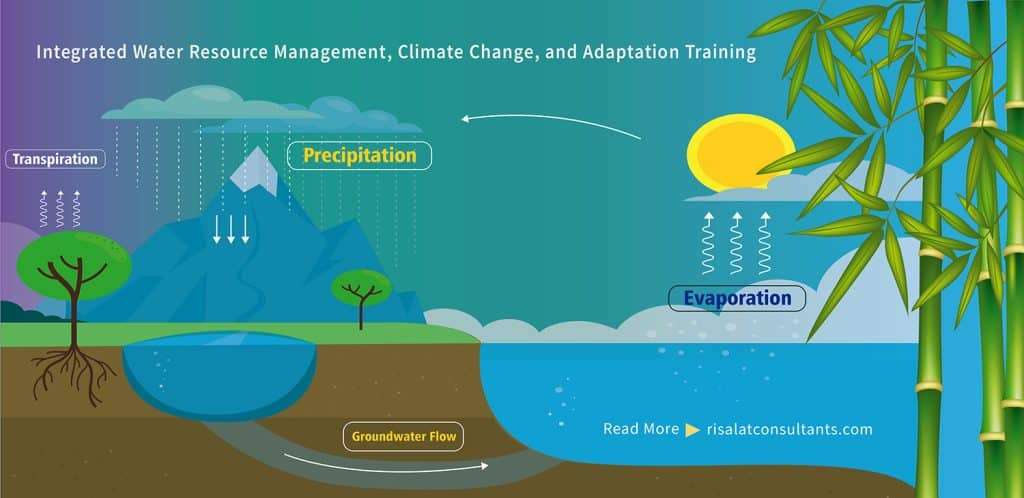
Water is a critical resource and a key pillar for sustainable development. Its scarcity is a pressing issue affecting many regions around the world. Growing population alongside elevated industrial and farming needs only escalates pressure on already limited resources. In addition, extreme climate change severely compromises our ability to manage water scarcity problems. Addressing water scarcity requires a multidimensional approach. This potentially includes efficient water management, investments in infrastructure, water conservation, better agricultural practices, pollution control, and societal awareness raising. Integrated water resource management (IWRM) is a holistic approach to managing water resources in a sustainable and equitable manner. It addresses water-related conflicts by considering social, economic, and environmental dimensions.
Integrated Water Resource Management, Climate Change, and Adaptation Training in Vientiane has been developed to aid efficient and equitable water allocation and support the long-term viability of water resources. It targets governmental and development workers, policymakers, and practitioners and equips them with scalable approaches that can contribute to climate change mitigation. Particular attention is drawn to effective water resource management systems and functional strategies for ensuring improved access to water.
Target Audience
The programme is the best suit for:
- Practitioners, Decision and Policy Makers working in development, climate change and environmental protection sectors
- Members of Governmental and Intergovernmental Bodies
- Employees of the NGOs operating within the subject field
- Anyone interested in integrated water resource management and climate change.
Tick what your team needs to be able to do.
Programme Objectives
Upon the successful completion of this intensive training course, the participants will be able to:
- Determine the impact of climate change and its influence on water resources
- Identify and Apply Climate Change Adaptation Strategies
- Demonstrate the understanding of Integrated Water Resource Management Tools and Techniques
- Deal with Climate Change Uncertainties and Water Resource Scarcity
- Contribute to the resolution of Water Resource Conflicts
Programme Contents
- Importance of Water for Economic Development
- Climate Change, Its Drivers and impacts
- Climate Change Mitigation and Adaptation
- Climate Change Vulnerabilities and Risk Assessment
- Water and Climate Change – Current Challenges
- Introduction to Water Resource Management
- International Frameworks for Integrated Water Resource Management
- Water Supply and Distribution
- Minimizing Water Loss
- Sources of Water
- Water Scarcity – Predictions and Preparedness
- Safe Water Reuse
- Wastewater Treatment and Recycling
- Storm Water Management
- Desertification Abatement
- Projections of future climate change impacts on the water cycle
- Strategy Development and Planning for Adaptation
- Technologies for addressing adaptation challenges
- Climate Change and Agriculture
- Drought Risk Management
- Conflict issues in water resources management
- Power, social processes and water rights
- Approaches to conflict resolution
- Conflict resolution measures
- The last day of the programme will entirely be dedicated to hands-on practice and knowledge reinforcement.
- Throughout this ultimate session, programme delegates will become actively involved in a multitude of group assignments, panel discussions, scenario…
- To diversify the expertise and acquire specific knowledge regarding the host country’s/region’s Climate Change Adaptation Measures and Water Resource…
- Together with the consultant and guest presenters, participants will perform a critical evaluation of Climate Change Adaptation Measures and…
Full day-by-day contents
First Day
- Importance of Water for Economic Development
- Climate Change, Its Drivers and impacts
- Climate Change Mitigation and Adaptation
- Climate Change Vulnerabilities and Risk Assessment
- Water and Climate Change – Current Challenges
- Introduction to Water Resource Management
Second Day
- International Frameworks for Integrated Water Resource Management
- Water Supply and Distribution
- Minimizing Water Loss
- Sources of Water
- Water Scarcity – Predictions and Preparedness
- Safe Water Reuse
- Wastewater Treatment and Recycling
Third Day
- Storm Water Management
- Desertification Abatement
- Projections of future climate change impacts on the water cycle
- Strategy Development and Planning for Adaptation
- Technologies for addressing adaptation challenges
Fourth Day
- Climate Change and Agriculture
- Drought Risk Management
- Conflict issues in water resources management
- Power, social processes and water rights
- Approaches to conflict resolution
- Conflict resolution measures
Fifth Day – Knowledge Reinforcement and Real-life Adoption of Theoretical Base
The last day of the programme will entirely be dedicated to hands-on practice and knowledge reinforcement. Throughout this ultimate session, programme delegates will become actively involved in a multitude of group assignments, panel discussions, scenario analysis, and case studies.
To diversify the expertise and acquire specific knowledge regarding the host country’s/region’s Climate Change Adaptation Measures and Water Resource Management Practices, Risalat will invite guest speakers from local governmental institutions and development organizations. Together with the consultant and guest presenters, participants will perform a critical evaluation of Climate Change Adaptation Measures and Integrated Water Resource Management Practices from different countries of the world. As a consequence, the delegates shall match these best practices with their specific contexts.
- Funds
- Entity
- Project
- Results
- MRV
Programme Methodology
The methodology used is designed to encourage maximum participation of all delegates. The consultant will lead sessions through open presentations and support them with interactive exercises, flipped learning, case studies, video demonstrations, and group assignments. Panel Discussions and Scenario Analysis make up a fair share of the programme. To make discussions more vibrant and diversified, Risalat will involve several guest presenters from partner development organizations. The speakers will be selected based on audience requirements, interests, and backgrounds.
Host Country Profile
Lao PDR had long been considered a water-rich country. Yet, increased pressure on water, especially in dry seasons, has strained available resources. Climate change has also been influencing the region negatively. Water quality has been deteriorating, and infrastructure has come under increased risk of fracture from flooding.
As a response to the above challenges, Lao PDR has implemented a series of reforms. These included the development of a national water resource strategy and action plans. The law has become more focused on water resource protection and sustainable use. Aided by the World Bank, the country became a part of the Mekong Integrated Water Resource Management (IWRM) programme alongside Cambodia, Thailand, and Viet Nam.
Course Deliverables
Participants will enjoy a full-service experience that covers everything needed before, during, and after the programme:
Before the Programme
- Participant Pre-Assessment to ensure effective preparation
- Complimentary Visa Support & Advisory (E-visa applications are fully processed by our team)
During the Programme
- Airport Pickup & Welcome Assistance
- Accommodation with Breakfast for the full duration
- Welcome Dinner for networking and connecting with fellow Participants & the Risalat Team
- Risalat Training Kit, including: bag, water bottle, coffee mug, t-shirt, cap, passport cover, pens, notebook, magnet, keychain
- Lunch Provided Daily during training days
- Comprehensive Course Manual & Training Materials
- Project-Based Templates, Tools, and Worksheets
- Mini Pad / Tablet for convenient access to digital resources
- Digital Case Studies, Reading Packs & Reference Materials
- Access to Sample Datasets & Practical Exercises
- Field Visit (where applicable)
- Complimentary Refreshments & Full Training Venue Facilities
- Access to Online Learning Resources
- Entertaining City Tour
- Certificate of Completion
- Risalat Programme Participation Recognition Award
After the Programme
- Post-Training Support & Follow-Up Guidance
- Programme Report
All programmes in VientianeMore Climate Change & Environment programmes
£3,565 per participant · invoice and bank transfer · groups of 5 or more receive a discount
Five or more from one organisation: ask for the group rate on the invoice request.
Ten or more: an in-house version for your institution may cost less per person. Ask for an in-house quote.
Registration closes in 53 days (23 Dec 2026)