حقائق رئيسية
- المواعيد
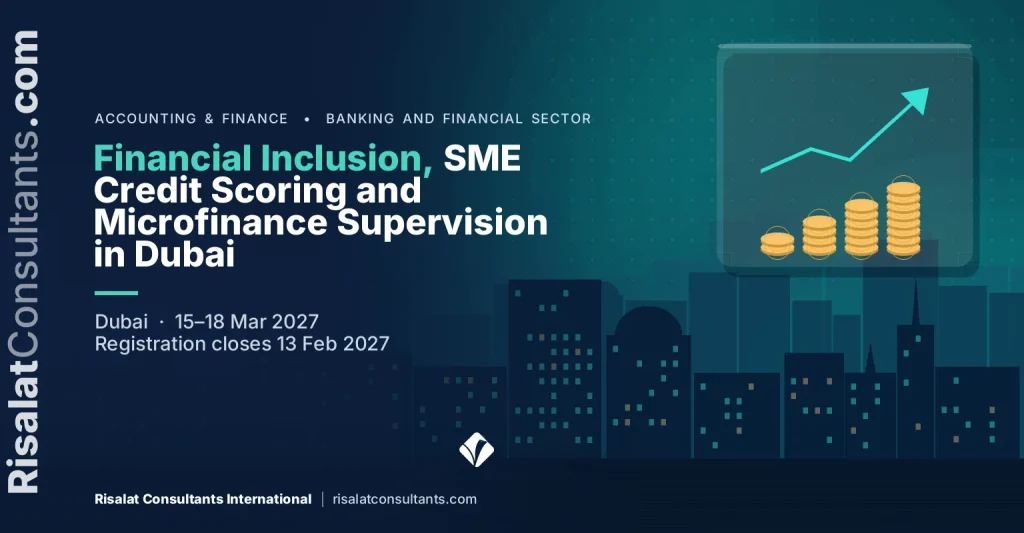
- 15–18 Mar 2027 (4 days)
- المكان
- Dubai, United Arab Emirates
- الرسوم لكل مشارك
- £2,300 (GBP)
- الدفع
- بالفاتورة والتحويل المصرفي
- إغلاق التسجيل
- 13 فبراير 2027
- الشهادة
- شهادة إتمام
- الخيار المؤسسي
- نفّذه لفريقك، في المواعيد التي تناسبك
في هذه الصفحة 14 قسماً
نظرة عامة على البرنامج
Financial inclusion remains central to sustainable economic development, requiring robust regulatory mechanisms that safeguard financial stability while expanding credit access. This four-day professional course in Dubai provides financial authorities with technical expertise in supervising non-bank financial institutions and microfinance organisations. Participants analyse established prudential standards, proportional regulatory regimes, and credit market infrastructure required to integrate underserved populations into the formal financial system safely.
The curriculum addresses the operational complexities of SME credit assessment, focusing on automated underwriting models, alternative data integration, and partial credit guarantee arrangements. Supervisors and policy specialists explore balance sheet vulnerabilities specific to microfinance institutions, including asset-liability mismatches, portfolio quality deterioration, and liquidity constraints. Regulatory approaches to novel financial technologies are examined alongside practical supervisory frameworks to maintain market integrity.
Delegates evaluate international supervisory practices adapted for emerging economies, with dedicated reference to transitional banking environments such as Tajikistan. Through structured analysis of Basel Committee guidelines on microfinance, CGAP recommendations, and consumer protection principles, attendees learn to calibrate supervisory intensity. The programme equips professionals to design monitoring regimes that promote institutional resilience, encourage commercial lending to small enterprises, and protect rural borrowers from systemic shocks.
Emerging economies are actively upgrading financial infrastructure under initiatives like the Financial and Private Sector Development Project to resolve structural barriers facing small enterprises. Financial authorities require immediate technical capacity to oversee modernised credit registries, supervise non-bank lending entities, and deploy risk-sharing facilities effectively. Strengthening supervisory oversight ensures expanding access to capital does not compromise financial system stability or consumer welfare during rapid digital transition.
Delivered by Risalat Consultants International in Dubai, United Arab Emirates, it combines expert-led sessions, real cases and group work, so that participants can apply what they learn in their own institution.
The Programme Strengthens Institutional Capability
- Basel Committee guidance on the application of core principles for microfinance
- Tiered regulatory architecture: differentiating banks, microcredit deposit-taking institutions, and non-deposit lenders
- Off-site surveillance techniques and key prudential ratios for microfinance institutions
- On-site examination procedures: evaluating asset quality, governance, and operational resilience
- Regulatory reporting frameworks and credit information sharing mechanisms
- Architectures of modern SME credit scoring: scorecard development, cut-off selection, and validation
- Integrating alternative data sources, mobile financial history, and utility payments into credit assessment
- Supervisory review of automated underwriting algorithms: transparency, bias mitigation, and model risk
- إعداد الموازنة وتنفيذها
- التقارير المالية والمعايير المحاسبية
- إدارة النقد والخزينة
- الرقابة الداخلية على المدفوعات والأصول
It is designed for central bank banking supervision officers, non-bank financial institution regulatory specialists, financial sector policy analysts from ministries of finance and others who want practical, current skills in public financial management and finance.
The Growing Importance of Financial Inclusion, SME Credit Scoring and Microfinance Supervision in Dubai
الإدارة المالية السليمة هي أساس الموازنات الموثوقة والمدفوعات في مواعيدها والتدقيق الخالي من الملاحظات. وتتوقع الحكومات والجهات الممولة تقارير دقيقة وتنفيذاً منضبطاً للموازنة واستخداماً شفافاً للأموال.
تعني التغيرات في معايير التقارير وأنظمة الدفع الرقمية ومتطلبات الجهات الممولة أن على الفرق المالية مواكبة مهاراتها باستمرار. كما أن الإدارة المالية القوية توفر الوقت والمال للخدمات ذات الأهمية.
تحتاج المؤسسات بشكل متزايد إلى مهنيين قادرين على:
- إعداد الموازنات وتنفيذها بما يتوافق مع الخطط
- إعداد تقارير مالية دقيقة وفي الوقت المناسب
- تطبيق ضوابط على المدفوعات والأصول
- استيفاء متطلبات الجهات الممولة في الإدارة المالية
- استخدام المعلومات المالية لدعم القرارات
تساعد الأنظمة القوية في إدارة المالية العامة والمالية المؤسسات على:
- تحسين مصداقية الموازنة وتنفيذها
- إعداد تقارير موثوقة وتدقيق خالٍ من الملاحظات
- الحد من تأخيرات المدفوعات وأخطائها
- بناء الثقة مع الجهات الممولة وهيئات الرقابة
This Financial Inclusion, SME Credit Scoring and Microfinance Supervision in Dubai programme brings these elements together in a practical format, so that participants understand not only what good practice looks like but also how to introduce it in their own setting, with the people and resources they have.
Who Should Attend This Financial Inclusion, SME Credit Scoring and Microfinance Supervision in Dubai Training?
صُمم هذا البرنامج من أجل:
- Central bank banking supervision officers
- Non-bank financial institution regulatory specialists
- Financial sector policy analysts from ministries of finance
- Commercial banking SME credit unit supervisors
- Microfinance organisation prudential oversight inspectors
- Credit bureau and collateral registry administrators
- Partial credit guarantee scheme risk managers
- Development finance institution portfolio officers
- Financial consumer protection and market conduct regulators
- المديرون الماليون والمحاسبون
- موظفو ومحللو الموازنة
- موظفو الخزينة وإدارة النقد
يناسب البرنامج المهنيين ذوي الخبرة وكذلك من ينتقلون إلى مسؤوليات جديدة. ونشجع المجموعات التي تضم مؤسسات ودولاً مختلفة، لأن المشاركين يتعلمون الكثير من تجارب بعضهم بعضاً.
حدّد ما يحتاج فريقك إلى القدرة على إنجازه.
Financial Inclusion, SME Credit Scoring and Microfinance Supervision in Dubai Training Objectives
Upon successful completion of this Financial Inclusion, SME Credit Scoring and Microfinance Supervision in Dubai Training, participants will be able to:
- Apply risk-based supervisory methodologies to non-bank financial institutions and microfinance operators in accordance with international standards
- Assess automated SME credit scoring architectures and alternative data inputs for underwriting accuracy and compliance
- Evaluate partial credit guarantee structures to mitigate portfolio credit risk without creating moral hazard
- Formulate liquidity oversight indicators and stress testing parameters tailored to deposit-taking microfinance intermediaries
- Design proportionate financial consumer protection frameworks to prevent over-indebtedness among underserved and rural borrowers
- Analyse non-performing loan resolution mechanisms and loan-loss provisioning rules for unsecured microcredit portfolios
- Structure supervisory early warning systems to monitor institutional solvency, asset quality, and systemic vulnerabilities
- شرح دورة الموازنة ودور كل طرف فيها
- إعداد الموازنات المرتبطة بالخطط ومتابعتها
- تطبيق المبادئ الرئيسية لمعايير التقارير ذات الصلة
يُطبَّق كل هدف خلال البرنامج من خلال التمارين أو دراسات الحالة أو العمل الجماعي، بحيث يغادر المشاركون وهم قادرون على تنفيذه، لا على وصفه فحسب.
محتوى البرنامج وهيكله
- Basel Committee guidance on the application of core principles for microfinance.
- Tiered regulatory architecture: differentiating banks, microcredit deposit-taking institutions, and non-deposit lenders.
- Off-site surveillance techniques and key prudential ratios for microfinance institutions.
- On-site examination procedures: evaluating asset quality, governance, and operational resilience.
- Regulatory reporting frameworks and credit information sharing mechanisms.
- Architectures of modern SME credit scoring: scorecard development, cut-off selection, and validation.
- Integrating alternative data sources, mobile financial history, and utility payments into credit assessment.
- Supervisory review of automated underwriting algorithms: transparency, bias mitigation, and model risk.
- SME financial statement analysis: cash-flow lending versus asset-based lending methodologies.
- Credit registry utilisation and public credit bureau oversight to prevent borrower over-indebtedness.
- Principles and structural design of partial credit guarantee schemes for SME lending.
- Risk-sharing mechanisms: pari-passu structures, first-loss caps, and recovery frameworks.
- Pricing guarantee fees, managing capital adequacy, and maintaining fiscal sustainability.
- Supervisory treatment of guaranteed exposures under standardized capital requirements.
- Monitoring moral hazard in lending institutions and auditing claim verification processes.
- Liquidity risk measurement in microfinance: cash-flow matching, funding concentration, and contingency planning.
- Market conduct supervision and transparency requirements for rural and vulnerable microborrowers.
- Fair lending practices, interest rate caps, and transparent disclosure of the total cost of credit.
- Handling distress: regulatory resolution toolkits, portfolio transfers, and loan restructuring protocols.
- Action planning: calibrating supervision for national financial and private sector development agendas.
المحتوى الكامل يوماً بيوم
يمتد البرنامج على 4 أيام. ويجمع كل يوم بين مداخلات الخبراء والعمل التطبيقي وورشة عمل ختامية أو دراسة حالة:
- First Day: Proportionate Regulation and Microfinance Supervisory Frameworks
- Second Day: Automated SME Credit Scoring and Underwriting Infrastructures
- Third Day: Credit Risk Mitigation and Partial Credit Guarantee Schemes
- Fourth Day: Liquidity Oversight, Consumer Protection, and Market Conduct
المحتوى الكامل يوماً بيوم
First Day | Proportionate Regulation and Microfinance Supervisory Frameworks
- Basel Committee guidance on the application of core principles for microfinance.
- Tiered regulatory architecture: differentiating banks, microcredit deposit-taking institutions, and non-deposit lenders.
- Off-site surveillance techniques and key prudential ratios for microfinance institutions.
- On-site examination procedures: evaluating asset quality, governance, and operational resilience.
- Regulatory reporting frameworks and credit information sharing mechanisms.
Workshop: Proportionate Regulation and Microfinance Supervisory Frameworks: Applying It to Your Institution
يعمل المشاركون في مجموعات صغيرة على تطبيق أساليب اليوم على أمثلة من مؤسساتهم، ويتفقون على خطوات عملية تالية.
Second Day | Automated SME Credit Scoring and Underwriting Infrastructures
- Architectures of modern SME credit scoring: scorecard development, cut-off selection, and validation.
- Integrating alternative data sources, mobile financial history, and utility payments into credit assessment.
- Supervisory review of automated underwriting algorithms: transparency, bias mitigation, and model risk.
- SME financial statement analysis: cash-flow lending versus asset-based lending methodologies.
- Credit registry utilisation and public credit bureau oversight to prevent borrower over-indebtedness.
Workshop: Automated SME Credit Scoring and Underwriting Infrastructures: Applying It to Your Institution
يعمل المشاركون في مجموعات صغيرة على تطبيق أساليب اليوم على أمثلة من مؤسساتهم، ويتفقون على خطوات عملية تالية.
Third Day | Credit Risk Mitigation and Partial Credit Guarantee Schemes
- Principles and structural design of partial credit guarantee schemes for SME lending.
- Risk-sharing mechanisms: pari-passu structures, first-loss caps, and recovery frameworks.
- Pricing guarantee fees, managing capital adequacy, and maintaining fiscal sustainability.
- Supervisory treatment of guaranteed exposures under standardized capital requirements.
- Monitoring moral hazard in lending institutions and auditing claim verification processes.
Case Study: Credit Risk Mitigation and Partial Credit Guarantee Schemes in Practice
يحلل المشاركون حالة واقعية، ويقارنون الخيارات المتخذة بالممارسات الجيدة، ويستخلصون دروساً يمكنهم تطبيقها في بيئة عملهم.
Fourth Day | Liquidity Oversight, Consumer Protection, and Market Conduct
- Liquidity risk measurement in microfinance: cash-flow matching, funding concentration, and contingency planning.
- Market conduct supervision and transparency requirements for rural and vulnerable microborrowers.
- Fair lending practices, interest rate caps, and transparent disclosure of the total cost of credit.
- Handling distress: regulatory resolution toolkits, portfolio transfers, and loan restructuring protocols.
- Action planning: calibrating supervision for national financial and private sector development agendas.
Capstone Exercise: Financial Inclusion, SME Credit Scoring and Microfinance Supervision in Dubai Action Plan for Your Institution
يجمع المشاركون حصيلة الأسبوع في خطة عمل لمؤسساتهم، تتضمن الأولويات والمسؤولين والخطوات الأولى، ثم يعرضونها لتلقي ملاحظات الزملاء والميسّرين.
Financial Inclusion, SME Credit Scoring and Microfinance Supervision in Dubai Training Methodology
The training is delivered through interactive lectures, technical diagnostic exercises, and structured comparative case analyses. Delegates examine practical supervisory manuals, regulatory return templates, and credit scorecard documentation. Group working sessions simulate on-site inspection reviews, liquidity stress testing, and guarantee scheme design, enabling professionals to benchmark national practices against international standards through peer exchange.
يجمع البرنامج بين:
- جلسات يقودها خبراء حول الممارسات الحالية
- دراسات حالة إقليمية ودولية
- عمل جماعي وتمارين عملية
- محاكاة ولعب أدوار حسب الحاجة
- مناقشة التحديات الخاصة بالمشاركين
- التعلم من الأقران عبر المؤسسات والدول
- أدوات ونماذج عملية تعود بها إلى العمل
- تأمل يومي وتخطيط للعمل
قبل البرنامج، يساعد تقييم مسبق قصير الميسّرين على فهم دور كل مشارك وأولوياته، بحيث يمكن تكييف الأمثلة والتمارين مع المجموعة. ويُختتم كل يوم بتأمل قصير يدوّن فيه المشاركون ما سيطبقونه في العمل.
النتائج المتوقعة
Upon completion of this Financial Inclusion, SME Credit Scoring and Microfinance Supervision in Dubai Training, participants will be able to:
- Capability to conduct risk-based inspections of microfinance institutions using standardised supervisory matrices
- Skill to evaluate algorithmic SME credit underwriting models for prudential robustness and fairness
- Competence in designing and assessing operational rules for national partial credit guarantee schemes
- Ability to monitor liquidity indicators and enforce capital adequacy rules tailored to non-bank lenders
- Proficiency in drafting market conduct regulations that prevent predatory lending and ensure credit disclosure
- Preparedness to implement regulatory reforms tied to international financial and private sector projects
- إعداد الموازنات المرتبطة بالخطط ومتابعتها
- إعداد تقارير مالية دقيقة
يغادر المشاركون بخطة عمل شخصية وأدوات عملية يمكنهم استخدامها في مؤسساتهم منذ الأسبوع الأول من عودتهم. ويمكن للمؤسسات التي ترسل عدة مشاركين الاستفادة من البرنامج للاتفاق على أساليب ونماذج مشتركة بين الفرق، مما يسهّل استدامة التحسينات.
£2,300 per participant · invoice and bank transfer · groups of 5 or more receive a discount
خمسة مشاركين أو أكثر من مؤسسة واحدة: اطلبوا سعر المجموعة عند طلب الفاتورة.
عشرة مشاركين أو أكثر: قد تكون تكلفة النسخة الداخلية لمؤسستك أقل للفرد الواحد. اطلب عرض سعر للتدريب الداخلي.
Registration closes in 93 days (13 Feb 2027)
Institutional Application of Financial Inclusion, SME Credit Scoring and Microfinance Supervision in Dubai Training
يدعم هذا البرنامج المؤسسات في تعزيز:
- إعداد الموازنة وتنفيذها
- التقارير المالية
- ضوابط المدفوعات والنقد
- الإدارة المالية لأموال الجهات المانحة
- الجاهزية للتدقيق
يعود المشاركون بأدوات عملية لتحسين:
- متابعة الموازنة
- التقارير المالية المرحلية
- التسويات
- إدارة الأصول
- متابعة نتائج التدقيق
صُمم البرنامج بحيث ينتقل التعلم من قاعة التدريب إلى المؤسسة. ويعمل المشاركون على عملياتهم ووثائقهم الخاصة كلما أمكن، ويغادرون بخطة عمل يمكن لمديريهم مراجعتها ودعمها.
الأهمية الإقليمية والتطبيق
أوروبا
تطبّق المؤسسات الأوروبية إدارة المالية العامة والمالية ضمن أطر تنظيمية مفصّلة وأجندات إصلاحية. ويمكن للمشاركين من أوروبا مقارنة ممارساتهم بممارسات زملائهم من مناطق أخرى، واختبار مدى نجاح الأساليب الراسخة في ظروف مختلفة.
أفريقيا
في أنحاء أفريقيا، تعمل الوزارات والهيئات وفرق المشاريع العاملة في إدارة المالية العامة والمالية بشكل متزايد إلى جانب برامج ممولة من الجهات المانحة تتطلب أنظمة وأدلة واضحة. ويساعد البرنامج المشاركين على تكييف الممارسات الجيدة مع المؤسسات والموارد التي يعملون بها.
الشرق الأوسط
في الشرق الأوسط، تفرض استراتيجيات التنمية الوطنية وخطط التنويع متطلبات متزايدة على إدارة المالية العامة والمالية. ويستكشف المشاركون كيفية بناء القدرات التي تحتاجها هذه الخطط داخل الجهات العامة والشركات.
آسيا
تجمع المؤسسات في أنحاء آسيا بين النمو السريع وبرامج التحديث الطموحة. ويمكن للمشاركين من آسيا تبادل خبراتهم في التوسع السريع في الأنظمة والتعلم من المناهج المتبعة في أماكن أخرى.
المحيط الهادئ
تواجه الدول الجزرية الصغيرة ودول المحيط الهادئ قيوداً خاصة تتعلق بالحجم والمسافة والقدرات. ويسلط البرنامج الضوء على مناهج عملية ومتناسبة في إدارة المالية العامة والمالية تلائم المؤسسات الأصغر حجماً.
Holding the programme in Dubai, United Arab Emirates brings participants together away from their daily pressures, so they can compare how public financial management and finance is handled in different settings. The same programme can also be delivered in-house for one institution, in its own country or online, with cases taken from its current work.
لمحة عن البلد المضيف – الإمارات العربية المتحدة
برامج وورش عمل وزيارات ميدانية ودورات تدريبية في دبي، الإمارات العربية المتحدة من Risalat Consultants International
تمنح الدراسة خارج البلد الأصلي المشاركين وقتاً للتركيز، ونظرة جديدة إلى مؤسساتهم، وفرصة لبناء شبكة علاقات مع زملاء من دول أخرى.
Financial Inclusion, SME Credit Scoring and Microfinance Supervision in Dubai Training Deliverables
يحصل المشاركون على الدعم قبل البرنامج وأثناءه وبعده، بحيث يشكّل التحضير والتعلم والمتابعة تجربة واحدة متصلة.
قبل البرنامج
- التقييم المسبق للمشاركين
- Financial Inclusion, SME Credit Scoring and Microfinance Supervision in Dubai Readiness Assessment
- Financial Inclusion, SME Credit Scoring and Microfinance Supervision in Dubai Resource Pack
- مواد قراءة تحضيرية
- دعم واستشارات مجانية بشأن التأشيرة
أثناء البرنامج
- الاستقبال من المطار والمساعدة عند الوصول
- إقامة مع الإفطار
- عشاء ترحيبي للتعارف
- حقيبة Risalat التدريبية (حقيبة، وقارورة، وكوب، وقميص، وقبعة، وغلاف جواز سفر، وأقلام، ودفتر، ومغناطيس وميدالية مفاتيح)
- Comprehensive Financial Inclusion, SME Credit Scoring and Microfinance Supervision in Dubai Training Manual
- نموذج متابعة الموازنة
- نموذج التقرير المالي المرحلي
- قائمة التحقق من التسويات
- قائمة التحقق للاستعداد للتدقيق
- ورش عمل عملية ومحاكاة
- مناقشات جماعية وتعلم من الأقران
- غداء ومرطبات يومية
- الاستفادة الكاملة من مرافق مكان التدريب
- جهاز Mini Pad / جهاز لوحي مزود بمواد تعليمية رقمية
- زيارة ميدانية (حسب الاقتضاء)
- جولة ترفيهية في المدينة
بعد البرنامج
- شهادة الإتمام
- جائزة Risalat تقديراً للمشاركة في البرنامج
- مواد مرجعية بعد التدريب
- التقييم الذاتي للإدارة المالية
- قائمة التحقق من ضوابط المدفوعات
- الدعم بعد التدريب وإرشادات المتابعة
- تقرير البرنامج
يمكن للمؤسسات أيضاً طلب نسخة داخلية مصممة خصيصاً من هذا البرنامج، تُقدَّم في مقارها أو عبر الإنترنت. اطلب عرضاً.
Common Challenges in Financial Inclusion, SME Credit Scoring and Microfinance Supervision in Dubai, And How This Training Helps
كيف يمكن للمؤسسات إعداد الموازنات وتنفيذها بما يتوافق مع الخطط؟
The programme addresses this directly on the first day (Proportionate Regulation and Microfinance Supervisory Frameworks), where participants practise the methods involved and adapt them to their own institution, then build it into their action plan.
كيف يمكن للمؤسسات إعداد تقارير مالية دقيقة وفي الوقت المناسب؟
The programme addresses this directly on the second day (Automated SME Credit Scoring and Underwriting Infrastructures), where participants practise the methods involved and adapt them to their own institution, then build it into their action plan.
كيف يمكن للمؤسسات تطبيق ضوابط على المدفوعات والأصول؟
The programme addresses this directly on the third day (Credit Risk Mitigation and Partial Credit Guarantee Schemes), where participants practise the methods involved and adapt them to their own institution, then build it into their action plan.
كيف يمكن للمؤسسات استيفاء متطلبات الجهات الممولة في الإدارة المالية؟
The programme addresses this directly on the fourth day (Liquidity Oversight, Consumer Protection, and Market Conduct), where participants practise the methods involved and adapt them to their own institution, then build it into their action plan.
كيف يمكن للمؤسسات استخدام المعلومات المالية لدعم القرارات؟
The programme addresses this directly on the first day (Proportionate Regulation and Microfinance Supervisory Frameworks), where participants practise the methods involved and adapt them to their own institution, then build it into their action plan.
الأسئلة الشائعة
When and where does the Financial Inclusion, SME Credit Scoring and Microfinance Supervision in Dubai programme take place?
It runs from 15 Mar 2027 to 18 Mar 2027, in Dubai, United Arab Emirates. The registration deadline is shown at the top of this page.
من ينبغي أن يحضر؟
The programme is designed for central bank banking supervision officers, non-bank financial institution regulatory specialists, financial sector policy analysts from ministries of finance, commercial banking SME credit unit supervisors, and others who want practical skills in public financial management and finance.
هل سأحصل على شهادة؟
نعم. يحصل المشاركون الذين يُتمّون البرنامج على شهادة إتمام من Risalat Consultants International.
هل يمكن تقديم هذا البرنامج لمؤسستنا حصرياً؟
نعم. يمكننا تقديم نسخة مؤسسية مصممة خصيصاً في مقر مؤسستكم أو في مدينة أخرى أو عبر الإنترنت، مبنية حول حالاتكم الخاصة. استخدموا نموذج طلب العرض في هذه الصفحة.
هل أحتاج إلى خبرة سابقة في إدارة المالية العامة والمالية؟
لا يُشترط أي تخصص سوى الخبرة في دور ذي صلة. ويساعد تقييم مسبق قصير الميسّرين على تكييف الجلسات مع المجموعة.
Who Will Deliver This Programme
Each date is delivered by a team assigned from Risalat's expert network for this subject. For this programme we assign:
How we choose them: Experience in the region of the participants or comparable settings; Command of the financier rules that apply (World Bank, ADB, AfDB, EU, UN) where relevant; Delivery in English; other languages on request for in-house groups; No conflict of interest with participants' institutions.
Names and short CVs of the assigned experts are shared with registered participants and sponsoring organisations before the programme, on request. Are you an expert in this subject? Join our expert network.
Training courses in DubaiBanking & Insurance training courses
لماذا دبي لهذا البرنامج
دبي مركز يربط أفريقيا وآسيا وأوروبا برحلة واحدة، مع إجراءات تأشيرة ميسّرة لكثير من الجنسيات وأماكن تدريب حديثة.
The Financial Inclusion, SME Credit Scoring and Microfinance Supervision in Dubai programme in March 2027 brings together officials and professionals from across the Middle East region and beyond. Sessions combine short inputs, case studies and group work on participants' own files, and the city's institutions can be added as a study visit on request.
الوصول: مطار دبي الدولي (DXB).
تحقق مما إذا كنت بحاجة إلى تأشيرة عبر أداة التحقق من التأشيرة المجانية، واطلب خطاب دعوة بعد إتمام تسجيلك.
الموضوع نفسه في مدن أخرى
- Digital Financial Infrastructure & Capital Market Modernisation in Singapore (Singapore)
- MSME Credit Infrastructure and Trade Finance Facilitation in Dubai (Dubai)
- Women Economic Empowerment and Smallholder Enterprise Incubation in Kigali (Kigali)
- Women Enterprise Acceleration and Credit Guarantee Design in Nairobi (Nairobi)
- MSME Digital Credit Guarantees and Mobile Money Regulatory Supervision in Dubai (Dubai)
- Internally Displaced Persons Economic Inclusion Strategies in Tbilisi (Tbilisi)
برامج أخرى في دبي
- Records and Archives Management for Public Institutions in Dubai
- Small Island Landfill Rehabilitation and Leachate Containment in Dubai
- Maritime Navigation Safety, Aids to Navigation and Port Operations in Dubai
- Model Energy Supply Purchase Agreements and Renewable PPA Negotiation in Dubai
- Aviation Infrastructure Procurement and FIDIC Gold/Yellow Contracting in Dubai
ذو صلة: برامج تنمية المؤسسات والمنشآت الصغيرة والمتوسطة · تقييم الاحتياجات التدريبية المجاني · جميع البرامج
For teams and institutions
Bring your team
Teams that learn together apply more at work. Tell us how many people and how you would like to take part: we reply with a group quote within two working days.
المزيد من الدورات التدريبية في الإمارات العربية المتحدة · جميع البرامج في الشرق الأوسط · تقويم التدريب الكامل
Plan this programme in a roadmap: why it matters, why to approve it, the dates to plan and the career it builds.