حقائق رئيسية
- المواعيد
- 22–26 فبراير 2027 (5 أيام)
- المكان
- TBD, Kaohsiung, Taiwan
- الرسوم لكل مشارك
- £3,860 (GBP)
- الدفع
- بالفاتورة والتحويل المصرفي
- إغلاق التسجيل
- 18 Dec 2026
- الصيغة
- 5-day short course: a practical capacity-building programme for government, NGO and project teams in Kaohsiung
- الشهادة
- شهادة إتمام
- الخيار المؤسسي
- نفّذه لفريقك، في المواعيد التي تناسبك
في هذه الصفحة 15 قسماً
نظرة عامة على البرنامج
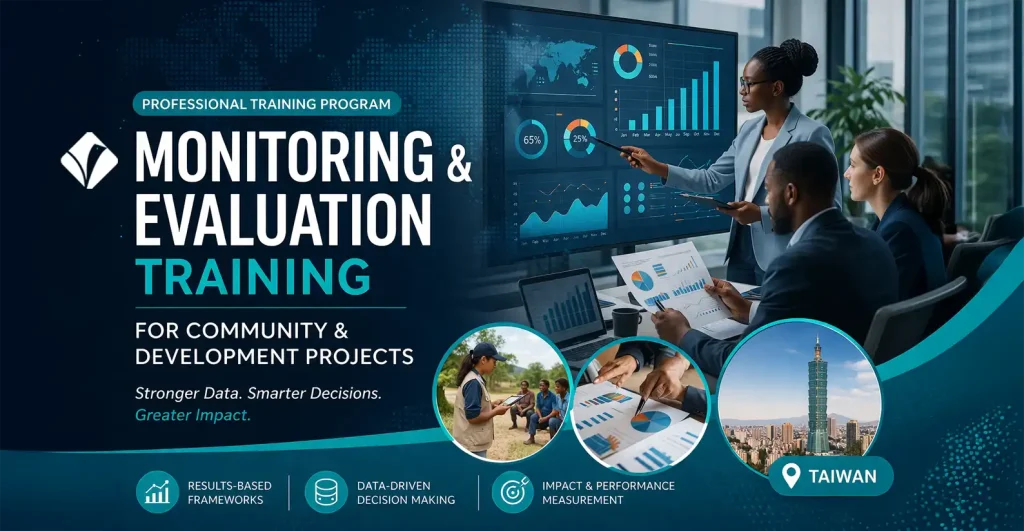
The Monitoring and Evaluation for Community Projects Training in Kaohsiung is an applied five-day professional development programme for officials, managers and specialists responsible for decisions, assurance and implementation. It connects technical methods with practical work products that participants can adapt to their own institutions.
فحص ذاتي مجاني: يمنحك تقييم المتابعة والتقييم والتعلم (M&E and MEAL) درجة لنظام المتابعة والتقييم والتعلم الخاص بك والثغرات التي يجب سدها أولاً، في غضون 10 دقائق تقريباً.
يُعقد البرنامج في كاوهسيونغ، تايوان. وهو مخصص للمؤسسات العامة، وفرق المشاريع الممولة من المانحين، والجهات التنظيمية، والمنظمات التي تحتاج إلى قرارات موثقة وضرائب تشغيلية موثوقة. مكان الانعقاد هو موقع تعليمي، وليس إقراراً بأن مؤسسة محلية توفر زيارة تقنية مؤكدة.
يعمل المشاركون مع ملفات حالات واقعية ولكنها وهمية تغطي نظرية التغيير، خطوط الأساس، جودة البيانات. تميز التمارين بين المتطلبات التي تتبع ممولاً معيناً أو ولاية قضائية والممارسة الجيدة العامة. لا يوجد تمويل للمشروع أو ترتيب ترشيح ضمني.
يפתח المنهج الدراسي سيرงาน مستمراً من التقييم الأول والتخطيط إلى جمع الأدلة، وضمان الجودة، وإعداد تقارير الإدارة، والمتابعة المؤسسية. كما يشجع المشاركين على تحديد الثغرات في السياسات القائمة قبل تطبيق أي إطار مرجعي دولي.
The Programme Strengthens Institutional Capability
- نظرية التغيير
- Results chains
- Community indicators
- Baselines
- الرصد التشاركي
- Survey tools
- جودة البيانات
- Gender disaggregation
- Feedback channels
- Evaluation questions
- Outcome harvesting
- مراجعات التعلم
- Dashboard design
- إعداد التقارير
- الإدارة التكيفية
Each participant builds a portfolio of draft tools and a short implementation plan, with responsibilities, verification points and a timetable for management review.
- المدخلات
- الأنشطة
- المخرجات
- النتائج
- الأثر
The Growing Importance of Monitoring and evaluation for community projects
Institutions are expected to demonstrate not only that activities have been completed, but that decisions are consistent, traceable and proportionate to risk. In monitoring and evaluation for community projects, weak definitions, fragmented records and unclear accountability can make otherwise sound work difficult to defend or improve.
The reference materials listed below offer official frameworks relevant to parts of this curriculum. They do not establish that any named institution has committed funds to this course. Participants should check the rules governing their own country, employer and financed project before adopting the examples.
تحتاج المؤسسات بشكل متزايد إلى مهنيين قادرين على:
- تقييم نظرية التغيير باستخدام معايير موثقة
- Assess results chains using documented criteria
- Assess community indicators using documented criteria
- Assess baselines using documented criteria
- Assess participatory monitoring using documented criteria
- تقييم أدوات الاستطلاع باستخدام معايير موثقة
- Assess data quality using documented criteria
- Assess gender disaggregation using documented criteria
- Assess feedback channels using documented criteria
- Assess evaluation questions using documented criteria
- Assess outcome harvesting using documented criteria
- Assess learning reviews using documented criteria
Strong monitoring and evaluation for community projects systems help organisations:
- Improve the consistency of feedback channels
- Improve the consistency of evaluation questions
- Improve the consistency of outcome harvesting
- Improve the consistency of learning reviews
- Improve the consistency of dashboard design
- Improve the consistency of reporting
- Improve the consistency of adaptive management
A workable system needs clear ownership, tested records and decisions that can be reviewed independently. The sessions translate these requirements into small, repeatable routines rather than a one-off report.
1. أي نهج يدعم بشكل أفضل نظرية التغيير؟
يُطبق البرنامج القرارات المُوثقة وفحص الأدلة على نظرية التغيير؛ ويجب التحقق من المتطلبات مقابل الإرشادات الأصلية ذات الصلة.
2. أي نهج يدعم خطوط الأساس بشكل أفضل؟
The programme applies documented decisions and evidence checks to baselines; requirements must be checked against the relevant original guidance.
3. Which approach best supports data quality?
يطبق البرنامج القرارات الموثقة وفحوصات الأدلة على جودة البيانات؛ ويجب التحقق من المتطلبات مقابل الإرشادات الأصلية ذات الصلة.
Who Should Attend This Monitoring and Evaluation for Community Projects Training?
صُمم هذا البرنامج من أجل:
- Ministry department directors
- Government policy analysts
- Project implementation unit managers
- Project management unit coordinators
- Technical assistance team leaders
- المدققون الداخليون
- Compliance officers
- Procurement specialists
- Finance managers
- Monitoring and evaluation officers
- Data and reporting analysts
- موظفو ضمان جودة البرامج
- Institutional development specialists
- Public sector trainers
- نقاط الاتصال لشركاء التنمية
- الاستشاريون الداعمون للوكالات العامة
Participants should bring a description of one institutional process they wish to improve, without sharing confidential personal or commercial information.
حدّد ما يحتاج فريقك إلى القدرة على إنجازه.
أهداف تدريب الرصد والتقييم للمشاريع المجتمعية
عند الانتهاء بنجاح من تدريب الرصد والتقييم للمشاريع المجتمعية، سيتمكن المشاركون من:
- Explain the institutional purpose and limitations of monitoring and evaluation for community projects
- Assess existing procedures against relevant documented requirements
- تحديد أصحاب المصلحة الرئيسيين وحقوق القرار
- Prioritise operational risks and quality weaknesses
- Select appropriate methods and tools for the task
- Document assumptions and supporting evidence
- Design practical controls and review checkpoints
- استخدام مجموعات البيانات النموذجية أو ملفات الحالات بطريقة مسؤولة
- Communicate findings to decision-makers
- إعداد خطة عمل وموارد متناسبة
- Monitor follow-up and adjust implementation
The emphasis is on demonstrable workplace outputs, with peer feedback and facilitator review of the methods selected.
محتوى البرنامج وهيكله
- Map community needs and programme assumptions
- التمييز بين الأنشطة، المخرجات، والنتائج
- بناء نظرية تغيير تشاركية
- Identify intended and unintended effects
- تحديد تعريفات أصحاب المصلحة والمستفيدين
- Map equity and inclusion risks
- Draft evaluation questions
- Select indicators that reflect community priorities
- Define baselines, targets and disaggregation
- Design simple survey and observation tools
- Plan sampling and respondent protection
- تحديد أدوار جمع البيانات والتحقق منها
- Establish a monitoring calendar
- إنشاء صحف مرجعية لمؤشرات الأداء
- Facilitate community monitoring discussions
- Design accessible feedback and complaints channels
- اختبار دقة البيانات واكتمالها
- Avoid coercion and protect confidentiality
- Use mobile data collection where appropriate
- Triangulate field records and community accounts
- Identify bias and missing population groups
- Compare process, outcome and impact evaluation
- Develop credible contribution questions
- Select qualitative and quantitative methods
- Review equity and gender-responsive analysis
- Assess sustainability of community outcomes
- تسهيل ورش العمل الخاصة بالتعلم والتأمل
- Write evidence-based evaluation findings
- Design an M&E governance and staffing matrix
- Build an indicator dashboard and report template
- Set feedback-to-management escalation rules
- Schedule periodic data quality reviews
- Link evidence to budget and work planning
- تحديد متطلبات تقارير الشريك
- إنشاء خارطة طريق لتحسين مدتها تسعون يوماً
المحتوى الكامل يوماً بيوم
The five-day sequence builds from diagnosis to an institutional improvement proposal. Each day includes guided technical work and a documented practical exercise.
- First Day: Community results and theory of change
- Second Day: Indicators, baselines and data collection
- اليوم الثالث: الرصد التشاركي جودة البيانات
- اليوم الرابع: التقييم، والشمول، والتعلم
- Fifth Day: M&E system design and community accountability
المحتوى الكامل يوماً بيوم
اليوم الأول | نتائج المجتمع ونظرية التغيير
- Map community needs and programme assumptions
- التمييز بين الأنشطة، المخرجات، والنتائج
- بناء نظرية تغيير تشاركية
- Identify intended and unintended effects
- تحديد تعريفات أصحاب المصلحة والمستفيدين
- Map equity and inclusion risks
- Draft evaluation questions
- Create a project results chain
Workshop: Community results and theory of change application
Working in small teams, participants apply the day’s methods to a fictional institutional scenario. They produce a short decision-ready artefact, record key assumptions, identify unresolved evidence gaps and receive structured feedback. The output is retained for the final institutional action plan.
Second Day | Indicators, baselines and data collection
- Select indicators that reflect community priorities
- Define baselines, targets and disaggregation
- Design simple survey and observation tools
- Plan sampling and respondent protection
- تحديد أدوار جمع البيانات والتحقق منها
- Establish a monitoring calendar
- إنشاء صحف مرجعية لمؤشرات الأداء
- Build a baseline collection plan
Workshop: Indicators, baselines and data collection application
Working in small teams, participants apply the day’s methods to a fictional institutional scenario. They produce a short decision-ready artefact, record key assumptions, identify unresolved evidence gaps and receive structured feedback. The output is retained for the final institutional action plan.
Third Day | Participatory monitoring and data quality
- Facilitate community monitoring discussions
- Design accessible feedback and complaints channels
- اختبار دقة البيانات واكتمالها
- Avoid coercion and protect confidentiality
- Use mobile data collection where appropriate
- Triangulate field records and community accounts
- Identify bias and missing population groups
- Prepare a data quality improvement log
Case Study: Participatory monitoring and data quality application
Working in small teams, participants apply the day’s methods to a fictional institutional scenario. They produce a short decision-ready artefact, record key assumptions, identify unresolved evidence gaps and receive structured feedback. The output is retained for the final institutional action plan.
اليوم الرابع | التقييم والشمول والتعلم
- Compare process, outcome and impact evaluation
- Develop credible contribution questions
- Select qualitative and quantitative methods
- Review equity and gender-responsive analysis
- Assess sustainability of community outcomes
- تسهيل ورش العمل الخاصة بالتعلم والتأمل
- Write evidence-based evaluation findings
- Convert recommendations into actions
Workshop: Evaluation, inclusion and learning application
Working in small teams, participants apply the day’s methods to a fictional institutional scenario. They produce a short decision-ready artefact, record key assumptions, identify unresolved evidence gaps and receive structured feedback. The output is retained for the final institutional action plan.
اليوم الخامس | تصميم نظام الرصد والتقييم والمساءلة المجتمعية
- Design an M&E governance and staffing matrix
- Build an indicator dashboard and report template
- Set feedback-to-management escalation rules
- Schedule periodic data quality reviews
- Link evidence to budget and work planning
- تحديد متطلبات تقارير الشريك
- إنشاء خارطة طريق لتحسين مدتها تسعون يوماً
- Present an M&E system and learning plan
Capstone Exercise: M&E system design and community accountability application
Working in small teams, participants apply the day’s methods to a fictional institutional scenario. They produce a short decision-ready artefact, record key assumptions, identify unresolved evidence gaps and receive structured feedback. The output is retained for the final institutional action plan.
Monitoring and Evaluation for Community Projects Training Methodology
Facilitators use short briefings, individual exercises and group-based problem solving. Case data are illustrative, with assumptions made explicit; the exercises do not represent an audit or certification of any real organisation.
يجمع البرنامج بين:
- Expert-led technical briefings
- مراجعات السياسات والعمليات الميسرة
- ملفات حالات مجهولة المصدر أو وهمية
- Spreadsheet and template exercises
- Small-group scenario analysis
- Role-based decision simulations
- Peer comparison of institutional practices
- Guided risk and control mapping
- Structured facilitator feedback
- تأملات التعلم اليومية
- Action planning and presentation practice
- فالنتات المرجعية مقارنة بالمعايير الأصلية
Participants can adapt worksheets to their own institution after reviewing local legal requirements, confidentiality rules and management approvals.
النتائج المتوقعة
Upon completion of this Monitoring and Evaluation for Community Projects Training, participants will be able to:
- Present a baseline of current institutional practice
- إعداد سجل للمخاطر والقضايا
- Draft a quality assurance checklist
- Explain key requirements to colleagues
- إعداد إحاطة إدارية موثوقة
- بناء خطة للأدلة والسجلات
- Identify priorities for staff development
- Set measurable implementation milestones
- Evaluate whether controls are operating as intended
- تقديم مقترح لتحسين المؤسسة
These are intended learning outcomes, not guaranteed changes in an employer’s systems or compliance status.
£3,860 لكل مشارك · فاتورة وتحويل مصرفي · تحصل المجموعات المكونة من 5 مشاركين أو أكثر على خصم
خمسة مشاركين أو أكثر من مؤسسة واحدة: اطلبوا سعر المجموعة عند طلب الفاتورة.
Ten or more: an in-house version for your institution may cost less per person. Ask for an in-house quote.
Registration closes in 26 days (18 Dec 2026)
تدريب التطبيق المؤسسي لرصد وتقييم مشاريع المجتمع
يدعم هذا البرنامج المؤسسات في تعزيز:
- Ownership of theory of change
- Ownership of results chains
- Ownership of community indicators
- Ownership of baselines
- Ownership of participatory monitoring
- Ownership of survey tools
- Ownership of data quality
- Ownership of gender disaggregation
- Ownership of feedback channels
- Ownership of evaluation questions
- Ownership of outcome harvesting
- Ownership of learning reviews
يعود المشاركون بأدوات عملية لتحسين:
- Documentation and review of feedback channels
- توثيق ومراجعة أسئلة التقييم
- Documentation and review of outcome harvesting
- توثيق ومراجعة مراجعات التعلم
- Documentation and review of dashboard design
- Documentation and review of reporting
- Documentation and review of adaptive management
Institutions can use the draft outputs as a starting point for a tailored in-house programme, internal working group or management-approved improvement initiative.
الأهمية الإقليمية والتطبيق
أوروبا
For teams working in Europe, monitoring and evaluation for community projects can support public-sector assurance, regulatory alignment and accountable reporting. The relevant rules and financing conditions differ by country and project, so the programme uses comparative methods without assuming a uniform legal or regulatory system.
أفريقيا
بالنسبة للفرق العاملة في إفريقيا، يمكن أن يدعم الرصد والتقييم لمشاريع المجتمع المحلي قدرات التنفيذ والأدلة للبرامج الممولة. تختلف القواعد ذات الصلة وشروط التمويل حسب البلد والمشروع، لذا يستخدم البرنامج طرقاً مقارنة دون افتراض نظام قانوني أو تنظيمي موحد.
الشرق الأوسط
For teams working in Middle East, monitoring and evaluation for community projects can support institutional modernisation and governance of large initiatives. The relevant rules and financing conditions differ by country and project, so the programme uses comparative methods without assuming a uniform legal or regulatory system.
آسيا والمحيط الهادئ
For teams working in Asia and the Pacific, monitoring and evaluation for community projects can support cross-agency coordination and delivery in varied operating contexts. The relevant rules and financing conditions differ by country and project, so the programme uses comparative methods without assuming a uniform legal or regulatory system.
يتيح العمل الجماعي العابر للأقاليم للمشاركين مقارنة النهج العملية مع حماية معلومات المؤسسات السرية.
Host Country Profile – Taiwan
Kaohsiung in Taiwan is the established location for this programme. Training is designed around classroom exercises, group discussion and international peer learning rather than an unverified promise of access to a specific government agency.
The host setting allows participants to examine how monitoring and evaluation for community projects can be organised in a professional training environment. Official frameworks and case materials are reviewed in class; a local organisation is not represented as a programme partner unless separately confirmed.
International participants should verify entry conditions for Taiwan using official consular channels based on their nationality and residence status. Travel routes, appointment availability, transit requirements and local arrangements can change, so visa assistance is advisory and entry is never guaranteed.
مخرجات التدريب على الرصد والتقييم لمشاريع المجتمع
The following support package and learning materials are designed to help participants prepare, take part and transfer the learning into their workplace.
قبل البرنامج
- التقييم المسبق للمشاركين
- تقييم الجاهزية للمتابعة والتقييم لمشاريع المجتمع المحلي
- Monitoring and evaluation for community projects Resource Pack
- مواد قراءة تحضيرية
- دعم واستشارات مجانية بشأن التأشيرة
أثناء البرنامج
- الاستقبال من المطار والمساعدة عند الوصول
- Accommodation with breakfast: 6 nights, check-in Sunday 21 February 2027, check-out Saturday 27 February 2027 (one night before and one night after the programme)
- عشاء ترحيبي للتعارف
- حقيبة Risalat التدريبية (حقيبة، وقارورة، وكوب، وقميص، وقبعة، وغلاف جواز سفر، وأقلام، ودفتر، ومغناطيس وميدالية مفاتيح)
- Comprehensive Monitoring and evaluation for community projects Training Manual
- نموذج نظرية التغيير
- Results Chains Template
- Community Indicators Template
- Baselines Template
- Participatory Monitoring Template
- ورش عمل عملية ومحاكاة
- مناقشات جماعية وتعلم من الأقران
- غداء ومرطبات يومية
- الاستفادة الكاملة من مرافق مكان التدريب
- جهاز Mini Pad / جهاز لوحي مزود بمواد تعليمية رقمية
- Field Visit (where applicable and confirmed)
- جولة ترفيهية في المدينة
بعد البرنامج
- شهادة الإتمام
- جائزة Risalat تقديراً للمشاركة في البرنامج
- مواد مرجعية بعد التدريب
- Theory Of Change Checklist
- Baselines Working Template
- Data Quality Action Plan
- الدعم بعد التدريب وإرشادات المتابعة
- تقرير البرنامج
Institutions seeking a customised group version can request a tailored proposal. Participants may also explore the programme categories and institutional capacity diagnostic.
التحديات المشتركة في الرصد والتقييم لمشاريع المجتمعات المحلية، وكيف يساعد هذا التدريب
How can we identify the real capability gap?
The first day combines baseline assessment with stakeholder mapping so teams can distinguish a skills gap from a process or accountability problem.
How can we make decisions consistent and defensible?
يقدم اليوم الثاني معايير موثقة، ونماذج عملية، وفحوصات الجودة لتمكين المراجعين من إعادة بناء سبب اختيار خيار معين.
How can we improve data and evidence quality?
The third day uses case records and verification steps to help participants identify missing, contradictory or unreliable information.
كيف يمكننا إعداد تقارير عن النتائج المعقدة للقيادات العليا؟
The fourth day turns technical findings into concise management messages, supporting evidence and clear recommendations.
كيف يمكننا تنسيق الفرق عبر الإدارات المختلفة؟
The programme defines decision rights, handovers and escalation points in a realistic institutional workflow.
كيف يمكننا إدارة عدم اليقين دون اختراع الدقة؟
تتطلب الجلسات من المشاركين توثيق الافتراضات والقيود والتفسيرات البديلة قبل تقديم التوصيات.
How can we sustain improvements after training?
يُخصص مشروع التخرج في اليوم الخامس مالكين، ومحطات رئيسية، ومؤشرات، وعملية مراجعة متابعة لخطة عمل يمكن التحكم فيها.
الأسئلة الشائعة
How can we identify the real capability gap?
The first day combines baseline assessment with stakeholder mapping so teams can distinguish a skills gap from a process or accountability problem.
How can we make decisions consistent and defensible?
يقدم اليوم الثاني معايير موثقة، ونماذج عملية، وفحوصات الجودة لتمكين المراجعين من إعادة بناء سبب اختيار خيار معين.
How can we improve data and evidence quality?
The third day uses case records and verification steps to help participants identify missing, contradictory or unreliable information.
كيف يمكننا إعداد تقارير عن النتائج المعقدة للقيادات العليا؟
The fourth day turns technical findings into concise management messages, supporting evidence and clear recommendations.
كيف يمكننا تنسيق الفرق عبر الإدارات المختلفة؟
The programme defines decision rights, handovers and escalation points in a realistic institutional workflow.
Who Will Deliver This Programme
Each date is delivered by a team assigned from Risalat's expert network for this subject. For this programme we assign:
How we choose them: Experience in the region of the participants or comparable settings; Command of the financier rules that apply (World Bank, ADB, AfDB, EU, UN) where relevant; Delivery in English; other languages on request for in-house groups; No conflict of interest with participants' institutions.
Training courses in KaohsiungM&E & Performance Management training courses
Why Kaohsiung for this programme
Kaohsiung serves as a major maritime hub, housing the Port of Kaohsiung alongside key research facilities at National Sun Yat-sen University. Visiting officials can study port logistics, public transit systems, and industrial transition projects. The city is accessible via its own international airport and direct high-speed rail connections from Taipei.
يجمع برنامج التدريب على الرصد والتقييم للمشاريع المجتمعية في كاوهسيونغ في فبراير 2027 المسؤولين والمهنيين من جميع أنحاء منطقة آسيا وخارجها. تجمع الجلسات بين المدخلات القصيرة، ودراسات الحالة، والعمل الجماعي على ملفات المشاركة الخاصة بالمشاركين، ويمكن إضافة مؤسسات المدينة كزيارة دراسية بناءً على الطلب.
الوصول إلى هناك: مطار كاوشيونغ الدولي (KHH).
تحقق مما إذا كنت بحاجة إلى تأشيرة عبر أداة التحقق من التأشيرة المجانية، واطلب خطاب دعوة بعد إتمام تسجيلك.
الموضوع نفسه في مدن أخرى
- Disaster Risk Management and Early Warning Systems in Nagoya (Nagoya)
- Disaster Risk Management and Early Warning Systems in Sapporo (Sapporo)
- Mini Degree in Climate Finance and Resilience in Copenhagen (Copenhagen)
- Disaster Risk Management and Early Warning Systems in Hiroshima (Hiroshima)
- Disaster Risk Management and Early Warning Systems in Sendai (Sendai)
- Livelihoods and Services for Displaced Populations in Amman (Amman)
ذو صلة: المتابعة والتقييم والتعلم · أداة بناء البطاقات المرجعية للمؤشرات المجانية · جميع البرامج
للفرق والمؤسسات
Bring your team
Teams that learn together apply more at work. Tell us how many people and how you would like to take part: we reply with a group quote within two working days.
Watch: this programme in short



تواريخ ومدن أخرى لهذا الموضوع: دورات تدريب الرصد والتقييم (59 تاريخاً قادماً).
المزيد من الدورات التدريبية في تايوان · جميع البرامج في آسيا · تقويم التدريب الكامل
تخطيط هذا البرنامج في خارطة طريق: لماذا هو مهم، ولماذا يجب الموافقة عليه، والتواريخ المراد التخطيط لها، والمسار المهني الذي يبنيه.