Ключевые выводы
- Understanding the issue and its evidence. Keeping products in use through repair, sharing and remanufacturing can retain more value than crushing them into secondary material.
- Design choices and technical delivery. A recyclable product may still have high impacts if it uses substantial energy or scarce materials.
- Financing, procurement and governance. Public buyers can require repairability, spare parts, take-back arrangements and verifiable recycled content where appropriate.
- Implementation, safeguards and measurement. Recycling and repair depend on workers and informal collection systems in many settings.
- Application to public agencies and donor-funded projects. Useful indicators include material intensity, product lifetime, repair rates, waste prevention and verified recovery.
In short: A circular economy aims to reduce waste and demand for virgin resources by designing products and systems for durability, repair, reuse and material recovery. It is not a guarantee of sustainability: energy use, losses, growing consumption and social impacts still need independent assessment.
UNEP’s Global Resources Outlook 2024 finds that material use continues to rise and warns that extraction could increase sharply without policy change. This makes waste prevention and resource efficiency urgent, while also exposing the limits of recycling alone.
This updated guide revisits the original Risalat article while separating established concepts from claims that require fresh evidence. It is written for practitioners who must decide what to fund, procure, regulate or measure. Illustrative scenarios below are teaching examples, not reports of completed projects.
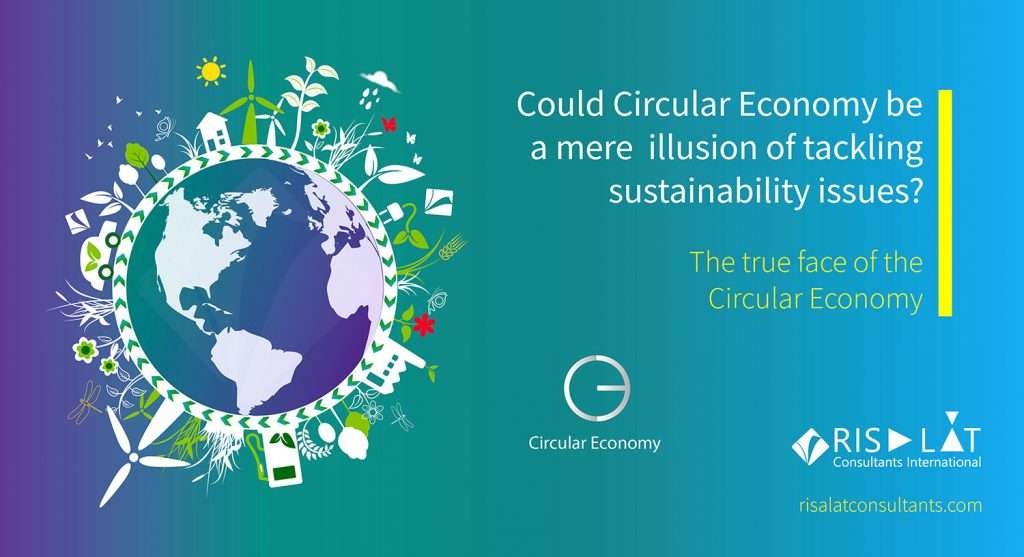
The earlier article also highlighted a continuing consideration: As far as sustainability is concerned, circularity does not necessarily fulfill all of its three dimensions. Being majorly focused on economic and several environmental aspects it clearly lacks social focus. Therefore, it cannot provide for uncompromised future. The practical implication is to test this proposition against current local evidence before applying it as policy.
The earlier article also highlighted a continuing consideration: Many critiques argue that the notion of a fully circular economy lacks viability and is too abstract, at this stage at least. The ideas of designing out the waste from the entire system and closing the loops sound impressive. However, in practice, they might not be achievable. For instance, some substances might reach their dead-end after several r. The practical implication is to test this proposition against current local evidence before applying it as policy.
The earlier article also highlighted a continuing consideration: Throughout recent decades Earth’s life-support systems have been increasingly jeopardized by accelerated natural resource exploitation and enhanced waste generation. A wide range of environmental, societal, and economical challenges have escalated, giving rise to the dire need for sustainable solutions that can save our planet from the dark future. The practical implication is to test this proposition against current local evidence before applying it as policy.
Understanding the issue and its evidence
Circularity is more than recycling
Keeping products in use through repair, sharing and remanufacturing can retain more value than crushing them into secondary material. Design decisions at the start of a product’s life often determine which options remain possible later.
Before setting a target for circularity is more than recycling, the responsible team should define the population or asset covered, the current condition and the source of its baseline information. A useful baseline records both what is known and what remains uncertain. In a project appraisal, this prevents a plausible narrative from being mistaken for evidence of demand or impact.
Material loops have physical limits
Some materials become contaminated, dispersed or degraded with each use. Collection and processing require energy and infrastructure, so a completely closed material cycle is not a realistic planning assumption.
The practical test for material loops have physical limits is whether two independent reviewers would reach a similar conclusion using the same records. Specify the definition of success, the relevant technical standard and the point at which a design needs reconsideration. Document exceptions openly rather than averaging away difficult cases.
Design choices and technical delivery
Energy and resource footprints
A recyclable product may still have high impacts if it uses substantial energy or scarce materials. Life-cycle assessment should examine production, transport, operation, maintenance and end-of-life scenarios.
Consider a hypothetical pilot focused on energy and resource footprints. The implementation team should begin with a narrowly defined use case, test it under ordinary operating conditions and record user experience alongside technical performance. Procurement should permit correction of design defects before large-scale roll-out.
Rebound effects
Efficiency can lower unit costs and encourage additional consumption. Organisations should measure absolute material use and emissions as well as performance per unit of output.
Operational readiness for rebound effects includes trained staff, a maintenance budget, reliable data and a route for complaints. If one of these is missing, the project may meet its construction or installation milestone while failing to deliver the intended service. Acceptance criteria should therefore include observed performance, not just equipment delivery.
Financing, procurement and governance
Circular procurement
Public buyers can require repairability, spare parts, take-back arrangements and verifiable recycled content where appropriate. Tender criteria should avoid excluding small suppliers through unnecessary certification burdens.
For circular procurement, a business case should distinguish initial investment from recurring costs. Compare alternatives on a common time horizon, including training, replacement, supervision and the cost of service interruptions. The cheapest compliant tender may not provide the lowest whole-life cost.
Infrastructure and construction
Reuse of structural components and recovered aggregates may reduce demand for virgin materials, subject to safety and quality standards. A project must assess logistics, contamination, testing and the actual market for recovered materials.
Governance of infrastructure and construction should clarify who approves changes, who holds the supplier accountable and who pays when assumptions prove wrong. A decision log helps explain trade-offs to auditors and affected communities. Material changes should be reflected in the budget, schedule and risk register before approval.
Decision check: Has the team compared a do-nothing baseline, a limited pilot and a scaled intervention using the same cost, risk and outcome criteria? Record the assumptions behind each option and the reason for selecting one.
Implementation, safeguards and measurement
Social and labour conditions
Recycling and repair depend on workers and informal collection systems in many settings. Formalisation should improve safety, income and participation rather than remove livelihoods without alternatives.
A practical control for social and labour conditions is to assign an owner, a reporting interval and an action threshold. Monitoring is useful only when findings lead to a decision: investigate, correct, redesign or stop. The threshold should be established before the data are reviewed to reduce pressure to declare success.
Avoiding unsupported claims
Statements such as zero waste or fully sustainable need clear system boundaries and evidence. A credible claim specifies which materials, sites, periods and impacts were measured.
Evaluation of avoiding unsupported claims should look for unintended effects as well as intended benefits. Record who gains access, who bears costs and whether outcomes differ across locations or user groups. When attribution is uncertain, describe the limitations instead of presenting a correlation as proof of impact.
Practical exercise: Give a cross-functional team the baseline, budget and two alternative designs. Ask it to prepare a one-page decision note identifying the main uncertainty, three implementation risks, the evidence required for approval and the trigger for corrective action.
Application to public agencies and donor-funded projects
Monitoring and accountability
Useful indicators include material intensity, product lifetime, repair rates, waste prevention and verified recovery. Record the destination of recovered material rather than counting everything collected as recycled.
A ministry or project implementation unit addressing monitoring and accountability can start with a short diagnostic: map mandates, list approvals, identify missing skills and test whether the proposed intervention fits existing operating arrangements. The result should be a prioritised workplan with named owners, deadlines and verifiable deliverables.
Donor and government programmes
Municipal solid-waste projects can combine collection, source separation, repair markets and safe disposal. Project appraisal should compare realistic options and include financing for operations, worker protection and enforcement.
In donor-financed work, donor and government programmes should be reflected in procurement specifications, financial planning, stakeholder engagement and reporting where relevant. The financing agreement and applicable national law determine the actual obligations. Teams should verify those instruments rather than assume a single donor procedure applies everywhere.
First 30 days: Verify the baseline and consult affected users or operators. Review the first four issues in this guide against available local data. Produce a short list of evidence gaps and decisions that cannot safely be deferred.
Days 31 to 60: Test one feasible intervention, refine the technical specification and confirm whole-life financing. Agree responsibilities between policy owners, implementing agencies, suppliers and oversight bodies. Publish a risk register and a monitoring plan that can be maintained with existing capacity.
Days 61 to 90: Review early results with users and independent specialists, correct weak assumptions and decide whether to expand, redesign or discontinue the intervention. Preserve the lessons in procurement templates and operating procedures so the next project does not repeat avoidable mistakes.
For a field review of infrastructure and construction, collect the relevant operating records and speak separately with service users, front-line personnel and the budget holder. Compare their descriptions of the problem and record where they disagree. A discrepancy can indicate a missing measurement, an incentive problem or a genuine difference in experience. A pilot should be designed to resolve that specific uncertainty before public funds are committed to expansion.
Risalat supports institutions with diagnostic assessments, applied learning and advisory services. Teams can begin with the institutional capacity assessment, explore the diagnostic centre and request a tailored proposal where external support is justified.
Evidence and further reading: The following primary sources informed this update. Readers should consult the underlying publications for scope, dates and methodological limitations.
Часто задаваемые вопросы
What should institutions check about circularity is more than recycling?
Keeping products in use through repair, sharing and remanufacturing can retain more value than crushing them into secondary material. Design decisions at the start of a product’s life often determine which options remain possible later. Check the local baseline, technical requirements and responsibilities before scaling a proposed solution.
What should institutions check about energy and resource footprints?
A recyclable product may still have high impacts if it uses substantial energy or scarce materials. Life-cycle assessment should examine production, transport, operation, maintenance and end-of-life scenarios. Check the local baseline, technical requirements and responsibilities before scaling a proposed solution.
What should institutions check about circular procurement?
Public buyers can require repairability, spare parts, take-back arrangements and verifiable recycled content where appropriate. Tender criteria should avoid excluding small suppliers through unnecessary certification burdens. Check the local baseline, technical requirements and responsibilities before scaling a proposed solution.
What should institutions check about social and labour conditions?
Recycling and repair depend on workers and informal collection systems in many settings. Formalisation should improve safety, income and participation rather than remove livelihoods without alternatives. Check the local baseline, technical requirements and responsibilities before scaling a proposed solution.
What should institutions check about monitoring and accountability?
Useful indicators include material intensity, product lifetime, repair rates, waste prevention and verified recovery. Record the destination of recovered material rather than counting everything collected as recycled. Check the local baseline, technical requirements and responsibilities before scaling a proposed solution.
Знаете тех, кому стоит это прочитать? Станьте амбассадором Risalat или напишите статью вместе с Risalat под своим именем.
Партнеры в успехе проектов с 2011 года: диагностика, консультационная поддержка и прикладное обучение для министерств, государственных ведомств и проектных команд.
Нужна помощь, чтобы применить это на практике?
Начните с бесплатной 10-минутной диагностики или обратитесь к нашим экспертам.