Datos clave
- Fechas
- 14–18 Jun 2027 (5 días)
- Dónde
- Sendai, Japan
- Tarifa por participante
- 2.600 £ (GBP)
- Pago
- Mediante factura y transferencia bancaria
- Cierre de inscripciones
- 5 May 2027
- Formato
- 5-day short course: a practical capacity-building programme for government, NGO and project teams in Sendai
- Opción interna
- Impártalo para su equipo, en sus fechas
En esta página 10 secciones
Descripción del programa
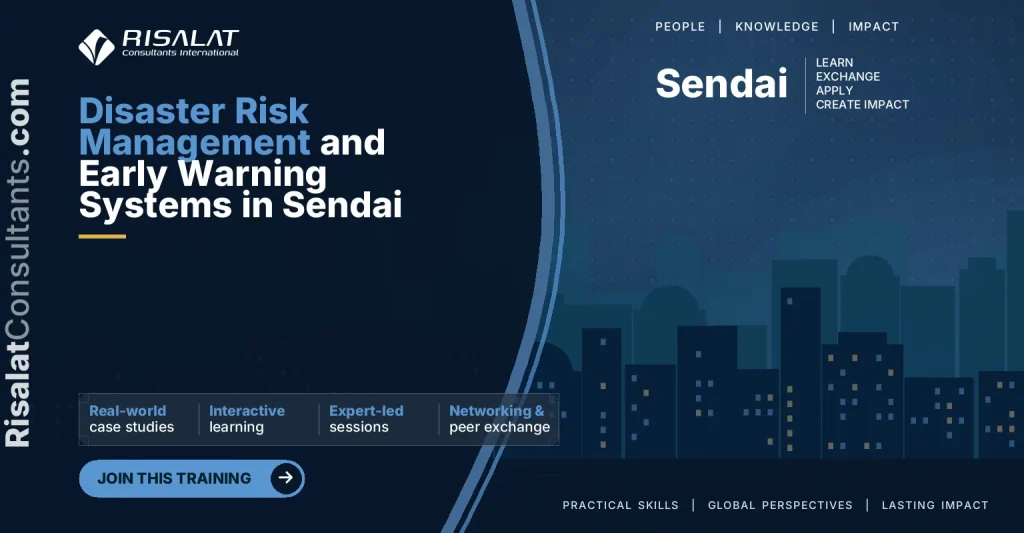
This five-day professional training programme delivers rigorous, practical capabilities in disaster risk management and multi-hazard early warning systems. Delivered in Sendai, Japan, the birthplace of the Sendai Framework for Disaster Risk Reduction 2015-2030, the course links international standards with operational implementation. Participants examine systemic risk, community-level preparedness, and infrastructure resilience, gaining the technical insights necessary to design and manage resilient public sector investments.
Free self-check: the governance self-audit gives a quick check of governance, controls and accountability, in about 10 minutes.
The curriculum addresses the operational requirements of projects funded by international financial institutions and bilateral partners. Participants analyse how to integrate disaster risk assessments, climate adaptation criteria, and early warning protocols into programmes supported by the World Bank, Asian Development Bank, European Union, and United Nations agencies. The course combines classroom instruction with site visits across Sendai to observe structural and non-structural recovery countermeasures directly.
Delivered by Risalat Consultants International in Sendai, Japan, it combines expert-led sessions, real cases and group work, so that participants can apply what they learn in their own institution. Participants will master institutional coordination mechanisms, contingency planning, risk-informed land use, and the deployment of last-mile early warning communication channels to upgrade national, sub-national, and project-level risk architectures.
El programa fortalece la capacidad institucional en:
- The Sendai Framework for Disaster Risk Reduction 2015-2030: core priorities, targets, and global reporting mechanisms
- Understanding systemic, compounding, and cascading disaster risks in Southeast Asia and the Pacific
- Institutional architectures: legislative mandates, national disaster management organisations, and sub-national coordination
- Integrating disaster risk reduction into national development planning and public financial management
- Practical exercise: evaluating institutional gaps and governance constraints in national disaster management plans
- Multi-hazard risk and vulnerability assessment methods, spatial hazard mapping, and exposure modelling
- Four pillars of Multi-Hazard Early Warning Systems (MHEWS) aligned with the Early Warnings for All initiative
- Technical observation networks: hydromet infrastructure, seismic monitoring, and remote sensing tools
- Evaluación de riesgos climáticos y ambientales
- Planificación de la adaptación y la mitigación
- Estrategias sectoriales para la energía, el agua y la tierra
- Diseño de proyectos para objetivos climáticos y ambientales
- Fondos
- Entidad
- Proyecto
- Resultados
- MRV
Why this matters now
Las organizaciones necesitan cada vez más profesionales capaces de:
- Evaluar los riesgos climáticos y ambientales para sus servicios y activos
- Diseñar proyectos que cumplan los objetivos climáticos y ambientales
- Preparar propuestas que los financiadores puedan aprobar
- Medir e informar los resultados de forma creíble
- Trabajar con comunidades y socios de distintos sectores
Unos sistemas sólidos de clima, medio ambiente y recursos naturales ayudan a las organizaciones a:
- Proteger los servicios y las infraestructuras frente a los riesgos climáticos
- Acceder a la financiación climática y ambiental
- Cumplir los compromisos nacionales e internacionales
- Utilizar los recursos naturales de forma sostenible
Quién debería asistir
Este programa está dirigido a:
- Disaster risk reduction and emergency management officials from national ministries and sub-national authorities
- Project directors and technical specialists from World Bank, ADB, and EU-financed project implementation units
- Technical staff from national meteorological, hydrological, and geological hazard monitoring agencies
- Urban planners, infrastructure engineers, and regional development officers responsible for resilient capital works
- Climate change adaptation specialists and environmental officers from line ministries and regional commissions
- Monitoring and evaluation officers tracking Sendai Framework monitors and disaster-related Sustainable Development Goals
- Operations officers from regional emergency coordination bodies and civil defence forces
- Programme managers from United Nations agencies and international non-governmental organisations delivering humanitarian and resilience projects
- Responsables de cambio climático y medio ambiente
- Personal de los sectores de energía, agua y agricultura
- Responsables de planificación y políticas
- Gerentes de proyectos y programas
Marque lo que su equipo necesita ser capaz de hacer.
Objetivos del programa
Al final de este programa, los participantes serán capaces de:
- Align national and sector disaster risk policies with the priorities and targets of the Sendai Framework for Disaster Risk Reduction 2015-2030
- Evaluate multi-hazard early warning systems across observation, forecasting, dissemination, and community response pillars
- Incorporate disaster risk assessment methodologies into project design and procurement for international financial institution financing
- Develop operational standard operating procedures for multi-agency emergency coordination and last-mile warning dissemination
- Examine structural and non-structural disaster risk reduction measures implemented during the post-disaster reconstruction of Sendai
- Formulate institutional contingency and business continuity plans for critical public services and donor-funded project units
- Design inclusive disaster preparedness strategies that safeguard vulnerable groups, low-lying coastal zones, and remote rural communities
- Explicar los principales desafíos climáticos y ambientales de su sector
- Evaluar los riesgos climáticos y ambientales para los servicios y los activos
- Planificar medidas de adaptación y mitigación
Training Structure & Contents
- The Sendai Framework for Disaster Risk Reduction 2015-2030: core priorities, targets, and global reporting mechanisms
- Understanding systemic, compounding, and cascading disaster risks in Southeast Asia and the Pacific
- Institutional architectures: legislative mandates, national disaster management organisations, and sub-national coordination
- Integrating disaster risk reduction into national development planning and public financial management
- Practical exercise: evaluating institutional gaps and governance constraints in national disaster management plans
- Workshop: Day 1: The Sendai Framework and Institutional Risk Governance: Applying It to Your Institution
- Multi-hazard risk and vulnerability assessment methods, spatial hazard mapping, and exposure modelling
- Four pillars of Multi-Hazard Early Warning Systems (MHEWS) aligned with the Early Warnings for All initiative
- Technical observation networks: hydromet infrastructure, seismic monitoring, and remote sensing tools
- Impact-based forecasting: moving from hazard characteristics to operational impacts and actionable advisories
- Case study review: flood and typhoon early warning networks in river basins and archipelagic contexts
- Workshop: Day 2: Risk Assessment Methodologies and MHEWS Architecture: Applying It to Your Institution
- Field inspection: Sendai coastal protection facilities, elevated evacuation roads, and seawall engineering
- Non-structural countermeasures: coastal buffer forests, multi-tiered protection zones, and land use zoning regulations
- Community engagement: examining local disaster preparedness centres and designated evacuation facilities
- Managing large-scale recovery: lessons from the 2011 Great East Japan Earthquake reconstruction process
- Structured group debrief: translating Sendai structural resilience models to Pacific and Southeast Asian environments
- Case Study: Day 3: Sendai Field Study – Infrastructure Resilience and Recovery in Practice
- Bridging the last-mile gap: common alerting protocols, cellular broadcasting, sirens, and community networks
- Standard operating procedures (SOPs): triggers, decision-making thresholds, and operational chain of command
- Socially inclusive early warnings: reaching remote islands, ethnic minorities, persons with disabilities, and the elderly
- Community-based disaster risk management (CBDRM): local drill design, participatory mapping, and volunteer networks
- Simulation workshop: developing an inter-agency early warning SOP for rapid-onset riverine flooding and storm surge
- Workshop: Day 4: Last-Mile Communication and Standard Operating Procedures: Applying It to Your Institution
- Financing disaster risk reduction and climate adaptation through World Bank, ADB, and EU instruments
- Integrating disaster resilience criteria into project procurement and capital investment appraisal
- Monitoring and reporting systems: tracking Sendai Framework targets and disaster-related Sustainable Development Goals
- Institutional action planning: identifying priority reforms and capacity investments for participants’ organisations
- Presentation and peer review of institutional disaster risk management action plans
Contenido completo día a día
First Day | Day 1: The Sendai Framework and Institutional Risk Governance
- The Sendai Framework for Disaster Risk Reduction 2015-2030: core priorities, targets, and global reporting mechanisms
- Understanding systemic, compounding, and cascading disaster risks in Southeast Asia and the Pacific
- Institutional architectures: legislative mandates, national disaster management organisations, and sub-national coordination
- Integrating disaster risk reduction into national development planning and public financial management
- Practical exercise: evaluating institutional gaps and governance constraints in national disaster management plans
- Workshop: Day 1: The Sendai Framework and Institutional Risk Governance: Applying It to Your Institution
Second Day | Day 2: Risk Assessment Methodologies and MHEWS Architecture
- Multi-hazard risk and vulnerability assessment methods, spatial hazard mapping, and exposure modelling
- Four pillars of Multi-Hazard Early Warning Systems (MHEWS) aligned with the Early Warnings for All initiative
- Technical observation networks: hydromet infrastructure, seismic monitoring, and remote sensing tools
- Impact-based forecasting: moving from hazard characteristics to operational impacts and actionable advisories
- Case study review: flood and typhoon early warning networks in river basins and archipelagic contexts
- Workshop: Day 2: Risk Assessment Methodologies and MHEWS Architecture: Applying It to Your Institution
Third Day | Day 3: Sendai Field Study – Infrastructure Resilience and Recovery
- Field inspection: Sendai coastal protection facilities, elevated evacuation roads, and seawall engineering
- Non-structural countermeasures: coastal buffer forests, multi-tiered protection zones, and land use zoning regulations
- Community engagement: examining local disaster preparedness centres and designated evacuation facilities
- Managing large-scale recovery: lessons from the 2011 Great East Japan Earthquake reconstruction process
- Structured group debrief: translating Sendai structural resilience models to Pacific and Southeast Asian environments
- Case Study: Day 3: Sendai Field Study – Infrastructure Resilience and Recovery in Practice
Fourth Day | Day 4: Last-Mile Communication and Standard Operating Procedures
- Bridging the last-mile gap: common alerting protocols, cellular broadcasting, sirens, and community networks
- Standard operating procedures (SOPs): triggers, decision-making thresholds, and operational chain of command
- Socially inclusive early warnings: reaching remote islands, ethnic minorities, persons with disabilities, and the elderly
- Community-based disaster risk management (CBDRM): local drill design, participatory mapping, and volunteer networks
- Simulation workshop: developing an inter-agency early warning SOP for rapid-onset riverine flooding and storm surge
- Workshop: Day 4: Last-Mile Communication and Standard Operating Procedures: Applying It to Your Institution
Fifth Day | Day 5: Project Financing, Monitoring, and Institutional Action Plans
- Financing disaster risk reduction and climate adaptation through World Bank, ADB, and EU instruments
- Integrating disaster resilience criteria into project procurement and capital investment appraisal
- Monitoring and reporting systems: tracking Sendai Framework targets and disaster-related Sustainable Development Goals
- Institutional action planning: identifying priority reforms and capacity investments for participants’ organisations
- Presentation and peer review of institutional disaster risk management action plans
Metodología de formación
The programme runs over 5 days. Each day combines expert input, practical work and a closing workshop or case study. Working in small groups, participants apply the methods to examples from their own institutions and agree practical next steps.
- Expert-led instructional sessions
- Site visits and field inspections across Sendai
- Small-group practical exercises and workshops
- Case study analyses
- Simulation exercises and action planning
Resultados esperados
- Capability to align institutional policies with Sendai Framework targets and priorities
- Proficiency in designing and evaluating four-pillar multi-hazard early warning systems
- Ability to integrate risk assessments into projects funded by international financial institutions
- Creation of operational standard operating procedures for emergency coordination and alerting
- Actionable insights drawn from Sendai post-disaster reconstruction countermeasures
- Completed institutional action plans for disaster risk management and climate adaptation
2.600 £ por participante · factura y transferencia bancaria · descuento para grupos de 5 o más personas
Cinco o más personas de una misma organización: solicite la tarifa de grupo al pedir la factura.
Ten or more: an in-house version for your institution may cost less per person. Ask for an in-house quote.
Registration closes in 164 days (5 May 2027)
Pertinencia y aplicación regionales
Southeast Asian and Pacific island nations face intensifying tropical cyclones, coastal inundation, seismic activity, and severe riverine flooding. Countries such as the Philippines, Vietnam, Indonesia, Cambodia, Lao PDR, and Fiji require urgent modernisation of early warning infrastructure and cross-agency coordination to meet the targets of the Sendai Framework and the Early Warnings for All initiative. Adopting proven risk governance models and bankable investment designs is critical to protecting vulnerable communities and preventing disaster-induced debt distress.
Who Will Deliver This Programme
Each date is delivered by a team assigned from Risalat's expert network for this subject. For this programme we assign:
How we choose them: Experience in the region of the participants or comparable settings; Command of the financier rules that apply (World Bank, ADB, AfDB, EU, UN) where relevant; Delivery in English; other languages on request for in-house groups; No conflict of interest with participants' institutions.
Training courses in SendaiClimate Change & Environment training courses
Why Sendai for this programme
Sendai is globally recognised for disaster risk reduction and urban resilience, having hosted the conference that adopted the Sendai Framework. Visiting delegations can examine reconstruction initiatives, coastal protection works and research facilities at Tohoku University. The city is easily reached from Tokyo via the Tohoku Shinkansen high-speed railway and through Sendai Airport.
The Disaster Risk Management and Early Warning Systems in Sendai programme in June 2027 brings together officials and professionals from across the Asia region and beyond. Sessions combine short inputs, case studies and group work on participants' own files, and the city's institutions can be added as a study visit on request.
Getting there: Sendai Airport (SDJ).
Compruebe si necesita visado con el Verificador de visados gratuito y solicite una carta de invitación una vez inscrito.
El mismo tema en otras ciudades
- Disaster Risk Management and Early Warning Systems in Nagoya (Nagoya)
- Disaster Risk Management and Early Warning Systems in Sapporo (Sapporo)
- Disaster Risk Management and Early Warning Systems in Fukuoka (Fukuoka)
- Disaster Risk Management and Early Warning Systems in Hiroshima (Hiroshima)
- Disaster Risk Management and Early Warning Systems in Kobe (Kobe)
- Disaster Risk Management and Early Warning Systems in Osaka (Osaka)
Free roadmap: Disaster Insurance on the Lookout of Modern Disaster Risk Management: a 12-month plan for your team
Is there disaster risk management training for government officials in Sendai in June 2027?
Can "Disaster Risk Management and Early Warning Systems in Sendai" be delivered in-house for one organisation?
¿Qué otros programas de gestión del riesgo de desastres imparte Risalat?
¿Cómo se inscriben y pagan las organizaciones?
For teams and institutions
Bring your team
Teams that learn together apply more at work. Tell us how many people and how you would like to take part: we reply with a group quote within two working days.
Watch: this programme in short
Otras fechas y ciudades para este tema: Cursos de capacitación en gestión de riesgos de desastres y respuesta a emergencias (83 próximas fechas).
Más cursos de formación en Japón · Todos los programas en Asia · Calendario de formación completo
Planificar este programa en una hoja de ruta: por qué es importante, por qué aprobarlo, las fechas a planificar y la carrera que construye.