Datos clave
- Fechas
- 18–22 ene 2027 (5 días)
- Dónde
- Cleopatra Hotel, Nicosia, Chipre
- Tarifa por participante
- 3.250 £ (GBP)
- Pago
- Mediante factura y transferencia bancaria
- Cierre de inscripciones
- 9 dic 2026
- Certificado
- Certificado de finalización
- Opción interna
- Impártalo para su equipo, en sus fechas
Descripción del programa
Running an organisation well depends on a small set of management disciplines applied consistently: a clear strategy, a plan that turns it into budgets and targets, sound financial control, motivated people, customers who come back and the discipline to review performance and correct course. This Effective Business Management Training in Nicosia brings those disciplines together in one practical five-day programme for managers of state-owned enterprises, public agencies, small and medium-sized enterprises (SMEs) and project organisations.
The programme is built around the problems managers report most often. The OECD SME and Entrepreneurship Outlook 2023 describes a period of high inflation, tighter and more expensive credit, widespread labour shortages and slow digital adoption among smaller firms. Each of these pressures lands on the desk of a general manager, a finance lead or a head of operations, and each needs a management response rather than a single technical fix.
Cyprus is a useful setting for this work. Data from the Statistical Service of Cyprus show that the island had more than 125,000 enterprises in 2023, almost 95% of them employing fewer than ten people. Firms of that size have to manage strategy, finance, people and compliance with very lean teams, which is exactly the challenge many participants face at home.
Participants also study how public money and policy shape business decisions. Cyprus is implementing an EU-financed Recovery and Resilience Plan worth about €1.02 billion in grants, alongside the THALIA 2021–2027 cohesion programme, which funds SME competitiveness, start-up support and a digital upgrade scheme for enterprises. These programmes give the course real case material on investment appraisal, grant management, reporting and digital transformation.
The approach is practical. Every day ends with a workshop or case study in which teams apply the tools to a realistic organisation, and on the final day each participant presents a 90-day management improvement plan for their own institution or business unit.
El programa fortalece la capacidad institucional en
- Strategic analysis and setting clear organisational priorities
- Translating strategy into annual business plans and budgets
- Balanced scorecard design and key performance indicators
- Reading and interpreting financial statements as a manager
- Previsión del flujo de caja y gestión del capital circulante
- Costing, pricing and break-even analysis
- Investment appraisal and business case preparation
- Accessing and managing EU and donor funds for enterprises
- Organisational design, roles and delegation
- Performance management and constructive feedback
- Marketing strategy and customer focus
- Legal forms of business, contracts and regulatory compliance
- Enterprise risk management and insurance
- Digital tools, data and business software choices
- Governance of state-owned and public enterprises
- Leading change and execution discipline
Throughout the week, participants work with templates they can reuse at home, so the programme leaves behind practical management tools rather than only notes.
The Growing Importance of Effective Business Management
The OECD reports that SMEs make up around 99% of firms and generate around 60% of business-sector value added across its member countries. Their productivity, wages and ability to grow depend heavily on management quality: how well owners and managers plan, control costs, adopt technology and develop staff. The same is true of state-owned enterprises and agencies, where citizens and governments expect value for money and transparent results.
Public policy is also raising expectations. The Cyprus Recovery and Resilience Plan dedicates a share of its resources to SME access to finance, digitalisation of public services and reskilling, while THALIA 2021–2027 has opened calls worth several hundred million euros for business support. Applying for and managing this kind of funding requires business plans, budgets, indicators and reports that stand up to review.
At the same time, digital change is moving faster than many management teams. The European Commission’s 2026 Digital Decade report notes that about three-quarters of Cypriot SMEs have at least a basic level of digital readiness, while business uptake of artificial intelligence remains low. Managers need to judge which digital investments pay back and how to bring their teams with them.
Las organizaciones necesitan cada vez más profesionales capaces de:
- Setting a clear strategy and explaining it to staff and boards
- Building realistic annual plans linked to budgets
- Designing indicators that measure what really matters
- Reading a profit and loss statement, balance sheet and cash flow statement
- Forecasting cash and managing working capital under rising costs
- Preparing business cases for investments and grant applications
- Managing grant-funded projects to EU and donor requirements
- Pricing products and services on a sound cost basis
- Leading teams through change and labour shortages
- Using data and digital tools for better decisions
- Managing legal, regulatory and contractual risk
- Running regular performance reviews and acting on results
Strong business management systems help organisations:
- Focus scarce resources on the highest-value priorities
- Avoid cash shortfalls and costly emergency borrowing
- Win and retain customers through consistent quality
- Qualify for and absorb public and donor funding
- Retain skilled staff through clear roles and fair performance management
- Comply with tax, labour and company law requirements
- Respond early when performance slips
- Report credibly to owners, boards and ministries
- Plan digital investments that deliver measurable returns
This programme treats management as a connected system: strategy, finance, people, customers and operations reinforce one another, and weakness in one quickly shows up in the others. Participants who wish to benchmark their own organisation before attending can use Risalat’s free institutional capacity assessment.
Who Should Attend This Business Management Training?
Este programa está dirigido a:
- General managers and chief executives of SMEs
- Directors and senior managers of state-owned enterprises
- Heads of department in public agencies and authorities
- Responsables de unidades de negocio y de sucursales
- Finance managers who want a broader management role
- Responsables de operaciones y producción
- Sales and marketing managers
- Human resources managers and people leads
- Strategy, planning and performance officers
- Project managers and project directors
- Programme officers in development and donor-funded projects
- Supervisors and line managers moving into management
- Entrepreneurs and founders of growing companies
- Family business owners preparing for growth or succession
No specialist finance background is needed. Teams of two or three from the same organisation get the most value, because they can build a shared improvement plan during the week.
Marque lo que su equipo necesita ser capaz de hacer.
Business Management Training Objectives
Upon successful completion of this Business Management Training, participants will be able to:
- Analyse their organisation’s environment, strengths and weaknesses
- Formulate a clear strategy with a small number of priorities
- Translate strategy into an annual plan, budget and balanced scorecard
- Interpret financial statements and key financial ratios
- Prepare a 12-month cash flow forecast and manage working capital
- Use costing, pricing and break-even analysis in decisions
- Build a business case for an investment or grant application
- Design roles, delegation and performance management for their team
- Develop a practical marketing and sales plan
- Map and improve a core business process
- Identify legal, regulatory and operational risks and plan controls
- Assess digital readiness and prioritise digital investments
- Lead a monthly performance review and act on the results
Objectives are reviewed with each participant on the first morning against their pre-assessment, so the trainer can adapt examples to the sectors in the room.
Source: Statistical Service of Cyprus (CYSTAT) data for 2023, as reported by FastForward, September 2025
1. According to the OECD SME and Entrepreneurship Outlook 2023, roughly what share of business-sector value added do SMEs generate?
The OECD SME and Entrepreneurship Outlook 2023 states that SMEs account for around 99% of firms and around 60% of business-sector value added.
2. What share of Cypriot enterprises employed fewer than ten people in 2023?
CYSTAT data reported for 2023 show 94.8% of the more than 125,000 enterprises in Cyprus had fewer than ten employees.
3. Which tool links strategy to financial, customer, process and learning measures?
The balanced scorecard tracks performance across financial, customer, internal process and learning perspectives, which is why it is used on Day 5 to turn strategy into a review routine.
Contenido y estructura del programa
- What effective management means in SMEs, public enterprises and agencies
- The business model canvas: value, customers, channels and costs
- Environmental scanning: PESTLE and market analysis
- SWOT analysis that leads to real choices
- Setting vision, mission and three to five strategic priorities
- From strategy to annual business plan
- Writing a business plan for lenders, boards and grant schemes
- Reading the profit and loss statement
- Understanding the balance sheet and what it reveals
- Cash flow statements and why profit is not cash
- Key ratios: margin, liquidity, gearing and return
- Cash flow forecasting and working capital control
- Costing methods, contribution and break-even analysis
- Pricing decisions under rising input costs
- Organisational structure, roles and spans of control
- Delegation and decision rights
- Workforce planning in a tight labour market
- Recruitment, selection and onboarding
- Employees, contractors and outside advisers
- Setting objectives and managing performance
- Coaching, feedback and difficult conversations
- Marketing strategy and the marketing mix
- Customer segmentation and value propositions
- Sales planning, pipelines and key account management
- Process mapping and removing waste
- Service quality and customer feedback systems
- Legal forms of business, contracts and intellectual property
- Regulatory compliance, health and safety and data protection
- The balanced scorecard: financial, customer, process and learning perspectives
- Choosing a small set of meaningful indicators
- Targets, baselines and data sources
- Running a monthly performance review meeting
- Managing projects and initiatives as a portfolio
- Reporting to boards, owners and ministries
- Governance and accountability in public enterprises
Contenido completo día a día
The five days move from direction to delivery: strategy first, then finance, people, customers and operations, and finally execution and control.
- Day 1: strategy, planning and the business model
- Day 2: financial management for managers
- Day 3: people, organisation and leadership
- Day 4: customers, operations, compliance and digital tools
- Day 5: execution, performance review and the 90-day plan
Contenido completo día a día
First Day | Strategy, Planning and the Business Model
- What effective management means in SMEs, public enterprises and agencies
- The business model canvas: value, customers, channels and costs
- Environmental scanning: PESTLE and market analysis
- SWOT analysis that leads to real choices
- Setting vision, mission and three to five strategic priorities
- From strategy to annual business plan
- Writing a business plan for lenders, boards and grant schemes
- Strategy in state-owned enterprises: mandate, ownership and public value
- Common reasons strategies fail in execution
Workshop: Business Model and Priorities
Teams map the business model of their own organisation or of an illustrative Cypriot SME, run a short SWOT and agree three priorities for the next year. Each team tests its priorities against cash, staff and customer constraints, then presents them in five minutes to a panel that challenges the logic and asks what will be stopped to make room.
Second Day | Financial Management for Managers
- Reading the profit and loss statement
- Understanding the balance sheet and what it reveals
- Cash flow statements and why profit is not cash
- Key ratios: margin, liquidity, gearing and return
- Cash flow forecasting and working capital control
- Costing methods, contribution and break-even analysis
- Pricing decisions under rising input costs
- Budgeting, variance analysis and forecasting
- Investment appraisal: payback, NPV and sensitivity
- Business taxes and record keeping essentials
Case Study: Financing a Digital Upgrade
Using the published rules of the Cyprus Digital Business Upgrade Scheme under THALIA as a reference (grants of 50% of eligible costs up to a stated ceiling), teams prepare a simple business case for an SME e-commerce investment: costs, expected savings and revenue, a 12-month cash flow, the funding gap and the conditions a grant would impose.
Third Day | People, Organisation and Leadership
- Organisational structure, roles and spans of control
- Delegation and decision rights
- Workforce planning in a tight labour market
- Recruitment, selection and onboarding
- Employees, contractors and outside advisers
- Setting objectives and managing performance
- Coaching, feedback and difficult conversations
- Motivation, engagement and retention
- Leadership styles and leading through change
Workshop: Role Map and Performance Conversation
Participants redraw the structure of a team they manage, clarify who decides what and identify one bottleneck. In pairs they then practise a performance conversation using a structured feedback model, with an observer scoring clarity, fairness and agreed actions. The exercise closes with a short plan for one retention measure.
Fourth Day | Customers, Operations, Compliance and Digital Tools
- Marketing strategy and the marketing mix
- Customer segmentation and value propositions
- Sales planning, pipelines and key account management
- Process mapping and removing waste
- Service quality and customer feedback systems
- Legal forms of business, contracts and intellectual property
- Regulatory compliance, health and safety and data protection
- Risk registers, insurance and business continuity
- Assessing digital readiness and choosing business software
- Using data and dashboards for decisions
Case Study: Digital Readiness and Process Improvement
Teams take one core process, such as order to cash or service requests, map it as it runs today and identify delays, rework and manual steps. They score their digital readiness and select one or two improvements, weighing cost, staff skills and data protection duties, then estimate the time and money each change would save.
Fifth Day | Execution, Performance Review and the 90-Day Plan
- The balanced scorecard: financial, customer, process and learning perspectives
- Choosing a small set of meaningful indicators
- Targets, baselines and data sources
- Running a monthly performance review meeting
- Managing projects and initiatives as a portfolio
- Reporting to boards, owners and ministries
- Governance and accountability in public enterprises
- Sustaining change after the training
- Personal action planning and peer commitments
Capstone Exercise: 90-Day Management Improvement Plan
Each participant builds a one-page balanced scorecard and a 90-day action plan for their own organisation, linking the priorities from Day 1, the financial targets from Day 2, the people measures from Day 3 and the process changes from Day 4. Plans are presented to peers and the trainer, who give structured feedback on realism, ownership and measures.
- Recopilar
- Depurar
- Almacenar
- Analizar
- Decidir
Business Management Training Methodology
The programme uses an applied, participatory method. Short inputs from the trainer introduce each tool, and participants then use it straight away on their own organisation or on a case drawn from published EU, OECD and Cypriot sources.
El programa combina:
- Short expert presentations focused on practical tools
- Case studies based on real EU and national business support programmes
- Escenarios ilustrativos claramente identificados como tales
- Team workshops using participants’ own organisations
- Financial exercises with spreadsheets and templates
- Role plays for feedback and performance conversations
- Process mapping exercises
- Peer review of plans and business cases
- Group discussions comparing sectors and countries
- Pre- and post-training self-assessment
- A capstone presentation of a personal improvement plan
Materials are adapted to the mix of participants. Public enterprise managers work on mandate, governance and value-for-money examples, while SME participants focus on cash, pricing and growth.
Resultados esperados
Upon completion of this Business Management Training, participants will be able to:
- Explain their organisation’s strategy and priorities clearly
- Present a budget and business plan linked to those priorities
- Read financial statements and spot early warning signs
- Forecast cash and take timely action on working capital
- Prepare a convincing business case or grant application
- Manage team performance through clear objectives and feedback
- Improve at least one core process with measurable savings
- Choose digital tools based on need and return
- Run a monthly performance review using a balanced scorecard
- Lead a 90-day improvement plan in their own unit
Participants leave with completed templates and a plan they can start the following week, with follow-up guidance from Risalat during implementation.
3.250 £ por participante · factura y transferencia bancaria · los grupos de 5 o más personas reciben un descuento
Cinco o más personas de una misma organización: solicite la tarifa de grupo al pedir la factura.
Ten or more: an in-house version for your institution may cost less per person. Ask for an in-house quote.
Registration closes in 37 days (9 Dec 2026)
Institutional Application of Business Management Training
Este programa ayuda a las organizaciones a fortalecer:
- Strategic and annual business planning
- Budgeting and financial control
- Gestión de la tesorería y del capital circulante
- Investment and grant decision-making
- Medición del desempeño e informes
- Organisational structure and delegation
- Human resource management and retention
- Customer focus and sales management
- Eficiencia de los procesos y calidad del servicio
- Legal and regulatory compliance
- Gestión de riesgos y continuidad del negocio
- Digital transformation planning
- Governance of public and state-owned enterprises
Los participantes regresan con herramientas prácticas para mejorar:
- Business model and SWOT templates
- Annual plan and budget formats
- Cash flow forecast workbook
- Break-even and pricing calculator
- Business case and grant application outline
- Role and decision-rights map
- Process map and improvement log
- Balanced scorecard and monthly review agenda
Organisations that send a team can use these tools to agree a common management routine. Risalat’s digital readiness assessment is a useful companion for the Day 4 work on technology choices.
Pertinencia y aplicación regionales
Europa
Across the EU, SMEs are the backbone of employment and value added, and national recovery plans and cohesion programmes are channelling grants into SME finance, digitalisation and skills. Managers who can plan, budget and report to EU standards are better placed to use these funds well.
Oriente Medio
Many economies in the region are diversifying away from a dependence on public employment and hydrocarbons, with growing attention to SMEs and the performance of state-owned enterprises. Strategy execution, financial discipline and performance measurement are central to these agendas.
África
Small firms and public enterprises face difficult access to finance, high input costs and skills gaps, themes the OECD also identifies for SMEs worldwide. Strong cash management, credible business plans and clear governance help organisations attract lenders, investors and development partners.
Whatever the region, the same core disciplines apply. The programme uses international examples so that managers from different countries can learn from each other and adapt tools to their own legal and market conditions.
Host Country Profile – Cyprus
Nicosia is the capital of the Republic of Cyprus, an EU member state, and the seat of its government, ministries and many professional services firms. It offers a compact, safe and English-friendly environment for a week of focused management training, with short travel times between the venue, business districts and the old city.
Cyprus is a useful benchmark for business management because its economy is dominated by very small firms: CYSTAT data show that almost 95% of enterprises employed fewer than ten people in 2023. The country is also implementing EU-funded support for SMEs through its Recovery and Resilience Plan and the THALIA 2021–2027 programme, and in 2025 the government opened a Business Support Centre in Nicosia that brings licensing authorities and Invest Cyprus together as a single contact point for investors.
Most participants arrive through Larnaca or Paphos international airports, both with regular connections to Europe and the Middle East. Visa requirements depend on nationality; Cyprus applies its own national visa rules as an EU member that is not yet a full Schengen member. Risalat provides visa support letters and advice for each registered participant.
Business Management Training Deliverables
Participants receive a complete package of preparation, learning materials and follow-up so that the week in Nicosia leads to visible improvements at work.
Antes del programa
- Evaluación previa del participante
- Business Management Readiness Assessment
- Business Management Resource Pack
- Materiales de lectura preparatoria
- Apoyo y asesoramiento gratuitos para el visado
- Recogida en el aeropuerto y asistencia de bienvenida
- Alojamiento con desayuno
- Cena de bienvenida y networking
Durante el programa
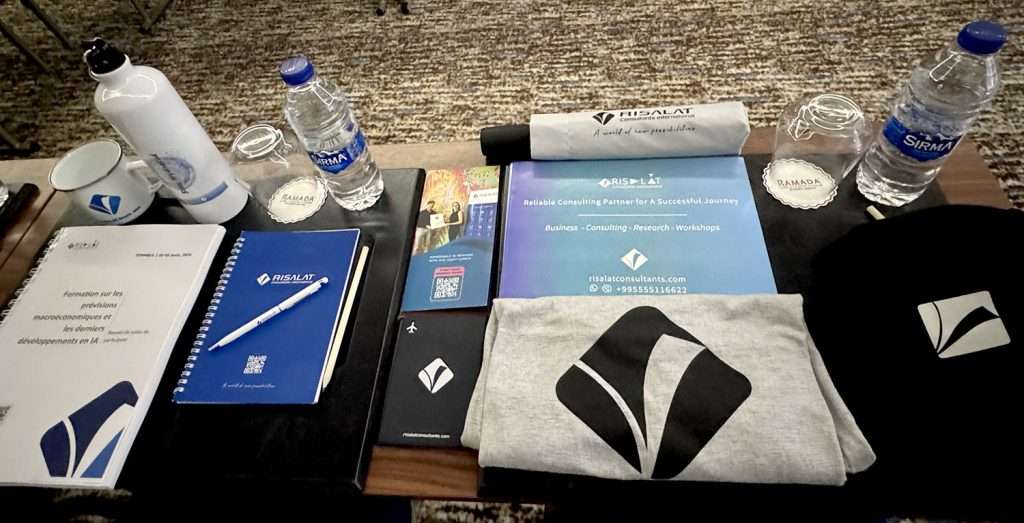
- Kit de formación de Risalat (bolsa, botella, taza, camiseta, gorra, funda de pasaporte, bolígrafos, cuaderno, imán y llavero)
- Comprehensive Business Management Training Manual
- Business Model Canvas and SWOT Template
- Annual Plan and Budget Template
- Cash Flow Forecast Workbook
- Break-Even and Pricing Calculator
- Business Case and Grant Application Outline
- Process Mapping Toolkit
- Balanced Scorecard Template
- Talleres prácticos y simulaciones
- Debates en grupo y aprendizaje entre pares
- Almuerzo y refrigerios diarios
- Acceso completo a las instalaciones de la sede de formación
- Mini Pad / tableta con materiales didácticos digitales
- Visita de campo (cuando proceda)
- Recorrido turístico por la ciudad
Después del programa
- Certificado de finalización
- Reconocimiento a la participación en programas de Risalat
- Materiales de consulta posteriores a la formación
- 90-Day Management Improvement Plan
- Monthly Performance Review Agenda
- Digital Investment Checklist
- Apoyo posterior a la formación y orientación de seguimiento
- Informe del programa
Institutions that want to train a whole management team can request a tailored in-house version of this programme, delivered at their premises or in another city. Please request a proposal and Risalat will adapt the cases and tools to your sector. You can also browse related courses in our programme categories.
Common Challenges in Business Management, And How This Training Helps
How can managers turn a long strategy document into daily priorities?
Many strategies list too many goals and are never linked to budgets. Day 1 narrows the strategy to three to five priorities, and Day 5 links them to a balanced scorecard and a monthly review routine so that progress is checked rather than assumed.
How can non-financial managers understand the numbers?
Day 2 explains the three financial statements in plain language, with ratios and examples from small firms and public enterprises. Participants practise spotting early warning signs such as shrinking margins or growing receivables.
How can an organisation avoid running out of cash while still profitable?
The Day 2 cash flow workbook shows the timing gap between sales and receipts. Participants build a 12-month forecast and test actions on receivables, stock and payment terms before a shortfall arrives.
How can SMEs prepare grant applications that succeed and stay compliant?
The Day 2 case study uses the published conditions of a real Cypriot digital upgrade scheme to show what a fundable business case contains and what reporting duties follow approval.
How can managers keep good staff when skills are scarce?
Day 3 covers workforce planning, clear roles, regular feedback and retention measures. Participants practise a performance conversation and leave with one concrete retention action.
How can digital investments be chosen wisely?
Day 4 starts from the process, not the software. Teams map a real process, score their digital readiness and select improvements with a clear estimate of time and cost saved.
How can public enterprises balance commercial results with their public mandate?
Day 1 and Day 5 cover mandate, ownership and governance in state-owned enterprises, and show how a balanced scorecard can track financial results alongside service quality and public value.
Preguntas frecuentes
Who is the Effective Business Management Training in Nicosia for?
It is designed for managers of SMEs, state-owned enterprises, public agencies and project organisations, including new managers moving up from supervisory roles.
Do I need a finance background?
No. The financial management day is written for non-financial managers and explains statements, cash flow, costing and budgeting in plain language with practical exercises.
¿El programa utiliza material de casos reales?
Yes. Cases draw on published EU and Cypriot business support programmes, such as the THALIA 2021-2027 digital upgrade scheme, and illustrative scenarios are labelled as such.
What will I take back to my organisation?
Templates for business planning, budgeting, cash flow, pricing, process mapping and a balanced scorecard, plus a 90-day improvement plan you build during the week.
¿Puede impartirse este programa de forma interna?
Yes. Risalat can deliver a tailored version for a single organisation, adapted to its sector, at its premises or in another city.
Todos los programas en NicosiaMás programas de Negocios y comunicación
Por qué Nicosia para este programa
Se eligió Nicosia (Chipre) para este programa porque es de fácil acceso para los participantes previstos y cuenta con sedes adecuadas para una formación práctica e interactiva.
The Effective Business Management Training in Nicosia programme in January 2027 brings together officials and professionals. Sessions combine short inputs, case studies and group work on participants' own files, and the city's institutions can be added as a study visit on request.
Compruebe si necesita visado con el Verificador de visados gratuito y solicite una carta de invitación una vez inscrito.
Otros programas en Nicosia
Más cursos de formación en Chipre · Todos los programas en Europa · Calendario de formación completo