Points clés
- Dates
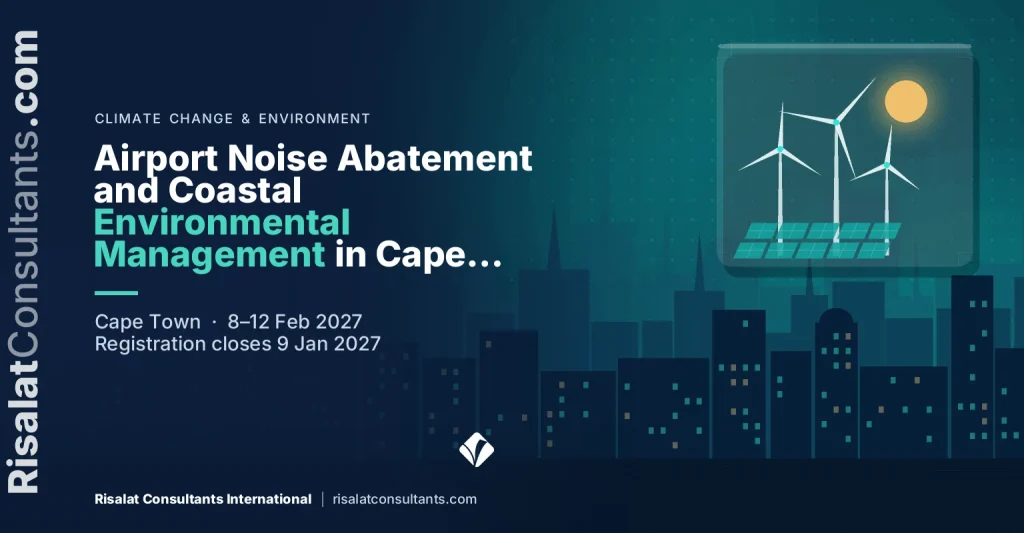
- 8–12 févr. 2027 (5 jours)
- Lieu
- Cape Town, South Africa
- Frais par participant
- 3 250 £ (GBP)
- Paiement
- Sur facture et par virement bancaire
- Clôture des inscriptions
- 9 janv. 2027
- Certificat
- Certificat de participation
- Option intra
- Organisez-le pour votre équipe, à vos dates
Sur cette page 13 sections
Présentation du programme
Aviation expansion in vulnerable coastal zones requires rigorous environmental safeguarding to balance operational connectivity with ecological stability. This professional training programme equips technical practitioners with the capabilities needed to manage acoustic disturbances and preserve sensitive littoral habitats around aerodrome infrastructure. Participants examine international compliance benchmarks, noise modelling tools, and coastal conservation strategies required for aerodrome operations located in close proximity to critical marine and terrestrial ecosystems.
The curriculum addresses the unique environmental tensions faced by oceanic and island territories. Technical sessions focus on modern aircraft noise contouring, wildlife hazard management, stormwater run-off control, and hydrocarbons containment. Attendees analyse the operational linkages between aviation safety, regulatory mandates, and coastal biodiversity, ensuring that infrastructure expansion adheres to multilateral lender standards and national environmental legislation without compromising flight safety or community health.
Delivered in Cape Town, South Africa, the programme provides access to relevant coastal infrastructure case studies and marine environmental management practices. Through structured lectures, regulatory reviews, and interactive planning exercises, infrastructure specialists and safeguards officers develop practical frameworks to monitor pollutants, mitigate shorefront degradation, and satisfy international project finance criteria in island and coastal aviation contexts.
Coastal and island aerodromes face intensifying regulatory demands to protect fragile shorefront habitats while modernising infrastructure to meet civil aviation needs. Capital investments, such as works under the Rodrigues Airport Project, require environmental safeguard specialists and airport managers to enforce strict multilateral lender standards, including World Bank Environmental and Social Standards and ICAO Annex 16 acoustic provisions. Establishing robust noise abatement procedures, bird hazard controls, and coastal drainage safeguards is immediately essential to prevent irreversible degradation of endemic biodiversity, manage community disruption, and ensure continuous compliance on donor-financed island transport projects.
Delivered by Risalat Consultants International in Cape Town, South Africa, it combines expert-led sessions, real cases and group work, so that participants can apply what they learn in their own institution.
The Programme Strengthens Institutional Capability
- International standards for aerodrome noise: ICAO Annex 16 and donor safeguard requirements
- Acoustic measurement metrics, baseline data collection, and seasonal ambient adjustments
- Aircraft noise contour mapping principles and calculation software inputs
- Flight trajectory optimisation, preferential runway allocations, and operational curfews
- Ground noise mitigation: engine test run barriers, auxiliary power unit limits, and buffer zones
- Balancing aerodrome flight safety with the protection of endemic coastal avifauna
- Habitat modification techniques along coastal airstrips to reduce nesting and feeding attractants
- Non-lethal bird dispersal mechanisms suited to sensitive marine environments
- Évaluation des risques climatiques et environnementaux
- Planification de l'adaptation et de l'atténuation
- Stratégies sectorielles pour l'énergie, l'eau et les terres
- Conception de projets pour les objectifs climatiques et environnementaux
It is designed for environmental safeguards officers from project implementation units, airport environmental officers and operational compliance managers, infrastructure planning specialists handling aerodrome modernisations and others who want practical, current skills in climate, environment and natural resources.
The Growing Importance of Airport Noise Abatement and Coastal Environmental Management in Cape Town
Le changement climatique, les pressions environnementales et la gestion des ressources façonnent désormais les plans nationaux, les budgets et les décisions d'investissement. Les bailleurs attendent de plus en plus que les considérations climatiques et environnementales soient intégrées aux projets dès le départ.
Les institutions capables d'anticiper les risques climatiques, de bien gérer les ressources naturelles et de préparer des propositions solides sont mieux placées pour protéger les services et accéder aux financements disponibles pour ce travail.
Les organisations ont de plus en plus besoin de professionnels capables de :
- Évaluer les risques climatiques et environnementaux pesant sur leurs services et leurs actifs
- Concevoir des projets qui répondent aux objectifs climatiques et environnementaux
- Préparer des propositions que les bailleurs peuvent approuver
- Mesurer les résultats et en rendre compte de manière crédible
- Travailler avec les communautés et les partenaires de différents secteurs
Des systèmes solides en matière de climat, d'environnement et de ressources naturelles aident les organisations à :
- Protéger les services et les infrastructures contre les risques climatiques
- Accéder aux financements climatiques et environnementaux
- Respecter les engagements nationaux et internationaux
- Utiliser durablement les ressources naturelles
This Airport Noise Abatement and Coastal Environmental Management in Cape Town programme brings these elements together in a practical format, so that participants understand not only what good practice looks like but also how to introduce it in their own setting, with the people and resources they have.
Who Should Attend This Airport Noise Abatement and Coastal Environmental Management in Cape Town Training?
Ce programme s'adresse à :
- Environmental safeguards officers from project implementation units
- Airport environmental officers and operational compliance managers
- Infrastructure planning specialists handling aerodrome modernisations
- Civil aviation authority technical inspectors and regulators
- Ministries of environment and natural resources personnel
- Coastal zone management authorities and marine conservation officers
- Aviation engineering consultants and safeguards advisers
- Public works engineers managing coastal transport drainage and fuel facilities
- Environmental and social risk specialists working on donor-funded island projects
- Chargés du changement climatique et de l'environnement
- Personnel des secteurs de l'énergie, de l'eau et de l'agriculture
- Chargés de planification et de politiques
Le programme convient aussi bien aux professionnels expérimentés qu’à ceux qui prennent de nouvelles responsabilités. Les groupes réunissant plusieurs institutions et pays sont encouragés, car les participants apprennent beaucoup de l’expérience des autres.
Cochez ce que votre équipe doit être capable de faire.
Airport Noise Abatement and Coastal Environmental Management in Cape Town Training Objectives
Upon successful completion of this Airport Noise Abatement and Coastal Environmental Management in Cape Town Training, participants will be able to:
- Design aircraft noise contour maps using internationally recognised acoustic assessment methods
- Establish coastal wildlife and bird-hazard management plans that safeguard critical aviation paths and protected marine avifauna
- Formulate airport environmental compliance frameworks aligned with ICAO Standards and World Bank Environmental and Social Framework requirements
- Develop surface water run-off and drainage mitigation plans to safeguard nearshore marine environments from sediment and chemical discharge
- Implement secondary containment, monitoring, and emergency response procedures for aerodrome fuel storage installations
- Structure ecological baseline surveys to monitor the integrity of adjacent coral reef, lagoon, and shorefront ecosystems
- Create operational noise abatement procedures, including flight path adjustments and ground engine running restrictions
- Expliquer les principaux enjeux climatiques et environnementaux de leur secteur
- Évaluer les risques climatiques et environnementaux pesant sur les services et les actifs
- Planifier des mesures d'adaptation et d'atténuation
Chaque objectif est mis en pratique pendant le programme à travers des exercices, des études de cas ou des travaux de groupe, afin que les participants repartent capables de le faire, et pas seulement de le décrire.
Contenu et structure du programme
- International standards for aerodrome noise: ICAO Annex 16 and donor safeguard requirements
- Acoustic measurement metrics, baseline data collection, and seasonal ambient adjustments
- Aircraft noise contour mapping principles and calculation software inputs
- Flight trajectory optimisation, preferential runway allocations, and operational curfews
- Ground noise mitigation: engine test run barriers, auxiliary power unit limits, and buffer zones
- Balancing aerodrome flight safety with the protection of endemic coastal avifauna
- Habitat modification techniques along coastal airstrips to reduce nesting and feeding attractants
- Non-lethal bird dispersal mechanisms suited to sensitive marine environments
- Passive monitoring and strike reporting systems aligned with ICAO Doc 9137 standards
- Developing an operational aerodrome Wildlife Hazard Management Plan (WHMP)
- Hydrological impacts of runway surfaces and aprons on coastal erosion and siltation
- Run-off filtration systems, oil-grit separators, and sediment retention basins
- Managing de-icing fluid residues and firefighting chemical run-off in marine zones
- Monitoring coastal water quality: turbidity, hydrocarbons, and dissolved oxygen standards
- Integrating nature-based drainage solutions with airport civil engineering works
- Environmental risk profiling of bulk fuel storage and refuelling stations in coastal zones
- Secondary and tertiary containment design principles to prevent ground and marine contamination
- Leak detection systems, cathodic protection, and groundwater monitoring well networks
- Emergency containment and rapid deployment protocols for coastal fuel spills
- Safe disposal pathways for hazardous waste, oily rags, and contaminated absorbents
- Structuring an Environmental and Social Management Plan (ESMP) for island aerodromes
- Integrating World Bank ESS2, ESS3, and ESS6 mandates into routine airport operations
- Community engagement, stakeholder communication, and noise grievance redress mechanisms
- KPI tracking, regulatory audit protocols, and donor compliance reporting cycles
- Group presentations: specialised environmental safeguard strategies for island aviation projects
Contenu détaillé jour par jour
Le programme se déroule sur 5 jours. Chaque journée associe apports d'experts, travail pratique et un atelier ou une étude de cas de clôture :
- First Day: Aviation Noise Modelling and Acoustic Abatement Frameworks
- Second Day: Coastal Bird-Hazard Management and Avifauna Conservation
- Third Day: Stormwater Run-Off, Drainage Design, and Lagoon Protection
- Fourth Day: Aviation Fuel Containment, Storage Safety, and Spill Control
- Fifth Day: Environmental Compliance, Monitoring, and Safeguards Reporting
Contenu détaillé jour par jour
First Day | Aviation Noise Modelling and Acoustic Abatement Frameworks
- International standards for aerodrome noise: ICAO Annex 16 and donor safeguard requirements
- Acoustic measurement metrics, baseline data collection, and seasonal ambient adjustments
- Aircraft noise contour mapping principles and calculation software inputs
- Flight trajectory optimisation, preferential runway allocations, and operational curfews
- Ground noise mitigation: engine test run barriers, auxiliary power unit limits, and buffer zones
Workshop: Aviation Noise Modelling and Acoustic Abatement Frameworks: Applying It to Your Institution
En petits groupes, les participants appliquent les méthodes du jour à des exemples tirés de leurs institutions et conviennent d'étapes concrètes pour la suite.
Second Day | Coastal Bird-Hazard Management and Avifauna Conservation
- Balancing aerodrome flight safety with the protection of endemic coastal avifauna
- Habitat modification techniques along coastal airstrips to reduce nesting and feeding attractants
- Non-lethal bird dispersal mechanisms suited to sensitive marine environments
- Passive monitoring and strike reporting systems aligned with ICAO Doc 9137 standards
- Developing an operational aerodrome Wildlife Hazard Management Plan (WHMP)
Workshop: Coastal Bird-Hazard Management and Avifauna Conservation: Applying It to Your Institution
En petits groupes, les participants appliquent les méthodes du jour à des exemples tirés de leurs institutions et conviennent d'étapes concrètes pour la suite.
Third Day | Stormwater Run-Off, Drainage Design, and Lagoon Protection
- Hydrological impacts of runway surfaces and aprons on coastal erosion and siltation
- Run-off filtration systems, oil-grit separators, and sediment retention basins
- Managing de-icing fluid residues and firefighting chemical run-off in marine zones
- Monitoring coastal water quality: turbidity, hydrocarbons, and dissolved oxygen standards
- Integrating nature-based drainage solutions with airport civil engineering works
Case Study: Stormwater Run-Off, Drainage Design, and Lagoon Protection in Practice
Les participants analysent un cas réaliste, comparent les choix effectués aux bonnes pratiques et en tirent des enseignements applicables à leur propre contexte.
Fourth Day | Aviation Fuel Containment, Storage Safety, and Spill Control
- Environmental risk profiling of bulk fuel storage and refuelling stations in coastal zones
- Secondary and tertiary containment design principles to prevent ground and marine contamination
- Leak detection systems, cathodic protection, and groundwater monitoring well networks
- Emergency containment and rapid deployment protocols for coastal fuel spills
- Safe disposal pathways for hazardous waste, oily rags, and contaminated absorbents
Workshop: Aviation Fuel Containment, Storage Safety, and Spill Control: Applying It to Your Institution
En petits groupes, les participants appliquent les méthodes du jour à des exemples tirés de leurs institutions et conviennent d'étapes concrètes pour la suite.
Fifth Day | Environmental Compliance, Monitoring, and Safeguards Reporting
- Structuring an Environmental and Social Management Plan (ESMP) for island aerodromes
- Integrating World Bank ESS2, ESS3, and ESS6 mandates into routine airport operations
- Community engagement, stakeholder communication, and noise grievance redress mechanisms
- KPI tracking, regulatory audit protocols, and donor compliance reporting cycles
- Group presentations: specialised environmental safeguard strategies for island aviation projects
Capstone Exercise: Airport Noise Abatement and Coastal Environmental Management in Cape Town Action Plan for Your Institution
Les participants synthétisent la semaine dans un plan d'action pour leur institution, avec des priorités, des responsables et des premières étapes, puis le présentent à leurs pairs et aux animateurs pour recueillir leurs retours.
Airport Noise Abatement and Coastal Environmental Management in Cape Town Training Methodology
The training is delivered through interactive lectures, practical technical exercises, and contextual case analysis tailored to coastal aerodrome operations. Participants review real-world island scenarios, apply noise mapping concepts, and construct monitoring matrices aligned with international lender criteria. Daily peer reviews and practical simulation exercises ensure that technical concepts are translated into actionable operational plans for implementation in coastal aviation contexts.
Le programme associe :
- Sessions animées par des experts sur les pratiques actuelles
- Études de cas régionales et internationales
- Travaux de groupe et exercices pratiques
- Simulations et jeux de rôle le cas échéant
- Discussion des défis rencontrés par les participants dans l'exercice de leurs fonctions
- Apprentissage entre pairs, d'institutions et de pays différents
- Des outils et modèles pratiques à réutiliser au travail
- Réflexion quotidienne et plan d'action
Avant le programme, une courte pré-évaluation aide les animateurs à comprendre le rôle et les priorités de chaque participant, afin d’adapter les exemples et les exercices au groupe. Chaque journée se termine par une brève réflexion au cours de laquelle les participants notent ce qu’ils appliqueront dans leur travail.
- Fonds
- Entité
- Projet
- Résultats
- MRV
Résultats attendus
Upon completion of this Airport Noise Abatement and Coastal Environmental Management in Cape Town Training, participants will be able to:
- Produce standard-compliant aircraft noise contour models to define land-use planning zones around coastal runways
- Implement effective aerodrome wildlife hazard programmes that mitigate flight risks while protecting rare coastal species
- Design environmental drainage controls that halt sediment and toxic chemical transmission into fragile coastal lagoons
- Audit airport fuel storage infrastructure against international containment and spill-prevention benchmarks
- Author institutional Environmental and Social Management Plans compliant with multilateral development bank standards
- Establish functional public grievance channels to record, assess, and address community noise disturbances
- Évaluer les risques climatiques et environnementaux
- Planifier des mesures d'adaptation et d'atténuation
Les participants repartent avec un plan d'action personnel et des outils pratiques utilisables dans leur institution dès la première semaine de retour. Les institutions qui envoient plusieurs participants peuvent s'appuyer sur le programme pour convenir de méthodes et de modèles communs entre équipes, ce qui facilite la pérennité des améliorations.
3 250 £ par participant · facture et virement bancaire · réduction pour les groupes de 5 personnes ou plus
Cinq personnes ou plus d'une même organisation : demandez le tarif de groupe lors de votre demande de facture.
À partir de dix participants, une version intra pour votre institution peut revenir moins cher par personne. Demander un devis intra.
Clôture des inscriptions dans 57 jours (9 janv. 2027)
Institutional Application of Airport Noise Abatement and Coastal Environmental Management in Cape Town Training
Ce programme aide les organisations à renforcer :
- Planification climatique et environnementale
- Conception de projets
- Accès au financement
- Mesure des résultats
- Participation des parties prenantes
Les participants repartent avec des outils pratiques pour améliorer :
- Évaluations des risques
- Notes conceptuelles
- Cadres de résultats
- Systèmes de suivi
- Modalités de partenariat
Le programme est conçu pour que l'apprentissage passe de la salle de formation à l'institution. Les participants travaillent, dans la mesure du possible, sur leurs propres processus et documents, et repartent avec un plan d'action que leurs responsables peuvent examiner et soutenir.
Pertinence régionale & mise en application
Europe
Les institutions européennes traitent le climat, l'environnement et les ressources naturelles dans le cadre de réglementations détaillées et de programmes de réforme. Les participants venus d'Europe peuvent comparer leurs pratiques avec celles de collègues d'autres régions et vérifier comment des méthodes éprouvées fonctionnent dans d'autres conditions.
Afrique
En Afrique, les ministères, agences et équipes de projet œuvrant dans le climat, l'environnement et les ressources naturelles travaillent de plus en plus aux côtés de programmes financés par les bailleurs qui exigent des systèmes clairs et des données probantes. Le programme aide les participants à adapter les bonnes pratiques aux institutions et aux ressources avec lesquelles ils travaillent.
Moyen-Orient
Au Moyen-Orient, les stratégies nationales de développement et les plans de diversification sollicitent de plus en plus les capacités en matière de climat, d'environnement et de ressources naturelles. Les participants examinent comment bâtir, au sein des organismes publics et des entreprises, les capacités dont ces plans ont besoin.
Asie
Les institutions asiatiques conjuguent croissance rapide et programmes de modernisation ambitieux. Les participants venus d'Asie peuvent partager leur expérience du déploiement rapide de systèmes à grande échelle et découvrir les approches adoptées ailleurs.
Pacifique
Les petits États insulaires et du Pacifique font face à des contraintes particulières de taille, de distance et de capacités. Le programme met en avant des approches pratiques et proportionnées en matière de climat, d'environnement et de ressources naturelles, adaptées aux institutions de petite taille.
Holding the programme in Cape Town, South Africa brings participants together away from their daily pressures, so they can compare how climate, environment and natural resources is handled in different settings. The same programme can also be delivered in-house for one institution, in its own country or online, with cases taken from its current work.
Host Country Profile – South Africa
Programmes in Cape Town suit government officials, project teams and professionals focusing on public policy, parliamentary governance, infrastructure administration and urban management.
Se former hors de son pays permet aux participants de se concentrer, de porter un regard neuf sur leur propre institution et de constituer un réseau avec des collègues d'autres pays.
Airport Noise Abatement and Coastal Environmental Management in Cape Town Training Deliverables
Les participants sont accompagnés avant, pendant et après le programme, afin que la préparation, l'apprentissage et le suivi forment une expérience continue.
Avant le programme
- Pré-évaluation des participants
- Lectures préparatoires
- Aide et conseils gratuits pour le visa
Pendant le programme
- Airport Noise Abatement and Coastal Environmental Management in Cape Town Readiness Assessment
- Airport Noise Abatement and Coastal Environmental Management in Cape Town Resource Pack
- Accueil à l'aéroport & assistance à l'arrivée
- Hébergement avec petit-déjeuner
- Dîner de bienvenue et de réseautage
- Kit de formation Risalat (sac, gourde, mug, t-shirt, casquette, protège-passeport, stylos, carnet, magnet & porte-clés)
- Comprehensive Airport Noise Abatement and Coastal Environmental Management in Cape Town Training Manual
- Liste de contrôle du tri préliminaire des risques climatiques
- Modèle d'analyse des options
- Modèle de note conceptuelle
- Modèle de mesure des résultats
- Ateliers pratiques & simulations
- Discussions de groupe & apprentissage entre pairs
- Déjeuner et pauses-café quotidiens
- Accès complet aux installations du lieu de formation
- Mini tablette avec supports pédagogiques numériques
- Visite de terrain (le cas échéant)
- Visite récréative de la ville
Après le programme
- Certificat de participation
- Distinction Risalat de participation au programme
- Documents de référence après la formation
- Liste de contrôle de préparation au financement
- Modèle de suivi et de rapport
- Accompagnement après la formation & conseils de suivi
- Rapport du programme
Les institutions peuvent aussi demander une version intra sur mesure de ce programme, dispensée dans leurs locaux ou en ligne. Demander une proposition.
Common Challenges in Airport Noise Abatement and Coastal Environmental Management in Cape Town, And How This Training Helps
Comment les institutions peuvent-elles évaluer les risques climatiques et environnementaux pesant sur leurs services et leurs actifs ?
The programme addresses this directly on the first day (Aviation Noise Modelling and Acoustic Abatement Frameworks), where participants practise the methods involved and adapt them to their own institution, then build it into their action plan.
Comment les institutions peuvent-elles concevoir des projets qui répondent aux objectifs climatiques et environnementaux ?
The programme addresses this directly on the second day (Coastal Bird-Hazard Management and Avifauna Conservation), where participants practise the methods involved and adapt them to their own institution, then build it into their action plan.
Comment les institutions peuvent-elles préparer des propositions que les bailleurs peuvent approuver ?
The programme addresses this directly on the third day (Stormwater Run-Off, Drainage Design, and Lagoon Protection), where participants practise the methods involved and adapt them to their own institution, then build it into their action plan.
Comment les institutions peuvent-elles mesurer les résultats et en rendre compte de manière crédible ?
The programme addresses this directly on the fourth day (Aviation Fuel Containment, Storage Safety, and Spill Control), where participants practise the methods involved and adapt them to their own institution, then build it into their action plan.
Comment les institutions peuvent-elles travailler avec les communautés et les partenaires de différents secteurs ?
The programme addresses this directly on the fifth day (Environmental Compliance, Monitoring, and Safeguards Reporting), where participants practise the methods involved and adapt them to their own institution, then build it into their action plan.
Questions fréquentes
When and where does the Airport Noise Abatement and Coastal Environmental Management in Cape Town programme take place?
It runs from 8 Feb 2027 to 12 Feb 2027, in Cape Town, South Africa. The registration deadline is shown at the top of this page.
Qui devrait participer ?
The programme is designed for environmental safeguards officers from project implementation units, airport environmental officers and operational compliance managers, infrastructure planning specialists handling aerodrome modernisations, civil aviation authority technical inspectors and regulators, and others who want practical skills in climate, environment and natural resources.
Recevrai-je un certificat ?
Oui. Les participants qui terminent le programme reçoivent un certificat de participation délivré par Risalat Consultants International.
Ce programme peut-il être dispensé pour notre seule institution ?
Oui. Nous pouvons proposer une version intra sur mesure dans vos locaux, dans une autre ville ou en ligne, construite autour de vos propres cas. Utilisez la demande de proposition sur cette page.
Faut-il une expérience préalable en climat, environnement et ressources naturelles ?
Aucune formation spécialisée n'est requise au-delà d'une expérience dans une fonction similaire. Une courte pré-évaluation aide les animateurs à adapter les sessions au groupe.
Who Will Deliver This Programme
Each date is delivered by a team assigned from Risalat's expert network for this subject. For this programme we assign:
How we choose them: Experience in the region of the participants or comparable settings; Command of the financier rules that apply (World Bank, ADB, AfDB, EU, UN) where relevant; Delivery in English; other languages on request for in-house groups; No conflict of interest with participants' institutions.
Names and short CVs of the assigned experts are shared with registered participants and sponsoring organisations before the programme, on request. Are you an expert in this subject? Join our expert network.
Training courses in Cape TownInfrastructure, Planning, and Development training courses
Why Cape Town for this programme
Cape Town offers examples of water resilience and tourism, in a setting participants remember.
The Airport Noise Abatement and Coastal Environmental Management in Cape Town programme in February 2027 brings together officials and professionals from across the Africa region and beyond. Sessions combine short inputs, case studies and group work on participants' own files, and the city's institutions can be added as a study visit on request.
Getting there: Cape Town International (CPT).
Vérifiez si vous avez besoin d'un visa avec le vérificateur de visa gratuit, et demandez une lettre d'invitation une fois inscrit.
Other programmes in Cape Town
- Blue Economy Sector Governance and Investment Frameworks in Cape Town
- Social Assistance Labour Activation and Graduation Pathways in Cape Town
- Bagasse Biomass Cogeneration and Carbon Offset Verification Systems in Cape Town
- Vocational Skills Programme Standards and Youth Market Intermediation in Cape Town
- Smallholder Pressurised Irrigation & Solar Water Pumping Scheme Design in Cape Town
For teams and institutions
Bring your team
Teams that learn together apply more at work. Tell us how many people and how you would like to take part: we reply with a group quote within two working days.
Other dates and cities for this subject: Environmental and Social Safeguards (ESF) training courses (27 upcoming dates).
More training courses in South Africa · Tous les programmes en Afrique · Calendrier complet des formations
Plan this programme in a roadmap: why it matters, why to approve it, the dates to plan and the career it builds.