

Vue d'ensemble
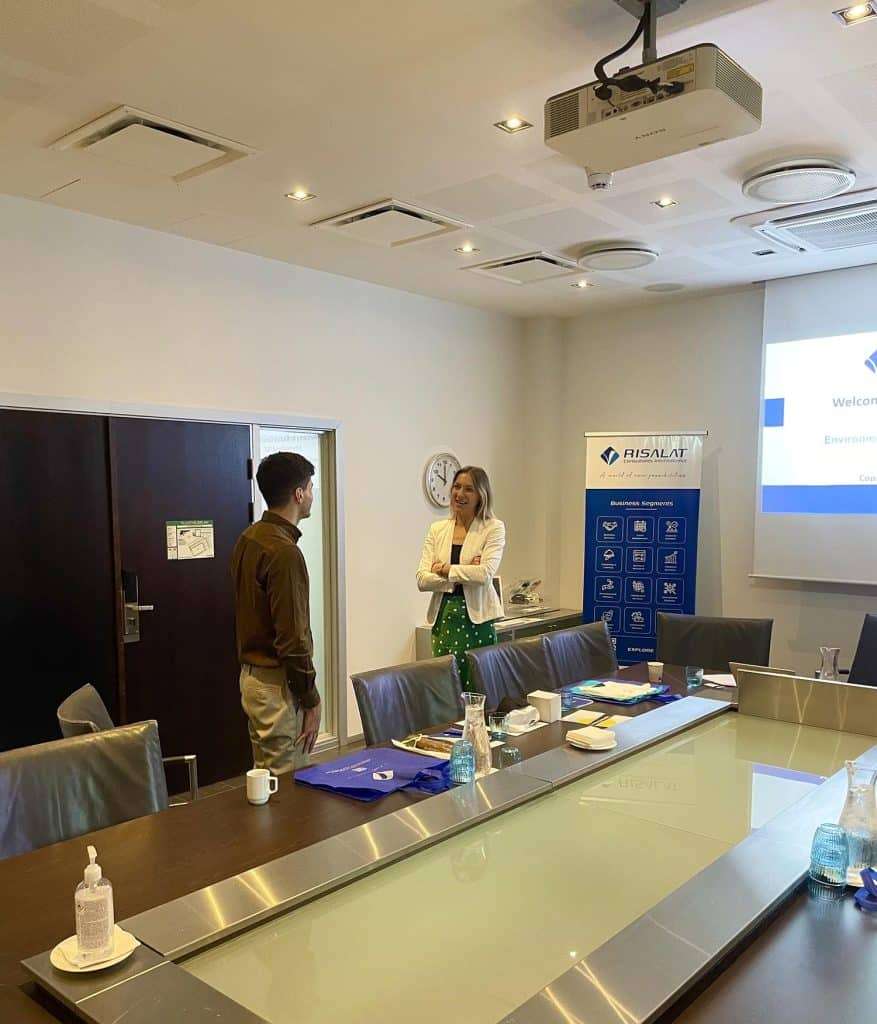
This assignment comprised a five-day training workshop on Environmental and Social Standards (ESS) for professionals from an industrial development fund. The program introduced international safeguard frameworks, practical screening tools, and methods for applying these standards to real-world projects.
Delivered through classroom sessions, practical exercises, and site visits, the workshop covered institutional safeguards, risk assessment processes, stakeholder consultation, and sustainable municipal infrastructure across Denmark and Sweden.
Client and context
The program was delivered for the Saudi Industrial Development Fund. The participants had previous experience in environmental assessment, sustainability policy, and safety and hazard assessment, with a strong interest in deepening their knowledge of environmental and social safeguards.
Objectives
- Present the concept, purpose, and history of environmental and social standards.
- Examine international frameworks including those of the World Bank, the United Nations Development Programme (UNDP), and the International Finance Corporation (IFC).
- Provide guidelines and practical methods for screening and applying safeguards in real-life projects.
- Review good practices in risk screening, stakeholder identification, involuntary resettlement, and meaningful consultations.
- Explore operational sustainability practices through real-life projects and infrastructure visits.
What we delivered
- Presentations on the history of ESS, international frameworks, and real-life sector examples such as waste management and sustainable food production.
- Practical screening exercises using the World Bank framework applied to the Gibe III dam project in Ethiopia.
- Training on the UNDP Social and Environmental Risk Screening Checklist, applied to a canal loop project case study from Poland.
- Sessions on the UN Sustainable Development Goals (SDGs) and IFC Performance Standards, including implementation timelines and organisational integration.
- A guided tour of Copenhagen featuring bike lanes, open schools, natural water catchment architecture, the Osterbro climate-resilient neighbourhood, and Climate Tile pavement installations.
- A site visit to the Amager Bakke waste-to-energy plant in Copenhagen, examining clean low-emission incineration, urban heat supply, and combined recreational facilities.
- A study visit to Helsingborg, Sweden, reviewing landfill-free waste separation, biogas production for city buses, waste hierarchy principles, and the Oceanhamn neighbourhood three-pipe sewage system.
- Instruction and practical exercises on stakeholder identification, involuntary resettlement frameworks, and consultation processes using a coal mine expansion case study.
- Advisory discussions on overcoming organisational challenges and integrating ESS into the participants’ daily operations.
Approach
The program combined theoretical presentations with hands-on case studies and field observations, enabling participants to analyse international standards before evaluating practical implementations on site.
- Introductory alignment on participant expectations, prior experience, and learning motivations.
- Structured reviews of international standards followed immediately by case-study screening exercises.
- Interactive discussions on organisational adoption and implementation roadmaps.
- Field visits demonstrating municipal-scale sustainability, energy recovery, and water management solutions.
- Collaborative problem-solving addressing specific institutional challenges and real-life applications.
Results and outputs
- Completion of risk-screening exercises using both World Bank and UNDP screening tools on international project case studies.
- Delivery of guidance on introducing IFC Performance Standards and meaningful consultation processes within the client organisation.
- Review of real-world sustainable infrastructure systems across Denmark and Sweden.
- Exchange of recommendations, practical advice, and implementation strategies tailored to the participants’ operational context.
At a glance
| Type de client | Industrial development fund |
|---|---|
| Pays | Denmark and Sweden |
| Location | Copenhagen, Helsingor, and Helsingborg |
| Durée | 5 jours |
| Participants | 2 participants |