In short: Explore cultivated meat: evidence, practical decisions, risks and safeguards for organisations, public agencies and donor-funded projects. Learn what to ch
Points essentiels
Cultivated meat, grown from animal cells instead of raised animals, has moved from laboratories to regulators’ desks. Food safety authorities that prepare early can protect consumers without blocking innovation.
- The safety questions are known – FAO and WHO mapped the hazards across four stages of production in 2023.
- Familiar tools apply – good hygiene, good manufacturing and cell culture practice and HACCP are the starting point.
- Singapore moved first – cultivated chicken has been sold there since December 2020.
- The United States split the work – the FDA reviewed production, then the USDA approved sale and inspection in June 2023.
- Labelling is a policy choice – what the product is called shapes consumer trust and fair competition.
Introduction
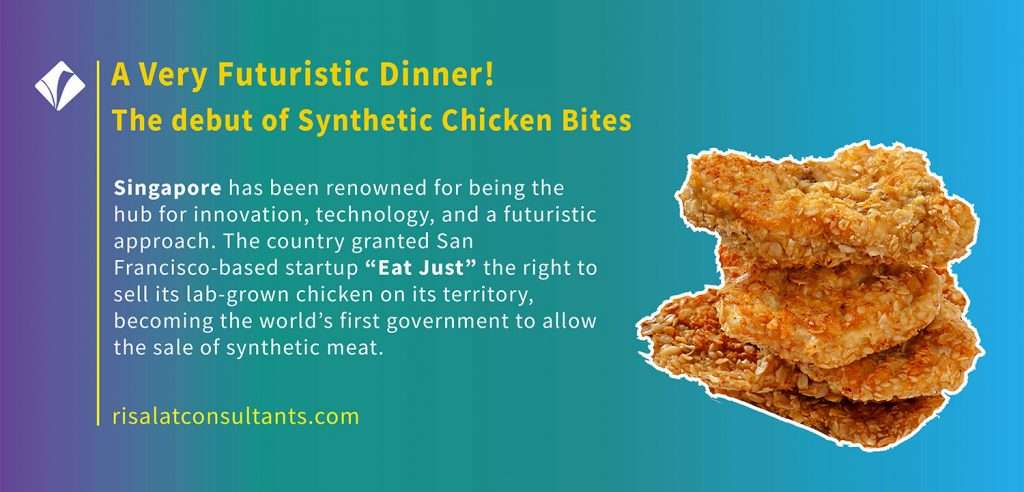
This page first reported, in 2020, on a “futuristic” dinner of cultivated chicken bites. The novelty has passed; the regulatory work has not. For ministries of agriculture, health and trade and their food safety agencies, the practical question is no longer whether cultivated meat exists but what a credible assessment and inspection system for it looks like.
What FAO and WHO identified
In March 2023 FAO and WHO published Food safety aspects of cell-based food. It describes four stages of production: selecting, isolating, preparing and storing the cells; growing them (and possibly differentiating them) into biomass at scale; harvesting; and processing and formulation into food.
The hazards it lists are foreign matter, veterinary drug residues, microbial toxins, additives, other residues, allergens, microplastics and pathogens. Many are familiar to meat and food inspectors; what changes is where in the process they arise. The report suggests risk-mitigating tools such as good hygiene, manufacturing and cell culture practices and HACCP, notes that a case-by-case approach may suit assessment, and stresses communication with consumers. FAO described the hazard identification as only the first step of a long process.
How Singapore did it
Singapore was the first country to clear cultivated meat for sale, and Good Meat chicken has been sold there since December 2020. Its food agency publishes its procedures online, companies can consult the regulator before submitting, and an expert working group on novel food safety helps assess difficult questions. Advisers quoted in the trade press put the whole process at about nine to twelve months.
How the United States did it
In the United States two agencies share the work. The Food and Drug Administration oversees cell collection, cell banking and cultivation; the Department of Agriculture’s Food Safety and Inspection Service oversees meat and poultry from harvest onwards, including facility inspection and labels. In November 2022 the FDA completed its first pre-market consultation, with Upside Foods, stating that it had no further questions about the production process and that the consultation is not an approval. That consultation took just over a year. In June 2023 the USDA approved the sale of cultivated chicken from Good Meat and Upside Foods, with facilities inspected like conventional plants and products labelled “cell-cultivated chicken”.
The decisions a regulator needs to prepare
| Decision | Options seen so far |
|---|---|
| Who regulates which stage | One agency end to end (Singapore) or a split between cell culture and processing (United States) |
| How safety is assessed | A pre-market review of each product and process, using hazard-based tools such as HACCP |
| How facilities are inspected | As food or meat plants, with a grant of inspection before sale |
| What the label says | A clear name such as “cell-cultivated”, agreed before products reach shops |
| How the public is informed | Published procedures and plain-language communication |
Les questions essentielles que les responsables publics et les chefs de projet devraient se poser
Does our food law cover cell-based products at all?
If it is silent, a novel food procedure or a specific regulation is the first step.
Which agency inspects which stage?
Overlaps and gaps between agencies are the usual source of delay.
Do our inspectors know the hazards of cell culture?
The FAO and WHO hazard list is a ready basis for training and checklists.
What will the product be called?
Deciding labels early avoids disputes with producers and confusion for consumers.
How will we explain our decisions to the public?
Published procedures and clear communication build trust in either decision.
Comment Risalat peut vous aider
Food safety authorities preparing for novel foods usually start with their inspectors’ and assessors’ skills. Our agriculture, health and regulatory programmes can be tailored for a team, and the free Training Needs Assessment shows where to start.
Sources
- WHO and FAO, Food safety aspects of cell-based food (2023)
- Food Safety News, FAO and WHO consider the safety of cell-based food (April 2023)
- CNBC, US approves sale of cell-cultured chicken (June 2023)
- TechCrunch, FDA and Upside Foods (November 2022)
- FoodNavigator, cultivated meat regulation in the US and Singapore (February 2023)
Know people who should read this? Become an Ambassador or write with Risalat.
Partenaires de la réussite des projets depuis 2011 : diagnostics, conseil et apprentissage appliqué pour les ministères, les organismes publics et les équipes de projet.
Besoin d'aide pour passer à la pratique ?
Commencez par un diagnostic gratuit de 10 minutes ou échangez avec nos experts.